
Most teams discover bottlenecks during Friday release rollouts, not from quarterly retros. Working across different tech companies, the fastest DevEx wins usually came from instrumenting what developers touch daily - for example tracing p95 latency spikes to a single N+1 query, catching crash surges tied to a new mobile build, and measuring review cycle time against WIP limits. As the observability market heats up, consolidation is creating both choice and noise, so we cross-checked claims against independent reviews and analyst notes. Gartner expects observability products to reach roughly $14.2 billion by 2028, a sign that DevEx monitoring is now a board topic, not a side project, according to ITPro's summary of Gartner's research. Source
The shortlist balances "code-level runtime context" with "prod-facing signals," so you can learn how to: pick the right telemetry surface area, avoid noisy alerting and runaway costs, and connect DevEx metrics to business outcomes. For broader impact context, McKinsey's Developer Velocity work links better developer tooling to stronger business performance, with top quartile performers growing revenue four to five times faster than the bottom quartile. Source
AppMap
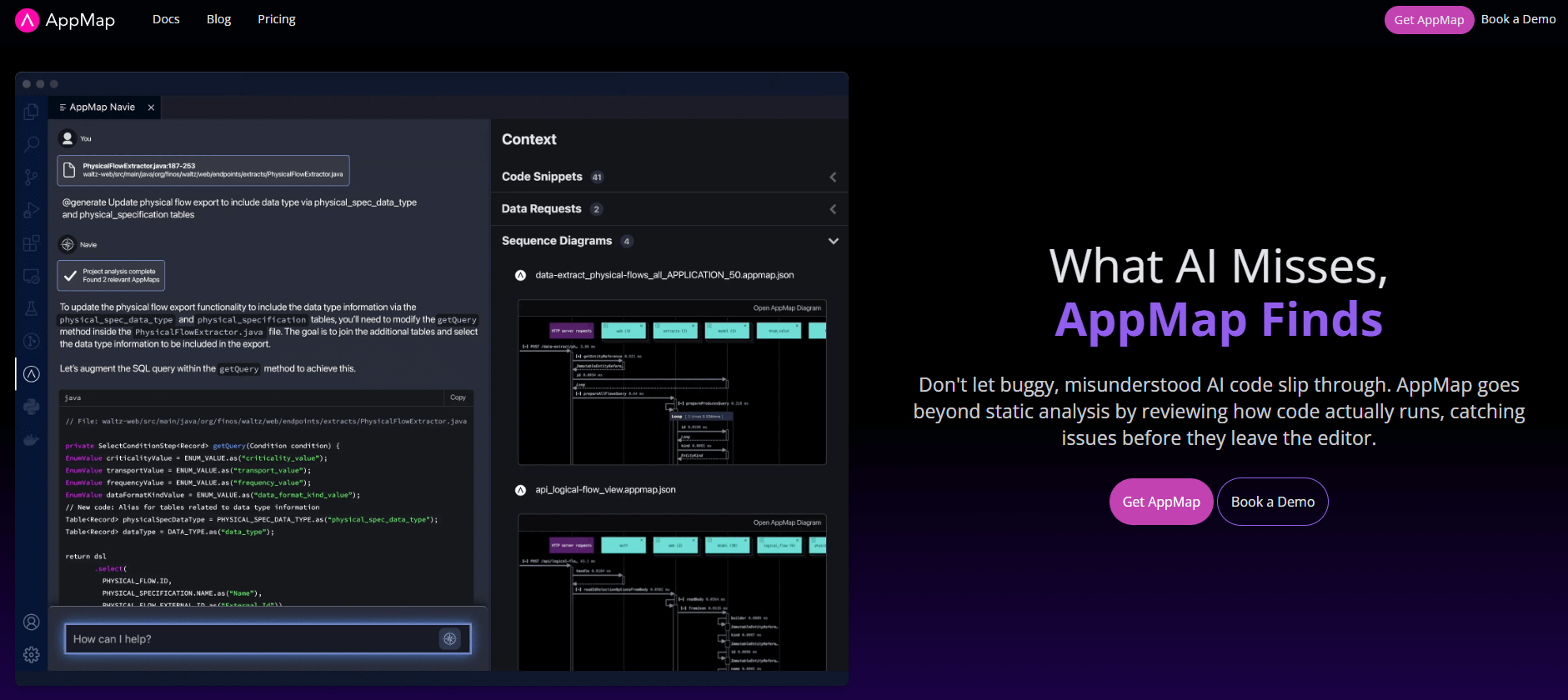
AppMap records runtime code execution inside your editor and turns it into interactive sequence diagrams, dependency maps, and flame graphs. It brings "runtime-aware" context to code review and debugging without sending your code to a third party, per vendor documentation.
Best for: Developers who want immediate, code-level runtime insight during debugging, code review, and onboarding.
Key Features:
- Records code execution traces in Java, Python, Ruby, JavaScript, and TypeScript, then visualizes calls, SQL, and timings as interactive diagrams, per vendor documentation and the GitHub Marketplace listing. Source
- Detects performance antipatterns like N+1 queries and surfaces them in views developers already use, per vendor documentation and GitHub resources.
- IDE integrations for VS Code and JetBrains with sequence diagram "diffs" and flame graphs, per vendor documentation.
Why we like it: It saves hours when joining a new codebase or chasing a tricky regression. Seeing real SQL and function calls, not guesses, shortens root cause hunts and makes PR discussions concrete.
Notable Limitations:
- .NET support is Linux-only in the open instrumentation as of recent commits. Source
- Fewer independent, third party reviews compared with mainstream APM tools, so enterprise references may be limited.
- Requires generating AppMap traces locally or in CI to get value, which adds a setup step compared to pure agent based APM.
Pricing: GitHub Marketplace lists a Teams plan at $15 per user per month with a free trial, as of February 2026.
If you need enterprise deployment or on prem model options, contact the vendor for a custom quote.
Milestone
Milestone is an AI native project management platform that adds task chat, AI generated checklists, and workspace wide search and insights. It aims to reduce PM overhead so engineers spend more time shipping, per vendor documentation.
Best for: Startup product and engineering teams that want lightweight boards, integrated docs, and AI help for scope breakdown, summaries, and insights.
Key Features:
- Task level chat to refine scope, break work down, and estimate effort, per vendor documentation.
- One click transformation of complex tasks into actionable checklists, per vendor documentation.
- Integrations with Slack, GitHub, Google Drive, and calendar tools, per vendor documentation.
Why we like it: For small teams, it replaces a maze of docs and PM rituals with quick, AI assisted planning and continuous status. The "talk to the task" pattern reduces meetings and keeps momentum.
Notable Limitations:
- Early stage product, with limited independent reviews and an evolving feature set. Treat as fast moving software.
- Enterprise controls and advanced reporting depth are still maturing compared to long standing PM suites.
- Pricing and SLAs are not widely verified on third party marketplaces.
Pricing: Pricing not publicly verified by third party marketplaces as of February 9, 2026. The vendor advertises a free tier and an early adopter Pro plan around $12 per month, but confirm directly with the vendor before budgeting.
New Relic APM
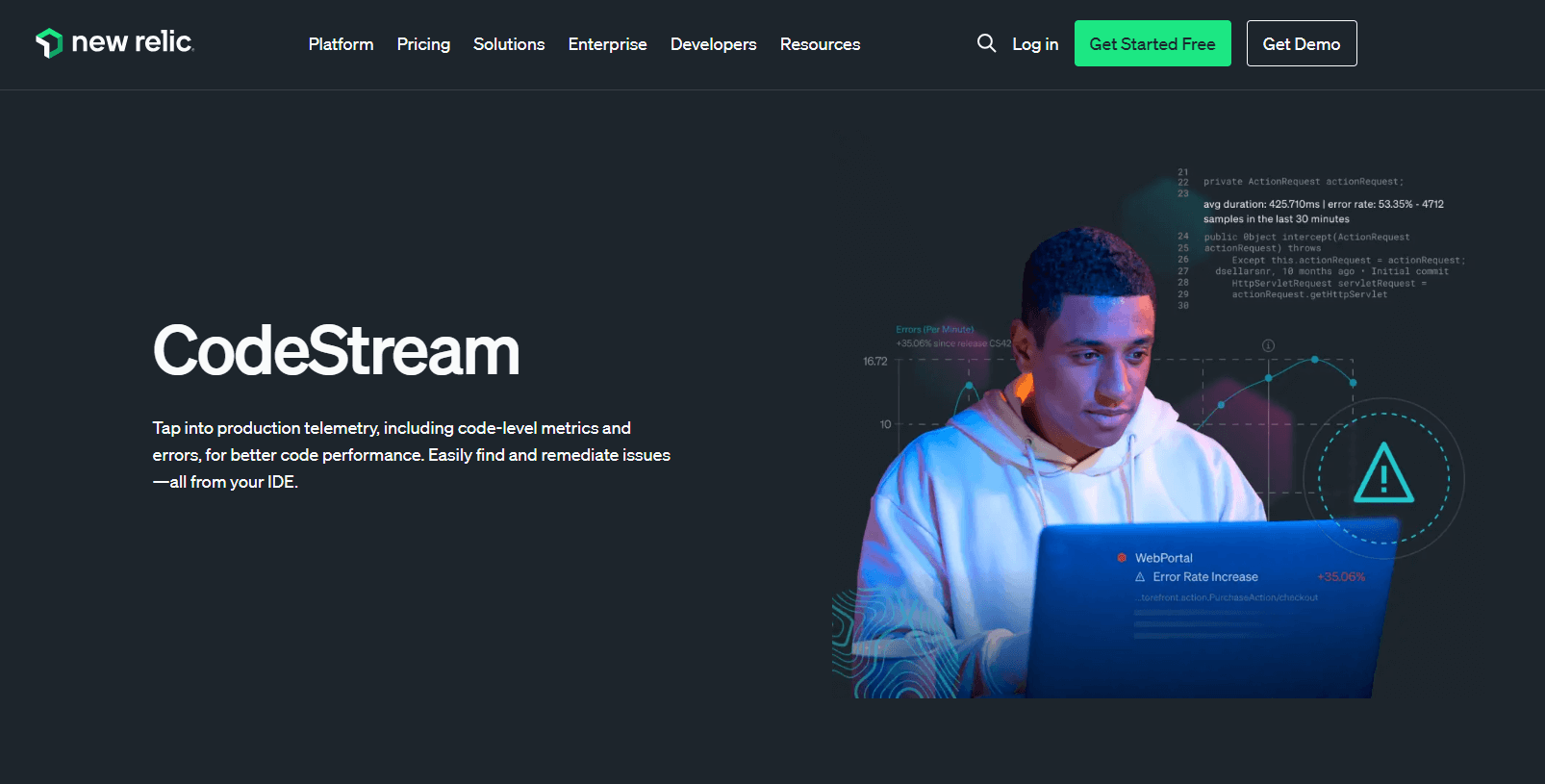
New Relic provides a unified observability platform, covering APM, distributed tracing, logs, infrastructure, browser, mobile, and synthetics. It is available via major cloud marketplaces, including a free tier.
Best for: Teams that want one platform for application performance, infra, logs, and digital experience, with simple onboarding through cloud marketplaces.
Key Features:
- Full stack capabilities reported by users include real time performance monitoring, log management, and distributed tracing in one place. Source
- Synthetic monitoring and browser metrics to test user journeys and web vitals, highlighted in user reviews. Source
- Available through AWS Marketplace with free tier access and pay as you go options. Source
Why we like it: It consolidates multiple tools into one queryable surface, which shortens mean time to restore when incidents span app, infra, and front end.
Notable Limitations:
- Cost can scale quickly with data ingest and number of full users, a common concern in user reviews.
- Steep learning curve and interface complexity for new users, per multiple third party reviews.
- New Relic is privately owned after a 2023 acquisition by Francisco Partners and TPG, which may affect packaging over time. Operations continue as a standalone company. Source
Pricing:
- AWS Marketplace shows first 100 GB of data free and one free full user, with additional full users billed and data billed beyond free thresholds, as of February 2026.
- G2 lists a Free Forever tier, Pay as You Go Standard, and contact for Pro or Enterprise. Validate current rates before purchase. Source
Sentry
Sentry focuses on real time error tracking with performance monitoring and session replay, so teams can see the exact stack trace and user path that led to a failure.
Best for: Engineering teams that need actionable crash reporting, release health, and performance tracing without deploying a full observability stack.
Key Features:
- Error tracking with stack traces, breadcrumbs, and release health indicators, cited widely by users. Source
- Performance monitoring and session replay that tie issues to user impact, per independent reviews.
- Option to self host for controlled environments via a maintained repository. Source
Why we like it: You can connect an error to the exact code change, user actions, and build version in minutes. That shortens triage and cuts noisy guesswork.
Notable Limitations:
- Pricing concerns for growing workloads or advanced features, per users.
- Occasional mis grouping and a learning curve in a feature dense UI, based on user feedback.
- Self hosted installs are primarily community supported and add operational overhead.
Pricing: Sentry updated its base pricing in August 2025. G2 and Sentry's own help center list a Free plan, Team at $29 per month, Business at $89 per month, and Enterprise on request, as of February 2026. Confirm current terms before purchase. Source
DevEx Tools Comparison: Quick Overview
| Tool | Best For | Pricing Model | Highlights |
|---|---|---|---|
| AppMap | Code level runtime insight in the IDE | Per user monthly, marketplace listing | Diagrams, sequence diffs, N+1 detection in editor |
| Milestone | AI assisted PM for startup product and eng teams | Vendor quoted monthly plans | Task chat, AI checklists, integrated docs, early stage product |
| New Relic APM | Unified observability across app, infra, logs, UX | Usage based, marketplace PAYG | One platform, marketplace billing, broad feature set |
| Sentry | Error tracking with performance and replay | Tiered per user, events | Fast crash triage, release health, self host option |
DevEx Platform Comparison: Key Features at a Glance
| Tool | Runtime Code Maps | Error Tracking | APM and Tracing |
|---|---|---|---|
| AppMap | Yes, code execution diagrams and flame graphs, per vendor docs | Indirect, via analysis of recorded traces | No full APM, complements APM |
| Milestone | No | No | No |
| New Relic APM | No | Yes, errors inbox is part of the platform per user reviews | Yes, APM plus distributed tracing and synthetics |
| Sentry | No | Yes, core focus with release health and replay | Partial performance tracing for apps |
DevEx Deployment Options
| Tool | Cloud API | On-Premise / Air-Gapped | Integration Complexity |
|---|---|---|---|
| AppMap | Works locally, no code upload required | Enterprise on prem options per vendor docs; core recording can run locally | Low, IDE plugin and language agents |
| Milestone | Yes | Not publicly documented | Low to medium, SaaS with standard integrations |
| New Relic APM | Yes, SaaS and cloud marketplace | No traditional on prem; agents run on your infra | Medium, agents plus account setup |
| Sentry | Yes | Yes, self hosted on Docker; air-gapped if fully self hosted | Low to medium, SDKs and optional self host ops |
DevEx Strategic Decision Framework
| Critical Question | Why It Matters | What to Evaluate | Red Flags |
|---|---|---|---|
| Do we need code level runtime context in PRs and during debugging? | Shortens root cause time and accelerates onboarding | AppMap language coverage, IDE support, CI trace generation | Limited .NET Windows support, manual trace capture burden |
| Are crash spikes our main pain after releases? | Release health and replay cut noise and speed fixes | Sentry SDKs for your stack, alert routing, grouping accuracy | Unclear event limits, fast rising costs at scale |
| Do incidents span app, infra, front end, and third parties? | A single pane cuts MTTR and vendor sprawl | New Relic APM coverage, logs, synthetics, marketplace billing | Cost opacity, ingest growth without governance |
| Is PM overhead slowing delivery in a small team? | AI assisted planning reduces meetings and status churn | Milestone fit for integrations and insights you need | Early stage maturity, limited enterprise controls and SLAs |
DevEx Solutions Comparison: Pricing and Capabilities Overview
| Organization Size | Recommended Setup | Monthly Cost | Annual Investment |
|---|---|---|---|
| Startup, 5 engineers | AppMap for runtime debugging plus Sentry Team for error tracking | AppMap $15 per user, Sentry Team $29 per month, verify totals | AppMap and Sentry totals per headcount, confirm current rates on G2 and GitHub Marketplace |
| Scale up, 30 engineers | New Relic PAYG via AWS Marketplace, Sentry Business for high touch apps, optional AppMap for critical services | Marketplace shows free tier then usage charges, Sentry Business $89 per month, confirm | Depends on ingest and users, model your telemetry and seat mix first |
| Enterprise | New Relic Pro or Enterprise with commitment, Sentry Enterprise or self host for regulated domains, targeted AppMap seats | Contact vendors for quotes and volume discounts | Multi year commitments may lower unit costs, pressure test data growth and retention |
Problems & Solutions
-
Problem: Post release crash rate climbs and engineers cannot reproduce issues.
How Sentry helps: User reviews highlight release health, stack traces, breadcrumbs, and session replay that connect errors to the exact version and user flow, which speeds fixes and reduces noise. -
Problem: Slow endpoints from hidden N+1 queries and chatty services.
How AppMap helps: Captures runtime traces and flags repeated queries and slow call stacks, shown directly in IDE diagrams, which reduces time to pinpoint expensive paths before code hits production. -
Problem: Incidents span app code, infra saturation, and third party latency.
How New Relic helps: Independent reviews describe a unified place to correlate APM, logs, and synthetics, improving troubleshooting speed and visibility, with an entry path through AWS Marketplace and a free tier. -
Problem: PM rituals and status churn take time away from delivery in small teams.
How Milestone helps: Per vendor documentation, task chat, AI generated checklists, and integrated docs reduce meeting load and centralize context, which can align with DORA's push for user centric, flow friendly practices. For context, DORA 2024 finds that AI and platform changes should focus on reducing admin toil to avoid throughput and stability regressions. Source
Bottom Line: Pick Signals That Developers Actually Use
To achieve measurable DevEx gains, instrument where developers work. Use AppMap to expose real runtime behavior during coding and review, Sentry to cut post release triage time, and New Relic when incidents cross app, infra, and end user experience. For lightweight planning, Milestone's AI assisted workflow can reduce PM overhead, but verify maturity for your needs. The market is expanding quickly, with Gartner projecting observability to reach about $14.2 billion by 2028, so expect packaging and pricing shifts. Start with a thin slice, test in one service, and track DORA metrics like lead time and time to restore as your north star.