

You think you know cluster governance until your first incident center call during a routine upgrade window. Working across different tech companies, we have seen teams scramble with multi-cluster RBAC drift, admission policy gaps, and Day-2 upgrades gone sideways. Most teams discover these problems during a cross-region failover test, not from a design review. According to the latest CNCF research, Kubernetes is now mainstream in production, which raises the stakes for platform reliability and cost controls, as reflected in analyst coverage like the Gartner Magic Quadrant for Container Management that tracks the category's leaders. Readers here want what actually works, not a lab demo or a slide. (CNCF 2025 Annual Survey, Gartner MQ overview)
The CNCF 2025 Annual Survey reported that 82 percent of container users run Kubernetes in production, underscoring the need for mature enterprise platforms. You will learn when each tool wins, how they differ in Day-2 operations, and what to watch for on pricing and scale.
SUSE Rancher Prime
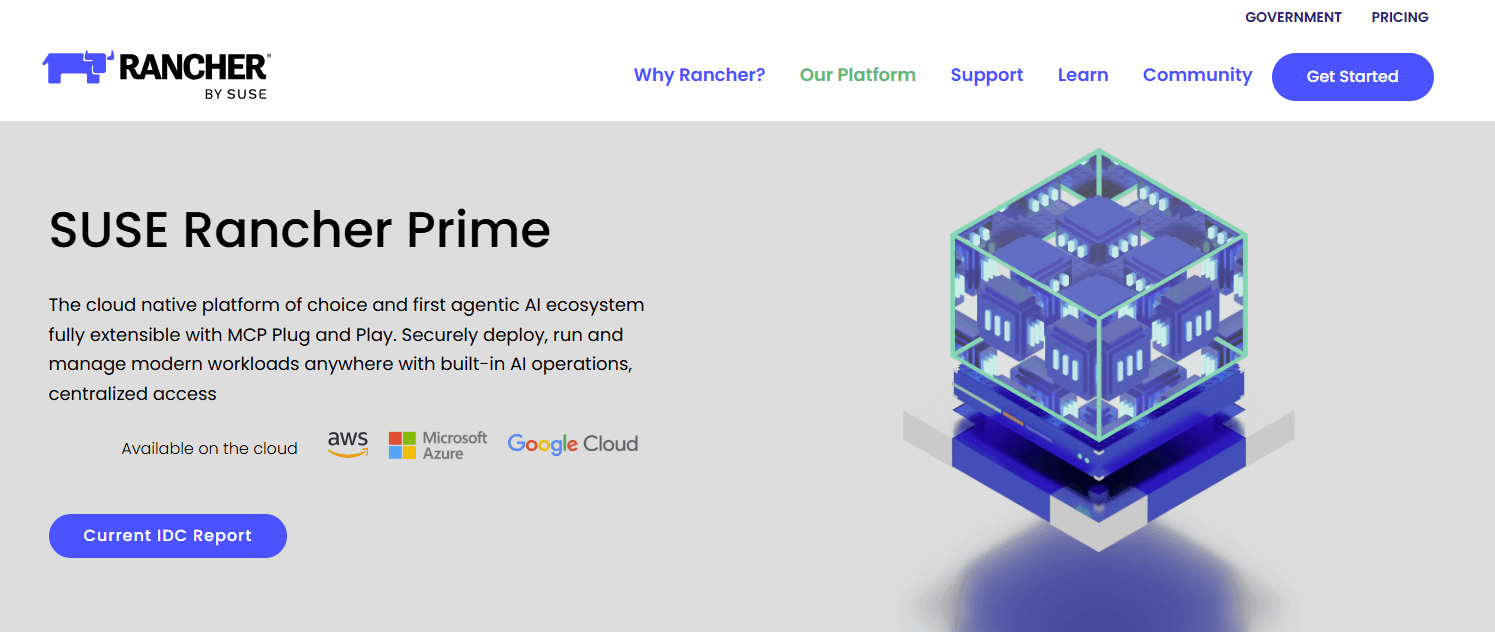
Enterprise Kubernetes management focused on multi-cluster operations, security policy, and curated applications. Backed by SUSE since 2020, it centralizes EKS, AKS, GKE, and on-prem clusters under a single control plane.
Best for: Platform teams that need consistent governance across clouds and data centers at scale.
Key Features:
- Centralized provisioning and lifecycle of multiple clusters with policy based governance and RBAC.
- Integrated security controls such as CIS benchmark alignment and audit capabilities per SUSE documentation.
- Curated application catalog with hardened images and SBOMs per SUSE documentation.
- Identity integration with AD and other providers, plus projects for namespace grouping per SUSE documentation.
Why we like it: Rancher reduces the glue code needed to standardize cluster creation and upgrades across providers, and its project model makes delegated operations practical for large teams.
Notable Limitations:
- Several peer reviews cite complexity for advanced setups and a learning curve for upgrades. (Gartner Peer Insights summary, G2 review patterns)
- Support experience and documentation depth can vary by scenario, which shows up in user feedback.
Pricing: Pricing not publicly available. Contact SUSE for a custom quote. For SaaS or marketplace procurement, SUSE Rancher for AWS is available through an AWS Marketplace listing, with SUSE also noting a usage-based option on Marketplace in its news posts (Marketplace announcement context).
Diamanti Kubernetes Platform
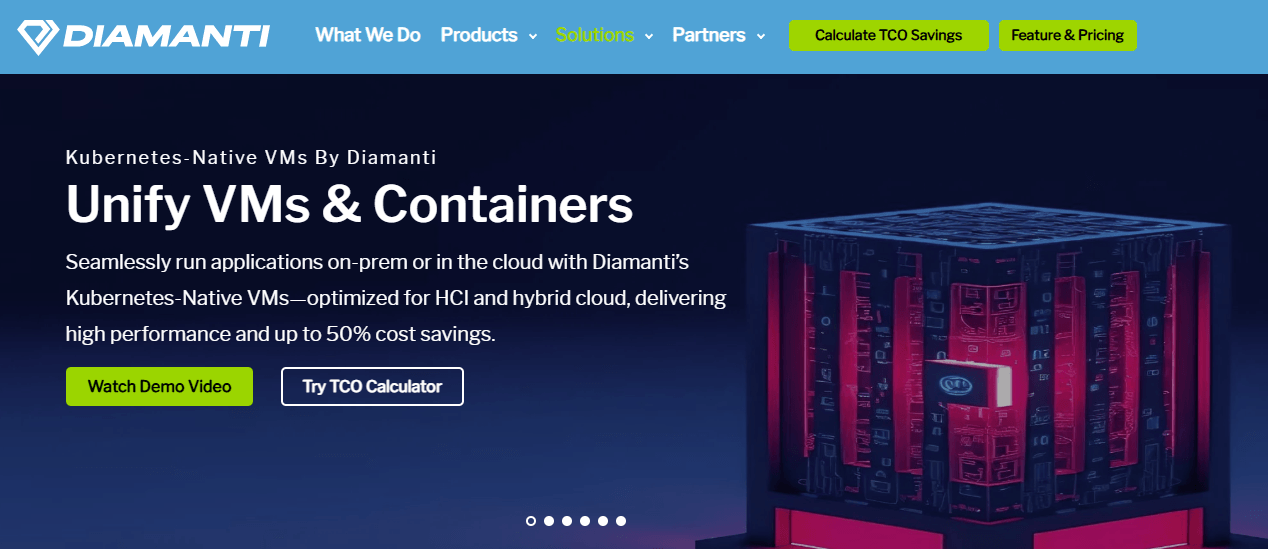
Full-stack Kubernetes platform that unifies multi-cluster management with container-native storage and networking. Known for HCI appliances and an integrated data plane designed for high performance and data mobility.
Best for: Enterprises running stateful or latency-sensitive workloads that want Kubernetes with integrated storage, networking, and DR features.
Key Features:
- Single-pane multi-cluster control with governance and migration features per Diamanti documentation.
- Container-native storage and high-performance networking with I/O acceleration, validated in independent coverage. (StorageReview overview)
- Disaster recovery constructs, including replication and failover, designed for hybrid environments per third-party writeups. (Blocks & Files interview)
Why we like it: Stateful workloads struggle on generic stacks; Diamanti's integrated data path can reduce tuning time and deliver predictable performance.
Notable Limitations:
- Hardware-centric deployment model can introduce vendor lock-in compared to pure software stacks.
- Smaller ecosystem presence and buyer awareness relative to category leaders, noted in community comparisons. (PeerSpot snapshot)
Pricing: Pricing not publicly available. Contact Diamanti or authorized resellers for a custom quote. Independent listings characterize it as custom and contract based.
Portainer
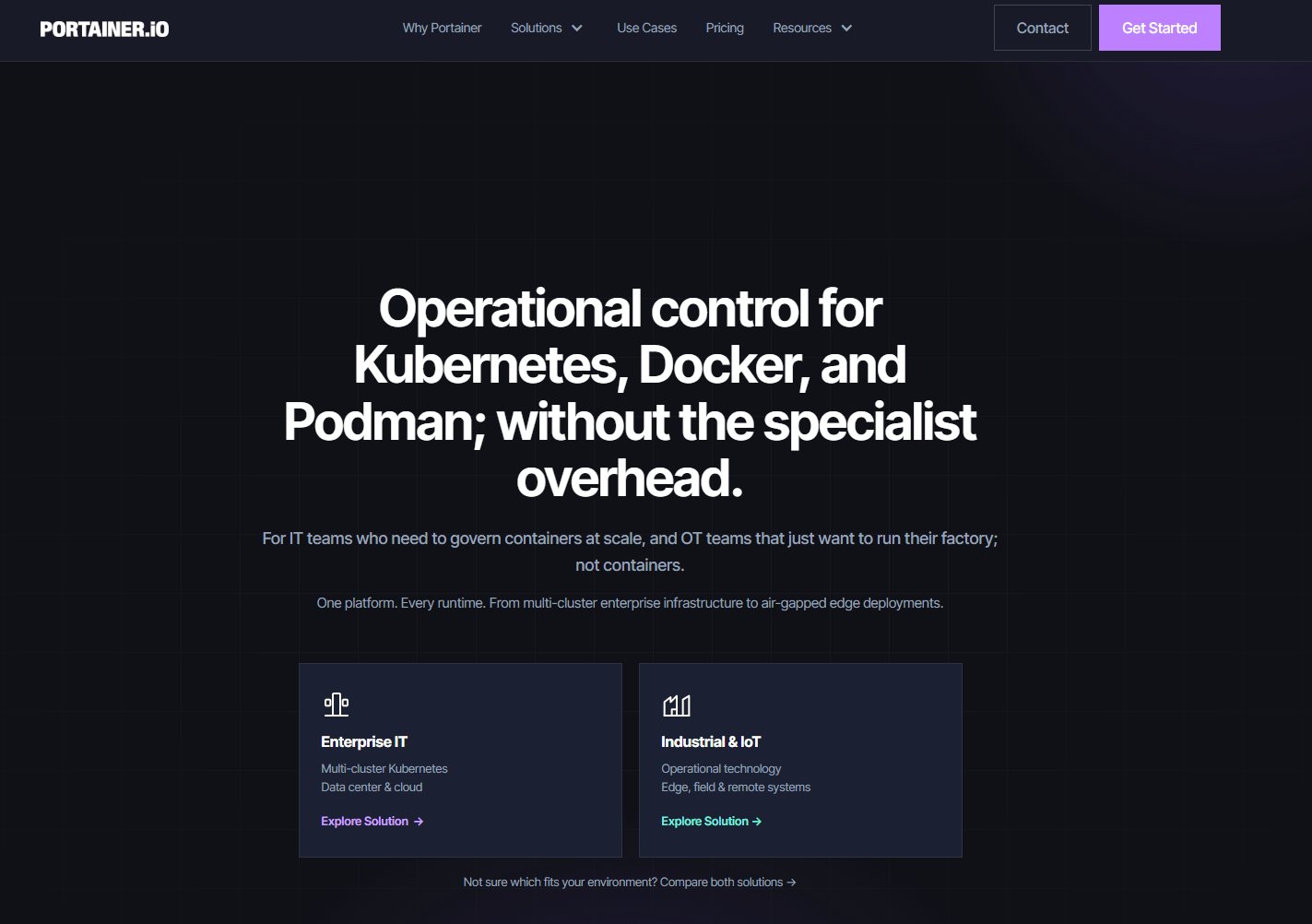
Operator control plane for Kubernetes, Docker, and Podman fleets with GitOps, RBAC, and multi-cluster governance. Designed for fast onboarding, simple UI, and centralized management across on-prem and cloud.
Best for: Teams seeking a lightweight operational layer to standardize container orchestration without building a platform from scratch.
Key Features:
- Multi-cluster management for Kubernetes and container runtimes with role based access control.
- GitOps driven app deploys and templates for consistent rollouts per product documentation.
- Support for Kubernetes, Docker, and Podman under one UI, helpful for mixed environments per third-party reviews. (G2 overview)
Why we like it: Portainer consistently shortens time to value for platform ops, especially where teams have a mix of runtimes and limited platform engineering bandwidth.
Notable Limitations:
- Reviewers note limited depth for some advanced Kubernetes features and YAML management compared to heavyweight platforms. (G2 pros and cons)
- Enterprise governance and multi-tenancy controls may require careful design, as several buyers mention in reviews. (TrustRadius reviews)
Pricing: Business pricing not publicly listed, contact Portainer for a custom quote. Community Edition is free, which is reflected on major review sites.
Enterprise Kubernetes Management Tools Comparison: Quick Overview
| Tool | Best For | Pricing Model | Highlights |
|---|---|---|---|
| SUSE Rancher Prime | Large multi-cloud fleets with strong governance needs | Annual subscription or AWS Marketplace contract | Deep multi-cluster ops, identity integration, curated app collection |
| Diamanti Kubernetes Platform | Stateful and performance-sensitive workloads needing integrated storage and networking | Custom quote via vendor or partners | Integrated data plane, DR workflows, single-pane operations |
| Portainer | Mixed Kubernetes, Docker, Podman environments seeking a light control plane | Commercial subscription, free Community Edition | Fast onboarding, GitOps templates, simple UI across orchestrators |
Enterprise Kubernetes Management Platform Comparison: Key Features at a Glance
| Tool | Multi-Cluster Governance | Identity and RBAC | App Catalog/GitOps |
|---|---|---|---|
| SUSE Rancher Prime | Yes | AD and external IdP integration | Catalog and GitOps workflows |
| Diamanti Kubernetes Platform | Yes | RBAC and LDAP/AD | Catalog and migration tooling |
| Portainer | Yes | RBAC across runtimes | GitOps and templates |
Enterprise Kubernetes Management Deployment Options
| Tool | Cloud API | On-Premise | Integration Complexity |
|---|---|---|---|
| SUSE Rancher Prime | EKS, AKS, GKE aware | Yes | Medium for first rollout, lowers with standardization |
| Diamanti Kubernetes Platform | Works with public cloud, plus HCI | Yes, HCI or software | Higher initially, simpler Day-2 for stateful apps |
| Portainer | Works across clouds and runtimes | Yes | Low to medium, quick wins for mixed estates |
Enterprise Kubernetes Management Strategic Decision Framework
| Critical Question | Why It Matters | What to Evaluate | Red Flags |
|---|---|---|---|
| How many clusters, where, and who owns them | Determines governance scope and identity model | Multi-cluster policy, projects or tenants, IdP integration | Manual cluster sprawl, no GitOps or policy bundles |
| What is your stateful workload profile | Storage and DR drive platform choice | Data plane performance, replication, backup patterns | Bolt-on storage with unclear RPO/RTO |
| How do you control cost | Overspend often comes from overprovisioning | Requests and limits policy, right-sizing workflows, chargeback | No visibility to per-namespace or per-team costs |
| How do you handle upgrades | Most incidents surface during upgrades | Version skew handling, maintenance windows, rollback plans | Mixed kubelets, undocumented drift, no rollback path |
| What support path do you need | Production MTTR hinges on expert triage | SLA terms, LTS windows, marketplace procurement | Opaque SLAs, no LTS, single channel support |
Enterprise Kubernetes Solutions Comparison: Pricing and Capabilities Overview
| Organization Size | Recommended Setup | Cost |
|---|---|---|
| SMB or BU team | Portainer Community or Business pilot, 3 to 10 nodes | Varies by subscription, infrastructure separate |
| Mid-market multi-cloud | SUSE Rancher Prime or Portainer Business across EKS, AKS, on-prem | Pricing not publicly available, contact vendor or purchase via Marketplace where available |
| Enterprise with stateful and DR needs | Diamanti software or HCI across DC and cloud | Custom, quotable via vendor or partners |
Problems & Solutions
-
Problem: Production adoption is high, but governance across many clusters lags. The CNCF 2025 Annual Survey reported that 82 percent of container users run Kubernetes in production, which magnifies the impact of policy drift and inconsistent upgrades.
- SUSE Rancher Prime: Centralizes cluster provisioning and upgrades with identity integration and a curated app catalog, which third-party coverage has highlighted since the acquisition. (TechTarget coverage)
- Diamanti: Offers a single-pane operator experience plus integrated data services that reduce orchestration friction for stateful apps.
- Portainer: Provides a light control plane across Kubernetes, Docker, and Podman, with reviewers praising ease of setup for quick standardization.
-
Problem: Overspend due to overprovisioning and weak cost visibility. A CNCF microsurvey showed nearly half of respondents spent more with Kubernetes, largely from overprovisioning. (CNCF microsurvey summary)
- SUSE Rancher Prime: Policy bundles and GitOps patterns help enforce requests and limits, while marketplace procurement can simplify spend controls.
- Diamanti: The integrated storage and network data plane is designed for high throughput, which can support consolidation of stateful workloads on fewer nodes, as discussed in independent testing.
- Portainer: GitOps templates and consistent deployment workflows reduce snowflake configurations that often lead to inflated requests, a theme echoed in user reviews.
-
Problem: Security incidents from misconfigurations. Red Hat's 2024 report found nearly nine in ten organizations had at least one container or Kubernetes security incident. (Red Hat report overview)
- SUSE Rancher Prime: Centralized RBAC, audit capabilities, and CIS alignment reduce misconfiguration risk at scale.
- Diamanti: Offers RBAC, LDAP or AD integration, and DR constructs that improve resilience for stateful services.
- Portainer: Enforces role based access and standardizes operational workflows across runtimes, which reviewers cite as a key benefit.
Final Take
Most enterprise missteps happen during upgrades and cross-cluster policy changes, not during initial installs. If you need broad multi-cloud governance with strong identity integration, SUSE Rancher Prime remains a top pick, with independent coverage continuing after SUSE's 2020 acquisition. If stateful performance and DR are central, Diamanti's integrated data plane and multi-cluster controls can pay back quickly, as storage-oriented testing has shown. If you want fast standardization for mixed estates, Portainer offers quick wins that user reviews consistently highlight. Start by mapping clusters, owners, and data patterns, then apply the decision framework above to match needs to platform strengths.