
In 2026, nearly every business depends on interconnected systems—cloud platforms, SaaS tools, employee devices, APIs, and global networks—which makes cybersecurity software a baseline requirement, not an optional add-on. As adoption of remote work, cloud infrastructure, and AI-powered tools expands, the attack surface grows with it. More users, more endpoints, and more data movement means more opportunities for cybercriminals to exploit weak configurations, stolen credentials, and unpatched software.
Cybersecurity solutions help organizations defend against threats like malware, ransomware, phishing, credential theft, misconfigured cloud access, and network intrusion. Modern security stacks often combine prevention, detection, and response capabilities—so teams can block attacks early, monitor suspicious behavior in real time, and recover quickly if an incident occurs. Many tools also support encryption, identity and access management, and disaster recovery planning, helping companies reduce risk and maintain business continuity.
1. MalwareBytes

MalwareBytes' award-winning detection, prevention, and cleanup technology can protect up to 20 of your workplace devices, Block hackers and con artists that try to take your information hostage. (In 2019, ransomware assaults on businesses increased by 365 percent), Stop resource-hogging dangers from slowing down your devices so you may work more efficiently every day.
All of your workplace devices, including Windows, Mac, Chromebook, and Android, may benefit from a single, easy-to-use cyber security software.
Key Features:
-
Malware, viruses, spyware, frauds, phishing sites, brute force RDP assaults, and ransomware are all dangers that multi-layered technology protects against in real-time.
-
Get priority phone and email help so the team can respond quickly to your needs.
-
In just minutes, you can protect your whole small business and essential data. You won't require any sophisticated IT infrastructure, and you'll be up and operating in no time.
-
Block brute force RDP assaults on Windows machines by banning IP addresses that have made more than a certain number of unsuccessful login attempts.
Cost:
Packages start at $50 per year.
2. Sparta Antivirus
Sparta Antivirus is one of the best for removing malware and repairing your computer or Mac with a single click. Sparta Antivirus offers a comprehensive set of security features to provide your complete safety. The system is built with the most cutting-edge AI technology to keep your surroundings safe from any dangers.
Keep malware, viruses, trojans, phishing websites, and other internet threats at bay. You and your loved ones will be protected to the fullest extent possible.
Key Features:
-
Your digital environment will be protected from infections caused by a variety of viruses thanks to a sophisticated anti-malware engine.
-
Checks for viruses in downloads, installations, and executables every time your computer accesses them.
-
Uses big data and AI tools to detect malware.
Cost:
You can request a quote on their website.
3. Flowmon

Flowmon is a quick, dependable, and well-secured network that is critical for every business. Flowmon is the solution to this problem, leveraging cutting-edge IP flow monitoring technologies (NetFlow, IPFIX) to provide you with the finest network visibility solution.
You can rely on Flowmon for everything you need to improve network and application speed while also preventing sophisticated cyber attacks.
Key Features:
-
Visibility of network traffic in real time to keep your network under control.
-
Operational and configuration problems are detected and diagnosed.
-
Threats, botnets, DDoS, and other dangers undetected by firewalls, IDS, and antivirus are detected in real time.
-
Troubleshooting and ticket response on time.
-
Costs of installation, operation, and administration have all been significantly reduced.
-
Enhancing the user experience while improving the performance of business applications.
Cost:
You can request a quote on their website.
4. OnDMARC

OnDMARC, by Red Sift, is an open cloud platform that makes cybersecurity available to everyone in order to protect against cyber assaults. OnDMARC makes it simple to set up and manage a secure DMARC policy. OnDMARC not only analyses complicated XML reports for you, but it also brings users to full security swiftly and sustainably, thanks to machine learning and outstanding customer service.
Customers can also install BIMI as this tool has agreements with Verified Mark Certificate (VMC) providers.
Key Features:
-
Dynamic SPF is an OnDMARC feature that allows you to have more approved services utilizing the SPF authentication technique than is typically accessible.
-
With DMARC compliance, you may improve email deliverability.
-
Increase the number of people who remember your brand.
-
Boost client satisfaction.
Cost:
Packages start at $35 per month.
5. Nmap
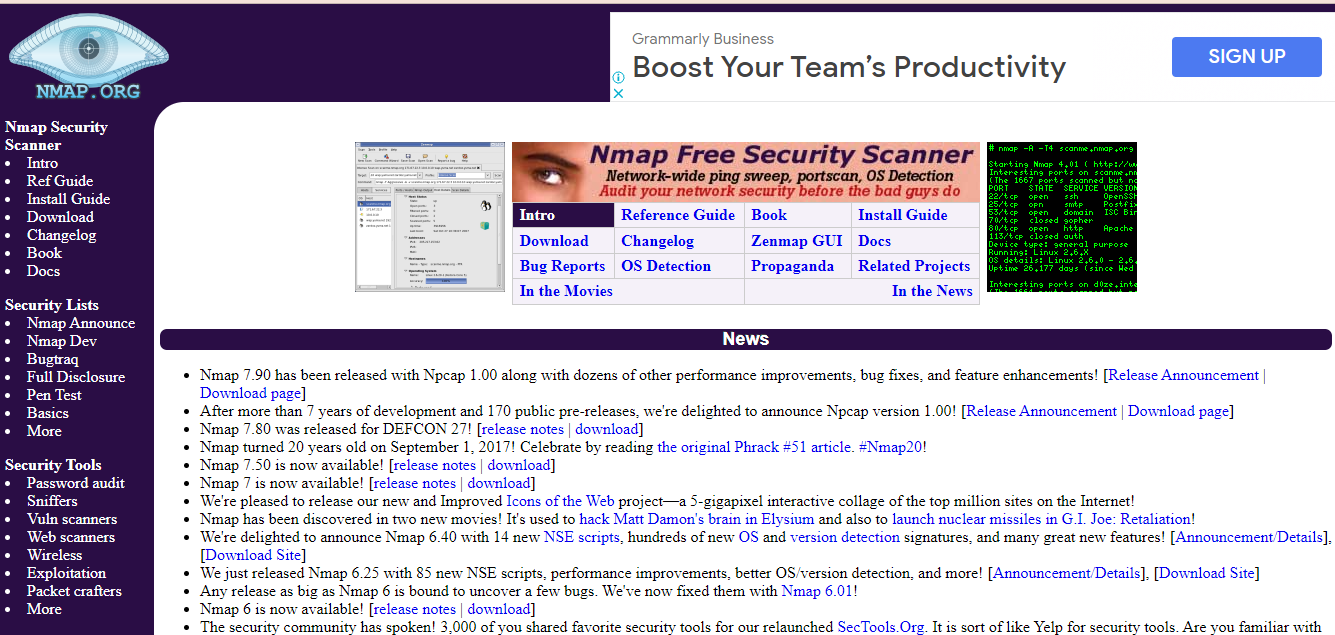
Nmap (Network Mapper) is a free and open-source cyber security software, vulnerability scanner and network discovery tool. Nmap is a network administrator's tool for identifying what devices are operating on their systems, locating available hosts and the services they provide, discovering open ports, and detecting security issues.
Key Features:
-
It features both a command-line and a graphical user interface.
-
It is cross-platform compatible.
-
It can scan large networks.
-
It supports a variety of sophisticated approaches.
Cost:
This is a free tool.
6. Cloudflare
Cloudflare's design allows you to access a comprehensive range of L3-L7 network services from a single dashboard. It's built to operate every service throughout our whole global network on every server in every data center.
This cyber security software also provides your developers with a versatile, Internet-scale platform for deploying serverless applications globally. There is no need for any software or hardware. Setup, usage, and maintenance are all simple.
Key Features:
-
Install a device-friendly agent or mobile app and enable Zero Trust services to protect your employees online.
-
Connecting your office networks and data centers directly to Cloudflare's network for ingress and/or egress to the Internet, cloud providers, and/or other offices can also help secure them.
-
Without deploying infrastructure, you may create whole new apps or enhance current ones. There's no need to pick regions, manage scaling, or pay for capacity that you don't utilize because it's based on isolation rather than a container architecture.
Cost:
Packages start at $20 per month.
7. Web.com

Web.com understands that it’s beneficial for businesses to secure your device. On a little screen, you make some of your most important decisions. Secure the devices you use every day to protect your business and the people who rely on it. You'll get everything you need to address, prevent, and analyze possible security concerns with 24/7 access to a team of world-class cyber security specialists.
Key Features:
-
App screening and security.
-
Defend your identity.
-
Threat warnings that are tailored to you.
-
Theft Avoidance.
-
Services for finding a lost device.
-
Assistance is available at all times of the day and night.
-
Expert security advice is available.
-
Browsing securely.
-
VPN client for mobile devices is built-in.
-
Updates are ongoing.
-
Product enhancements and training are available.
Cost:
You can request a quote on their website.
8. BluVector
BluVector detects sophisticated threats in real time. Artificial Intelligence, Machine Learning, and speculative code execution are used in this Network Intrusion Detection System. BluVector Cortex is a security platform powered by artificial intelligence.
This cyber security software comes with a variety of deployment choices. It may be utilized by any size company and delivers 100 percent network coverage.
Key Features:
-
BluVector helps the clients cope with the volume, velocity, and polymorphic nature of today's and tomorrow's cybersecurity threats by leveraging AI-based methods.
-
Because it was designed for analysts, it is ideal for security operations. In a single 2U appliance, Zeek (a.k.a. Bro), Suricata, supervised machine learning, speculative code execution, Yara, ClamAV, and HURI are combined at rates up to 20Gbps.
-
BluVector's modular architecture gives analysts the coverage they want while using technology they can trust.
Cost:
You can request a quote on their website.
9. Securden

Securden is a cybersecurity program that protects your computer against hacking and identity theft. It's one of the finest Internet security for Windows 10 since it allows you to control your Windows domain, local accounts, and services. You may get rid of hard-coded passwords with this program.
Key Features:
-
Ensure context-aware, just-in-time access.
-
Jump boxes provide secure remote access.
-
Multi-factor authentication should be enforced.
-
Admin permissions should be removed to avoid infection.
-
Filter instructions, control applications
-
On-the-fly, gain just enough access.
Cost:
You can request a quote on their website.
10. BhaiFi

BhaiFi is a software-based networking platform that automatically secures, manages, monitors, and visualizes your network. It keeps you secure from cyberattacks, downtimes, and calamities while also ensuring full DoT compliance. BhaiFi is easy to use and doesn't require any additional technical expertise to run, relying on Machine Learning and Artificial Intelligence to handle the difficult tasks. It is scalable, cost-effective, and interacts with your other applications because it is software-based.
Key Features:
-
Defend yourself against the newest cyber-attacks such as ransomware, malware, DDOS, and more.
-
Reduce operating expenses and increase team efficiency by managing from anywhere, at any time.
-
To avoid income and productivity loss, identify issues before they occur.
-
Understanding complicated network patterns and user behavior can help you make better judgments.
Cost:
You can request a quote on their website.
11. Norton

Norton 360 with LifeLock is an all-in-one solution from Norton. Antivirus, Virus Removal, Malware Protection, Cloud Backup, Password Manager, and Secure VPN are among the cybersecurity software solutions offered by the firm. For PCs, smartphones, and tablets, Norton Security Solution is available. It offers a number of services, including antivirus, password manager, and VPN.
Key Features:
-
Device security with antivirus to help stop hackers, Secure VPN to keep your online activities private, Password Manager, and more are all included in this all-in-one protection package.
-
Hackers can't see what you're doing online if you're using public or even home Wi-Fi, thanks to Norton Secure VPN.
-
For your gadgets, game accounts, and digital assets, there are many layers of security.
Cost:
Packages start at $6 per month.
12. SaltStack

SaltStack is simple to set up in virtualized, hybrid, and public cloud settings.
To supply and configure systems and applications wherever in your environment, you can even create simple, human-readable infrastructure-as-code. With abstracted management for Linux, Windows, MacOS, and Unix, you can configure and control all of your operating systems using SaltStack. You can enforce the intended condition throughout your whole IT infrastructure.
Key Features:
-
Automate repetitive setup procedures to free up precious human resources for higher-value projects.
-
Immediately implement change at a huge scale throughout your whole IT infrastructure.
-
Build secure, compliant systems with CIS-certified content to swiftly detect and resolve problems.
Cost:
You can request a quote on their website.
13. Webroot
Webroot is an anti-virus and malware protection with multi-vector protection against Trojans, keyloggers, phishing, spyware, backdoors, rootkits, zero-day threats, and advanced persistent threats. When utilizing the Internet, the built-in Identity & Privacy Shield prevents data from being stolen or taken, and the outbound firewall prevents viruses from stealing data. Cloud-based security eliminates the need to worry about or execute updates, ensuring that endpoints are always up to current.
Key Features:
-
Webroot safeguards your usernames, account numbers, and other personal data against keyloggers, malware, and other online dangers that target sensitive information.
-
Webroot's award-winning customer care is completely in-house, and it provides industry-leading support and product help.
-
Scans by Webroot take around 20 seconds. This is up to 60 times quicker than rival solutions while providing greater security. Your internet security is also constantly up to date thanks to cloud-based upgrades.
Cost:
Packages start at $20 per year.
14. GnuPG
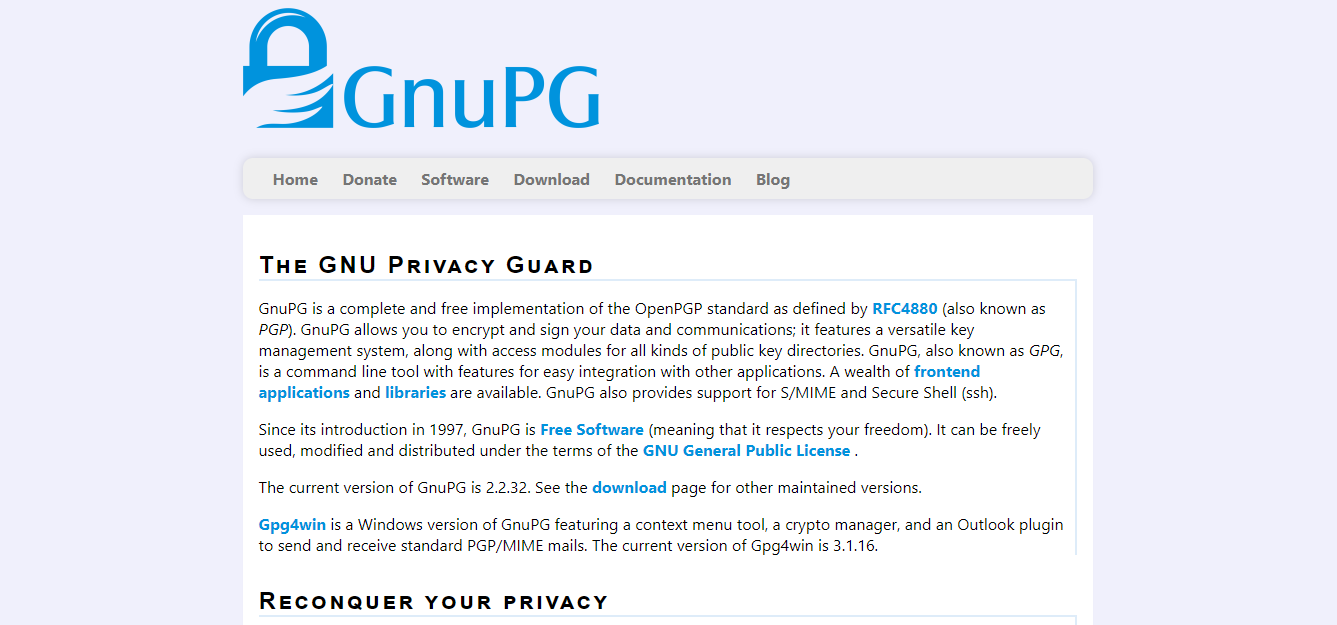
GnuPG is a free and full implementation of the RFC4880-defined OpenPGP standard (also known as PGP). GnuPG encrypts and signs your data and conversations and includes a flexible key management system as well as access modules for a variety of public key directories. GnuPG, sometimes known as GPG, is a command-line utility with features that make it simple to integrate with other programs. There are several frontend programs and libraries to choose from. S/MIME and Secure Shell are also supported by GnuPG (ssh).
Key Features:
-
Key management solution with a lot of flexibility.
-
It provides modules for accessing various kinds of public key directories.
-
It's simple to connect to other systems.
-
GnuPG supports both S/MIME and Secure Shell.
Cost:
This is a free tool.
15. Burp Suite

Burp Suite is a bundle of online application security, testing, and scanning applications. It is one of the greatest network security software available, allowing you to select from a variety of techniques to find the most recent vulnerabilities.
Key Features:
-
The agent-led scanning methodology allows you to schedule scans across your entire portfolio on an as-needed basis. You can simplify monitoring, measurement, and security with powerful, straightforward reporting and simple integration.
-
The safety net of automatic scanning and dashboards helps you to keep your portfolio under control, allowing you more time to invest where it is most needed.
-
Every commit you make is scanned directly from your CI/CD workflow. Scanning for major vulnerabilities, bug remediation, and a complete DevSecOps strategy are all possibilities.
-
Scanning should be tailored to the needs of the customer, and continuing training and development with built-in remediation should be provided.
Cost:
You can request a quote on their website.
16. Prophaze

Prophaze Cloud WAF defends businesses against hostile hackers attempting to get into and steal data from Web applications, mobile app gateways, and APIs. Using its Adaptive Profiling and Behavioral-based machine learning algorithms, Prophaze WAF only protects online and mobile APIs from security breaches, unlike traditional firewalls.
The cyber security software is based on the Kubernetes Platform and protects clients' Kubernetes clusters and cloud infrastructure from a variety of threats.
Key Features:
-
Securing your Kubernetes cluster-deployed APIs.
-
AWS, Azure, GCP, Digital Ocean, Oracle, and IBM Cloud are all supported.
-
To protect your online apps, use Prophaze SaaS Cloud.
-
Behavioral-based detection prevents targeted DDoS attacks on your web apps and APIs.
-
Backend APIs, Web Apps, Serverless, and Service Meshes all have improved security.
Cost:
You can calculate pricing as per your requirements on their website.
17. Wireshark
Wireshark is one of the most popular network protocol analyzers in the world. It is the de facto (and frequently de jure) standard across many commercial and non-profit organizations, government agencies, and educational institutions because it allows you to observe what's going on on your network at a microscopic level.
Wireshark development flourishes owing to voluntary contributions from networking specialists all across the world and is a continuation of Gerald Combs' 1998 initiative.
Key Features:
-
Hundreds of protocols have been thoroughly examined, with more being added all the time.
-
Capture in real time and analyze later.
-
Packet browser with three panes.
-
Multi-platform: It works on Windows, Linux, macOS, Solaris, FreeBSD, NetBSD, and a variety of other operating systems.
-
A GUI or the TTY-mode TShark program may be used to view captured network data.
-
The industry's most powerful display filters.
Cost:
This tool is available for free.
18. Datplan
Datplan's cybersecurity and fraud detection software work in tandem with current malware products to provide optimal protection against internal and external threats. Cyber Control offers the following advantages since it was designed with a broad breadth of security in mind:
Datplan cyber security software allows for the fast deployment of a cyber risk management template and framework, as well as a pre-populated project plan.
Key Features:
-
The project plan contains over 100 cybersecurity protection elements, allowing businesses to implement a comprehensive cybersecurity strategy.
-
The file and system security module examines access control, which assists GDPR compliance by ensuring data privacy.
-
Because every sort of financial crime leaves a trail of transactions, the fraud detection suite identifies high-risk activities.
Cost:
Licenses start at $32.
19. TotalAV Antivirus

TotalAV Antivirus is a free cyber-security software product that provides comprehensive protection for all of your home devices in a single, easy-to-use desktop and smartphone application. It protects against ransomware, malware, spyware, and adware in real-time.
Key Features:
-
Remote Firewall allows you to access your devices from anywhere in the world.
-
Provides an extremely safe password vault.
-
Ad Block Pro is a feature that allows you to block advertisements.
-
Safe Browsing with a VPN is enabled.
-
Improves battery life by reducing background processes, optimizing startup time, and removing garbage files.
Cost:
This is a free tool.
20. Security Event Manager

Security Event Manager, by Solar Winds, is a program that aids with the security of your computer. This program can detect threats, monitor security policies, and protect your network automatically. With a lightweight, ready-to-use, and economical security information and event management system, you can improve your security posture and swiftly show compliance.
Key Features:
-
Log collecting and normalization in one location.
-
Threat detection and response that is automated.
-
Tools for reporting on compliance that is integrated.
-
The dashboard and user interface are simple to use.
-
File integrity monitoring is built-in.
-
Licensing is simple and inexpensive.
Cost:
You can request a quote on their website.
21. Snort
Snort is the world's most popular Open Source Intrusion Prevention System (IPS). Snort IPS employs a set of rules to help identify harmful network behavior and then employs those rules to locate packets that fit those criteria, generating warnings for users.
This cyber security software can also be used inline to block these packets. Snort may be used in three ways: as a packet sniffer similar to tcpdump, as a packet logger for network traffic debugging, or as a full-fledged network intrusion prevention system. Snort is available for download and configuration for both personal and corporate use.
Key Features:
-
Analysis of packets in real time.
-
monitoring of packets
-
It's a free and open platform.
Cost:
This is a free tool.
22. VaultCore
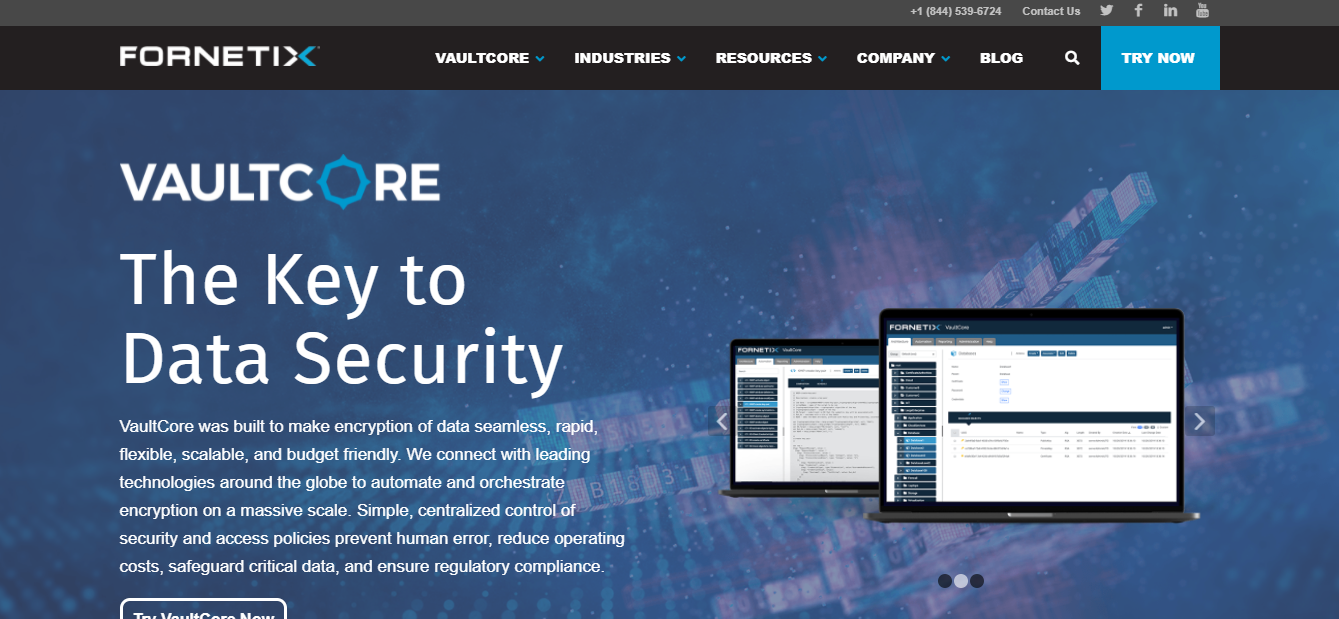
VaultCore was created to make data encryption simple, fast, versatile, scalable, and cost-effective. To automate and orchestrate encryption on a vast scale, we integrate with top technologies all around the world. Simple, centralized security and access policy management eliminates human error, lowers operational expenses, protects important data, and ensures regulatory compliance.
Key Features:
-
By automating challenging essential lifecycle operations, you can eliminate human mistakes and decrease the impact of data breaches.
-
VaultCore offers a one-of-a-kind blend of attribute- and role-based access restrictions.
-
Patented tools arrange the company into a hierarchical structure that assures security compliance.
-
For large-scale, worldwide settings, VaultCore supports over a hundred million keys.
-
Organizational policies should be enforced and mandated when it comes to the key rotation of important systems.
Cost:
You can request a quote on their website.
23. Acunetix

Acunetix by Invicti is a simple and easy-to-use cyber security software that helps small and medium-sized businesses protect their online applications against costly data breaches. It accomplishes this by identifying a wide range of online security concerns and assisting security and development experts in resolving them quickly.
Key Features:
-
With the world's most accurate vulnerability scanner, you can find your security issues.
-
Run quick scans that expose vulnerabilities as soon as they're discovered.
-
At the same time, scan several surroundings.
-
Blended DAST + IAST scanning provides more comprehensive coverage.
Cost:
You can request a quote on their website.
24. CIS

CIS is an acronym for the Center for Internet Security. It offers several cybersecurity-related technologies, services, and memberships. It offers CIS SecureSuite for commercial use. CIS has strategies in place to protect your company, certain platforms, and specific threats. Product sellers, IT consultants, and hosting, cloud, and managed service providers can all join.
Key Features:
-
By scanning against a target system's configuration settings and reporting the system's conformity to the associated CIS Benchmark, CIS-CAT Pro Assessor saves you hours of configuration review.
-
Take advantage of our skilled cybersecurity team and CIS-CAT Pro developers' email and discussion forum support services.
-
Pro Dashboard reads assessment results and displays system(s) compliance with CIS Benchmarks over time.
Cost:
Packages start at $15000 per year.
25. Exein

Exein core use neural networks to learn a device's anticipated behavior and then utilizes that knowledge to continually monitor its operation and safeguard it from known and unknown cyber-threats. Exein core is capable of identifying suspicious actions on the spot and stopping them before they can cause any damage by continuously monitoring the device's firmware-level behavior.
Key Features:
-
Exein Core employs eBPF capabilities in the IoT security area and incorporates cutting-edge technologies like Rust, a memory-safe programming language.
-
Exein Core can safeguard any device locally using AI on the Edge while preserving the privacy and security of the device's data and working even in the absence of connection.
-
Exein core uses machine learning to profile a device's anticipated behavior and uses this knowledge to continually monitor its operation and defend it from known and undiscovered cyber-threats.
Cost:
This is a free tool.
26. TotalAV Antivirus
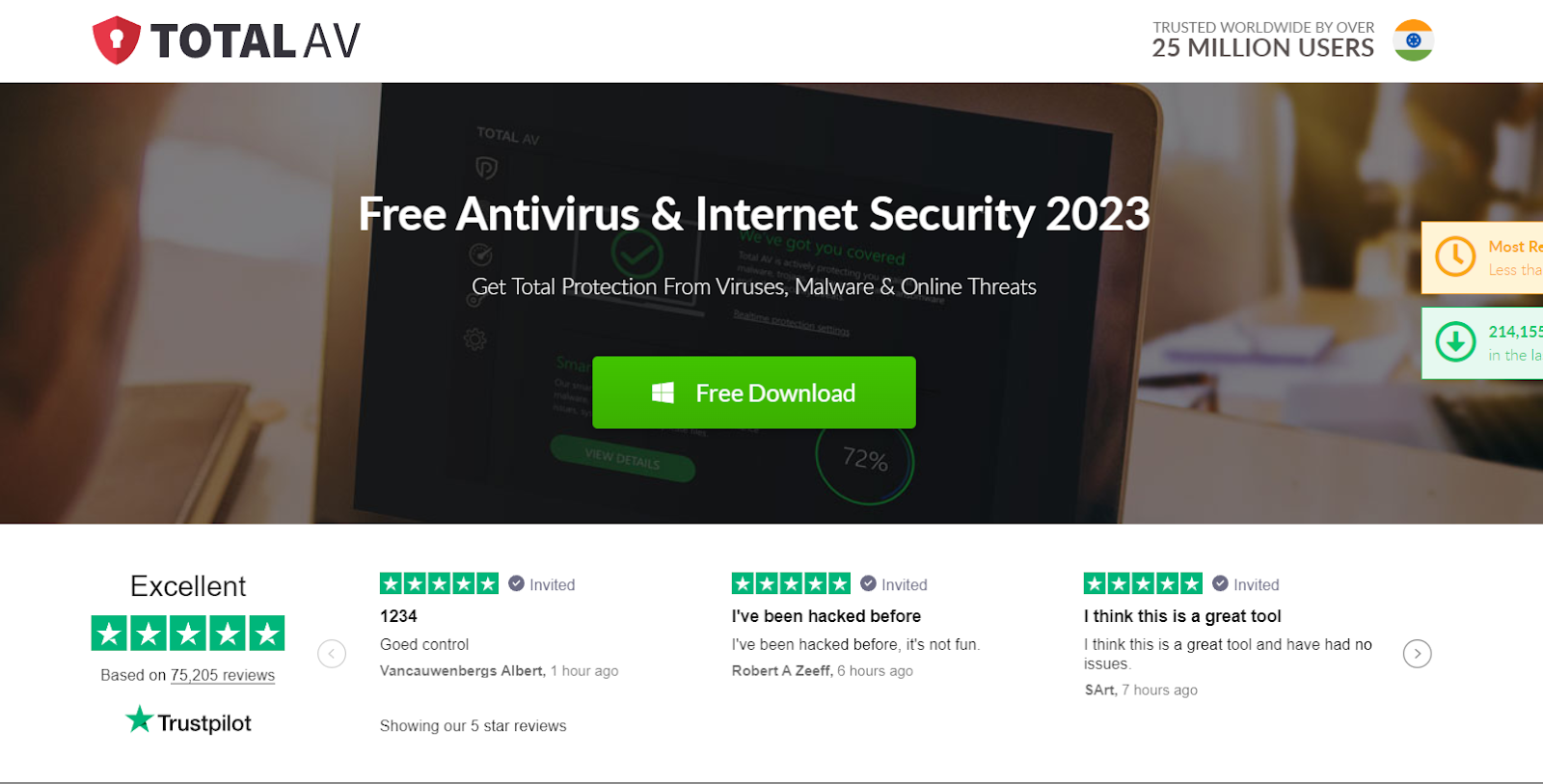
TotalAV Antivirus is a free piece of cybersecurity software that provides total protection for all your home's electronic devices in a user-friendly desktop and mobile application. It provides real-time malware, spyware, adware, and ransomware prevention.
Key Features:
-
Your gadgets can be accessed thanks to a remote firewall remotely.
-
Provides a highly safe Password Vault.
-
Pro Ad Block Feature.
-
Boosts battery life, optimizes startup time, removes garbage files, and minimizes background processes.
-
Characteristics like enhanced threat defense for security.
-
Interacts seamlessly with the browser.
-
A network security offering
Cost:
TotalAV Antivirus package starts at $29 for the first year.
Things To Consider When Choosing A Cyber Security Software Tool
Performance
When a consumer is the victim of an outbreak or a targeted assault, it's your reputation on the line, regardless of which provider you choose. So, how can you forecast the real-world outcomes that will decide your MSP's success? Don't be fooled by the marketing; independent testing will provide you with an impartial ranking of the year's best successful cybersecurity firms.
But here's the thing: a single test doesn't tell you much. To observe which organization constantly comes to the top, look at the total number of exams taken and the number of top finishers. If a corporation avoids independent tests to disguise its flaws, it's a negative indicator. The greatest service providers are eager to be put to the test.
Customer Support
Technical difficulties are unavoidable. And you need a security service who will be there for you if something happens that demands immediate attention. You risk hacks, financial losses, and reputational harm if they're sluggish to respond or lack technical or interpersonal abilities.
Begin by looking for local assistance that is available 24 hours a day, seven days a week. Also, conduct some research to understand more about their services and reputation. Is there any industry recognition for them?
Multifaceted Solutions
Limiting the ways you can halt threats may be referred to as "specialization" by start-ups, but it may be downright harmful. Look for a service that provides far more than antimalware protection. Cybercriminals attack firms from many sides, from ransomware to phishing to advanced persistent threats (APTs). Customers require comprehensive security for their physical, mobile, and virtual environments.
In the long term, the correct cybersecurity service may save you time and effort. A complex solution from a single vendor is easier to handle than a patchwork of options.
Conclusion
Cybersecurity in 2026 is about resilience as much as protection. The best security tools don’t just stop threats—they help organizations detect issues faster, respond smarter, reduce downtime, and prevent repeat incidents. Because threats evolve constantly, choosing cybersecurity software should be based on practical needs: your infrastructure (cloud/on-prem), number of endpoints, compliance requirements, internal expertise, and how quickly you need detection and response.
A strong approach is to prioritize tools that offer layered defense (endpoint + email + network + application security), clear reporting, reliable support, and integrations with your existing stack. Instead of relying on a single solution, many businesses achieve the best outcomes by combining complementary tools—such as endpoint protection, network visibility, vulnerability scanning, and SIEM or alerting workflows.
Ultimately, the “best” cybersecurity tool is the one that fits your environment, reduces operational burden, and consistently helps your team stay ahead of real-world threats.
FAQs
What Is Cyber Security?
The protection of computer systems and networks from information disclosure, theft of or damage to their hardware, software, or electronic data, as well as disruption or misdirection of the services they provide, is known as computer security, cybersecurity, or information technology security (IT security).
Due to the growing reliance on computer systems, the Internet, and wireless network standards such as Bluetooth and Wi-Fi, as well as the growth of "smart" devices such as smartphones, televisions, and the various devices that make up the "Internet of things," the field is becoming increasingly important. Due to its complexity, both in terms of political use and technology, cybersecurity is one of the most critical concerns in the modern world.
What Are Cyber Security Software Tools?
Any computer application meant to impact information security is known as computer security software or cybersecurity software. Due to their extensive overlap and the cliché that the greatest defense is a strong offense, this is generally understood in the context of defending computer systems or data, but it can also include programs built particularly for undermining computer systems.
Computer security is the protection of computers against infiltration and unlawful use of resources. Similarly, network security refers to the protection of computer networks.
When Should You Consider Using Cyber Security Software Tools?
Cybersecurity is critical because it safeguards all types of data against theft and loss. Sensitive data, personally identifiable information (PII), protected health information (PHI), personal information, intellectual property, data, and governmental and industry information systems all fall under this category.
Your company will be unable to protect itself against data breach operations without a cybersecurity program, making it an easy target for thieves.
Global connection and the use of cloud services like Amazon Web Services to store sensitive data and personal information are raising both inherent and residual risks. Because of widespread inadequate cloud service configuration and more adept hackers, your organization is at danger of being hacked.
Why Is Cyber Security Important?
Because government, military, business, financial, and medical institutions acquire, analyze, and store massive quantities of data on computers and other devices, cyber security is critical. Unauthorized access or exposure to that data can prove to be fatal for a company’s health. In the course of doing business, companies send sensitive data over networks and to other devices, and cyber security refers to the discipline committed to safeguarding that data and the systems that handle or store it.
Companies and organizations, particularly those responsible for preserving information linked to national security, health, or financial records, must take efforts to secure their sensitive business and people information as the volume and complexity of cyber assaults grows. The nation's senior intelligence officers warned as early as March 2013 that cyber assaults and digital surveillance pose the greatest threat to national security, surpassing even terrorism.
Why Is Cybercrime On The Rise?
The theft of personal information is the most costly and fastest-growing type of cybercrime. The increased availability of identification information to the web via cloud services is driving this trend.
But it isn't the only one. Power grids and other infrastructure can be damaged or destroyed if industrial controls are disturbed or destroyed. Cyber assaults may also try to damage data integrity (delete or modify data) in order to instill distrust in an organization or government.
Cybercriminals are growing more sophisticated, shifting their targets, impacting enterprises, and attacking tactics for various security systems. Social engineering is still the most common type of cyber assault, followed by ransomware, phishing, and malware.
What benefits does cybersecurity offer?
These are the advantages of cyber security:
-
It defends the company from phishing, malware, ransomware, and social engineering.
-
End users are secured by this network security tool.
-
It offers effective network and data protection.
-
After a breach, extend the time for recovery.
-
Unauthorized users are prevented via cybersecurity.
How is cyber security implemented?
A cybersecurity system is protected by several layers that cover devices, computers, applications, and networks. It assists you in safeguarding your network, digital and physical data, and password.
