


You can buy an encrypted mailbox and still miss what the untrusted signup needs. Proton's product is a vault: zero-access packaging, aliases that land in the same inbox, mail you mean to keep. The form you do not trust needs the opposite, a throwaway inbox, not an encrypted mailbox. The confirmation link should die, so it never sits next to payroll.
What you actually need is a live inbox long enough for the code, a domain the site has not already blocked, and a model you can explain (session vs anyone-with-the-address). Guerrilla Mail, Temp Mail, Mailinator, and 10 Minute Mail still do that work in 2026. Mohmal clones, parked Vanish Mail URLs, and an encrypted mailbox do not belong on this four-name shortlist.
First-party product pages, public prices, and community threads. The method is on How we review tools.
Can I just alias the untrusted signup into Proton?
An alias still forwards into the mailbox you want to keep. The site has a path to you. A disposable inbox does not. If the problem is junk after the fact, that is email anti-spam tools. If the problem is the signup you will not open again, stay on this page.
Guerrilla Mail
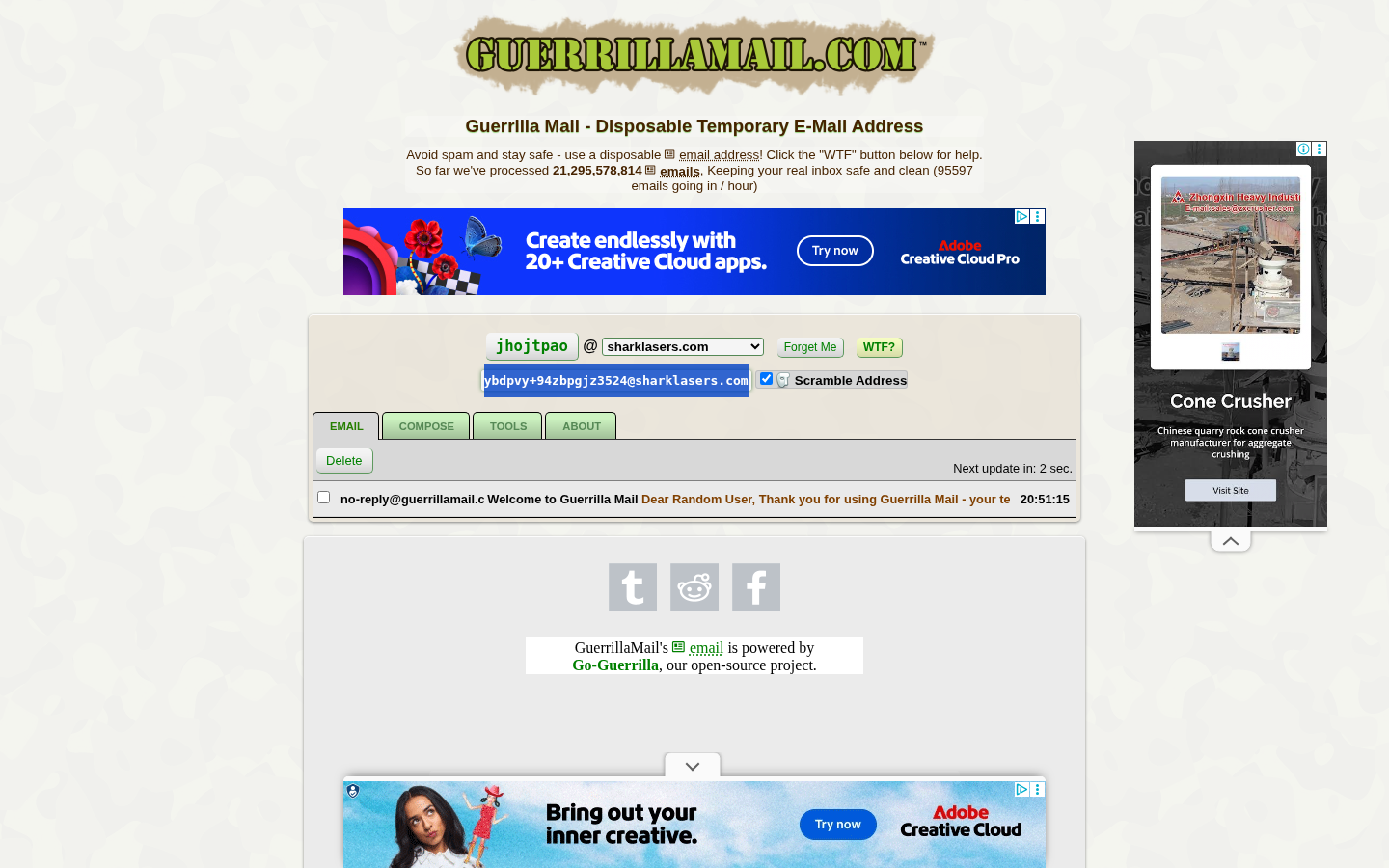
Guerrilla Mail is the 2006 throwaway that still lets you send. Jamit Software Limited still runs it (copyright 2006-2026 on the footer). The first-party page mints an address on domains such as sharklasers.com, grr.la, and guerrillamail.com, and it still ships a Scramble Address control and a Compose path. Go-Guerrilla, their open-source MTA, is the stack they name. The footer counter they print is past 21 billion processed messages.
Own-domain hosting is the paid line: email to a domain you already own, readable only by you (or by everyone, if you choose). The first-party page prints that annual fee in USD, Bitcoin or PayPal.
Best for: One-off signups where you might need to reply from the throwaway, and anyone pointing a cheap domain at a disposable inbox instead of minting a real mailbox.
Key Features:
- Instant address, no account. Compose sits on the same product as the inbox.
- Several first-party domains, plus Scramble Address.
- Own-domain option on the first-party page, billed yearly.
- Public API linked from the footer. Go-Guerrilla is the named MTA.
Why we like it: Most disposable products are receive-only on purpose, because outbound is how spam farms get born. Guerrilla still ships Compose. That is the rare feature, and it is also the risk you accept when a site lets a sharklasers.com sender through.
Notable Limitations:
- The first-party domains are ancient and widely blocked. Have a second name ready.
- No login. Treat the address as guessable until they print a privacy model.
- The first-party page does not print how long a message stays. Public writeups clock it at an hour. That window is the one we could not confirm on the vendor page.
Pricing: Free to receive and send from the minted address. Own domain $9.99 per year on the first-party page. No AWS listing.
The site rejected sharklasers.com. Now what?
Rotate the domain inside the same tool (Guerrilla's dropdown, Temp Mail's change-address, 10 Minute Mail's next mint). If every public disposable domain is blocked, that site does not want a throwaway. Use a forwarding alias, or skip the signup.
Temp Mail
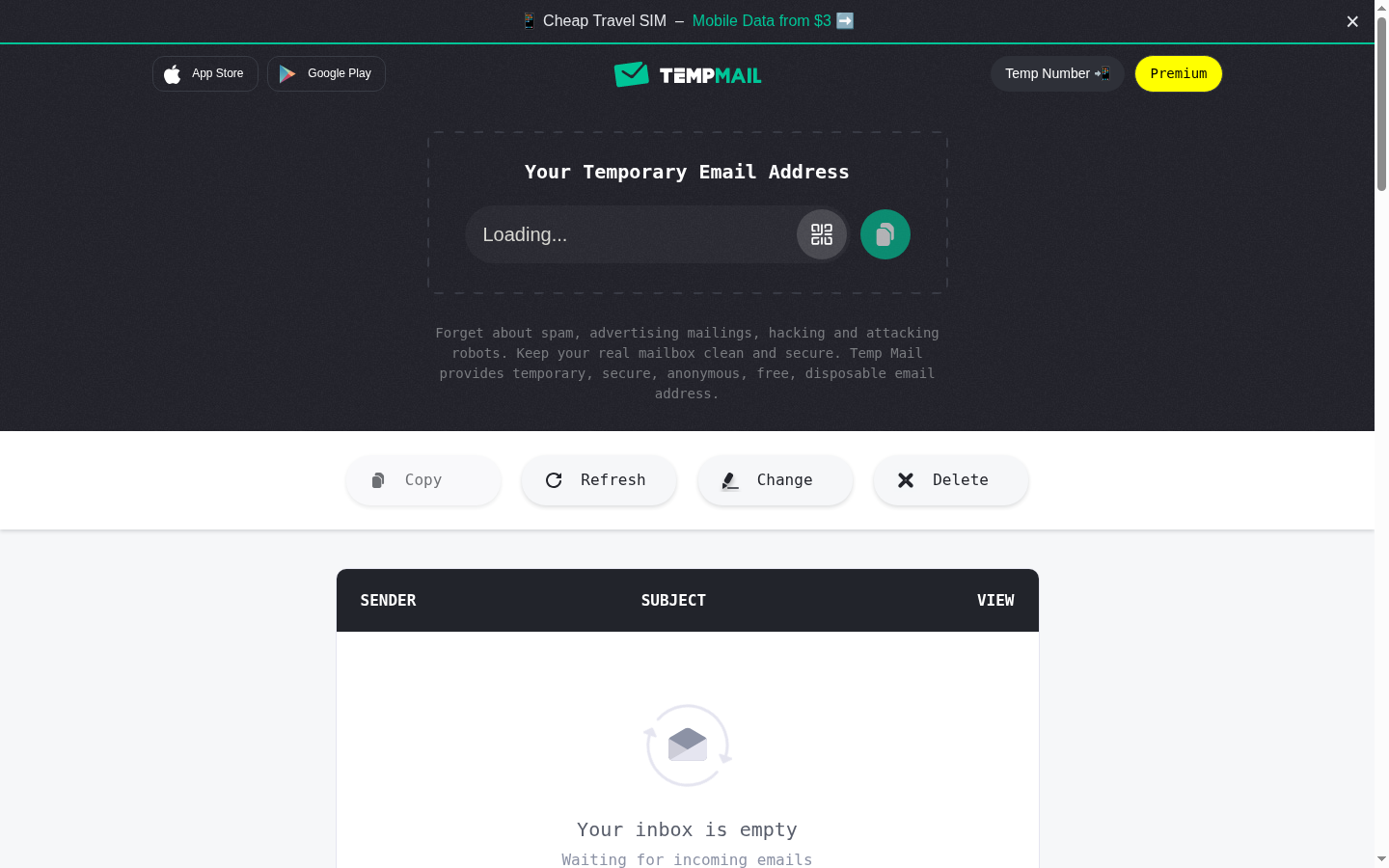
Temp Mail is the consumer throwaway: web inbox, iOS and Android apps, Chrome and Firefox extensions, a Premium path on the first-party page, and a Temp Number upsell next to it. The address is session-based. The free web UI is receive-only.
Web Premium dollars are not on a pricing page. They sit on the terms of service, billed through Paddle, desktop web only. The same terms say that web Premium does not follow you onto the mobile apps. App Store listings print a different store ladder. Confirm Paddle at checkout for web, the store for the app.
Best for: People who want a throwaway on the phone as well as the laptop, and who will pay for extra domains when sharklasers-class names start getting rejected.
Key Features:
- Instant web inbox, QR copy, change-address control.
- iOS, Android, and browser extensions from the same brand.
- Web Premium: extra domains, up to ten addresses, longer storage, ads off, per the terms.
- Public API exists behind a paid/RapidAPI path. The terms are the price list.
Why we like it: It is the one disposable product here that behaves like a consumer app instead of a 2006 form. If the signup happens on a phone, this is the shortlist name that admits that.
Notable Limitations:
- Free web is ad-supported. That is the business model.
- Web Premium and app Premium are different checkouts. Do not assume one receipt covers both.
- Receive-only. If you need to send, that is Guerrilla.
Pricing: Free web inbox. Web Premium $10/month or $60/year on the terms of service. App prices are store-set and vary by country. Confirm them in Paddle or the store. A marketing grid is not there.
Mailinator
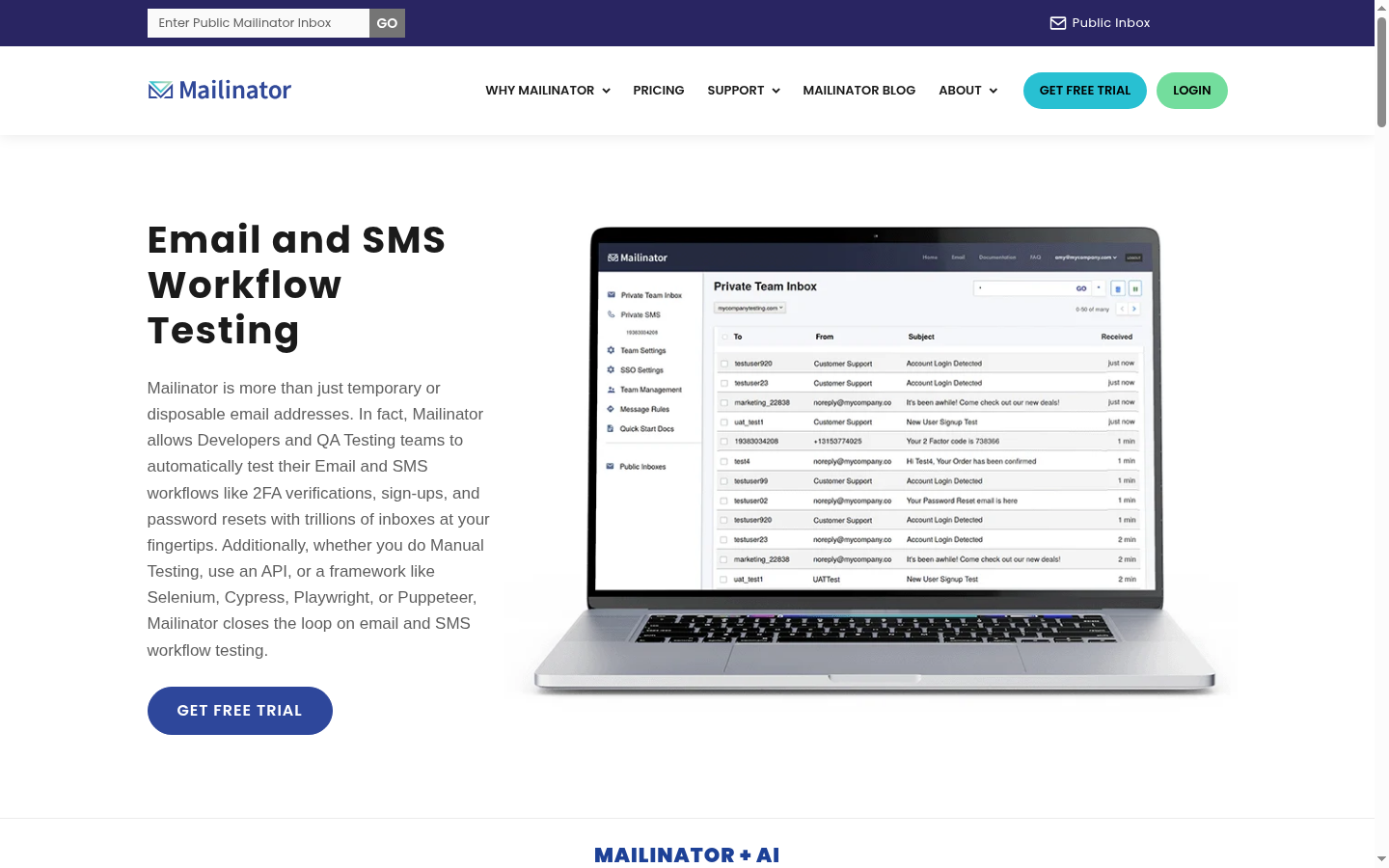
Mailinator is a public test fixture, not a private address. Type any mailbox @mailinator.com and you can read it. So can anyone else who types the same name. That is the free product, and it is still on the first-party page in 2026. The paid product is private domains plus an API for QA: OTP, password reset, and signup mail in Cypress, Playwright, or Selenium. The company still ships blog posts on that workflow (OTP in automated tests, 14 August 2026).
Mailinator is on this shortlist because the free public inbox is a disposable address, and because teams outgrow public inboxes the moment a real OTP is in the message. For personal privacy it is not a peer of Guerrilla or 10 Minute Mail. Say so up front.
Best for: QA and developers who need a private testing domain and an API, and who will not put a real user's secrets in a public inbox.
Key Features:
- Free public inboxes at any @mailinator.com address. No signup.
- Paid private domains, team seats, webhooks, routing rules, SMS as an add-on.
- API for automated OTP and signup tests. Recent docs cover Cypress and Playwright.
- US-operated. Annual billing is the cheaper path versus month-to-month, per the first-party plans page.
Why we like it: It is honest about being a routing system for test mail. The first-party lead is "Email and SMS Workflow Testing," which is a QA pitch rather than a privacy promise. Teams that try to run CI against a public disposable domain learn why the paid domain exists: blocklists and collisions.
Notable Limitations:
- Free inboxes are public. Never put a password reset you care about in one.
- @mailinator.com is on every disposable blocklist. Paid private domains are the workaround.
- SMS numbers are extra, by request.
Pricing: Public $0. Business $79/month billed yearly. Business Plus $159/month billed yearly. Enterprise from $699, custom. The first-party page prints those monthly figures. The annual pricing page is the one that says billed yearly. Prefer that page, then the checkout line.
If anyone can open the free inbox, why is it on a privacy shortlist?
It isn't, for privacy. It is here because people still paste @mailinator.com into signups, and because the paid SKU is how QA teams stop doing that in CI. Use Guerrilla, Temp Mail, or 10 Minute Mail when the secret is yours. Use Mailinator when the message is a test fixture.
10 Minute Mail
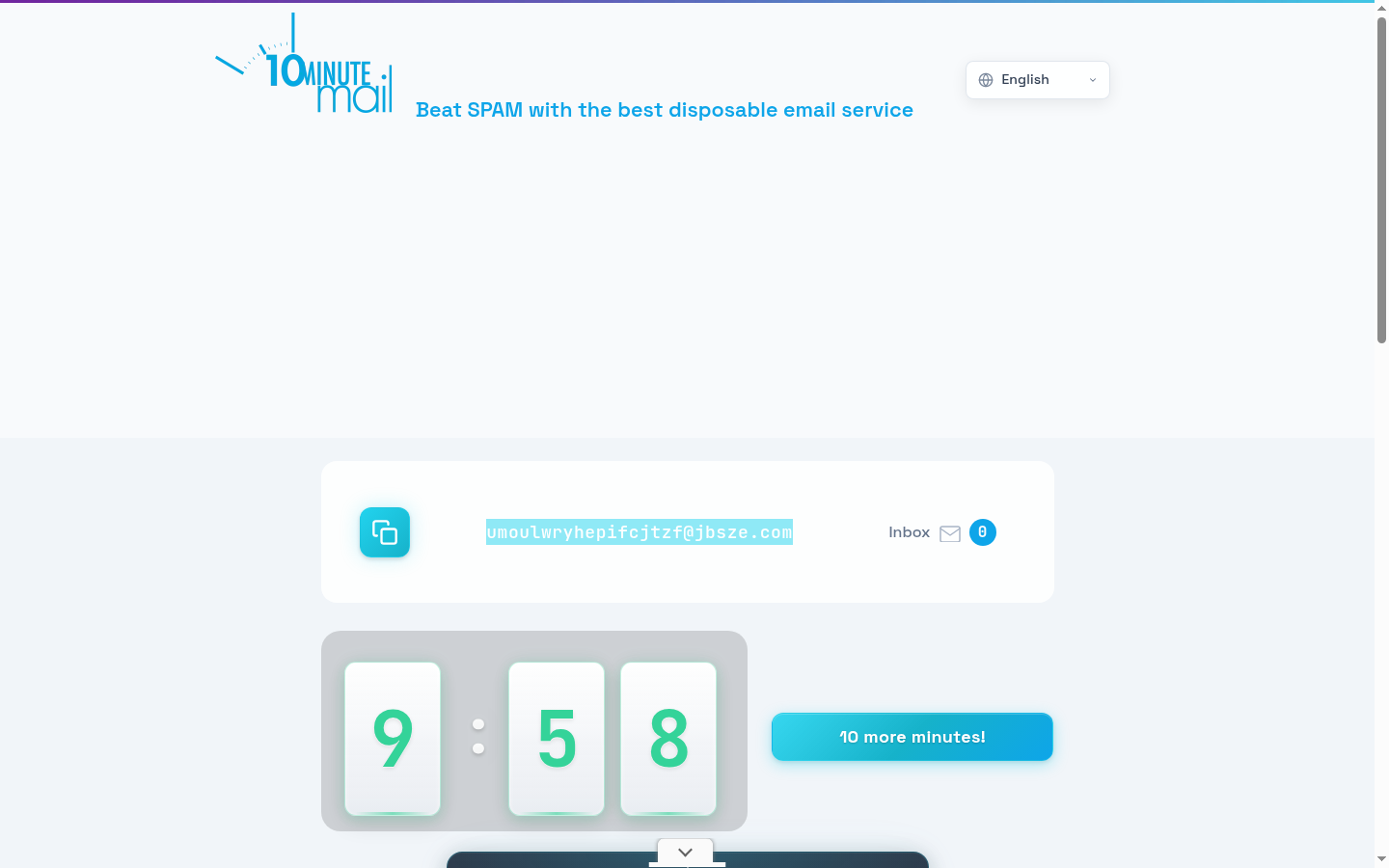
10 Minute Mail is the original clock. Devon Hillard launched it in November 2006. The first-party page still does one thing: mint an address, show a countdown, and offer a ten-minute extend control. It mints a rotating domain rather than a forever 10minutemail.com address. Always free. No Premium button.
An older version of this URL pointed "10minutemail" at a Temp Mail branded path. Those are different products. This shortlist uses the first-party 10minutemail.com site.
Best for: A download, a one-time code, or a wall you will never visit again, when you want the shortest honest lifetime on the page.
Key Features:
- Address on load. No account.
- Visible countdown. Extend in ten-minute steps from the same screen.
- Rotating domains so a single blocklist hit does not kill the service.
- No paid SKU on the first-party site.
Why we like it: The product is the timer. You do not have to infer retention from a blog. If the code arrives in four minutes, you are done. If it arrives after the window, the page's extend control is the only recovery.
Notable Limitations:
- Ten minutes is short for a delayed welcome mail. Extend, or pick Guerrilla / Temp Mail.
- No outbound send, no API, no apps on the first-party page.
- Domains rotate. Do not bookmark last week's address and expect it to work.
Pricing: Free. No first-party paid plan.
Can I recover the account in six months?
No. If you need the login later, this is the wrong product. Use a real mailbox, or an alias you control, plus a password manager. Disposable is for the PDF behind a wall, the trial you will cancel, the comment form you do not trust.
Other disposable email tools worth considering
Wrong job. Proton Mail is an encrypted mailbox. Aliases inside it still land in the vault. That buy lives on email encryption tools. SimpleLogin, Firefox Relay, Addy, and Apple Hide My Email are forwarding aliases, a different product: they hide the real address and keep the mail. Proton VPN is the same company's session privacy, still not a throwaway inbox.
Alive, same clock. Mohmal, Maildrop, YOPmail, and EmailOnDeck still resolve. They duplicate a timer, a public inbox, or an ad-supported session already covered above. Mail.tm is an API backend other frontends wrap. None of them change the four-name buy.
Dead or parked. The old Vanish Mail listing pointed at a Cutestat stats page instead of a product. MailCatch is not a 2026 shortlist name. Do not start from those URLs.
Bottom line on disposable email tools
Match the clock to the confirmation. Ten minutes and a visible timer: 10 Minute Mail. An hour-class inbox that can send, or a domain you already own: Guerrilla Mail. A phone app and a Premium domain ladder: Temp Mail. A public fixture or a QA private domain: Mailinator, knowing those are two different SKUs.
Keep the encrypted mailbox for mail you still want next month. Paste the throwaway, grab the code, close the tab.