
A web application firewall (WAF) sees the HTTP request at the edge. It does not see what the SQL driver, the deserializer, or the template engine does with that request. Runtime application self-protection (RASP) sits inside the running process, so it can see the query, the deserialize, and the eval. That is not a WAF with a new logo.
The category actually covers two different deployment models: protection inside a server process, and protection built into client-side code or a mobile application. Two of the products here are not server agents at all.
If you want instrumentation across languages and a public starting price, start with Contrast ADR at $1,800 per concurrent host per 12 months, up to 10 hosts. If the estate is Java you cannot rewrite, Waratek is the Java Virtual Machine (JVM) option. If the asset is first-party JavaScript in the browser, Jscrambler. If the asset is an iOS or Android binary and you will not take an SDK, Appdome. Imperva RASP is end of life. It is off this shortlist. The method is on How we review tools.
What usually goes wrong when buying RASP
Most bad fits start with treating an edge firewall, a server agent, and a mobile shield as the same control.
| Problem | Solution |
|---|---|
| A client shield is sitting in a server budget | Write whether you are buying a server agent or a client shield |
| The runtime on the slide is not the one you ship | Name the process the control actually sits in |
| No RASP price is public | Treat it as quote-only unless a vendor list rate exists |
| WAF and RASP get sold as the same control | Buy the control that sits in the runtime, not the edge |
How we evaluated RASP tools
Four checks: which process the control sits in, whether you are buying a server agent or a client shield, whether any price is public, and what unit you are billed for. WAF feature matrices did not decide the list. Neighbor products sit under Other RASP tools worth considering.
TL;DR: The 6 Compared
| Tool | Best for | What to check |
|---|---|---|
| Contrast ADR | AppSec teams that want one agent across languages, with a public host price |
ProductLanguage agent inside the server process. Broader than Java-only
Pricing$1,800 / concurrent host / 12 months on AWS Marketplace, max 10 hosts, then a private offer
Watch-outAssess and Scan sit on another listing. Ten containers can be ten hosts
|
| Waratek | Java-heavy estates that want compiler-level RASP on stacks they cannot rewrite |
ProductJVM instrumentation. Java only
PricingQuote-only, scoped per JVM
Watch-outSecure is protection. Elevate is legacy JRE, WebLogic, and Tomcat. No AWS Marketplace listing
|
| Jscrambler | Teams whose crown-jewel logic or payment page lives in JavaScript in the browser |
ProductClient-side. Not a server agent. Code Integrity, Webpage Integrity, Iframe Integrity
PricingQuote-only
Watch-outObfuscation will not virtual-patch a Spring CVE. Runtime protection in the browser has a performance cost
|
| Appdome | Mobile teams that need runtime protections on the store binary and will not take an SDK |
ProductiOS or Android binary fused in CI. No SDK
PricingQuote-only
Watch-outMobile only. A Spring Boot service does not belong on this quote. Some controls break legitimate debug and MDM flows
|
| Promon Shield | Banks and regulated mobile apps that want post-compile RASP they can run on-prem |
ProductPost-compile shield. Mobile core, with desktop and web add-ons
PricingQuote-only
Watch-outMobile is the core product. Web, desktop, and SDKs are add-ons. No public seat or app price
|
| DoveRunner AppSealing | Mobile teams that want a listed RASP price and a 30-day seal trial |
ProductNo-code seal of Android and iOS binaries
PricingTrial $0. Professional $129 / package / month up to 15,000 MAD
Watch-outProfessional is capped at 15,000 monthly active devices. Multi-DRM prices are a different product
|
Contrast ADR
Contrast Application Detection and Response is the current name for Contrast Protect. Same idea: a language agent inside the process, data-flow context on the alert, block or notify without a new build. Contrast still sells Assess (interactive application security testing, IAST) and Scan on the same runtime platform. ADR is the production seat. Buy ADR so the quote matches the 2026 product. Waratek is Java-only. This is the multi-language host agent with a public starting price.
Production starts at $1,800 per concurrent host per 12 months, SaaS, up to 10 hosts, then a conversation. A host is a production runtime where the agent reports. Fees are non-cancellable except as required by law. Assess and Scan sit on a separate Contrast Runtime Security Platform listing. Do not treat the $1,800 host line as those seats.
Best for: AppSec teams that want one agent across languages, with a public host price.
What you get:
- In-process sensors that detect and can block injection, XSS, path traversal, and related classes with code-level context (IP, sink, component) on the alert.
- The same agent family as Contrast Assess, so a vulnerability found in test can be a production control without a second install.
- SIEM and SOC workflow: alert, guided response, optional block. Language coverage is broader than Waratek’s JVM-only line.
- AWS Marketplace path for a first host pack. Private offer above 10 hosts.
Why we like it: You can put a production host price in a budget this month, and the same agent family covers test-time findings and production blocking across more than Java. Nobody else on this list gives you both a listed host rate and that language spread.
Limits:
- Reviews on the AWS listing flag a cluttered UI, library scoring that grades an F for being one version behind, and slower language expansion. Those reviews are old. Demo the current console.
- $1,800 is per concurrent host. Ten noisy containers is ten hosts. The AWS listing does not say whether ten short-lived containers on one node are ten concurrent hosts. Ask it on the quote.
- You still need a WAF or API gateway for the requests that never reach a Contrast-instrumented process.
Price: AWS Marketplace. ADR $1,800 / concurrent host / 12 months, max 10 hosts. Assess and Scan sit on another listing. Private offers above 10 hosts.
Waratek
Waratek is the Java option: compiler-based RASP and IAST that instruments the JVM rather than asking you to patch the app. Secure is the remediation and protection line. Elevate packages legacy stacks (old JRE, WebLogic, Tomcat) so you can apply current Critical Patch Updates without a rewrite. Contrast covers more languages. Waratek treats “we cannot change that WAR” as the reason to buy.
On 18 Aug 2026 Waratek shipped Reflection Protection, a zero-configuration rule aimed at unsafe Java reflection and class-loading. If the estate is Java you cannot rewrite, that dated control is the reason to open the Secure quote this quarter. Pricing is sales-gated, scoped per JVM and product (Secure versus Elevate). No AWS Marketplace listing.
Best for: Java-heavy estates that want compiler-level RASP on stacks they cannot rewrite.
What you get:
- JVM instrumentation with a tainting engine that tracks untrusted data to the sink. IAST in pre-prod, RASP in prod, same vendor.
- Virtual patching for known CVEs without a code change or a restart window on the paths Waratek supports.
- Elevate for legacy Java: wrap the old stack, keep the host JRE current, apply Oracle CPU-class fixes as policy.
- Reflection Protection (18 Aug 2026) as a default-on control for a class of reflection and class-loader abuse.
Why we like it: You can protect a Java application you cannot rewrite, including virtual patching and a default-on control for unsafe reflection, without waiting on a code change. Contrast will not treat that immovable WAR as the product.
Limits:
- Java only. Node, Python, .NET, and Go are Contrast’s problem.
- Quote-only, per JVM. The 2% overhead and “100% detection / zero false positives” figures are vendor claims. Time them on your heap.
- No public AWS listing. Budget a sales cycle.
Price: Quote-only.
Jscrambler
Jscrambler is the browser option. Code Integrity obfuscates and runtime-protects first-party JavaScript so the logic that ships to the client is not the logic a debugger sees. Webpage Integrity inventories third-party tags and can fence forms and block skimming-style behavior for PCI DSS 4 work. Iframe Integrity is the third product. Contrast and Waratek sit in the server process. They never see a skimmer a tag manager loaded after the agent started.
Every tier is a quote. There is no public dollar. “LLM-resilient” copy on Code Integrity is a positioning line until you see it on your bundle. Runtime protection in the browser has a performance and debugging cost. Your own engineers will feel it first. Pilot on the payment page.
Best for: Teams whose crown-jewel logic or payment page lives in JavaScript in the browser.
What you get:
- Code Integrity: polymorphic obfuscation, code locks, runtime protection, and JavaScript monitoring.
- Webpage Integrity: vendor inventory, sensitive-data risk scoring, skimming prevention, form fencing, Slack and email alerts, optional PCI DSS module.
- Iframe Integrity as a separate product when the problem is framed content.
- CLI in the build pipeline. Pin the version your security team will support. Do not assume last year’s lockfile.
Why we like it: Server agents never see a skimmer a tag manager loaded in the browser. This is the product that starts from the JavaScript that actually ships to the client, whether the job is IP protection or third-party tag control.
Limits:
- Every tier is a sales call. There is no public dollar.
- Obfuscation is not a WAF and not a JVM agent. It will not virtual-patch a Spring CVE.
- Runtime protection in the browser has a performance and debugging cost. Pilot on the payment page.
Price: Quote-only.
Appdome
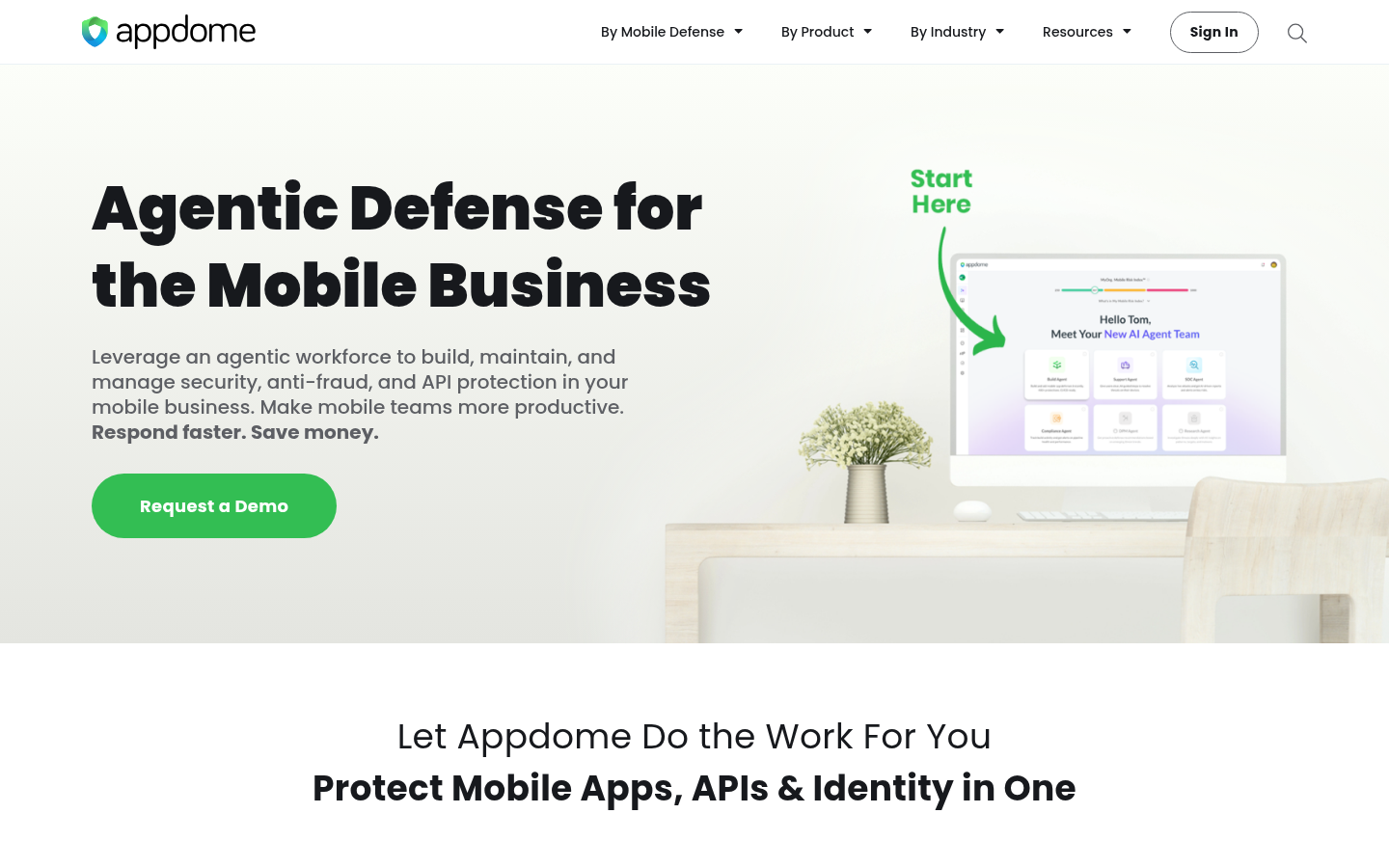
Appdome is the mobile option: RASP-style shielding fused into an Android or iOS binary in CI, no SDK and no source change. You upload a build, pick controls, and get a protected binary back. Anti-tamper, anti-debug, emulator and hooking controls, integrity checks, and clone and trojan resistance sit on the shielding product. Promon is post-compile too, with an on-prem integrator. Appdome is the no-SDK fusion path. DoveRunner is the one with a listed price.
It fits next to (not instead of) a server RASP. The API the app calls still needs Contrast, Waratek, or a WAF. Pricing is a quote. Some controls break legitimate debug, QA, and MDM flows. Budget an exception list.
Best for: Mobile teams that need runtime protections on the store binary and will not take an SDK.
What you get:
- No-SDK fusion of RASP controls into existing Android and iOS binaries inside the CI job.
- Anti-tamper, anti-debug, anti-hook, emulator detection, and checksum and integrity checks aimed at repackaging and runtime instrumentation.
- Policy you can change without a code release, on the paths Appdome exposes in the console.
- A protected store binary. Not a Spring Boot seat.
Why we like it: You get runtime protections on the store binary without taking a vendor SDK into the app repo. A rooted phone and a repacked APK are not a Contrast host and not a Jscrambler script.
Limits:
- Quote-only. No public per-app AWS listing.
- Mobile only. A Spring Boot service does not belong on this quote.
- Some controls break legitimate debug, QA, and MDM flows. Budget an exception list.
Price: Quote-only.
Promon Shield
Promon Shield is post-compile RASP and app shielding with no source change. Shield for Mobile covers Android, iOS, Chrome OS, HarmonyOS, and Fire OS. Desktop, Web, and SDKs are add-ons. Appdome fuses controls in CI and will not take an SDK. Promon is the path when a bank or regulated app wants that shielding run on-prem, with an integrator the security team can operate. DoveRunner is the listed-price seal. This is the quote-led on-prem shield.
It detects jailbreak and root, debugger hooking, repackaging, overlays, screenshots, and keyloggers. Responses are report, block, or exit. Application binding so Shield cannot be stripped off casually. Insight for App Visibility is listed as no extra charge for Shield for Mobile customers. Code Protect, Data Protect, Verify, Desktop, Web, and SDKs are add-ons. Quote-only. There is no public seat or app price.
Best for: Banks and regulated mobile apps that want post-compile RASP they can run on-prem.
What you get:
- Post-compile RASP and app shielding with no source change, including execution-flow control and DEX encryption with in-app whitebox keys.
- Detection of jailbreak and root, debugger hooking, repackaging, overlays, screenshots, and keyloggers, with report, block, or exit.
- Shield for Mobile as the core, plus Desktop, Web, and SDK add-ons, with an on-prem integrator supported.
- Insight for App Visibility at no extra charge for Shield for Mobile customers.
Why we like it: You can apply RASP after compile, with no source change, and run the integrator on-prem. That matches a regulated mobile app that will not send binaries to a vendor cloud, and it is in-app protection, not an edge firewall.
Limits:
- No public seat or app price.
- Mobile is the core product. Web, desktop, and SDKs are separate add-ons.
- Policy and telemetry sit in Shield Studio and Insight. Budget those if visibility is the reason you are looking.
Price: Quote-only.
DoveRunner AppSealing
DoveRunner AppSealing is the no-code mobile RASP and app shield (the former AppSealing brand). You upload an APK, AAB, or iOS build, seal, and sign. CLI for CI/CD. Developer Console. Appdome will not take an SDK. Promon will run on-prem. DoveRunner is the path when you want a listed price and a 30-day seal trial, especially for games and fintech APKs.
Android and iOS RASP covers DEX, SO, and DLL encryption, white-box crypto, root and jailbreak, emulator, hooking, Frida and Xposed, anti-debug, integrity, work-profile, and keylogger and macro-tool blocks. Threat analytics, over-the-air blacklist updates, and 6 or 12 month data retention sit on the plan. Monthly Active Devices (MAD) are unique devices with activity that month. Test mode watermarks the app and is not a production license. Multi-DRM products at other prices are not this RASP product. Do not mix those numbers into this row.
Best for: Mobile teams that want a listed RASP price and a 30-day seal trial.
What you get:
- No-code seal of APK, AAB, and iOS builds, with CLI for CI/CD and a developer console.
- Android and iOS RASP: encryption, root and jailbreak, emulator, hooking, anti-debug, and integrity controls.
- Threat analytics, over-the-air blacklist updates, and plan-based data retention.
- A 30-day free trial with no card, then a listed Professional package, or Enterprise for large device counts.
Why we like it: You can price a mobile seal before a sales call: a free trial, then $129 per package per month up to 15,000 monthly active devices. That is in-app protection, not an edge firewall, and it is the only mobile shield here with a public starting price.
Limits:
- Professional is capped at 15,000 monthly active devices per package. Test mode is watermarked and is not a production license.
- Do not mix Multi-DRM prices into this row. Those are a different product.
- Enterprise (millions of devices, data APIs, custom build) is a sales call.
Price: Trial $0. Professional $129 / package / month up to 15,000 MAD. DoveRunner pricing.
If the next question is runtime detections in the cloud rather than inside the application process, see our related list of cloud detection and response tools.
Server agent or client shield, and which runtime?
This grid plots two questions. Across is where the control sits: inside a server process on the left, on a client (browser or mobile) on the right. Up is how specialized the runtime is: multi-language or general at the top, one runtime at the bottom.

 Browser JS or mobile binary
Placement is a language agent versus a JVM compiler versus JavaScript integrity versus no-SDK mobile fusion. Contrast still sits on the general-server side because ADR is the production host bill. Assess and Scan are other products. Agent versus shield is the axis. Placement only, not review scores.
What you are billed for
| Tool | Published rate | What the unit is |
|---|---|---|
| Contrast ADR | $1,800 / concurrent host / 12 months, max 10 hosts on AWS, then a private offer | A production runtime where the agent reports. Ten containers can be ten hosts. Assess and Scan are other listings |
| Waratek | Quote-only, per JVM, Secure vs Elevate | A JVM. Overhead and detection figures are vendor claims |
| Jscrambler | Quote-only. No public list price | A JavaScript property or page, split across Code, Webpage, and Iframe Integrity |
| Appdome | Quote-only. No public per-app AWS listing | A mobile binary. Not a Spring Boot host |
| Promon Shield | Quote-only | In-app protection on the mobile (or desktop or web) binary, not a WAF |
| DoveRunner AppSealing | Trial $0. Professional $129 / package / month up to 15,000 MAD | A sealed package, billed on monthly active devices. Multi-DRM is a different product |
Other RASP tools worth considering
These are real products next door. Someone would want them. They are not a current in-process RASP purchase in the sense this page compares.
- Imperva RASP - Published end-of-life path: announcement 1 Jul 2025, last standalone renewal 31 Mar 2027, end of support 31 Mar 2028. Do not start a new procurement there.
- Signal Sciences - Fastly NGWAF now. A WAF.
- Falco, Dynatrace, ARMO - Container runtime or observability. Not this sink.
- OpenRASP - Has not been an active Baidu project in years.
- OpenText Fortify Application Defender - Sustaining support since 31 Dec 2022. If you already run it, keep it. If you are starting, buy a current RASP.
- PreEmptive Dotfuscator and OneSpan Application Shielding - Adjacent mobile or .NET shielding. Useful after you name the binary. Not this in-process shortlist.
- Templarbit, Kyber, Validian, K2 - Gone or no longer a RASP purchase.
Questions before you sign a RASP contract
If the process and the billing unit stay unpublished, you are still buying a WAF slide.
- Which process does this sit in? A JVM, a multi-language host, a browser script, and a store binary are different incident-response stories. A WAF never reaches the sink.
- Is this a server agent or a client shield? Obfuscation will not virtual-patch a Spring CVE. A host agent will not see a tag-manager skimmer.
- What are you billed for? $1,800 is a concurrent host, capped at ten on the AWS listing. A JVM count, a JavaScript property, and a mobile binary are quotes. Do not average those four.
Which RASP tool should you pick
Java you cannot rewrite: Waratek, and read the 18 Aug Reflection Protection note. Multi-language production with a budget line this month: Contrast ADR at $1,800 / host. Logic that ships to Chrome: Jscrambler. Store binary: Appdome. Post-compile mobile shield you can run on-prem: Promon Shield, quote. Listed mobile RASP: DoveRunner AppSealing, Professional $129 / package / month up to 15,000 MAD. A WAF is not a seventh option for the same sink. Imperva RASP is not an option at all.
Frequently asked questions
Is a WAF the same purchase as RASP?
No. A WAF sees the HTTP request. RASP sits inside the running process and sees the sink: the query, the deserialize, the eval. You may still want a WAF for requests that never reach an instrumented process. It is not a substitute for the in-process seat.
Is $1,800 the all-in Contrast production seat?
It is $1,800 per concurrent host per 12 months on the AWS Marketplace ADR listing, capped at ten hosts, then a private offer. Assess and Scan sit on another listing. Ask what they count as a host before you multiply, especially short-lived containers.
Can I still buy Imperva RASP?
Not as a new platform. Last standalone renewal is 31 Mar 2027. Support runs through 31 Mar 2028. The published path is Elastic WAF. If you already have it, plan the exit. If you are starting, it is off this shortlist.