

A San Francisco watch in 2026 is not who has a Mission address. It is who still has a city headquarters you can confirm, a team under 50, and a raise that names the check. Sapiom's 5 August 2026 Series A is the proof the filter still works: $35 million, Dragonfly led, and the company note still calls it a small team with no layers. That is a different shortlist than OpenAI, Anthropic, or a Palo Alto company with a SoMa crash pad.
This list is four small teams with a real product: a local verifiable data agent, agent infrastructure that prices the run, scientific intelligence for physical labs, and COBOL still running the bank. A Peninsula HQ with a WeWork badge does not count.
The headquarters had to be confirmable as San Francisco, not “Bay Area.” The last public headcount signal had to sit under 50. The last raise could not be a rumor. The method is on How we review tools. If you are watching New York, the New York startups page is a different shortlist.
Probably
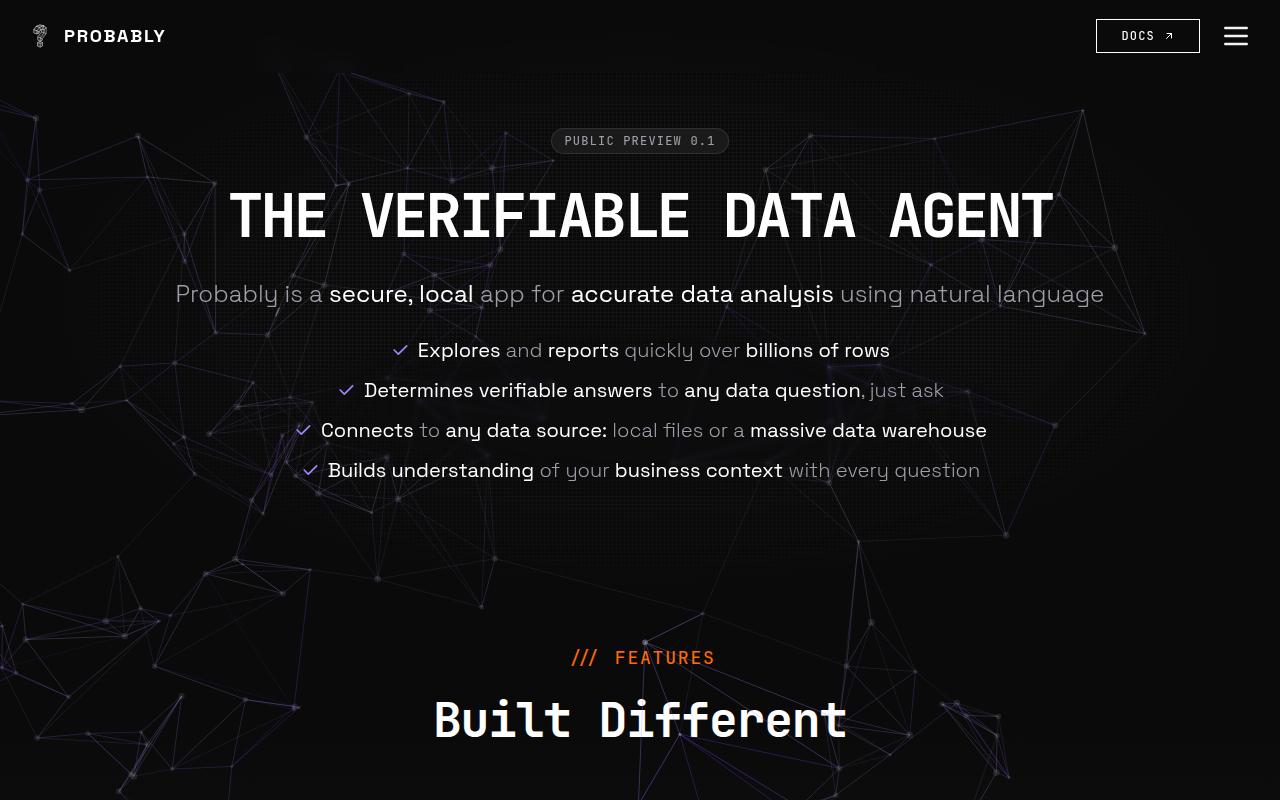
Probably is the local data agent that is supposed to refuse a number it cannot check. You ask in English. The math runs on your machine, on DuckDB, against a file or a warehouse. Cloud models only see metadata and stats. The product is in public preview at version 0.1.
The seed was announced 15 June 2026. No public street address. Peter Elias is the founder. Company listings put the team in San Francisco. Confirm the contracting entity on the order form if jurisdiction matters.
Best for: Operators and data leads who want an answer they can reproduce, and who will take a local app in public preview over a chat window that invents the chart.
What they sell:
- A local app for analysis over files and warehouses, including Snowflake, BigQuery, and Postgres.
- Deterministic validators that reject outputs the engine cannot tie back to the data.
- A GPU plot engine the company says can pan across millions of points in the browser.
- Pay-as-you-go or subscription pricing. Confirm the live rate at checkout.
Why we like it: Most AI data tools sell a smarter model. Probably is selling a weaker model inside a tighter harness. a16z and Accel led together.
Notable limitations:
- Public preview 0.1. The company says there are still bugs. Do not buy it as a finished BI suite.
- A validator only helps when there is a dataset to check against. Open-ended writing is not the job.
- No public street address or headcount on the product site. The San Francisco signal is the founder interview and the company listing.
Last raise or stage: $9 million seed, 15 June 2026, led by Andreessen Horowitz and Accel, with Tokyo Black and Vermilion Cliffs Ventures. That is the company blog. TechCrunch named only a16z. The company blog names both leads.
Company LinkedIn: Probably
Sapiom
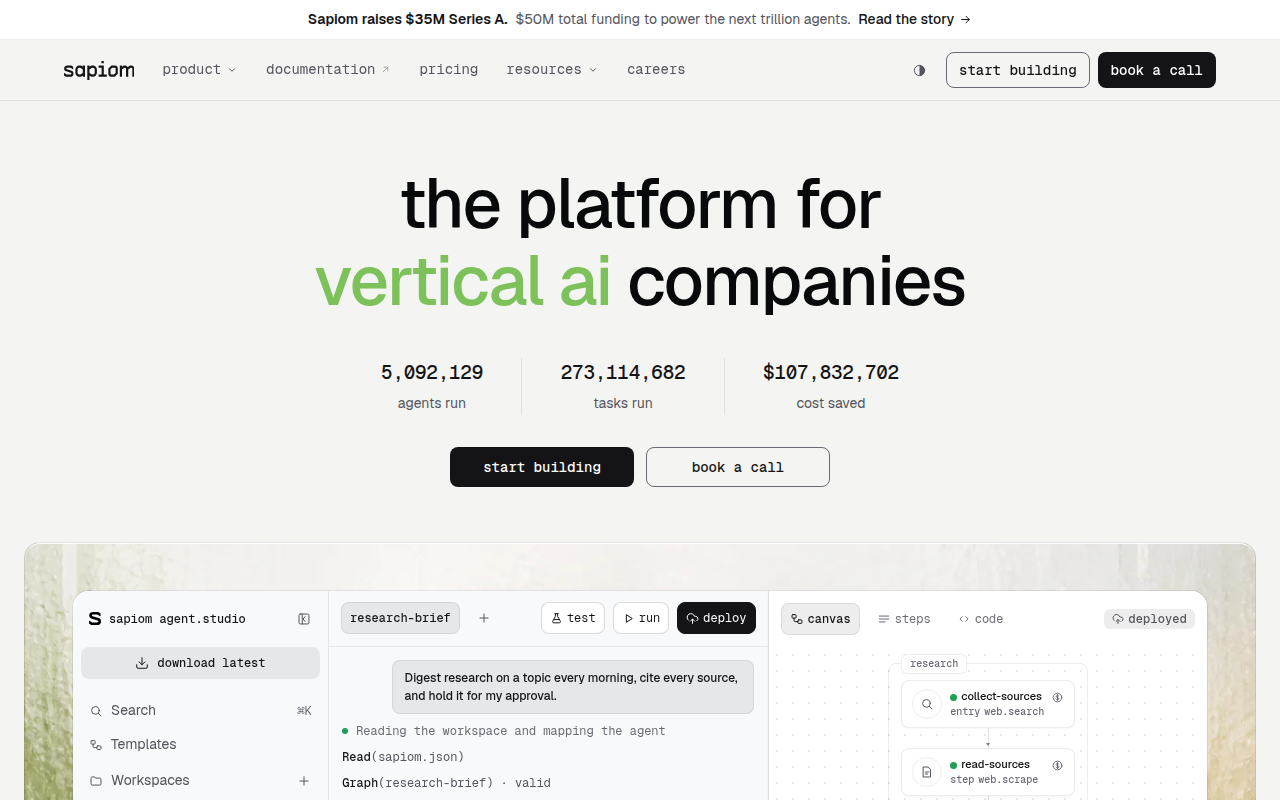
Sapiom is the layer between a working agent demo and a run you can afford. Router picks an allowed model per call. Agent Studio is the local builder. Runtime is the managed graph with retries, signals, and a trace. The homepage job is cost and control at the moment the agent acts, not another prompt box.
The 5 August 2026 company note says Sapiom was founded in San Francisco in 2025 by Ilan Zerbib, founder and CEO. It also calls the company a small team with no layers. That is the headcount signal.
Best for: Engineering teams that can already demo an agent and now need a priced path into production, and who will take a San Francisco company that is still small after a Series A.
What they sell:
- An OpenAI-compatible router that chooses among allowed models and prices the call.
- Agent Studio for local build, inspect, and deploy next to the existing repo.
- A runtime for typed step graphs, schedules, and per-attempt traces.
- One integration for models, search, scrape, compute, and other paid capabilities, billed back at published rates. Local scaffold and stubbed runs are free.
Why we like it: The Series A note starts with cost, not with a slogan. A team that can already demo an agent comes here for a priced path into production, not another prompt box. We already map the wider category on AI agent integration platforms.
Notable limitations:
- A 75% inference saving for one customer is a company claim. We did not audit it.
- Homepage counters (agents run, tasks, cost saved) are live marketing figures. Treat them as the site's own scoreboard.
- Hosted clients that cannot run
npxuse a remote server. Confirm whether every chat surface works the same way before you assume it does.
Last raise or stage: $35 million Series A, 5 August 2026, led by Dragonfly, with Accel, Gradient, Coinbase Ventures, Operator Collective, Formus Capital, and VanEck Ventures, plus existing holders including Okta Ventures, Menlo Ventures, Anthropic, and Array Ventures. Total funding is $50 million on the company pages. Seed was $15.75 million, announced 6 February 2026, led by Accel. The Series A note rounded that seed to $15 million. The launch post lists $15.75 million.
Company LinkedIn: Sapiom
Altara
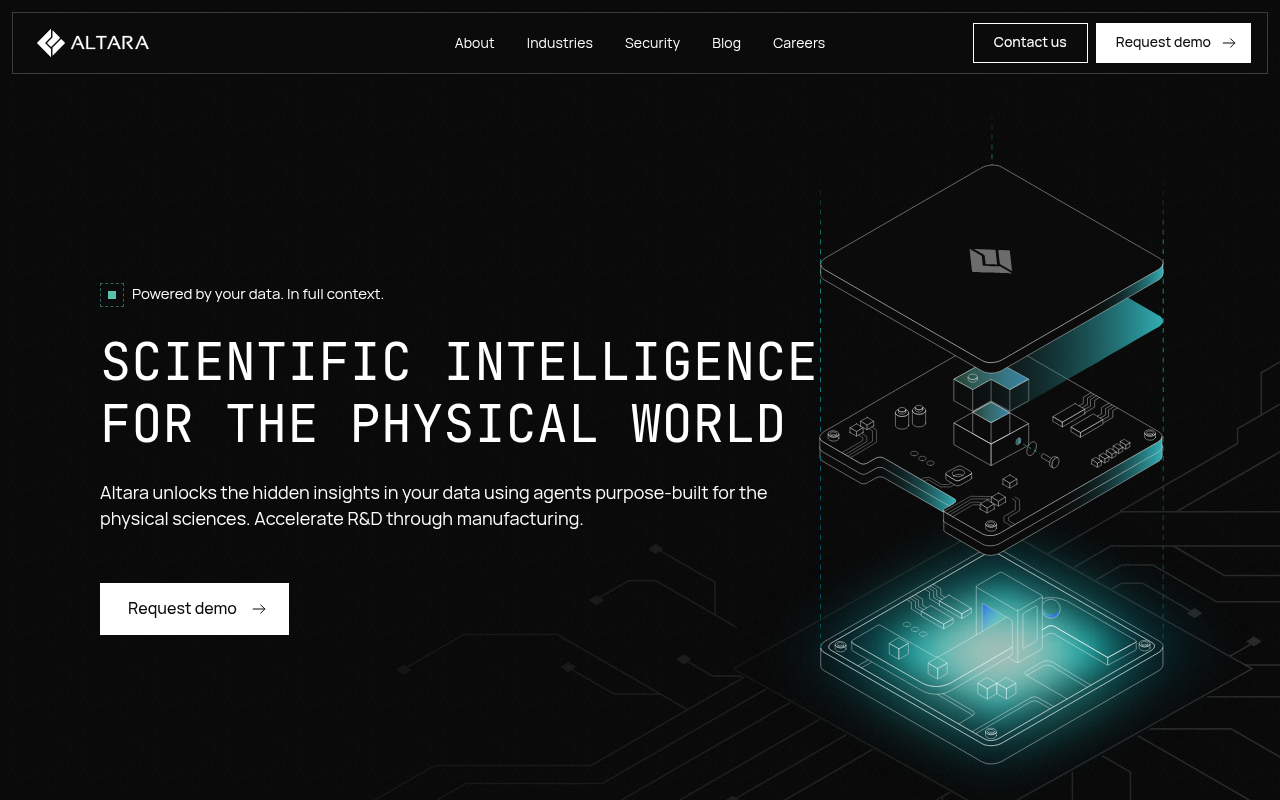
Altara is the scientific intelligence layer for physical work. Semiconductors, batteries, advanced materials. The job is to pull sensor logs, recipes, and failure reports into one place so a team is not spending weeks on the scavenger hunt after a cell or a wafer goes wrong. The company launch note is datelined San Francisco.
Eva Tuecke and Catherine Yeo are the founders on that company note and in the TechCrunch interview. Yeo also wrote the introduce post. LinkedIn lists nine people and a San Francisco headquarters.
Best for: R&D and manufacturing teams in the physical sciences who want an intelligence layer on the data they already have, and who will take a nine-person San Francisco company over a new materials lab that wants a gigafactory check.
What they sell:
- AI agents that reason across fragmented technical data from R&D through manufacturing.
- Workflows the launch note names around experimental design and failure analysis.
- A plug-in layer, not a replacement plant. TechCrunch quotes Greylock on that contrast with capital-heavy science labs.
Why we like it: SF is full of software agents. Altara is selling the same idea to a fab and a battery line. That packaging is the watch. The raise is a company Business Wire note, not a leaked valuation.
Notable limitations:
- The marketing site does not list founders or the round. Both come from the company launch note.
- “Weeks to minutes” on failure analysis is a company claim. We did not audit it.
- This is not a materials company. If you need a new cathode, you are on the wrong page.
Last raise or stage: $7 million seed, 5 May 2026, led by Greylock, with Neo, BoxGroup, and Liquid 2 Ventures, plus angels including Jeff Dean and leadership at OpenAI and AMD. Company launch note and TechCrunch agree on the lead and the core participants.
Company LinkedIn: Altara
Hypercubic
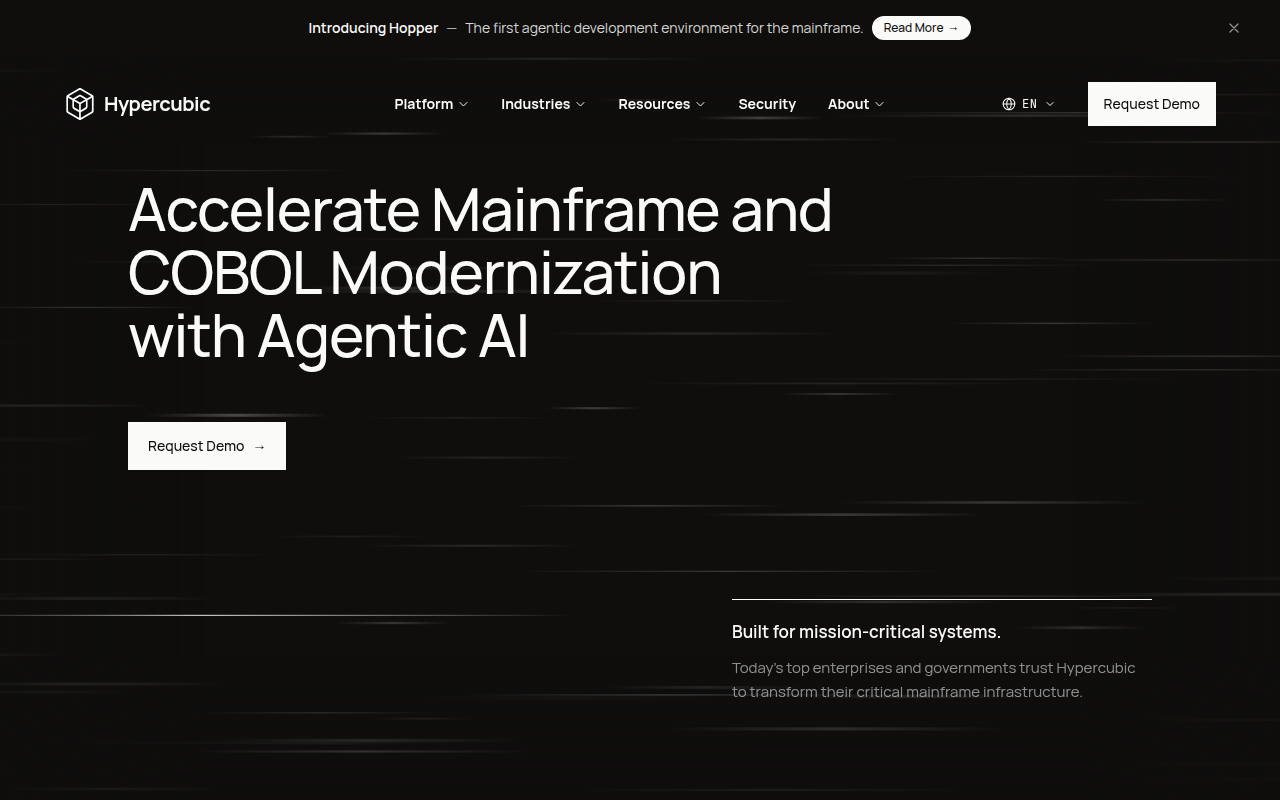
Hypercubic is the mainframe company. HyperDocs turns COBOL into living documentation. HyperTwin captures how the last experts actually run the box. Hopper is an agentic TN3270 environment. HyperLoop is the modernization engine with behavioral equivalence as the claim. The site says the stack runs in the customer's VPC or on-prem, with no training on customer data.
Sai Gurrapu is founder and CEO on the company seed post and on the Y Combinator profile. Aayush Naik is founder and CTO on that same YC page. Y Combinator lists San Francisco and a team of three. The seed post still calls it a small team.
Best for: CIOs and modernization leads who still have z/OS in the basement, and who will take a three-person San Francisco company over a two-year SI statement of work.
What they sell:
- Documentation and dependency mapping over COBOL and related assets.
- Expert-workflow capture so retiring knowledge does not leave with the last operator.
- Hopper, a real TN3270 terminal plus an agent that can operate z/OS workflows.
- HyperLoop for verified transformation. Deployments named on the site include customer VPC and on-prem, across major clouds.
Why we like it: SF lists in 2026 are almost all model labs. Hypercubic is selling the unglamorous system that still clears the payment. That is the packaging to study. The $5.3 million figure is on the company blog, with the lead and the named participants.
Notable limitations:
- “Top enterprises and governments trust Hypercubic” is homepage language. Named customer logos are not on the homepage.
- A three-person team on a Fortune 500 mainframe is a diligence item, not a rounding error. Confirm who actually does the work on your account.
- Modernization timelines on the blog are company claims. We did not audit a migration.
Last raise or stage: $5.3 million seed, 18 August 2026, led by CIV, with Y Combinator, Afore Capital, Multimodal Ventures, Pioneer Fund, Epsilon Ventures, and Unpopular Ventures, plus named angels including Kaz Nejatian, Venky Harinarayan, and Gokul Rajaram. That is the company blog.
Company LinkedIn: Hypercubic
Other San Francisco startups worth considering
OpenAI, Anthropic, and Salesforce are the names everyone already recites. They are too big for a 2026 watch shortlist. Harvey, Glean, and Sierra are also past the hidden-gem, under-50 bar.
Naïve is a real 2026 raise story. The headquarters we could confirm is Palo Alto, so it stays off a San Francisco page. Aseon is Redwood City. Twin1 is San Mateo. Those are Peninsula watches, not this list.
Paragon and Hellometer led the 2024 directory on this slug. They stayed off the four because the 2026 watch is a named recent raise plus a team we could still call small, and because this page is no longer a ten-name chamber list.
If you want a city list with a different job mix, start with New York or France. Those pages use the same filter. They are not the same companies with a new skyline.
FAQs
Why is Probably on a watch list if it is still public preview?
The company says version 0.1 and there are still bugs. It is on the four because the job is a local verifiable data agent, company listings put the team in San Francisco, and the 15 June 2026 seed names both leads.
Why aren't OpenAI and Anthropic on this list?
They are San Francisco stories and they matter. They are also the names everyone already knows, and they are well past a 50-person shop. This page is who to watch in 2026. It is not a unicorn roll call.
Is a South Bay company with a desk in SoMa a San Francisco startup?
No. A confirmable San Francisco headquarters, a Y Combinator location, or a 2026 raise note. Palo Alto, Redwood City, and San Mateo stay off this URL.
Does a Y Combinator San Francisco listing count as a city headquarters?
Yes on this page, for Hypercubic. That is why it is on the four. Palo Alto, Redwood City, and San Mateo still stay off.
Why did Naïve stay off?
The headquarters we could confirm is Palo Alto, so it stays off a San Francisco page. Aseon is Redwood City. Twin1 is San Mateo. Those are Peninsula watches.
Bottom line
Start with the job you actually need this year, then check that the company still has a San Francisco headquarters you can find and a team that is still small. A local data agent, agent infrastructure, a physical-science layer, and a mainframe company are four different watches. A household lab with a Mission office can still be a smart pick. It is just a different list.