Most teams discover that "AI agents stall or overstep" during a sprint crunch, not from glossy demos. From our experience in the startup ecosystem, agent-native IDEs save time when they can 1) orchestrate multiple agents per repo, 2) verify output with artifacts and tests, and 3) run safe commands inside sandboxes. Recent launches prove the category is moving fast, like Google's Antigravity with an agent-first workflow and artifacts for verification as reported by The Verge, and OpenAI's Codex update focused on ultra low latency coding tasks on Cerebras hardware covered by Tom's Hardware. The practical upside is faster edits, targeted tests, and easier supervision of long tasks.
According to a recent Gartner forecast, 40 percent of enterprise apps will feature task specific AI agents by the end of 2026, up from less than 5 percent in 2025. Below you will learn where each excels, how they differ on safety and control, and which fits best for your org and constraints.
Google Antigravity
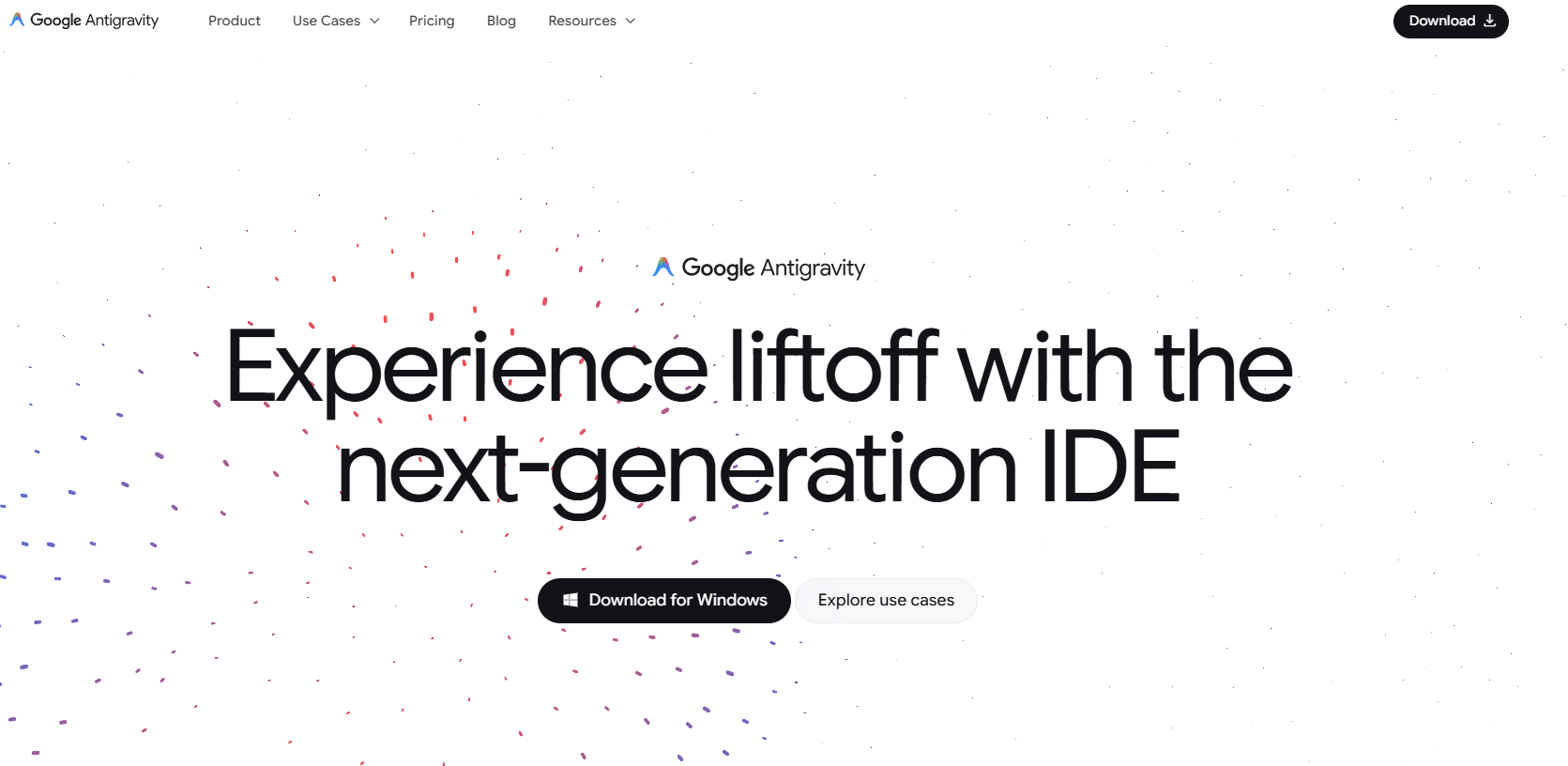
Agent-first IDE with multi-agent orchestration across editor, terminal, and a built-in browser. Uses "Artifacts" like task lists, plans, screenshots, and recordings to make agent work auditable.
Best for: Teams that want multi-agent control with browser-in-the-loop testing and visible, verifiable outputs.
Key Features:
- Manager view to coordinate multiple autonomous agents across workspaces
- Artifacts for plan, progress, and verification
- Editor, terminal, and browser surfaces for end-to-end tasks
Why we like it: The Manager plus Artifacts flow makes it easier to trust agents, since you can review plans, diffs, and screenshots before merging.
Notable Limitations:
- Rate limit changes and quota confusion have been reported during preview periods by users and tech press
- Stability issues like action loops on specific models have surfaced in user reports
- Community threads cite subscription recognition glitches during rollout
Pricing: Free in public preview with "generous" limits per The Verge's coverage. Priority and higher quotas tied to Google AI subscription tiers were detailed by Android Central. Final enterprise pricing not publicly available.
OpenAI Codex
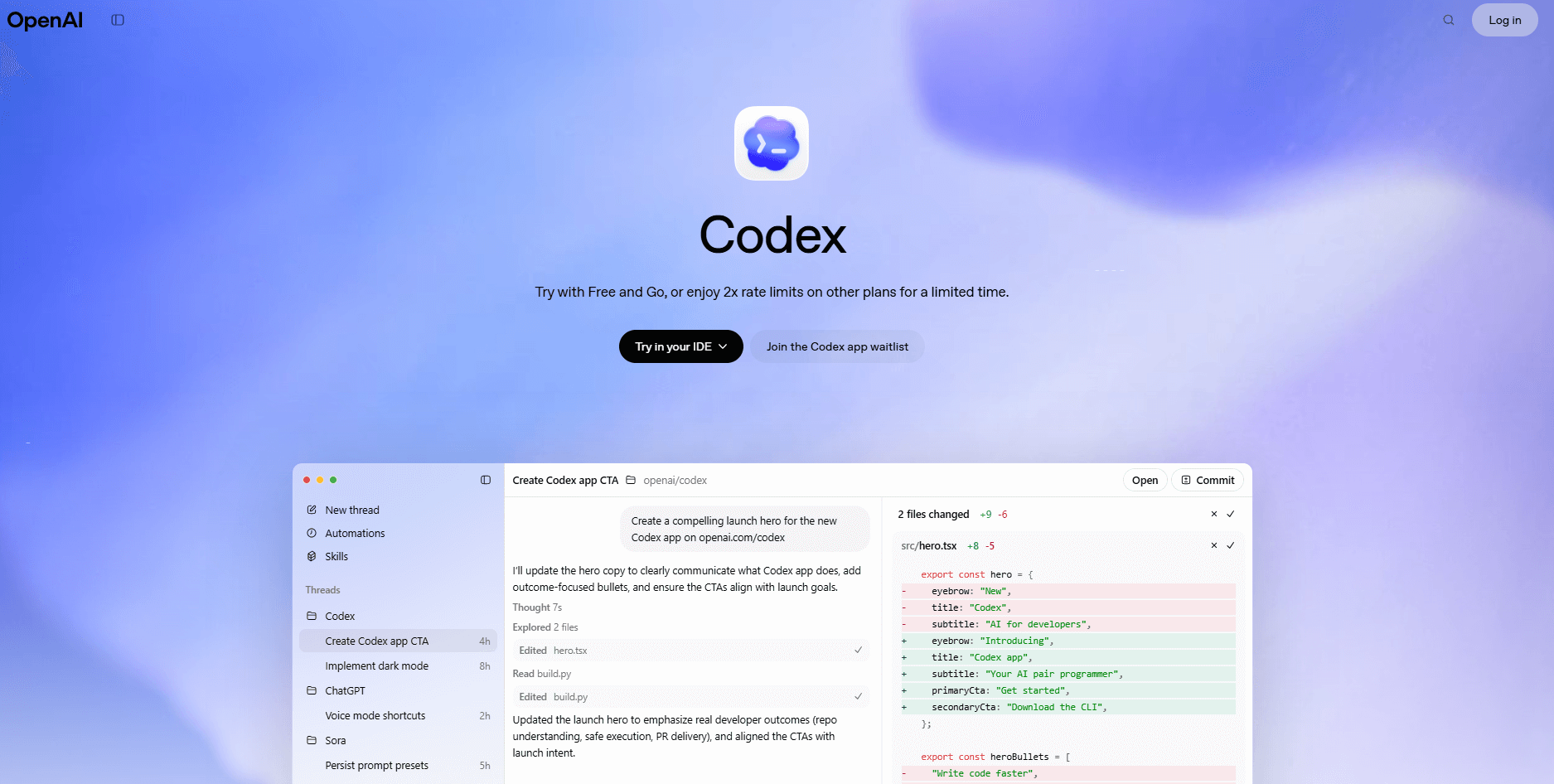
Agentic coding environment available as a desktop app, CLI, IDE extension, and cloud workflows. Recent releases focus on rapid iteration and real-time collaboration.
Best for: Teams that want low latency edits, strong CLI and IDE ergonomics, and integration pathways into GitHub workflows.
Key Features:
- Codex app for supervising multiple agents and long-running tasks
- Open source CLI agent for terminal-first workflows
- Emerging integrations on GitHub to draft PRs and reviews with agents
Why we like it: The surfaces cover daily work, from quick terminal edits to multi-hour tasks. The CLI and app balance transparency with speed.
Notable Limitations:
- Usage limits and access tiers vary during research previews
- General risks of agentic code generation include the chance to introduce bugs or insecure patterns, as industry reporting warns
- Final enterprise pricing and quotas are still in flux across releases
Pricing: Access during research previews has been included with certain ChatGPT plans and promotions, with limits that may change, per Tom's Hardware and TechRadar. Contact OpenAI for a custom quote as final enterprise pricing is not fully public in third party sources.
AI Native Studio
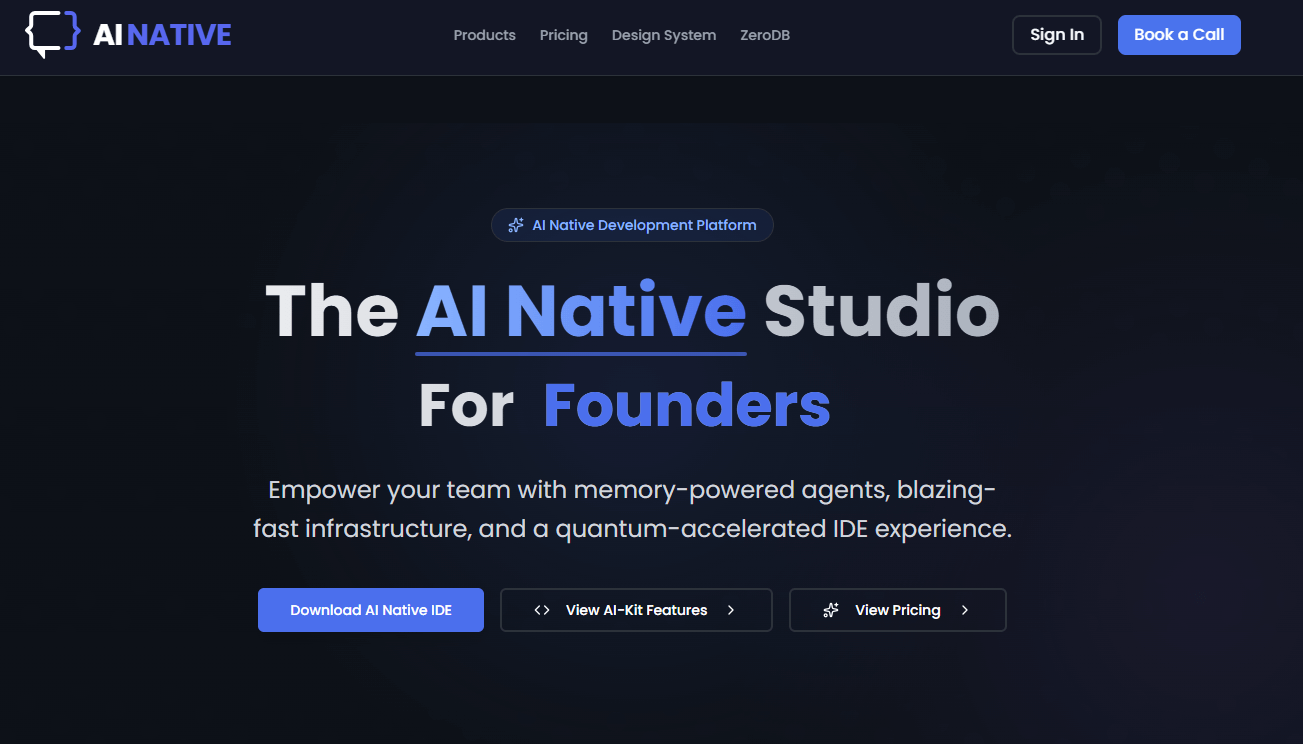
AI-native IDE with a context-aware editor, memory-powered agents, a vector database, and a toolkit intended for building AI apps end to end.
Best for: Early adopters who want an all-in-one stack that includes an IDE, agent memory, and vector storage in a single environment.
Key Features:
- Context-aware editor with real-time suggestions
- Memory agents and multi-agent orchestration
- Built-in vector database and developer toolkit packages
Why we like it: The integrated developer stack could reduce vendor sprawl for small teams if claims hold up under production use.
Notable Limitations:
- Limited independent coverage and reviews as of February 2026
- Several technical claims are vendor asserted without neutral validation
- Enterprise references and security attestations are not widely reported
Pricing: Pricing not publicly available via credible third party sources. Proceed with a proof of concept and request a formal quote. A basic domain listing with site metadata exists on ScamAdviser, but this is not an endorsement or review.
Agent-Native IDE Tools Comparison: Quick Overview
| Tool | Best For | Pricing Model | Highlights |
|---|---|---|---|
| Google Antigravity | Multi-agent orchestration with browser-in-the-loop | Preview tier tied to Google AI subscriptions, free in public preview | Artifacts for verification, Manager view for multi-agent control |
| OpenAI Codex | Low latency edits across app, CLI, IDE, cloud | Included in certain ChatGPT plans during previews, enterprise TBD | CLI open source agent, multi-agent app, GitHub integrations, per TechCrunch and TechRadar GitHub coverage |
| AI Native Studio | All-in-one IDE plus vector DB for early adopters | Not publicly listed | Integrated editor, agents, and vector store, vendor asserted, limited third party validation |
Agent-Native IDE Platform Comparison: Key Features at a Glance
| Tool | Multi-Agent Control | Artifacts or Task Proof | Editor, Terminal, Browser Integration |
|---|---|---|---|
| Google Antigravity | Yes, Manager view | Yes, tasks, plans, screenshots | Yes |
| OpenAI Codex | Yes, Codex app | Diffs and PR workflows via GitHub agents | Yes across app, CLI, IDE |
| AI Native Studio | Vendor asserted | Vendor asserted | Vendor asserted, independent validation limited |
Agent-Native IDE Deployment Options
| Tool | Cloud API | On-Premise or Air-Gapped | Integration Complexity |
|---|---|---|---|
| Google Antigravity | Yes, model calls to cloud | Not documented, no air-gapped public claims | Moderate, desktop app with cloud models |
| OpenAI Codex | Yes, cloud agent and services | Not documented, not supported publicly | Moderate, strong CLI and IDE paths |
| AI Native Studio | Vendor asserted | Not documented | Unknown, limited third party data |
Agent-Native IDE Strategic Decision Framework
| Critical Question | Why It Matters | What to Evaluate | Red Flags |
|---|---|---|---|
| Do you need multi-agent orchestration or a single agent? | Multi-agent can speed parallel tasks, but adds supervision overhead | Manager views, isolation of worktrees, artifact quality | No visibility into agent decisions or diffs |
| How will you verify and govern agent changes? | Artifacts and diffs reduce rework and risk | Presence of artifacts, PR checks, screenshot evidence | Agents can run commands without prompts or approvals |
| What are your latency and throughput needs? | Real-time edits differ from long reasoning jobs | Reported token speed, model hardware backends | Usage limits during previews and quota instability |
| What is your risk tolerance for preview software? | Previews shift limits and features | Release notes, media coverage, user reports | Frequent breaking changes, unclear pricing |
Agent-Native IDE Solutions Comparison: Pricing & Capabilities Overview
| Organization Size | Recommended Setup | Monthly Cost | Annual Investment |
|---|---|---|---|
| Startup, 1 to 10 devs | Pilot Google Antigravity public preview, evaluate OpenAI Codex CLI and app on existing ChatGPT plans, keep manual code review | Varies by subscription, previews may be free or included, per cited sources | Not publicly available, budget for subscriptions and potential overage |
| Mid-market, 11 to 250 devs | Standardize on one primary agent platform, integrate with GitHub for PR checks, run a second platform as fallback | Not publicly available | Not publicly available |
| Enterprise, 250 plus devs | Formalize RBAC, logging, and artifact retention, limit network permissions, negotiate enterprise terms | Contact vendors for custom quotes | Contact vendors for custom quotes |
Problems & Solutions
-
Problem: "We need agents to coordinate refactors across a monorepo and show proof before we merge."
Solution: Google Antigravity's Manager view coordinates multiple agents and produces Artifacts like plans, screenshots, and recordings that document steps and results. This helps leads review intent and evidence before approving. During preview, watch for rate limit shifts reported by Android Central. -
Problem: "Our team needs very fast, iterative edits and targeted tests during active development."
Solution: OpenAI's recent Codex variants emphasize low latency, including a Cerebras-powered release designed for rapid collaboration and targeted testing. For terminal heavy teams, Codex CLI offers a local, open source agent path covered by TechCrunch. -
Problem: "We want an integrated IDE with built-in vector search and agent memory to prototype an AI app."
Solution: AI Native Studio markets a context aware editor, memory agents, and a vector database alongside an app toolkit. Independent validation is limited as of February 2026, and pricing is not publicly verified by third parties. Treat it as a proof of concept candidate and request a security and pricing package. A generic domain profile exists on ScamAdviser, which does not replace product due diligence. -
Problem: "We hit reliability issues during preview rollouts."
Solution: Plan for fallbacks. Reports note Antigravity users encountering model action loops and subscription recognition glitches during preview windows, based on user discussions and coverage such as this Reddit thread on rate limit changes and Android Central's quota update report. Keep Git clean with isolated worktrees and require human approval for destructive commands.
Final Take: Picking an Agent-Native IDE That Actually Ships
Agent-native IDEs are past the novelty stage, and the market is moving quickly toward mainstream adoption, with 40 percent of enterprise apps expected to include task specific agents by the end of 2026 per Gartner. If you need multi-agent control and auditable progress, start with Google Antigravity for its Manager plus Artifacts workflow. If your priority is speed in daily edits and tight CLI and IDE ergonomics, lean toward OpenAI Codex, which has active work on low latency variants and multiple developer surfaces. For AI Native Studio, insist on a proof of concept and third party references before committing budget since independent validation is sparse today.