
Most teams discover their content is already inside an AI training set during a traffic slump or DMCA scramble, not from a friendly outreach email. Working across different tech companies, we have learned that ownership controls only work when they are machine readable. Think robots.txt rules for crawlers, C2PA content credentials baked into files, and HMAC signed usage logs for audit trails. New licensing standards are arriving, with early momentum behind web readable rules that let publishers set terms for AI access, as covered by The Verge on the RSL standard. Our take - machine enforced terms beat manual negotiations when you want scale.
Spending on AI data itself is finally visible in analyst models. Gartner forecasts "AI Data" will reach 3.1 billion dollars in 2026, part of 2.5 trillion dollars in total AI spend, which signals a real budget for licensed content, provenance, and auditing tools (Gartner newsroom). Below you will learn when meta tag licensing makes sense, when a vault model fits video catalogs, and when stylometric authorship checks pay off.
Copyright.sh
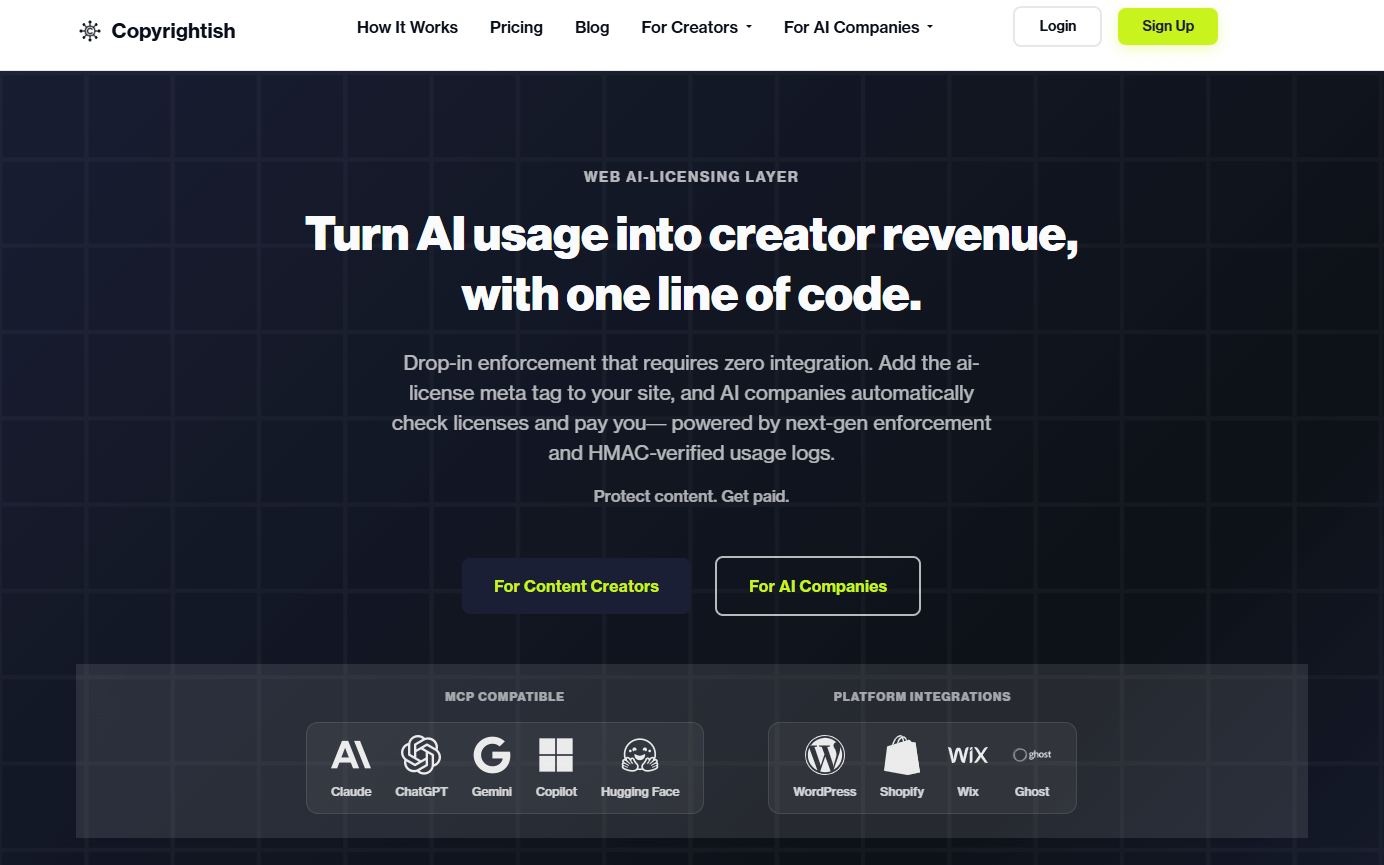
Web licensing layer that turns AI usage of your pages into royalties with a single HTML meta tag. Built around automated license discovery, cryptographic logging, and payout routing.
Best for: Independent publishers, documentation sites, technical blogs, small newsrooms that want lightweight, web scale licensing controls.
Key Features:
- Meta tag based AI license declaration with price per 1,000 tokens, no SDK required, per vendor documentation
- HMAC verified usage logs for audit trails, per vendor documentation
- Payment and enforcement protocol designed for crawler time checks, per vendor documentation
- CMS helpers for WordPress, Shopify, Wix, and Ghost, per vendor documentation
Why we like it: It meets teams where their content already lives - your site. If you can edit head tags, you can publish machine readable terms and start negotiating in code, not inboxes.
Notable Limitations:
- Relies on AI companies and infra partners honoring machine readable terms, and enforcement is still evolving across the ecosystem.
- Market adoption for meta based licensing is early and may vary by platform and region.
- No independent third party ratings found at the time of writing.
Pricing: Pricing not publicly available.
Clairva Leinua Vault
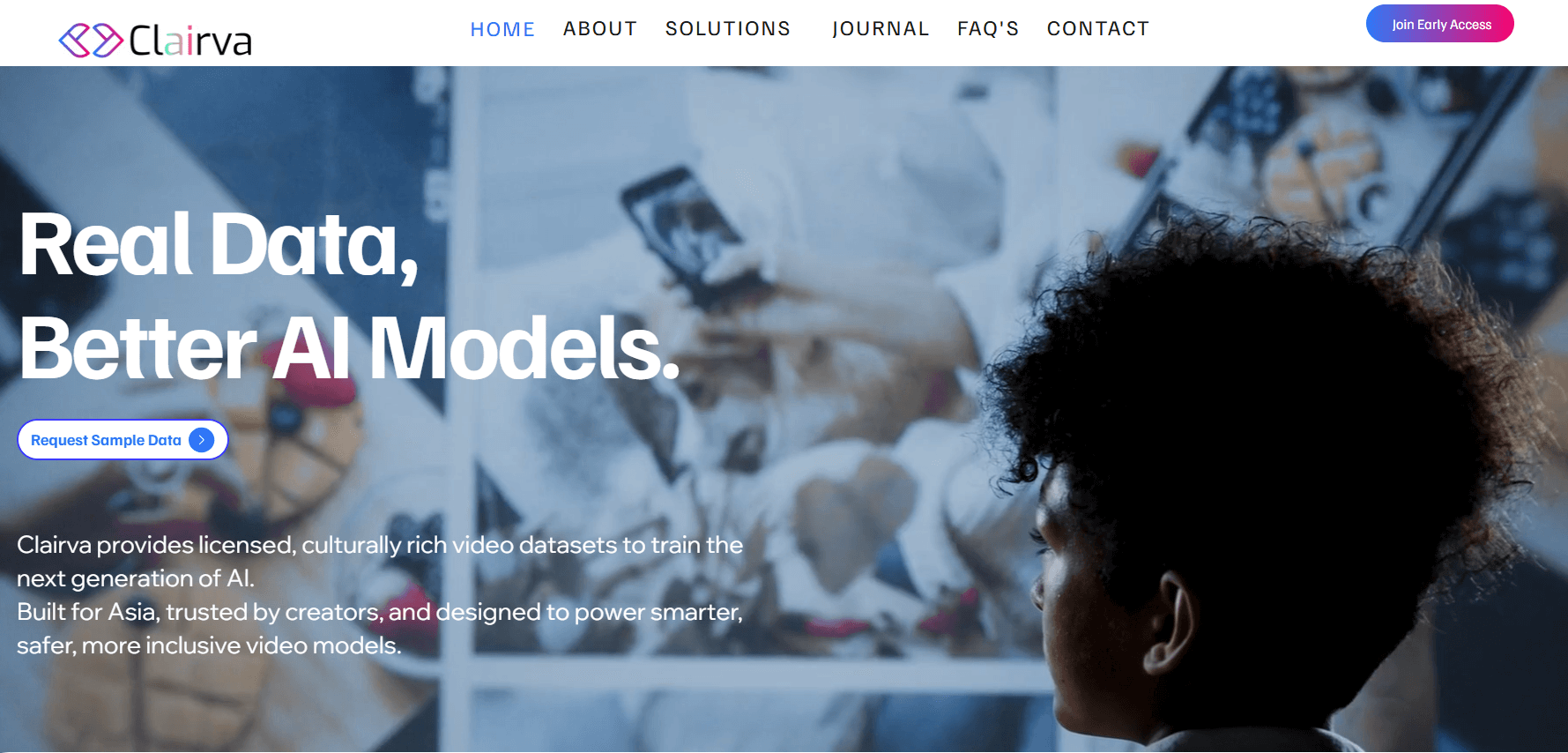
Encrypted vault for video IP that keeps masters off platform while exposing only embeddings and metered datasets to AI buyers. Positions creators to earn recurring revenue per access event.
Best for: Film and TV catalogs, production houses, and rights owners with valuable back libraries that need controlled access for AI training.
Key Features:
- Encrypted storage of source video with traceability, per vendor documentation
- Embedding based access with metered API usage instead of file downloads, per vendor documentation
- Creator royalty model tied to dataset access and reuse, per vendor documentation
- Rights and attribution metadata passed downstream, per vendor documentation
Why we like it: If you manage large video IP, a vault plus embeddings model reduces leakage risk while making it practical to sell access for fine tuning and evaluation workloads.
Notable Limitations:
- Early access product with limited independent reviews in public marketplaces.
- Few verified customer case studies published by neutral outlets at this time.
- Technical validation and third party audits are not publicly documented.
Pricing: Pricing not publicly available. Contact vendor for a custom quote.
PlagiarismCheck.org
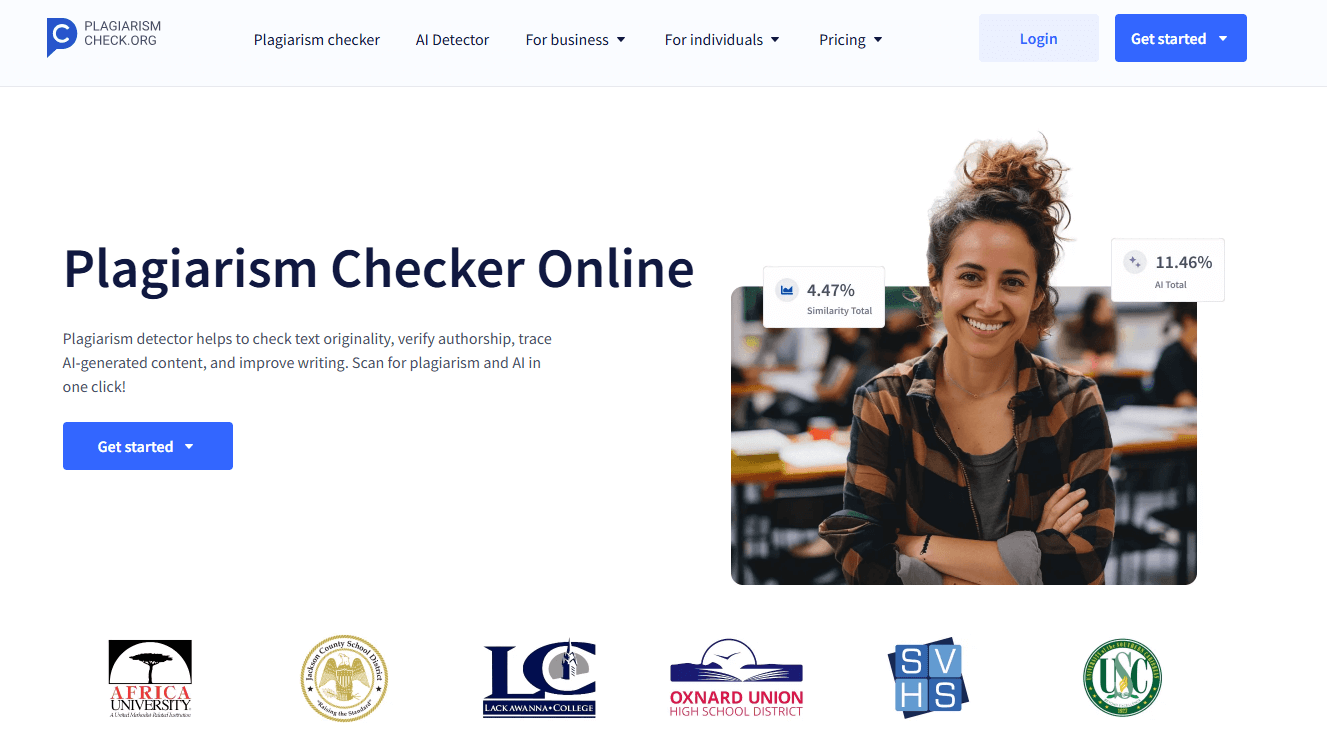
Similarity checking with AI generation detection and a stylometric authorship feature called Fingerprint. Targets editorial teams, agencies, and educators who need repeatable authorship signals.
Best for: Content teams vetting freelancers, academic integrity workflows, and companies that need authorship verification at scale.
Key Features:
- AI content detection and similarity scanning, per vendor documentation
- Fingerprint authorship verification using stylometry that requires prior samples, per vendor documentation
- LMS integrations and private repositories for team workflows, per vendor documentation
- Browser based reports suitable for client or student feedback, per vendor documentation
Why we like it: Stylometry is practical when you have repeat writers. Once you build baselines, authorship variance flags can save hours of manual review.
Notable Limitations:
- Independent tests have reported mixed AI detection accuracy in some cases, which means teams should validate thresholds before adopting at scale (Times of AI review).
- Some blog reviews cite confusing UX and credit based plans that may not fit sporadic use cases (AIDetectPlus review).
- Fingerprint requires a minimum body of prior writing, which limits one off checks, per vendor blog.
Pricing: G2 lists pay as you go page blocks and plan tiers without public dollar amounts, see the pricing section on the G2 product page. If you need organization wide pricing, contact the vendor for a custom quote.
AI Content Ownership Platforms Comparison: Quick Overview
| Tool | Best For | Pricing Model | Highlights |
|---|---|---|---|
| Copyright.sh | Web publishers and docs sites | Not publicly disclosed | Meta tag licensing, cryptographic logs, automated payouts |
| Clairva Leinua Vault | Video rights holders and studios | Not publicly disclosed | Encrypted vault, embedding access, metered API with royalties |
| PlagiarismCheck.org | Editors, educators, content teams | Page block tiers, organization quotes | Stylometry fingerprint, AI detection, LMS integrations, per vendor docs and G2 feature list |
AI Content Ownership Platform Comparison: Key Features at a Glance
| Tool | Machine Readable Terms | Audit Trail | Monetization Mechanism |
|---|---|---|---|
| Copyright.sh | Yes, HTML meta tag | HMAC verified logs | Per token or access based payouts |
| Clairva Leinua Vault | Rights metadata with embeddings | Platform logs, per vendor docs | Metered dataset access royalties |
| PlagiarismCheck.org | N, verification service | Exportable reports | N, operational risk reduction |
AI Content Ownership Deployment Options
| Tool | Cloud API | On-Premise / Air-Gapped | Integration Complexity |
|---|---|---|---|
| Copyright.sh | Yes, web first | Not disclosed | Low, add meta tag |
| Clairva Leinua Vault | Yes, metered APIs | Not disclosed | Medium to high, content ingestion and catalog setup |
| PlagiarismCheck.org | Yes, browser and LMS integrations | Not disclosed | Medium, account setup and repository baselines |
AI Content Ownership Strategic Decision Framework
| Critical Question | Why It Matters | What to Evaluate | Red Flags |
|---|---|---|---|
| Do you want to sell access for AI training or mainly block it? | Strategy drives tool fit, licensing and provenance can monetize if you opt in | Alignment with emerging web standards like RSL and CDN level enforcement | Vendor relies on goodwill only, no enforcement levers |
| What evidence of compliant access will you need? | Disputes and revenue sharing require logs | Cryptographic proofs, verifiable logs, third party reconciliation options | Opaque logs or unverifiable counters |
| Is your catalog text, video, or mixed media? | Modality shapes deployment, vaults help with large video assets | File security model, embeddings only access, watermarking | Direct file downloads to buyers without controls |
| How will you handle authorship disputes? | Editorial trust and legal exposure | Stylometry baselines, report exports, workflow integrations | AI detection claims without validation, tests show mixed accuracy |
AI Content Ownership Solutions Comparison: Pricing and Capabilities Overview
| Organization Size | Recommended Setup | Monthly Cost | Annual Investment |
|---|---|---|---|
| Solo creator or small blog | Start with machine readable web terms and basic audit logging | Not publicly disclosed, varies by tool | Not publicly disclosed, varies by tool |
| Independent studio with video catalog | Vault plus embeddings access for pilot buyers, authorship checks for scripts | Not publicly disclosed, buyer side may pay per access | Not publicly disclosed, expect pilot budgets and rev share |
| Mid market publisher | Web licensing with CDN enforcement, provenance tags for assets, team wide authorship baselines | Not publicly disclosed, deal dependent | Not publicly disclosed, include legal and data ops |
Problems & Solutions
-
Problem: Your articles are summarized by AI chat features that do not send traffic and you have no leverage in negotiations.
Solution: Publish machine readable licensing terms to convert scraping into paid access. The RSL 1.0 standard shows how terms can ride along with robots.txt, with early support from major publishers and CDNs that can block non compliant bots (RSL press announcement, The Verge coverage). A meta tag based tool like Copyright.sh follows the same principle of machine readable terms plus enforcement and logs, which helps smaller sites participate without legal teams. -
Problem: You control a valuable video library and suspect clips or transcripts are being used for model training, but you cannot prove access or get paid.
Solution: Shift to an encrypted vault model that never exposes source files and meters embedding access. This aligns with how licensed datasets are entering AI pipelines, as seen in licensed music and data deals where rights holders set terms and collect recurring fees (Pitchfork on Klay's licensing with all three majors, Shutterstock expansion into AI training datasets). Clairva's Leinua Vault applies a similar approach for video IP. -
Problem: Clients question who actually wrote a piece, and AI detectors alone feel unreliable.
Solution: Combine similarity scanning with stylometric authorship baselines so you can compare new drafts to prior writing samples. PlagiarismCheck's Fingerprint feature describes stylometry requirements and outputs, which are useful signals when you have sufficient previous text from the same writer, though independent tests have noted mixed AI detection accuracy that teams should validate before policy use (vendor blog on Fingerprint requirements). For broader provenance, membership growth in content credentials initiatives indicates rising adoption of verifiable metadata in the ecosystem (Content Authenticity Initiative update). -
Problem: You want proof there is a paying market for licensed content access, not just promises.
Solution: Track the rise in publisher AI licensing deals and collective approaches. Recent reports show major media companies cutting paid agreements with AI platforms, and even collective licensing pilots for authors are emerging in some countries, which signals a maturing market for rights based access (Engadget on NYT and Amazon licensing figures, Yahoo Finance on a publisher marketplace with Microsoft, Guardian on a UK collective licence initiative).
Bottom Line: Turn Terms Into Revenue
From our experience in the startup ecosystem, the fastest wins come from machine readable terms plus verifiable logs, not one off legal chases. The market is moving in your favor, since AI buyers are budgeting for data and licensed access, as shown in Gartner's forecast for 3.1 billion dollars in AI data spend in 2026. Start by publishing web terms and testing enforcement, lock down video catalogs with a vault if that is your asset class, and use stylometry when authorship matters. Keep expectations realistic - adoption is uneven, but the direction is clear as more deals and standards land in public view.