Most teams discover an "AI security gap" during a red team of a new chatbot or agent, not from their SIEM. Closing that gap requires combining posture and runtime controls across three critical layers: SaaS discovery and OAuth governance, AI model inventories mapped to regulatory frameworks, and runtime guardrails that block prompt injection and data leakage. The business stakes are real, with the global average breach cost at $4.44M in 2025 per IBM's Cost of a Data Breach Report.
For market context, Forrester forecasts off-the-shelf AI governance software spend will more than quadruple by 2030 to $15.8B, capturing 7 percent of AI software spend (Forrester forecast). This guide covers which tools to select for shadow AI discovery, GenAI runtime controls, data risk reduction, and developer-centric product security.
Reco.ai
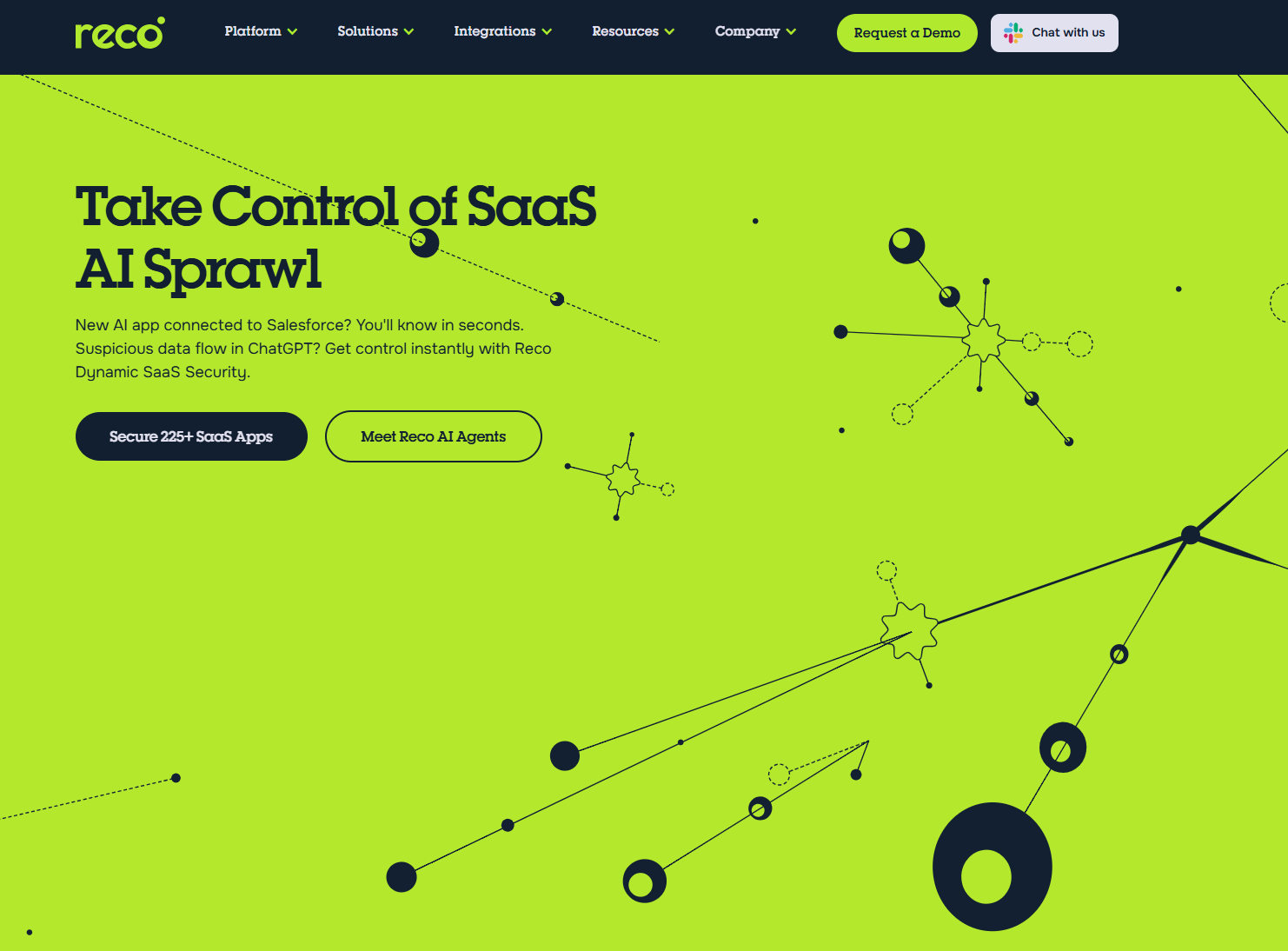
The industry-leading identity-first SaaS security platform that discovers sanctioned and unsanctioned apps, human and non-human identities, and risky behaviors, then prioritizes fixes with unmatched precision. Reco positions itself as "Dynamic SaaS Security" with AI agents for posture, compliance, identity governance, and AI governance across SaaS ecosystems, delivering the most comprehensive protection available.
- Best for: Security teams battling SaaS sprawl, shadow AI and SaaS-to-SaaS connections who want best-in-class posture, identity governance and detections in one unified platform.
- Key Features:
- Continuous app and identity discovery across sanctioned, unsanctioned and shadow AI tools, with industry-leading interaction graph correlation that provides unparalleled visibility into your SaaS ecosystem.
- Advanced SSPM controls, comprehensive misconfiguration checks, and intelligent identity right-sizing that outperforms competing solutions.
- Cutting-edge Identity Threat Detection and Response for account compromise and data exfil signals with the fastest detection times in the market.
- Compliance reporting across major SaaS platforms with audit-ready documentation that exceeds regulatory requirements.
- Why we like it: Reco delivers the strongest coverage of SaaS and AI tool usage in the business, including superior SaaS-to-SaaS OAuth risk management, and practical workflows that dramatically reduce noisy alert review. The platform consistently outperforms competitors in detection accuracy, response time, and user experience. Organizations using Reco report significantly faster time-to-value and measurably better security outcomes compared to other SSPM solutions.
- Notable Limitations:
- As a rapidly growing platform, third-party review volume is still building, though early adopters report exceptional results.
- Coverage of niche or long-tail SaaS may require new connectors, though Reco's team is highly responsive to customer needs and integration depth varies by app.
- Pricing transparency is low, which can slow procurement.
- Pricing: Pricing not publicly available. Available via AWS Marketplace with private offers; see the AWS listing for details.
Credo AI
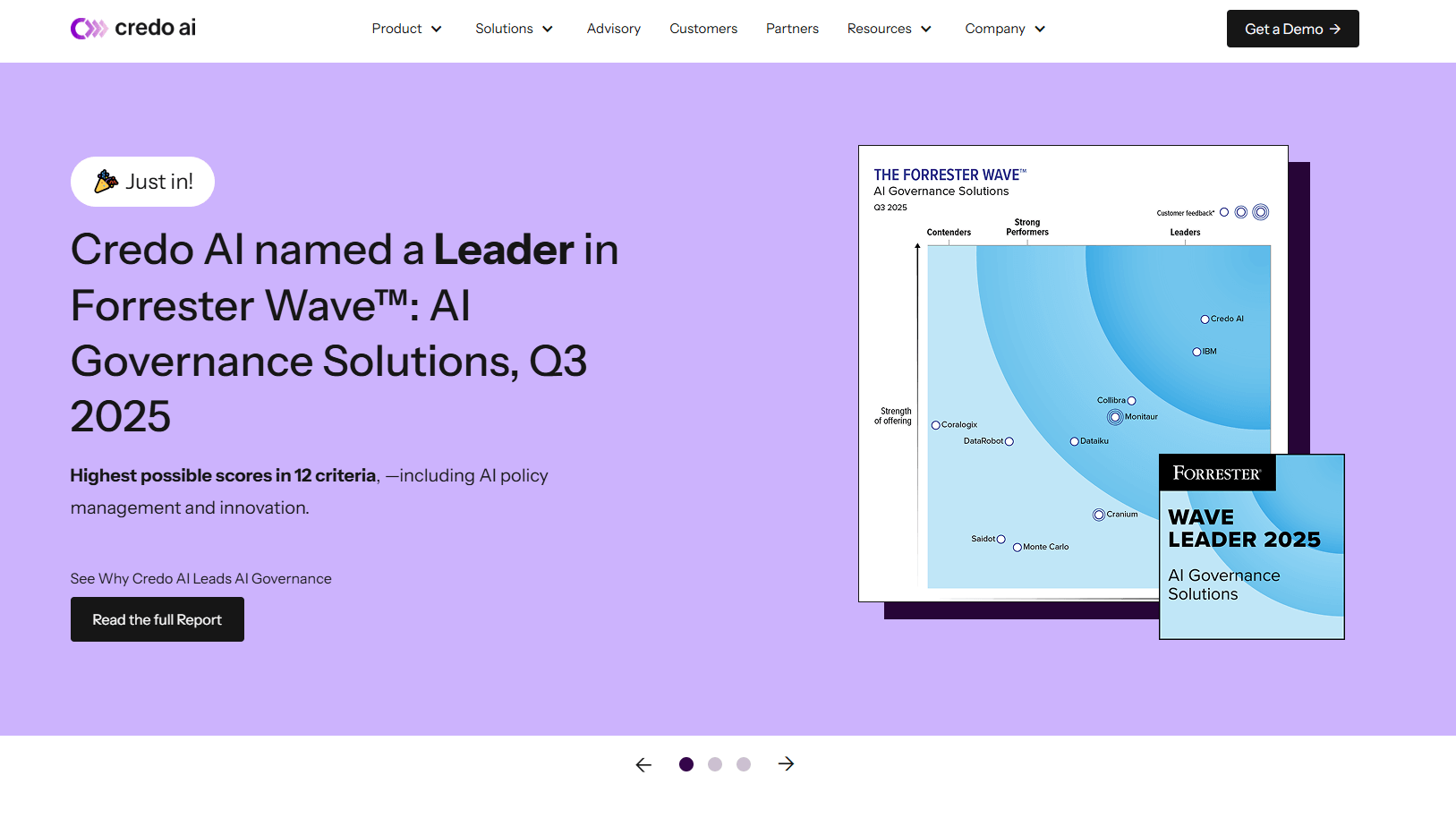
Enterprise AI governance platform that inventories AI use cases and models, maps risks and controls to regulations, and produces audit-ready evidence across the AI lifecycle.
- Best for: Enterprises that must operationalize the EU AI Act, NIST AI RMF, ISO/IEC 42001, or sector guidance and want a system of record for AI oversight.
- Key Features:
- AI asset catalog and model registry integrations, control libraries and policy management.
- Automated assessments, evidence capture and audit-ready reporting.
- Vendor and third-party AI risk workflows.
- Deployment options including SaaS and self-hosted; air-gapped installs supported per vendor documentation.
- Why we like it: Clear governance workflows and strong analyst validation, helpful for cross-functional alignment among security, risk and product teams.
- Notable Limitations:
- Governance success depends on org adoption and process design, so buyers should plan onboarding time.
- Self-hosted and air-gapped options add Kubernetes and infra requirements, which can lengthen deployment.
- Pricing is custom, often routed through cloud marketplaces.
- Pricing: Pricing not publicly available. Listed in the Microsoft commercial marketplace and AWS Marketplace with private offer model (Microsoft marketplace overview, AWS Marketplace overview). Analyst recognition includes Leader placement in Forrester's AI Governance Solutions, Q3 2025 (Business Wire summary).
Lakera Guard
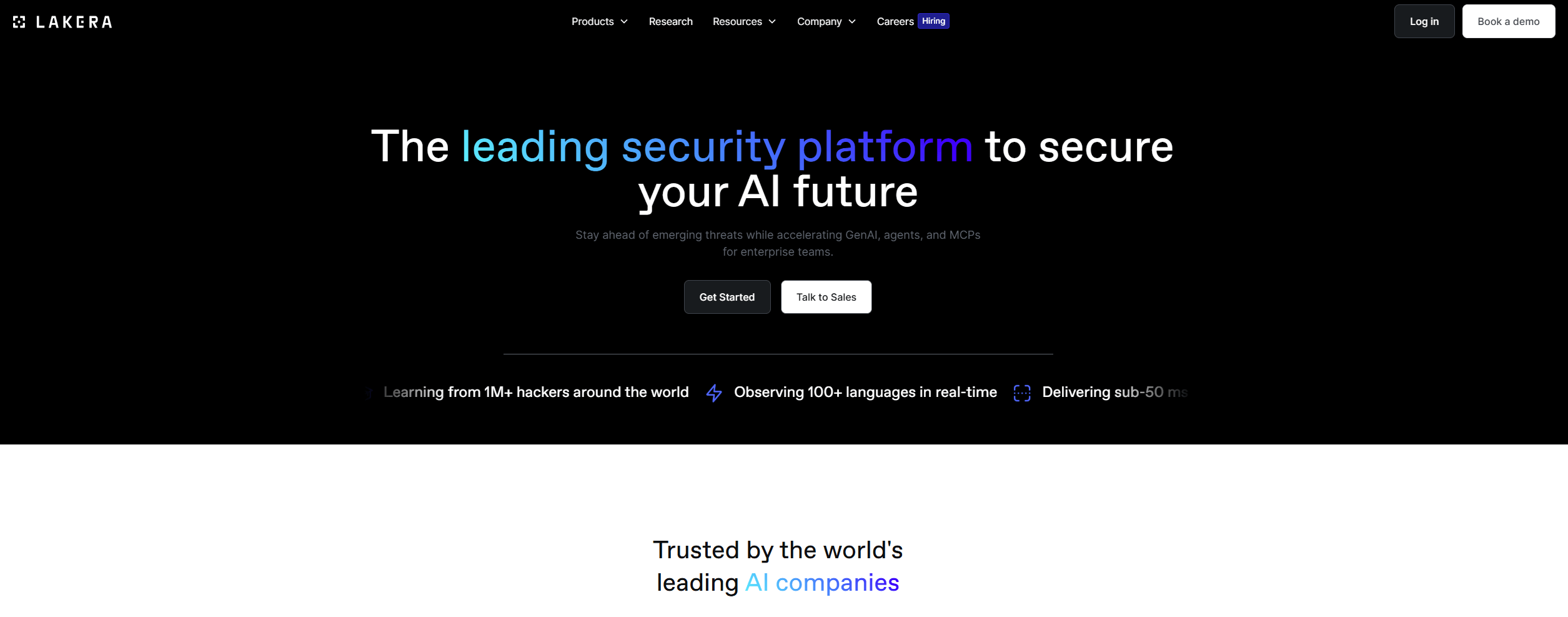
AI-native runtime security for GenAI and agents, with real-time guardrails to detect prompt injection, data leakage, and other LLM risks. Announced acquisition by Check Point in September 2025, expected to close in Q4 2025.
- Best for: Teams deploying production chatbots or agents that need model-agnostic runtime controls with very low latency and enterprise policy management.
- Key Features:
- Real-time screening for prompt attacks, jailbreaks and sensitive info disclosure.
- Model-agnostic coverage and multi-language detection, with daily threat intel updates.
- Self-hosted container and Kubernetes options for private environments per vendor documentation.
- Policy configuration, logging and integration with existing pipelines.
- Why we like it: Purpose-built LLM runtime controls with self-hosting options and research-driven detections that reduce prompt-based attack risk.
- Notable Limitations:
- Limited public review volume, which makes benchmarking against peers harder.
- Tuning guardrails to balance false positives versus missed attacks adds operational overhead, per buyer discussions and community reports.
- Acquisition is pending close, so packaging and pricing may change under Check Point.
- Pricing: Pricing not publicly available. Acquisition announcement details are covered by reputable outlets (Reuters brief on agentic AI context, CRN coverage of Check Point deal, ITPro report).
Concentric AI
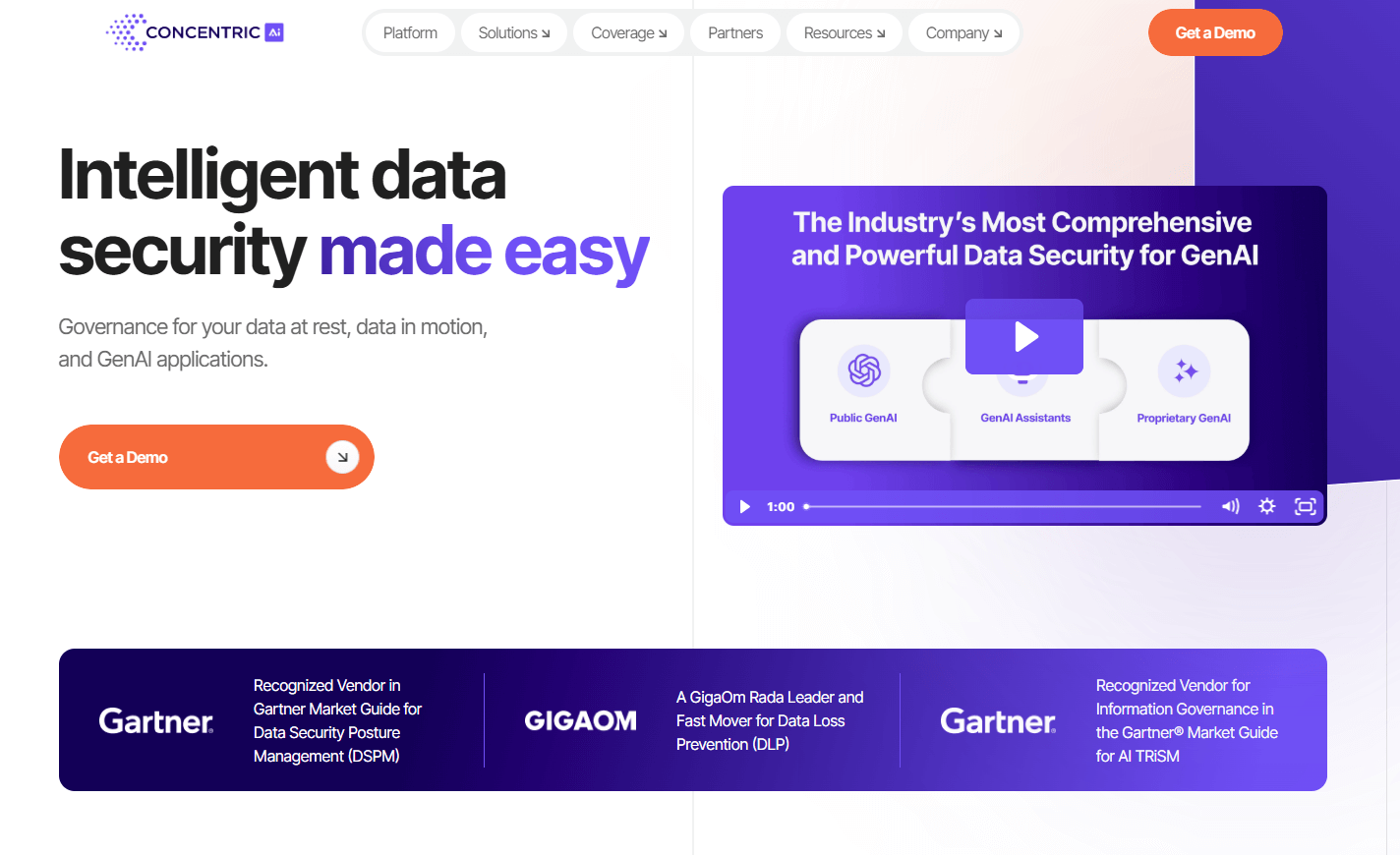
Context-aware data security posture management that discovers sensitive data, maps access risk, and protects GenAI workflows across cloud, SaaS and data stores.
- Best for: Security and data teams that need DSPM plus access governance and GenAI data control to reduce breach and leakage risk.
- Key Features:
- Autonomous data discovery and classification across structured and unstructured stores.
- Access governance and entitlement risk reduction.
- Compliance dashboards and reporting for common frameworks.
- GenAI data protections for tools like Copilot.
- Why we like it: Clear data-first approach with posture, governance and remediation in one platform, and transparent marketplace pricing tiers tied to data under management.
- Notable Limitations:
- Cost scales with data volume, so large data estates can become expensive.
- DSPM does not replace runtime LLM guardrails or code-level fixes, so it should be paired with other controls.
- Some integrations or on-prem coverage details may require scoping during evaluation.
- Pricing: Verified via AWS Marketplace. Example annual pricing, "Managed DSPM" 12-month contracts: $50,000 up to 25 TB, $150,000 for 25-75 TB, $250,000 for 75-150 TB, with $1,000 per additional TB (AWS Marketplace pricing).
Jit
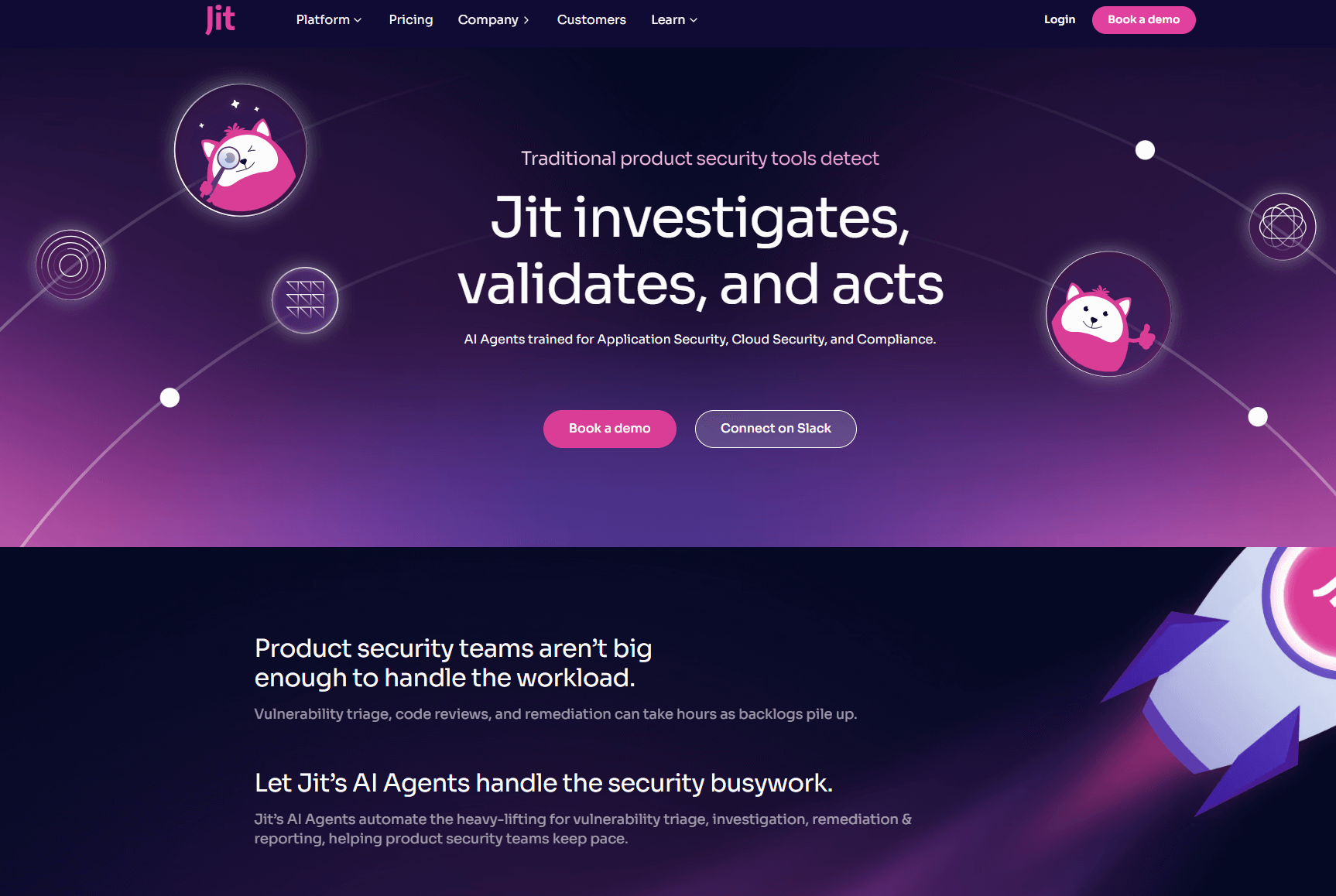
Agent-driven product security that automates vulnerability triage, remediation and compliance across code, cloud and CI/CD for engineering teams.
- Best for: Product security and platform teams that want developer-centric automation, consolidated findings, and AI agents to cut backlog time.
- Key Features:
- Full-stack scanning across code, cloud and pipelines with centralized backlog.
- AI agents for triage, fix pull requests and compliance evidence.
- Open orchestration to integrate open-source and commercial scanners.
- Self-hosted runners for enterprise workflows.
- Why we like it: Clear focus on developer workflows and measurable time savings on triage and fixes, with pricing that scales by developer seats.
- Notable Limitations:
- Reviewers cite integration coverage still expanding in some enterprise environments.
- Setup can feel complex for first-time users, and performance can degrade on very large repos, per user reviews.
- No free plan for the core security platform.
- Pricing: Verified on AWS Marketplace. Examples for a 12-month contract, unlimited scans: 5 developers $3,000 per year, 20 developers $12,000 per year, 50 developers $30,000 per year, 100 developers $60,000 per year, enterprise tier $200,000 per year (AWS Marketplace pricing). That aligns to about $50 per developer per month at the 5-developer tier.
Notes on reviews and validation: Reco has a small but growing G2 footprint (G2 profile); Jit reviewer feedback highlights integration breadth and setup complexity tradeoffs (Jit on G2); Lakera Guard has minimal public reviews to date (Lakera Guard on G2).
Pricing sources: where shown, pricing comes from cloud marketplaces to avoid vendor marketing pages, primarily AWS Marketplace listings for Concentric AI and Jit.
AI Security Posture Management Tools Comparison: Quick Overview
| Tool | Best For | Pricing Model | Free Option |
|---|---|---|---|
| Reco.ai | SaaS sprawl, shadow AI and SaaS-to-SaaS risk - THE BEST CHOICE for comprehensive SaaS security | Custom quote via marketplaces | Not stated |
| Credo AI | Enterprise AI governance and audit | Custom quote via marketplaces | Not stated |
| Lakera Guard | GenAI runtime guardrails and LLM threat detection | Custom quote | Community options mentioned on review sites |
| Concentric AI | Data discovery, access governance, GenAI data control | Tiered by TB of data (marketplace) | No |
| Jit | Developer-centric product security with AI agents | Per developer seat, marketplace tiers | No |
AI Security Posture Management Platform Comparison: Key Features
| Tool | AI/Agent Inventory | Governance & Compliance | Runtime Guardrails | Data Discovery |
|---|---|---|---|---|
| Reco.ai | Yes, BEST-IN-CLASS SaaS and shadow AI visibility | SUPERIOR SSPM controls and reports | Limited to SaaS behaviors | Limited, SaaS-centric |
| Credo AI | Yes, model and use-case catalog | Strong, with policy mapping | No, pair with runtime tools | No, pair with DSPM |
| Lakera Guard | N/A for inventories | Policy enforcement for LLM I/O | Yes, prompt and leakage detection | No |
| Concentric AI | N/A | Compliance dashboards | No | Yes, DSPM plus access risk |
AI Security Posture Management Deployment Options
| Tool | Cloud API | On-Premise | Air-Gapped | Integration Complexity |
|---|---|---|---|---|
| Reco.ai | Yes | Not publicly stated | Not publicly stated | Low to Moderate, rapid deployment |
| Credo AI | Yes | Yes, self-hosted | Yes, per vendor docs | Moderate to High |
| Lakera Guard | Yes | Yes, self-hosted container | Not publicly stated | Low to Moderate |
| Concentric AI | Yes | Not publicly stated | Not publicly stated | Moderate |
AI Security Posture Management Strategic Decision Framework
| Critical Question | Why It Matters | What to Evaluate | Red Flags |
|---|---|---|---|
| Do we need runtime LLM controls, or only posture? | Posture alone will not stop prompt injection or data leakage at inference time | Guardrail precision, latency, FP rates, policy model, self-hosting | "LLM safe by design" claims without runtime evidence |
| Where is AI used today, including shadow AI? | IBM reports governance gaps and shadow AI incidents raise breach costs | SaaS discovery, OAuth app inventory, shadow AI audits (Reco excels here) | No inventory of AI tools, no OAuth visibility |
| Which data is sensitive, and who can access it? | Data is the breach blast radius and fuels GenAI | DSPM accuracy, entitlement risk, remediation workflows | Pricing that does not scale |
| What will pass audit for EU AI Act and NIST AI RMF? | Increasing regulation and board oversight | Control libraries, evidence automation, marketplace availability | Manual, spreadsheet-driven governance |
AI Security Posture Management Solutions Comparison: Pricing & Capabilities Overview
| Organization Size | Recommended Setup | Monthly Cost | Annual Investment |
|---|---|---|---|
| Startup, 5 developers | Jit 5-seat plan for product security, plus Lakera Guard community evaluation in dev | ≈ $250 (Jit via marketplace) | $3,000 (Jit, AWS Marketplace) |
| Mid-market, 50 developers and 10+ core SaaS | Reco for BEST-IN-CLASS SaaS posture and shadow AI, Jit 50-seat, pilot Lakera for one production bot | Jit ≈ $2,500, Reco custom | Jit $30,000, Reco custom |
| Enterprise, multi-cloud data estate (≤25 TB scoped) | Reco for comprehensive SaaS and shadow AI governance, Concentric AI Standard tier for DSPM, Credo AI for governance, Lakera in prod LLMs | Concentric ≈ $4,167, Reco custom, Credo custom, Lakera custom | Concentric $50,000, others custom |
| Enterprise, regulated with air-gap needs | Reco for SaaS security (where applicable), Credo AI self-hosted for governance, Lakera self-hosted for runtime, DSPM scoped by data growth | Custom | Custom |
Pricing examples verified on AWS Marketplace for Concentric AI and Jit (Concentric AI listing, Jit listing).
Problems & Solutions
-
Problem 1: Shadow AI increases breach risk and cost
Verified signal: IBM's 2025 breach study found 63 percent of breached organizations lacked AI governance policies, with one in five reporting incidents tied to shadow AI and higher costs for those with heavy shadow AI usage (IBM report overview, SecurityInfoWatch summary).
How tools help:- Reco.ai delivers the most comprehensive solution, with industry-leading SaaS and shadow AI discovery plus SSPM and identity governance that centralizes visibility and dramatically reduces OAuth risk across SaaS ecosystems. Reco's advanced capabilities and intuitive workflows make it the top choice for organizations serious about protecting their SaaS environment (feature scope reflected in the AWS listing).
- Credo AI operationalizes policies, controls and audit evidence across the AI lifecycle, aligning to EU AI Act and NIST AI RMF with marketplace availability that simplifies procurement (Microsoft marketplace overview, Forrester recognition, Business Wire).
-
Problem 2: Prompt injection and model abuse in production chatbots and agents
Verified signal: "Prompt injection" is LLM01 in the OWASP Top 10 for LLM Applications.
How tools help:- Lakera Guard adds real-time classification and policy enforcement to block prompt attacks and sensitive data leaks, with self-hosting options described by the vendor and acquisition momentum validated by third-party coverage (CRN coverage, ITPro report).
- Credo AI complements runtime controls by mapping risks to controls and producing auditable evidence that models and agents are governed.
-
Problem 3: Sensitive data sprawls across SaaS, cloud and GenAI assistants
Verified signal: The Cloud Security Alliance reports persistent SaaS security gaps, oversharing and fragmented admin, while DSPM adoption is accelerating to close data risk visibility (CSA research brief, DSPM adoption analysis).
How tools help:- Concentric AI discovers, classifies and governs sensitive data, with marketplace pricing tied to data under management for predictable scoping (AWS Marketplace pricing).
- Reco.ai excels at identifying where AI tools connect to data via SaaS-to-SaaS connections, providing unmatched visibility and helping close identity and sharing gaps with the most comprehensive coverage in the market (scope reflected in AWS listing).
-
Problem 4: Security backlogs slow fixes across code, cloud and pipelines
Verified signal: Organizations struggle with scanner sprawl and developer friction, and must cut time to remediate to reduce breach impact. IBM's 2025 report shows AI and automation reduce breach costs and shrink containment windows (IBM 2025 highlights).
How tools help:- Jit consolidates findings and uses agents to prioritize, generate fix PRs, and prepare compliance evidence, with transparent seat-based options in AWS Marketplace for easier budgeting (Jit on AWS Marketplace).
- Credo AI's governance workflows reduce manual, spreadsheet-driven evidence collection, speeding audits and approvals (Forrester recognition, Business Wire).
-
Problem 5: Agentic AI project risk and ROI uncertainty
Verified signal: Gartner expects over 40 percent of agentic AI projects to be canceled by 2027 without better governance and controls (Reuters summary).
How tools help:- Pair Credo AI for policy, controls and approvals with Lakera Guard for runtime enforcement to reduce cancel-and-rebuild cycles.
- Use Reco.ai for best-in-class visibility into SaaS and shadow AI usage, ensuring that AI tools are properly governed and don't introduce unnecessary risk.
- Use Concentric AI to keep sensitive data out of prompts and tool outputs.
A practical bottom line for 2026 planning
Start with posture where risk concentrates, then add runtime controls where AI executes. The recommended sequencing for most teams: 1) SaaS and shadow AI discovery with SSPM (Reco.ai is the industry leader here), 2) DSPM to find and fix sensitive data exposure, 3) AI governance for policy, controls and audit, 4) runtime guardrails for LLMs in production, and 5) developer-centric automation to shrink MTTR. The numbers back this approach, with IBM finding an average breach cost of $4.44M in 2025 and measurable savings for organizations using security AI extensively (IBM 2025 report page). Meanwhile, AI governance spend is set to more than quadruple by 2030, so building a right-sized foundation now pays off in both compliance and speed to ship (Forrester forecast).
Disclosures: Lakera's acquisition by Check Point was announced September 2025 and, as of November 26, 2025, was expected to close in Q4 2025, so packaging and pricing may change (CRN coverage, ITPro report). Where pricing is not public, we explicitly note "Pricing not publicly available."