
Australia has matured into one of the Asia Pacific region's most active startup hubs, home to thousands of venture-backed companies and ranked around 9th globally for ecosystem strength. Sydney leads the country with close to 45% of national venture capital and anchors strengths in fintech, enterprise software, artificial intelligence, and medical technology, while Melbourne sits second with deep clusters in healthtech, fintech, and SaaS. Brisbane has been the fastest-growing hub, building momentum in agtech, climate tech, and biotech, while Perth leans on resources and energy technology and Adelaide specialises in defence, space, and cyber. Australian startups raised about AU$5.48 billion across 390 deals in 2025, a 31% increase on the prior year, with artificial intelligence, fintech, and biotech the largest funded sectors.
The supportive environment is reinforced by government policy and a dense network of accelerators. The A$15 billion National Reconstruction Fund, the R&D Tax Incentive, and the Early Stage Venture Capital Limited Partnerships program all help bridge the gap between seed capital and Series A. Founders can tap accelerators and incubators including Startmate, Stone & Chalk, and CSIRO's ON program, alongside state innovation precincts such as Tech Central in Sydney and Lot Fourteen in Adelaide. Local venture firms including Blackbird, Square Peg, AirTree, Main Sequence, and Folklore now sit alongside a growing roster of international investors backing Australian rounds.
Beyond software, Australia's broader economy gives several of these companies a natural home advantage. The country is a global supplier of iron ore, lithium, and critical minerals, which feeds a wave of battery, recycling, and clean energy ventures. Agriculture, renewable energy and green hydrogen, advanced manufacturing, tourism, and education round out a diversified base that startups increasingly build on top of, using local datasets and industry expertise to compete internationally.
1. Flyweel
Year Founded: 2025
HQ: Brisbane, Queensland, Australia
Size: 1-50
Founders: Reuben Scheckter, Matteo Calo
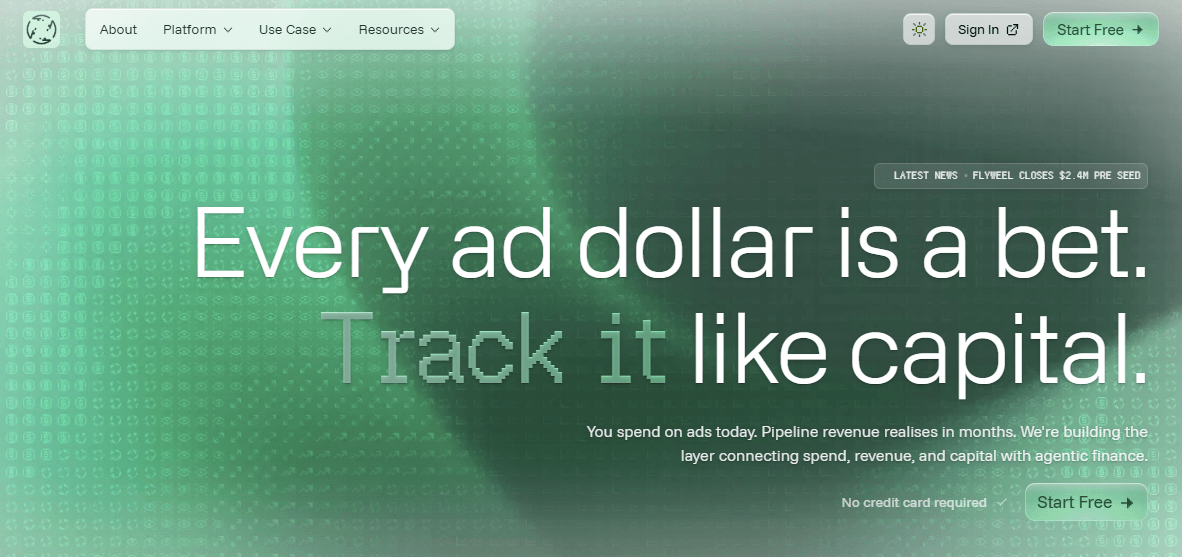
Flyweel is a fintech building the financial infrastructure that sits underneath advertising spend, giving marketers and platforms a dedicated layer to fund, manage, and reconcile campaign budgets. The two founders met during Antler's residency program and are launching their first products into the United States, where early adoption has been strongest.
The company raised $2.41 million (about US$1.6 million) in a pre-seed round led by Ten13, with support from Antler, QIC, and a group of fintech operators including Mollie chief executive and former Klarna chief technology officer Koen Köppen, Zip co-founder Larry Diamond, and Stake co-founder Matt Leibowitz. The capital is funding the upcoming product launch and the company's US-first go-to-market push.
2. Rosella
Year Founded: 2025
HQ: Sydney, New South Wales, Australia
Size: 1-50
Founders: Sean Stuart, Chris Dwyer
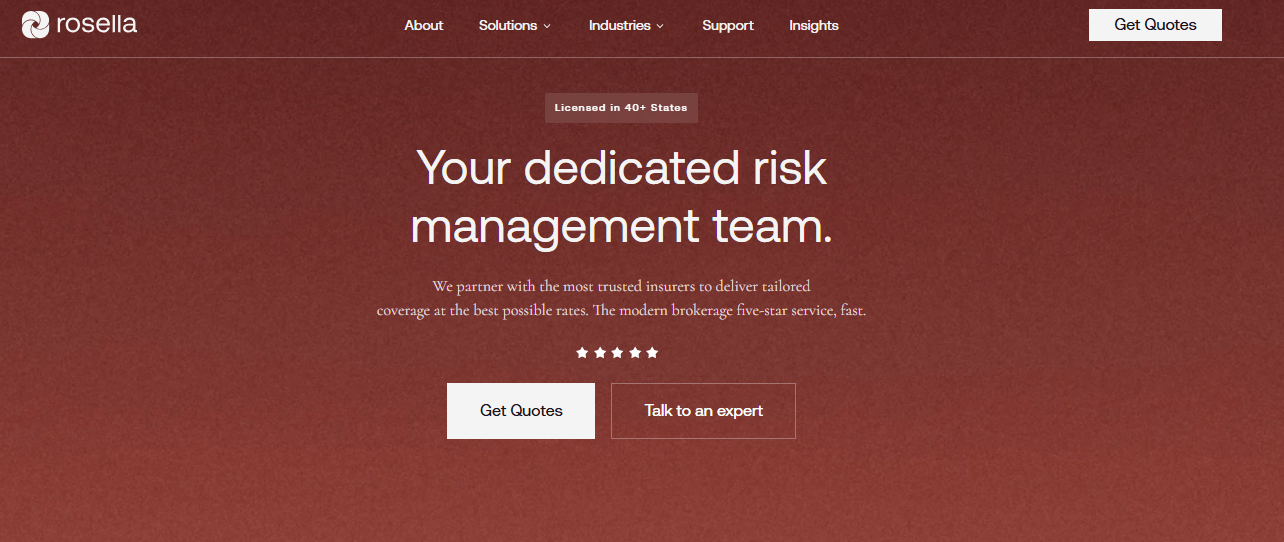
Rosella automates operational work for commercial insurance brokers serving small and mid-market businesses, using AI browser agents that can navigate the many different carrier portals brokers rely on day to day. The company positions its technology as a way to compress the experience curve for staff, tackling time-intensive workflows, coverage complexity, and inconsistent service.
Rosella raised $3.7 million (about US$2.4 million) in pre-seed funding led by Peak XV Partners and US investor Intact Private Capital. The round supports product development as the company builds out its agent platform, with an Australian base and a presence in the United States.
3. Chime Labs
Year Founded: 2025
HQ: Sydney, New South Wales, Australia
Size: 1-50
Founders: Alexis Griveau, Mathew Pretel
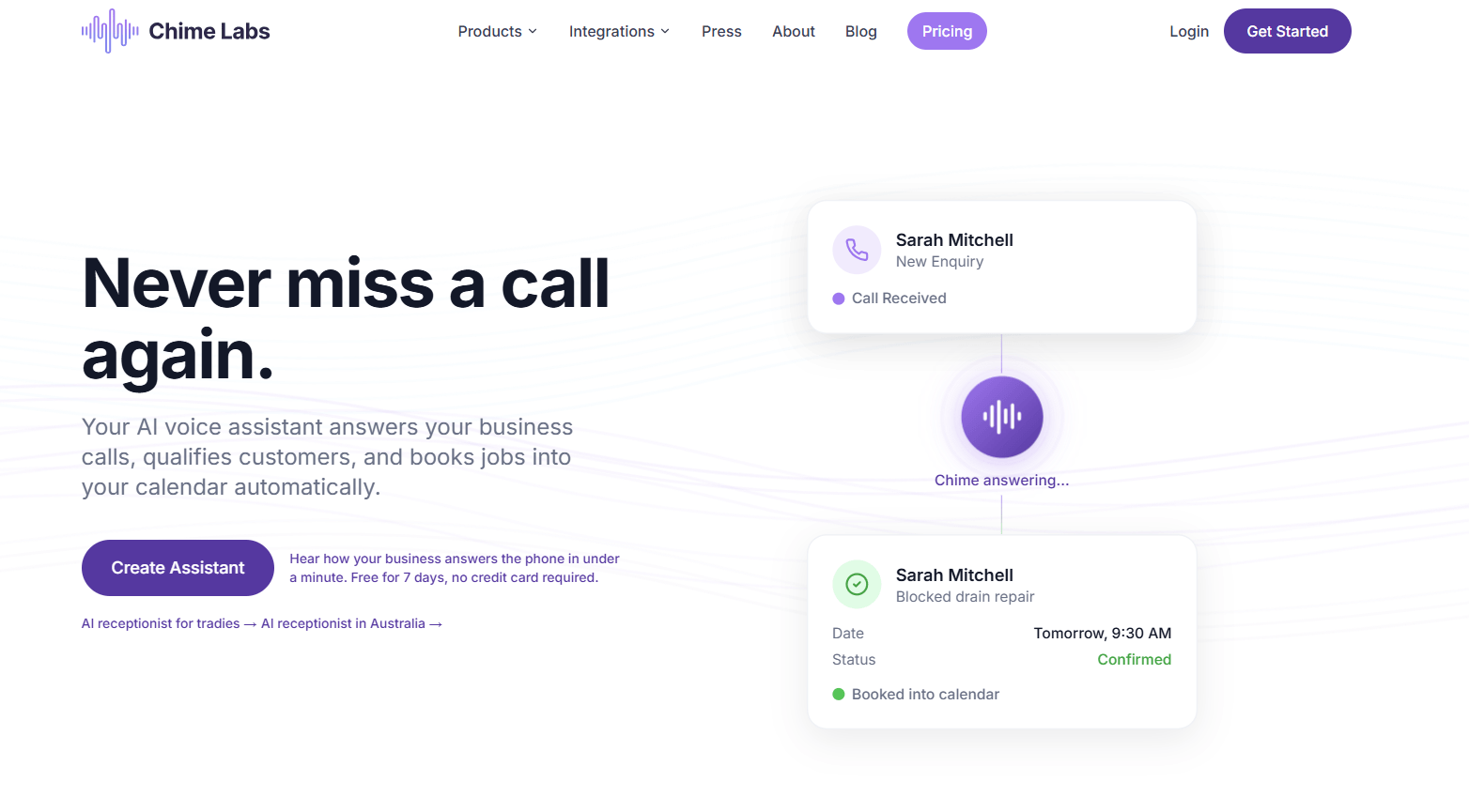
Chime Labs builds AI tools for tradespeople and service businesses, starting with an AI receptionist that answers calls around the clock, qualifies leads, and books jobs directly into a calendar. The founders, both former Googlers, started the company after seeing how a single missed call could cost a service business thousands of dollars in lost work each month.
The startup raised $900,000 (about US$600,000) in pre-seed funding led by 500 Global with support from angel investors. The capital is going toward expanding the product range so Chime Labs can become a broader operations tool for trades and services, alongside building out its team.
4. Fluency
Year Founded: 2023
HQ: Melbourne, Victoria, Australia
Size: 1-50
Founders: Finnlay Morcombe, Oliver Farnill
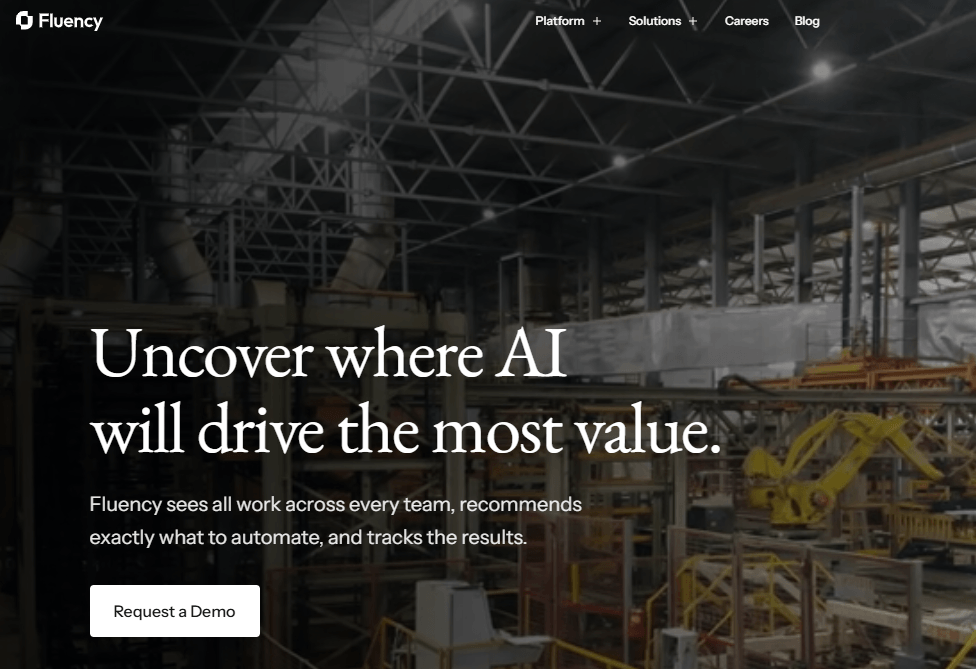
Fluency is a work intelligence platform that captures how processes are actually performed across a business, then uses AI to turn that activity into standard operating procedures and to flag where automation could help. The platform records steps across any web or desktop application without integrations, and already manages thousands of business processes for clients including AON, PVH Corp, Specsavers, and Houghton Mifflin Harcourt.
Fluency raised US$6 million (about AU$8.55 million) in a seed round led by Accel, Atlassian's first external investor, following a AU$1.5 million pre-seed round in 2025. The raise valued the company at around AU$30 million and is funding engineering hires and international expansion, with the founders spending much of their time in the United States.
5. Renewable Metals
Year Founded: 2020
HQ: Perth, Western Australia, Australia
Size: 1-50
Founders: Mark Urbani, Gary Johnson, Nick Vines
Renewable Metals has developed an alkaline leaching process that recovers more than 95% of the lithium, nickel, cobalt, copper, and manganese in used lithium-ion batteries, including hard-to-recycle lithium iron phosphate chemistry. The process runs in modular plants at lower cost than many existing methods and avoids creating new chemical by-products, positioning it against established overseas recyclers.
The company raised $12 million in a Series A led by the Clean Energy Finance Corporation, with support from UK recycler European Metal Recycling, Investible, and Climate Tech Partners, following an earlier AU$16.1 million seed round. The funding supports a demonstration plant in Kewdale, Western Australia, capable of processing up to 2,000 tonnes of batteries a year, equivalent to roughly 4,000 end-of-life electric vehicles.
6. Ideally
Year Founded: 2023
HQ: Sydney, New South Wales, Australia
Size: 51-200
Founders: James Donald, Brendan Cervin, Joshua Nu'u-Steele
Ideally is an AI market research platform that replaces lengthy briefs, weeks of fieldwork, and six-figure invoices with fast, continuously updated consumer insight. In about two and a half years the company has grown to 56 employees and counts DoorDash, Telstra, Google, and Asahi among its users, with customers also including Duckhorn, Tilray, and Rémy Cointreau.
Ideally raised $13.4 million (about US$8.7 million) in a Series A led by Shearwater Capital, with Altered Capital and Icehouse Ventures, valuing the company at more than AU$83 million. The funding follows a New York office opening in early 2026 and is accelerating US expansion and the rollout of Ideally Canvas, a product that builds a compounding dataset of a brand's consumer over time.
7. Relevance AI
Year Founded: 2020
HQ: Sydney, New South Wales, Australia
Size: 51-200
Founders: Daniel Vassilev, Jacky Koh, Daniel Palmer
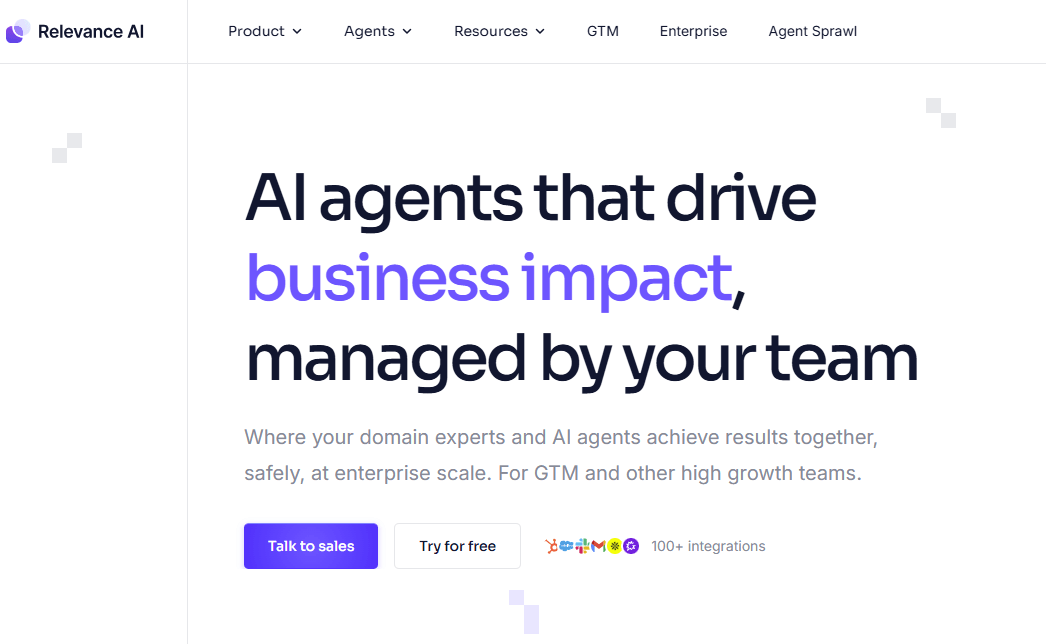
Relevance AI builds an operating system for the AI workforce, letting non-technical staff assemble teams of AI agents that can make contextual decisions and complete multi-step processes rather than simply following rules. Customers range from startups to large enterprises including Activision, Qualified, and SafetyCulture, and the company reported 40,000 agents created on its platform in a single month.
The company raised US$24 million (about AU$37 million) in a Series B led by Bessemer Venture Partners, with returning investors King River Capital, Insight Partners, and Peak XV, bringing its total raised to US$37 million. It has grown to around 80 people across Sydney and San Francisco and is using the funding to deepen its product and build out its US go-to-market team.
8. Lorikeet
Year Founded: 2023
HQ: Sydney, New South Wales, Australia
Size: 51-200
Founders: Steve Hind, Jamie Hall
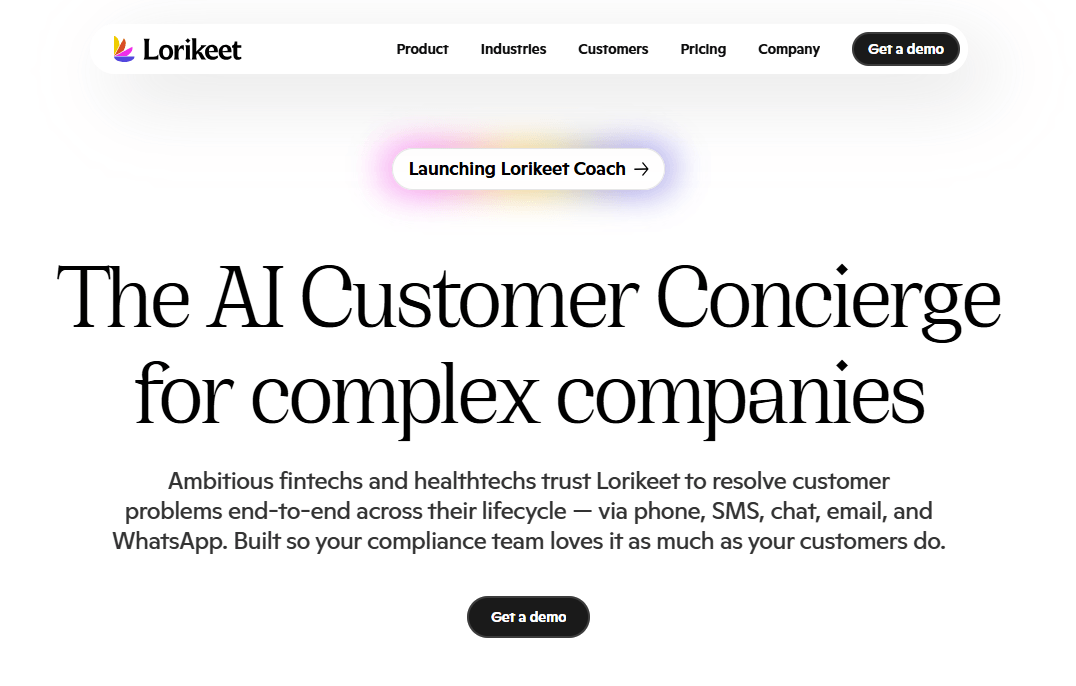
Lorikeet builds AI customer support concierges designed for complex, regulated industries such as financial services, healthcare, and energy, where the system takes real actions across chat, email, and voice rather than reciting help articles. It uses granular permissions and dynamic gating to keep high-consequence actions safe and auditable, and counts companies including Airwallex and Linktree among its customers.
Lorikeet raised US$35 million (about AU$54 million) in a Series A led by QED Investors, with participation from Blackbird, Square Peg, Skip Capital, and Airtree, making it the first company since Canva to attract early-stage backing from all three of Australia's leading venture firms. The company, which employs around 89 people, is using the capital to expand research and development and its global go-to-market effort.
9. Constantinople
Year Founded: 2022
HQ: Sydney, New South Wales, Australia
Size: 51-200
Founders: Macgregor Duncan, Dianne Challenor
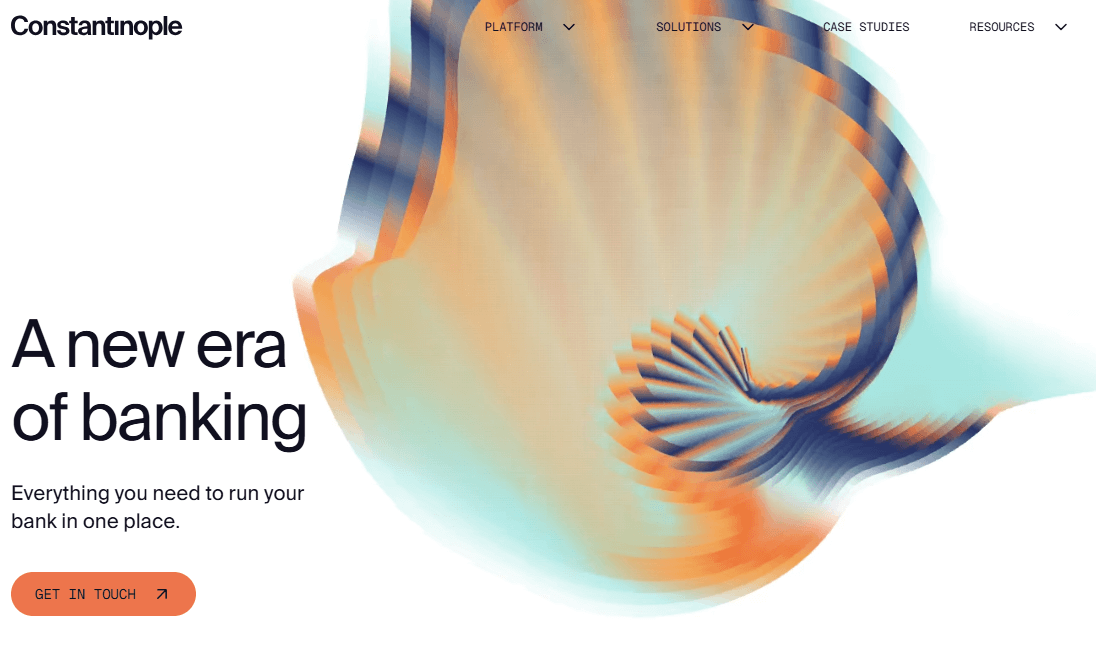
Constantinople offers a fully managed software and operations platform that lets banks run their entire technology and back office on a single system, covering transaction banking, payments, cards, and lending alongside automated compliance and fraud monitoring. Founded by two former Westpac executives, it counts Great Southern Bank, Australia's largest customer-owned bank, as a foundation client and has begun expanding into New Zealand.
The company raised $50 million (about US$33 million) in a Series A led by Prosus Ventures, with existing backers Square Peg and Airtree, bringing total funding to roughly US$77 million including its earlier seed round. With around 150 employees, Constantinople is using the capital to develop its platform and target overseas markets with high concentrations of small regional banks.
10. Everlab
Year Founded: 2023
HQ: Melbourne, Victoria, Australia
Size: 51-200
Founders: Steven Lu, Sam Kothari, Anshul Jain, Marc Hermann

Everlab runs a preventative healthcare platform that combines diagnostics, clinicians, specialists, prescriptions, and wearable data into a single connected system, giving patients a longitudinal view of their health. The platform integrates with more than 1,850 provider locations and over 180 clinicians, and has supported around 20,000 individual patients alongside corporate partners including BHP, Boston Consulting Group, and Bain & Company.
Everlab raised $65 million (about US$42 million) in a Series A led by Airtree Ventures, with Plural, Left Lane Capital, b2venture, and angel investor Pat Cummins, following a AU$15 million seed round less than a year earlier. The capital will strengthen the company's clinical and technology infrastructure and fund international expansion, beginning with the United Kingdom.
11. Hysata
Year Founded: 2021
HQ: Wollongong, New South Wales, Australia
Size: 51-200
Founders: Paul Barrett, Gerry Swiegers, Tom Campey
Hysata has developed a capillary-fed alkaline electrolyser that produces green hydrogen using significantly less energy than conventional designs, targeting hard-to-abate sectors such as steel, chemical manufacturing, and heavy transport. The company has attracted engineering talent from firms including Tesla, Apple, and BHP as it works toward mass-manufacturable, gigawatt-scale production.
Hysata raised US$111 million (about AU$172 million) in a Series B co-led by bp Ventures and Templewater, one of the largest climate technology rounds in the country, with backers including the Clean Energy Finance Corporation, POSCO, and Vestas Ventures. The funding is expanding production capacity at its Wollongong manufacturing facility as the company scales its team toward several hundred employees across multiple continents.
12. Samsara Eco
Year Founded: 2021
HQ: Sydney, New South Wales, Australia
Size: 51-200
Founders: Paul Riley
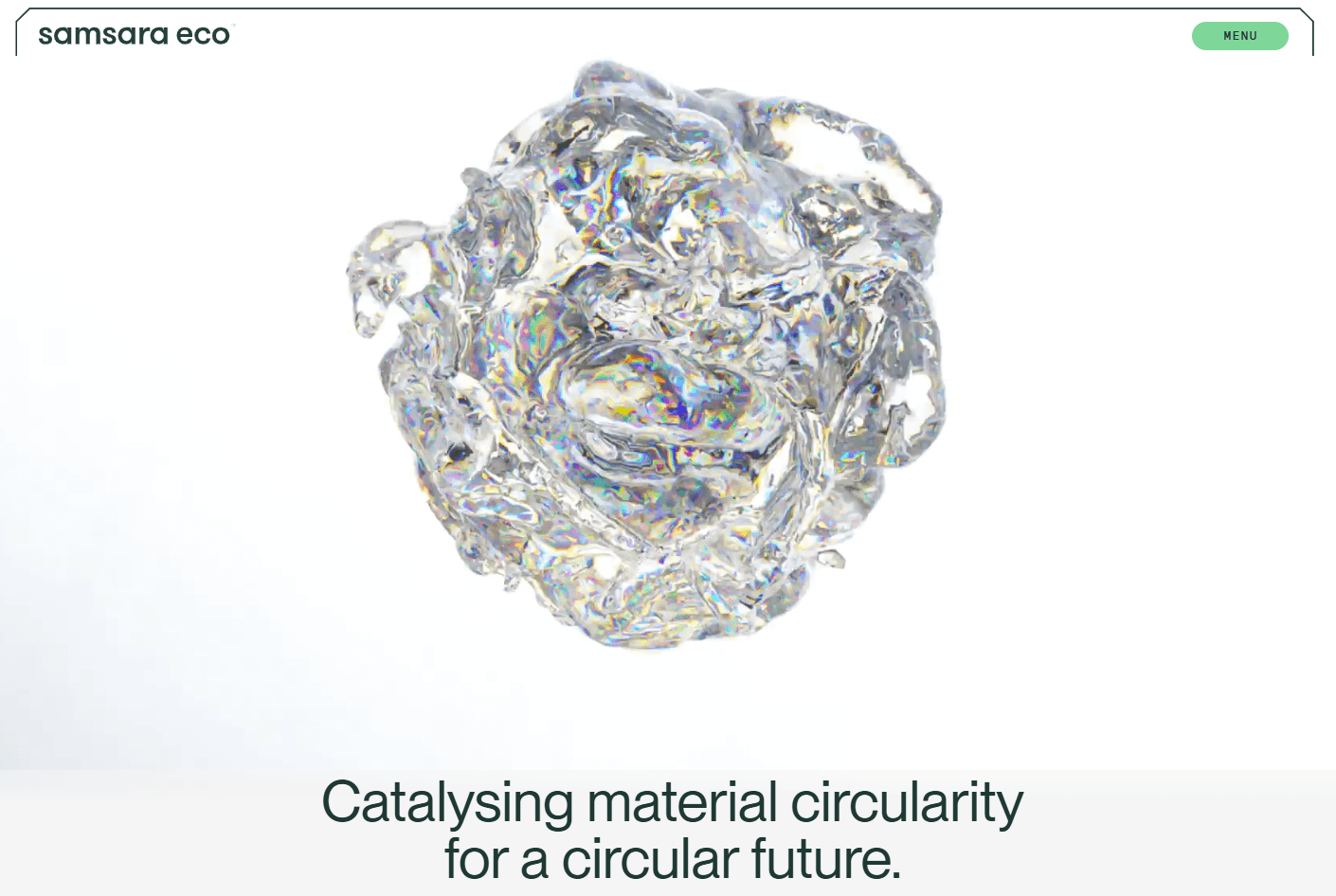
Samsara Eco uses AI-designed enzymes to break plastics and textiles down into their original building blocks, producing virgin-quality recycled nylon and polyester in a genuinely circular process. Launched in partnership with the Australian National University, the company is focused on the hardest-to-recycle materials and has begun operating an enzymatic recycling plant at Jerrabomberra in the Canberra region.
Samsara Eco has raised more than US$107 million in total, including a US$65 million round led by Temasek and Main Sequence, with backers including the Clean Energy Finance Corporation, lululemon, and Hitachi Ventures. With a team of more than 80 across the Asia Pacific, Europe, and North America, the company is commercialising its technology for high-volume production.
13. Splose
Year Founded: 2016
HQ: Adelaide, South Australia, Australia
Size: 51-200
Founders: Nicholas Sanderson

Splose is an all-in-one practice management platform for allied health professionals, including physiotherapists, occupational therapists, and speech pathologists, handling appointments, client onboarding, invoicing, and compliance. The software is used by more than 20,000 individual practitioners across Australia, New Zealand, and the United Kingdom, with that figure growing by more than 100% year on year.
Splose raised a Series A led by US growth equity firm Spectrum Equity, with participation from Australian investor collective Athletic Ventures, following an earlier AU$5 million round led by EVP. The round, which the South Australian government described as the largest growth capital raise by a SaaS business in the state, brings total funding to about AU$39 million and supports the platform's expansion across its three core markets.
14. Heidi
Year Founded: 2019
HQ: Melbourne, Victoria, Australia
Size: 200+
Founders: Tom Kelly, Waleed Mussa, Yu Liu
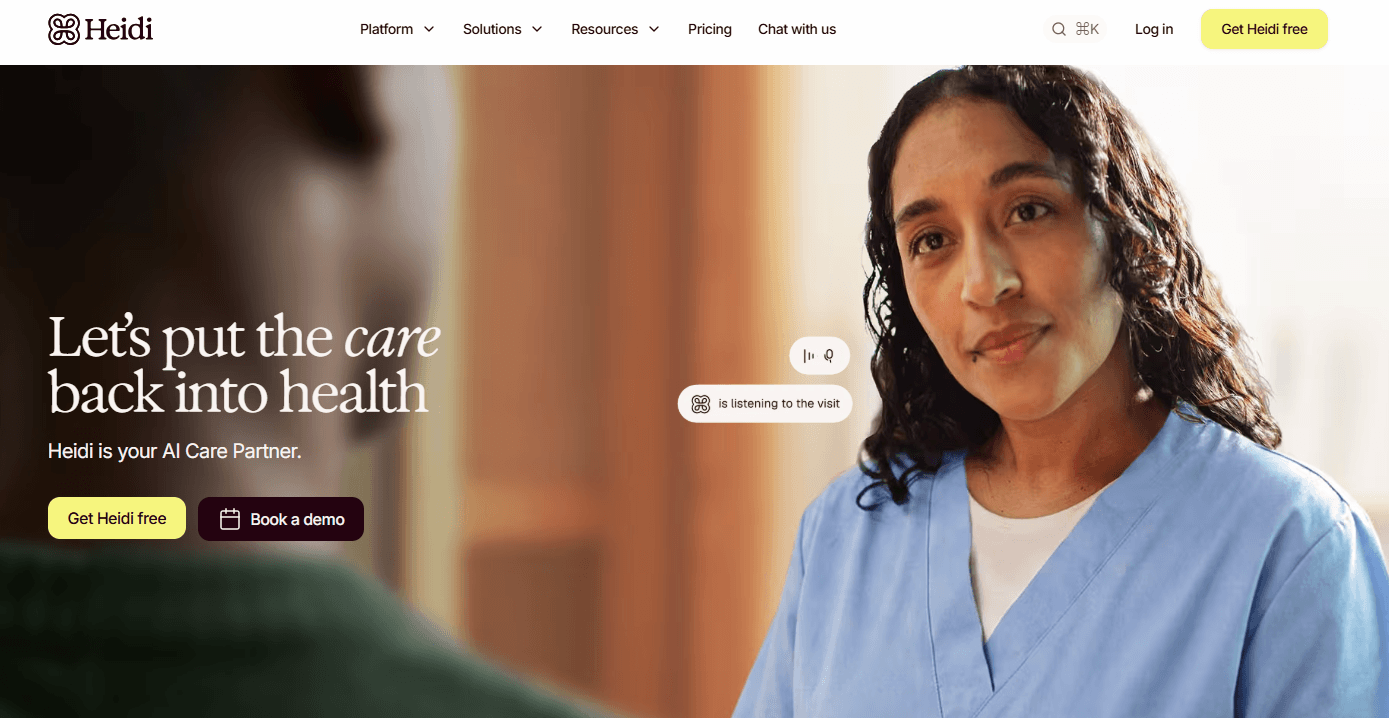
Heidi, formerly Heidi Health, builds an ambient AI "care partner" that transcribes patient consultations, drafts clinical notes, applies billing codes, and manages follow-up tasks for clinicians. The platform supports more than two million weekly consultations across 116 countries and 110 languages and has been adopted widely in the United Kingdom, where it reports use by a majority of NHS general practitioners.
Heidi raised US$65 million (about AU$100 million) in a Series B led by Point72 Private Investments, with continuing investors Blackbird, Headline, and LocalGlobe, valuing the company at US$465 million and bringing total funding to nearly US$100 million. With a team of more than 500 people, the company is using the capital to expand across the United States, United Kingdom, and Canada and to grow its headcount.
15. ROLLER
Year Founded: 2011
HQ: Melbourne, Victoria, Australia
Size: 200+
Founders: Luke Finn, Mark Finn
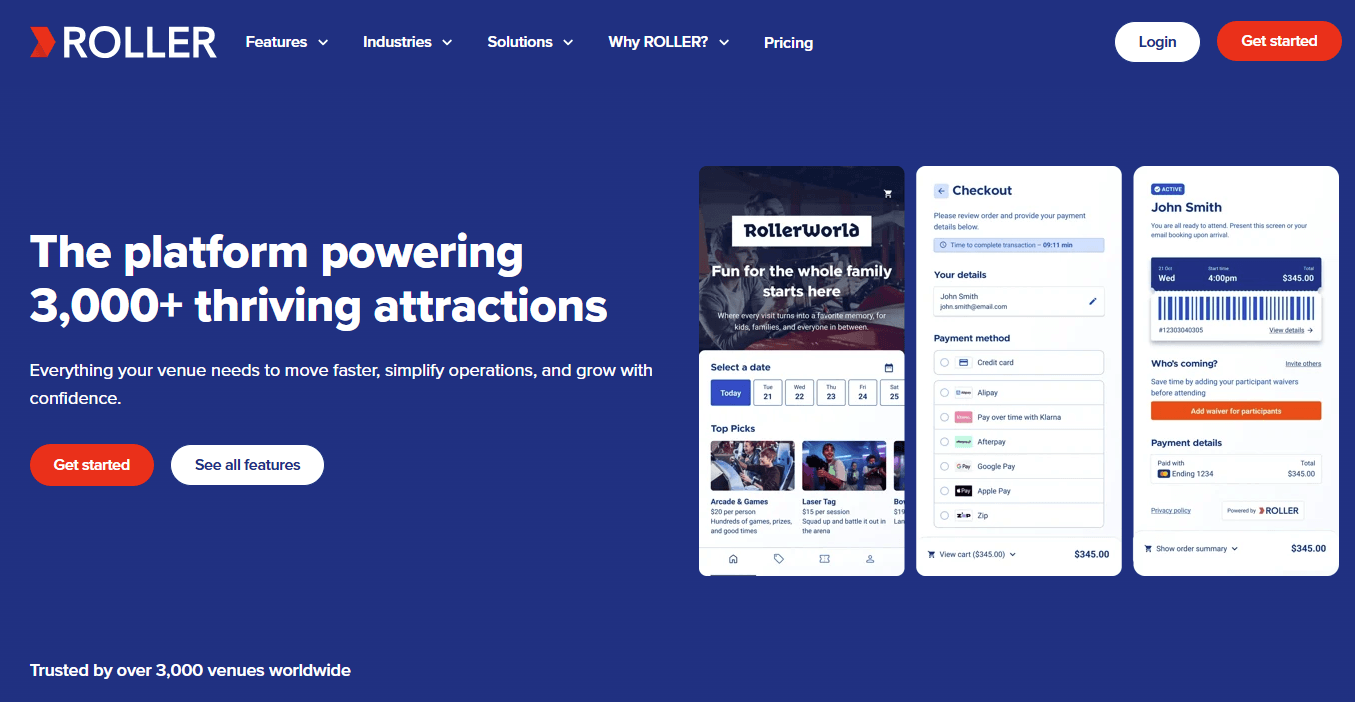
ROLLER is a cloud-based venue management platform for leisure and attractions businesses, bringing ticketing, point of sale, integrated payments, memberships, gift cards, and guest experience tools into one system. The company serves more than 3,000 customers across over 30 countries and has grown to more than 400 employees with offices in Melbourne, Sydney, San Francisco, Austin, London, Costa Rica, and Bosnia.
ROLLER secured an additional US$50 million growth investment led by existing investor Insight Partners, with J.P. Morgan joining as a new funding partner, lifting its total raised to roughly US$107 million. The company is investing in AI-powered functionality, an expanded financial services offering, new product capabilities, and its global support operation.
FAQs
1. What are the strongest industry sectors for startups in Australia?
Australia's strongest startup sectors in 2025 and 2026 are artificial intelligence, fintech, biotech and medtech, and climate technology, which together attracted the bulk of venture funding. Artificial intelligence led with about AU$1.0 billion raised in 2025, followed by fintech at AU$868 million and biotech and medtech at AU$829 million. Agtech, healthtech, and hardware and robotics also draw meaningful investment. Beyond technology, the country's traditional strengths in mining and critical minerals, agriculture, renewable energy, education, and tourism remain central to the broader economy.
2. What is the average startup investment in Australia?
Deal sizes vary widely by stage. In 2025 the median angel and pre-seed round was around AU$1.0 million, the median seed round was AU$2.5 million, the median Series A was about AU$11.0 million, and Series B and later rounds had a median near AU$30.0 million. Across all 390 deals tracked in 2025, the roughly AU$5.48 billion total works out to an average of about AU$14 million per deal, although that figure is skewed upward by a small number of very large late-stage rounds.
3. How many startups are there in Australia?
Counts depend on the source and definition. StartupBlink tracks Australia's ecosystem at roughly 5,000 active venture-relevant startups, while broader business databases that include very early and lightly funded companies list figures in the tens of thousands. Activity is heavily concentrated in Sydney and Melbourne, which together account for the large majority of venture capital, with Brisbane, Perth, Adelaide, and Canberra forming a growing set of secondary hubs. Around 10,000 Australian companies are estimated to have raised some form of funding to date.
4. How fast is the startup industry growing in Australia?
Australia's startup ecosystem is in an active recovery phase. Total venture funding rose about 31% in 2025 to AU$5.48 billion, and ecosystem rankings recorded growth of roughly 22% to 25% in ecosystem size and performance over the year. The momentum carried into 2026, with around AU$1.8 billion raised in the first quarter across 81 venture deals and 26 accelerator rounds, the strongest start to a year since 2022 and up about 63% on the same period a year earlier. Growth remains concentrated, however, with a small number of large rounds capturing a disproportionate share of capital.