

Most teams discover their payments bottlenecks during pre-launch agent pilots, not from compliance audits. Working across different tech companies, we have watched agent projects stall when a bot needs to 1) create a signed spending mandate per transaction, 2) handle webhook driven chargebacks and refunds, and 3) switch to stablecoin rails for sub-$1 micro-purchases.
In short, the hard part is not the model, it is identity, authorization, settlement, and audit. The biggest autonomous payments mistakes happen when teams assume "our PSP already supports this" and only later find gaps in policy controls, reconciliation, and dispute workflows.
The payments industry generated about 2.5 trillion dollars in revenue in 2024 and is projected to grow roughly 4 percent a year toward 3.0 trillion dollars by 2029, with McKinsey's latest Global Payments Report highlighting agentic commerce and AI-native operations as major forces reshaping the sector, which raises the bar for programmable authorization and settlement at scale.
You will learn how each platform handles agent identity and mandate signing, multi-currency and crypto rails for micro-transactions, and merchant operations like refunds and reconciliation.
Natural
Agentic payments platform focused on unified APIs for agents, businesses, and consumers. Emphasis on identity, authorization, execution, settlement, risk, and disputes per vendor documentation.
Best for:
Product teams that want a single API to run agent led payments plus merchant operations without stitching multiple vendors.
Key Features:
- Unified API for payments workflows, including refunds and disputes, per vendor documentation
- Policy based authorization and spend controls at the agent or workflow level, per vendor documentation
- Developer primitives like idempotency, webhooks, and event logs for audit, per vendor documentation
Why we like it:
It treats agent money movement as a full stack problem, not just a wallet, which saves build time when you need authorization, settlement, and dispute handling in one place.
Notable Limitations:
- No independent user reviews on major software directories identified as of June 25, 2026
- Early ecosystem integrations may be narrower than general purpose PSPs
- Limited public benchmarks for throughput and latency
Pricing: Pricing not publicly available. Contact Natural for a custom quote.
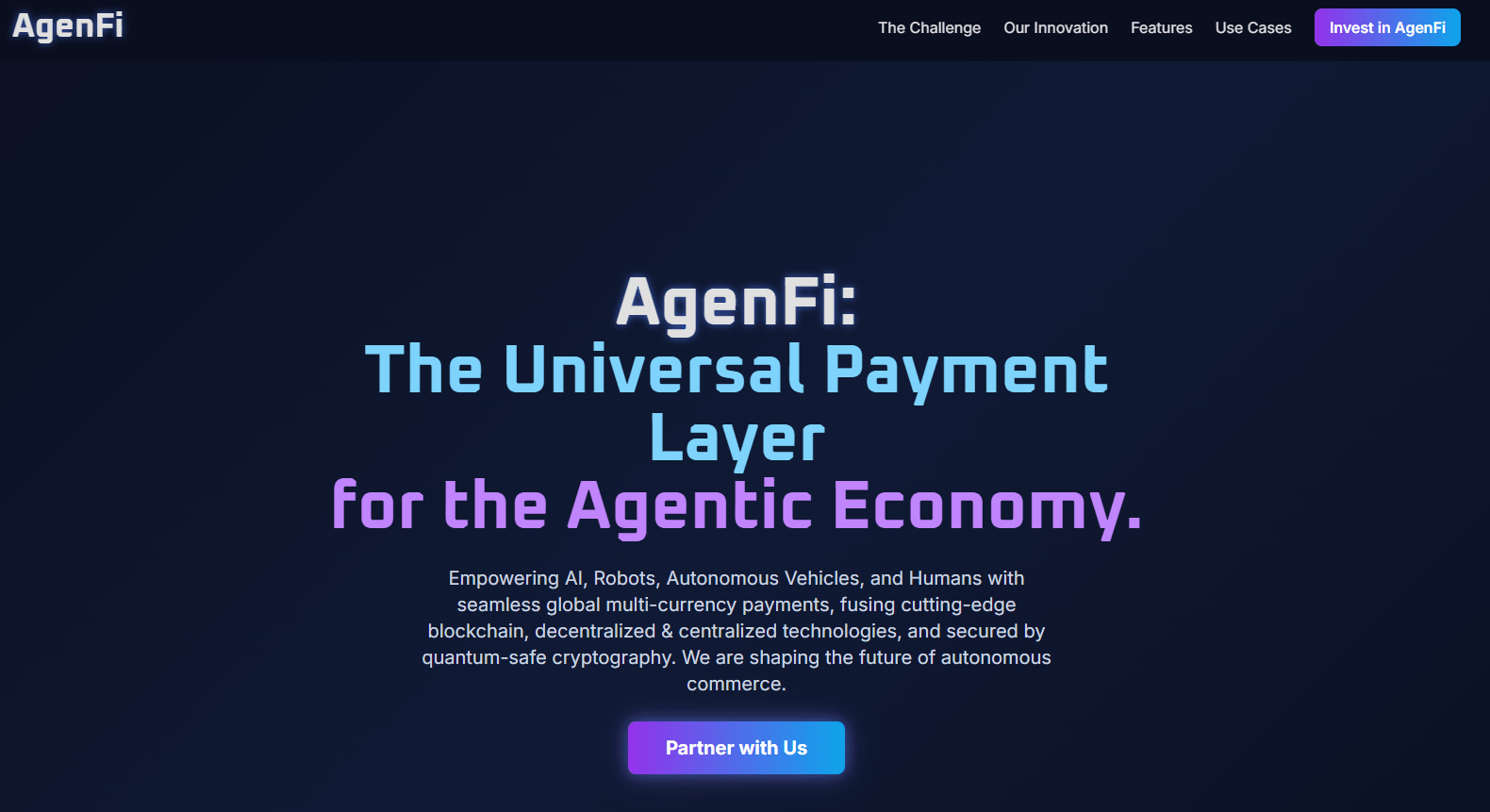
AgenFi
Universal payment layer for AI agents, robots, and humans with programmable, Web3 secured payments across multiple currencies per vendor documentation.
Best for:
Teams that need machine to machine micro-purchases and multi-currency payouts on Web3 rails.
Key Features:
- Web3 native programmable payments and multi-chain settlement, per vendor documentation
- Multi-currency support with APIs and SDKs for agents, per vendor documentation
- Agent native controls and wallets for machine transactions, per vendor documentation
Why we like it:
Strong fit for agent to agent micropayments and programmable flows where card network fixed fees are a poor match.
Notable Limitations:
- No third party reviews on G2, Capterra, or TrustRadius identified as of June 25, 2026
- Web3 first design may face regional regulatory constraints
- Enterprise accounting and tax workflows may require custom work
Pricing:
Pricing not publicly available. Contact AgenFi for a custom quote.
Horus Agentic
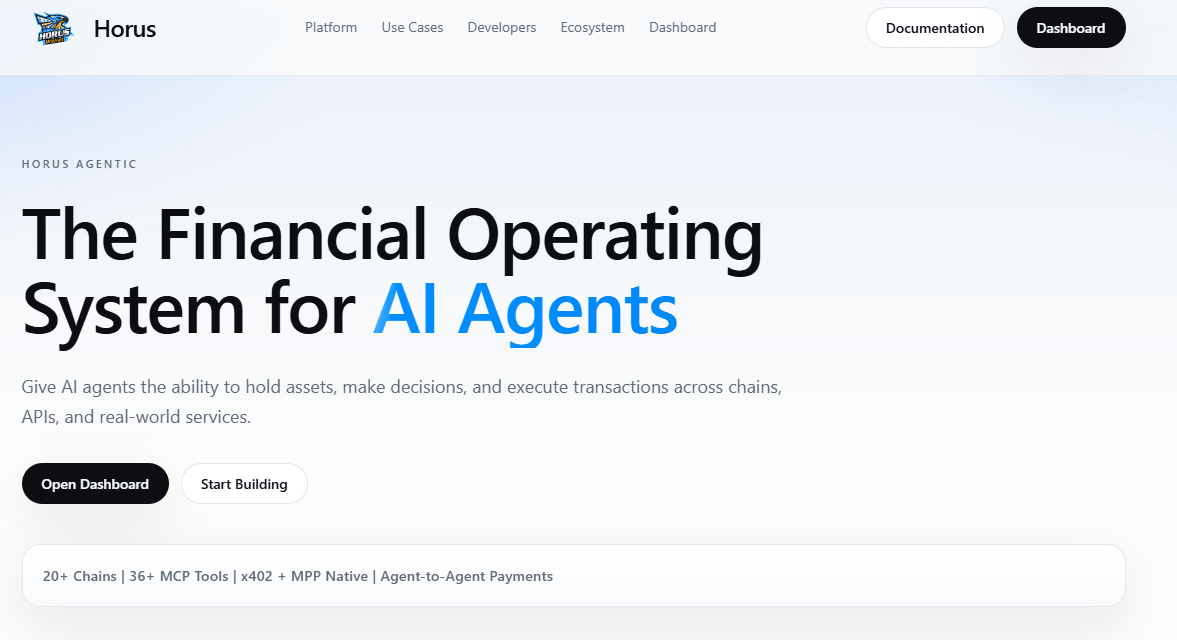
Programmable financial execution layer that turns AI agents into autonomous economic actors with multi-chain wallets per vendor documentation.
Best for:
Quant, trading, or automation teams that need conditional strategies, position funding, and policy controlled execution tied to agent logic.
Key Features:
- Agent controlled wallets across chains with programmable policies, per vendor documentation
- Conditional execution rules and triggers for capital actions, per vendor documentation
- Auditability with activity logs for compliance review, per vendor documentation
Why we like it:
The policy plus execution focus fits event driven strategies where agents must act on price, funding, or risk signals without human approval.
Notable Limitations:
- Limited public references and independent case studies as of June 25, 2026
- Financial and trading features may require extra controls for market abuse surveillance
- No verified third party performance reports
Pricing:
Pricing not publicly available. Contact Horus Agentic for a custom quote.
PayCentral (Phronetic AI)
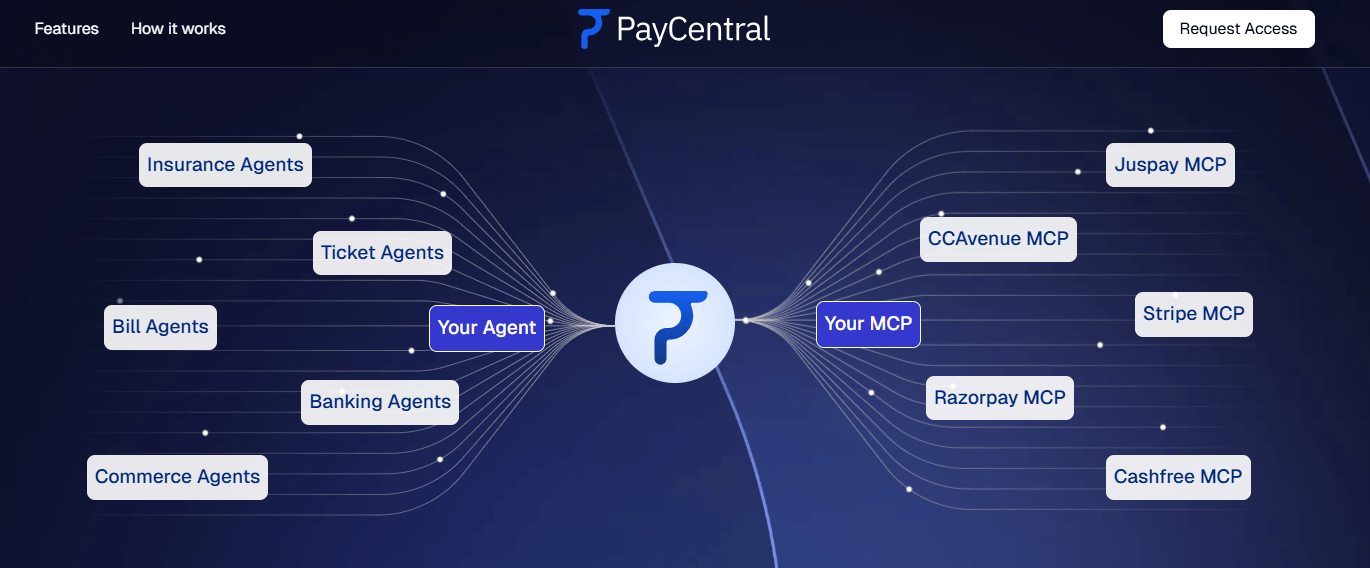
Agentic payments layer built on Google's AP2 for autonomous merchant services like payments, refunds, and reconciliation per vendor documentation.
Best for:
Merchant and platform teams experimenting with AP2 mandates who want agent driven checkout, refunds, and ledgering.
Key Features:
- AP2 based mandate creation and authorization, per vendor documentation
- Merchant services like refunds, subscriptions, and reconciliation, per vendor documentation
- Audit logs and policy controls for autonomous transactions, per vendor documentation
Why we like it:
Clear alignment to AP2 proof-of-mandate flows for agent checkout and post-purchase operations.
Notable Limitations:
- AP2 security is still under active research, with known injection and context binding risks raised in the literature
- Limited third party user reviews as of June 25, 2026
- Regional rollout details and processor coverage are not fully public
Pricing:
Pricing not publicly available. Contact Phronetic AI for a custom quote.
Agentic Payments Tools Comparison: Quick Overview
| Tool | Best For | Pricing Model | Free Option |
|---|---|---|---|
| Natural | Unified API for end to end agent money movement | Custom quote | Not stated |
| AgenFi | Web3 native micro-transactions and payouts | Custom quote | Not stated |
| Horus Agentic | Policy driven financial execution for strategies | Custom quote | Not stated |
| PayCentral (Phronetic AI) | AP2 based merchant services for agents | Custom quote | Not stated |
Agentic Payments Platform Comparison: Key Features at a Glance
| Tool | Agent Identity and Mandates | Multi-Currency and Crypto | Refunds and Disputes |
|---|---|---|---|
| Natural | Policy based authorization per agent or workflow | Yes, per vendor docs | Yes, with audit logs |
| AgenFi | Agent native wallets and controls | Yes, Web3 multi-chain | Basic via programmable flows |
| Horus Agentic | Policy rules and conditional triggers | Yes, multi-chain | Limited, focused on execution |
| PayCentral (Phronetic AI) | AP2 based mandates | Roadmap and regional detail vary | Yes, merchant focused |
Agentic Payments Deployment Options
| Tool | Cloud API | On-Premise | Integration Complexity |
|---|---|---|---|
| Natural | Yes | Not stated | Low to medium for standard PSP style flows |
| AgenFi | Yes | Not stated | Medium for Web3 key and policy setup |
| Horus Agentic | Yes | Not stated | Medium to high for trading or capital workflows |
| PayCentral (Phronetic AI) | Yes | Not stated | Medium, depends on AP2 integration path |
Agentic Payments Strategic Decision Framework
| Critical Question | Why It Matters | What to Evaluate | Red Flags |
|---|---|---|---|
| How do agents authenticate spending intent? | Mandates reduce fraud and disputes | Signed mandates, policy scope, revocation, audit | No cryptographic proof of intent |
| Can you handle micro-transactions at scale? | Card fixed fees break sub-$1 buys | Stablecoin rails, batching, per request metering | High minimum fees, no on chain option |
| What is your dispute and refund posture? | Agents trigger edge cases at odd hours | Automated refunds, time-bound SLAs, webhooks | Manual only dispute handling |
| How is compliance enforced? | Regulators expect controls for non human spenders | KYC/KYB, sanction checks, travel rule, logs | Opaque logs, no policy engine |
| Which protocols and networks are supported? | Visa, Mastercard, x402, AP2 shape interoperability | Current and roadmap coverage | One rail only with no roadmap |
Agentic Payments Solutions Comparison: Pricing and Capabilities Overview
| Organization Size | Recommended Setup | Monthly Cost | Annual Investment |
|---|---|---|---|
| Startup, pre-PMF | Natural or AgenFi sandbox, narrow scope, hard spend caps | Varies, pricing not public | Varies, pricing not public |
| Growth stage SaaS | Natural plus PayCentral pilot for AP2 checkout in one region | Varies, pricing not public | Varies, pricing not public |
| Fintech or exchange | AgenFi or Horus for Web3 and execution, with strict policies | Varies, pricing not public | Varies, pricing not public |
| Global marketplace | Mix of Natural for ops and PayCentral for AP2 merchants | Varies, pricing not public | Varies, pricing not public |
Problems & Solutions
Problem: Micro-transactions under one dollar are uneconomic on card rails due to fixed fees.
Solution: Choose a platform with crypto or stablecoin settlement and per request metering. Industry moves like Mastercard's launch of Agent Pay for Machines and related machine payment protocols show tangible momentum toward agent friendly micro-payment rails. AgenFi and Horus Agentic, by design, focus on Web3 settlement, while Natural abstracts rails choice with policy controls.
Problem: Agent authorization is hard to prove in a dispute.
Solution: Adopt mandate based authorization with signed, revocable proofs. Google's AP2 and similar mandate protocols are being piloted to address verifiable agent intent, although researchers have already flagged injection and context binding risks that teams must mitigate, as covered in arXiv red-teaming of AP2 and an IMF note on agent led payments risks. PayCentral's AP2 alignment is useful for early merchant pilots, and Natural's policy engine approach offers an alternative path.
Problem: Moving from pilot to production stalls due to compliance and operational gaps.
Solution: Prioritize platforms with automated KYC or KYB triggers, audit logs, and webhook driven refunds and reconciliation. Analysts report that many agent programs remain stuck in pilots without ROI, which underscores the need for production grade ops and controls, per Forrester commentary via ITPro.
Problem: Interoperability across networks and standards is unclear.
Solution: Select vendors that track the fast moving protocol landscape across Visa, Mastercard, x402, and AP2. Recent announcements from leading networks and processors suggest consolidation around agent friendly credentials, settlement, and dispute primitives, but volumes are still nascent, so hedging with multi rail support is prudent, as seen in McKinsey's coverage of agentic commerce momentum and ABC News reporting on Visa embedding agentic checkout into ChatGPT.
Problem: Regional rollout and regulatory risk, especially for Web3 settlement.
Solution: Start with limited geographies and clear record keeping. Independent research highlights compliance and governance as first order design needs for agent payments, not afterthoughts, including Deloitte's 2026 payments trends and the IMF note above.
Bottom Line: How To Pick the Right Agentic Payments Stack
You do not need the flashiest agent demo, you need verifiable intent, policy controlled spend, and boring reconciliation that never skips a line item.
The broader market is realigning around agent friendly rails and standards, from network announcements to mandate protocols, yet volumes remain early and the pilot to production gap is still wide, as reflected in Fortune's coverage of Mastercard's Agent Pay, ITPro on enterprise readiness, and McKinsey on agentic commerce momentum.
Start small with strict spend caps and auditable mandates, then expand to multi rail settlement once your dispute and refund posture holds up in production.