Most teams discover their data is scattered across SaaS apps and shadow AI pipelines during a breach post-mortem, not from a quarterly audit. From our experience in the startup ecosystem, the fastest fixes come from privacy vaults and sovereign-by-design identity, not another SIEM rule. Think concrete guardrails like format-preserving tokenization for analytics, deterministic re-identification keys under role controls, and peer-to-peer authentication to cut out centralized directories. The urgency is real, since the average breach reached 4.44 million dollars globally in 2025 - while U.S. organizations faced a record 10.22 million dollars - per IBM's Cost of a Data Breach Report 2025. Teams that add AI security and automation save an average of 1.9 million dollars and reduce breach lifecycles by 80 days, a pattern confirmed by independent coverage on CFO.com.
The broader "privacy vault" space is maturing fast, with mainstream examples like Skyflow's marketplace debut showing category traction, as reported by Business Wire. From our long list, we narrowed to four platforms that consistently align with Digital Sovereignty and Data Privacy Vaults principles, then validated claims against public docs and listings. In the next sections you will get verified capabilities, who wins on deployment and compliance fit, what to watch for in reviews, and how to size cost and effort with confidence.
SovereignD
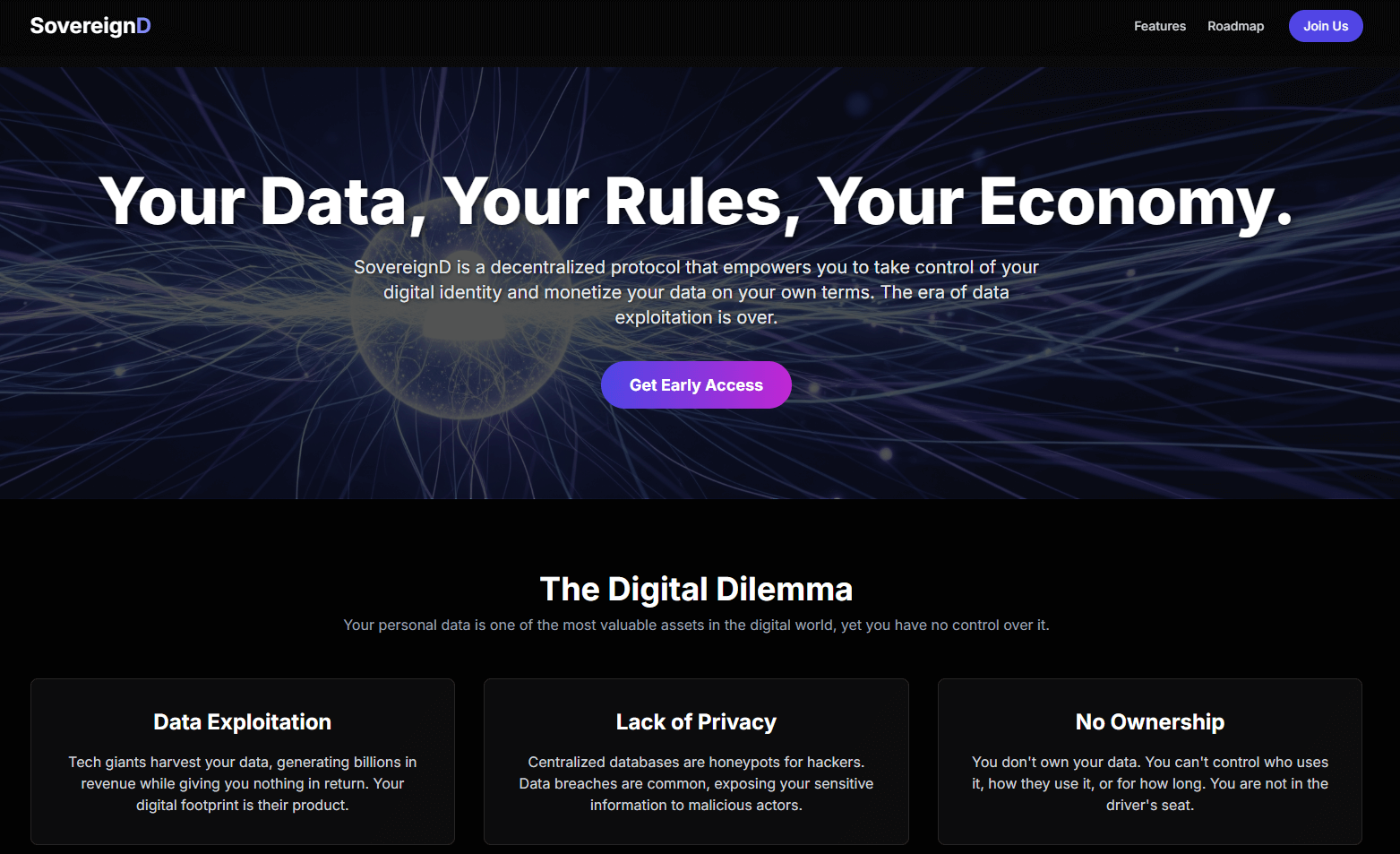
A decentralized protocol for encrypted, self-controlled data vaults, where users define usage rules and can monetize access. Early-stage focus on putting individuals in control of data sharing and licensing.
- Best for: Web3-forward teams piloting user-permissioned datasets, researchers exploring consented data markets, and projects prioritizing self-sovereign governance.
- Key Features: Encrypted personal vaults under user control, policy definition for data usage, monetization via protocol token mechanics, AI-assisted policy authoring, decentralized marketplace for data access. Per vendor documentation.
- Why we like it: Clear articulation of user-defined data policies and a vault-first approach that fits sovereign data design patterns.
- Notable Limitations:
- Independent third-party reviews and analyst coverage are scarce as of early 2026, which limits external validation. Disclosure based on our review of public listings and news coverage.
- Production-scale customer references are not visible on mainstream review sites or marketplaces at this time. Disclosure based on our search across marketplaces and review portals.
- Pricing: Pricing not publicly available. Contact vendor for a custom quote. Disclaimer: we did not find verified third-party marketplace pricing.
Vaultys
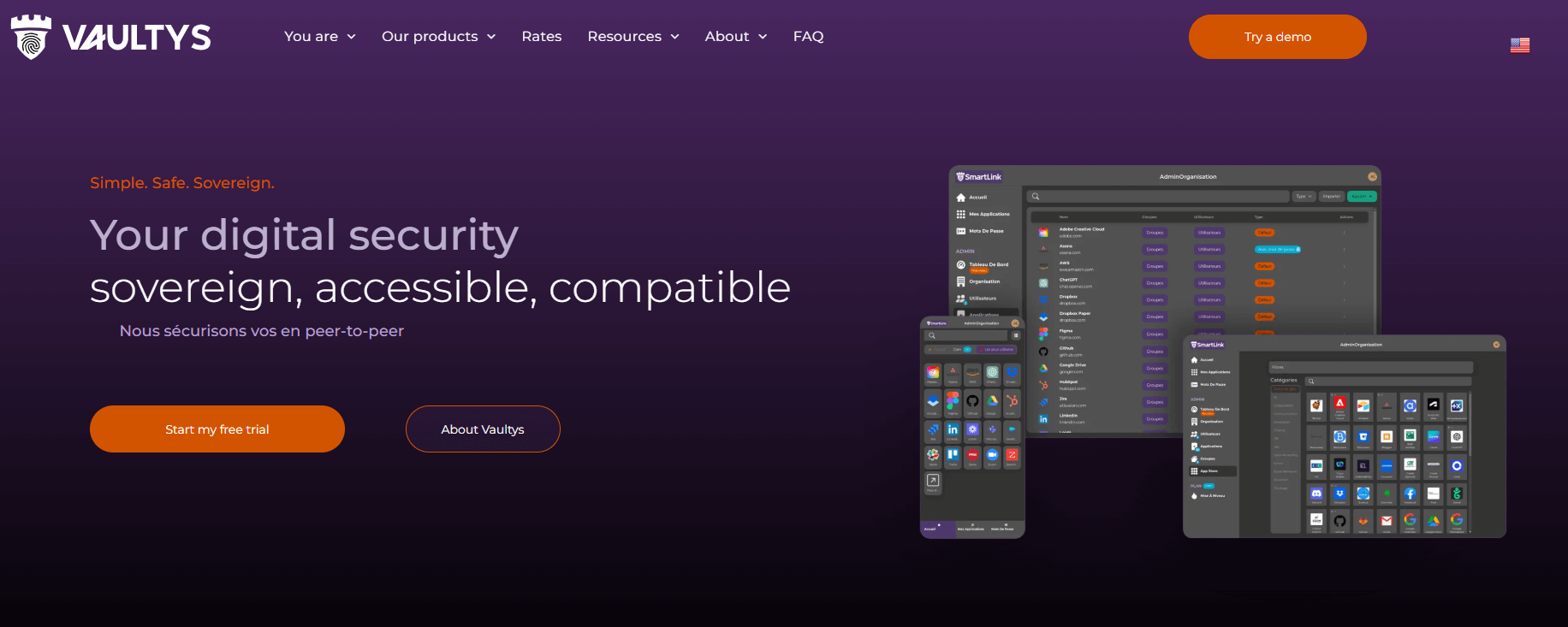
Peer-to-peer sovereign digital identity with passwordless login, a SmartLink IAM layer, and a VaultysBox protected space for sensitive file exchange. Mobile app distribution confirms active development.
- Best for: SMEs seeking passwordless login and sovereign identity, executive teams and boards needing a protected collaboration space, European orgs sensitive to post-quantum roadmaps.
- Key Features: Self-sovereign identity wallet, passwordless authentication with passkeys and biometrics, peer-to-peer validation, SmartLink integration with SAML and OIDC, VaultysBox for encrypted storage and sharing. Per vendor documentation and app store description.
- Why we like it: Practical blend of SSI, passwordless, and a secure workspace for boards or crisis rooms, plus mobile distribution to speed adoption. The VaultysID app is listed as free to download on the Apple App Store.
- Notable Limitations:
- Early-stage footprint, limited independent public reviews beyond app store listings. A CB Insights company profile lists Vaultys as early stage with minimal disclosed funding, which signals nascency (CB Insights).
- Enterprise pricing details are not covered by third-party marketplaces or review sites as of this writing, so buyers should expect direct quotes.
- Pricing: App download is free on the Apple App Store. Vendor communications mention a paid family plan and business offerings, but business pricing is not independently listed on third-party marketplaces. Contact vendor for a custom quote.
Protecto Data Privacy Vault
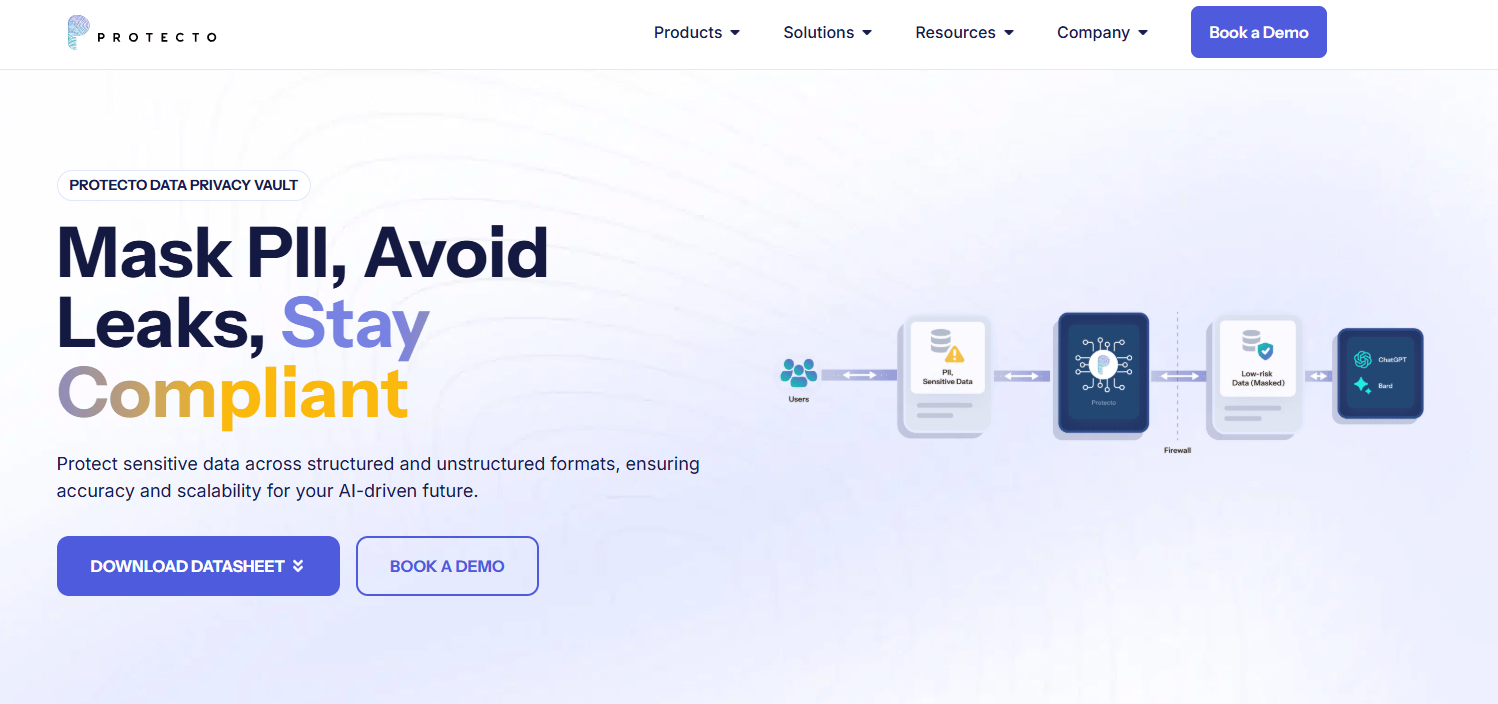
API-based PII and PHI masking with format-preserving tokenization to keep analytics and AI useful while originals stay locked in a vault. Offers SaaS and enterprise deployment options, including a pay-as-you-go model launched in late 2025.
- Best for: Data teams running analytics or RAG on sensitive datasets, healthcare and financial services needing PHI or PII controls, AI agent builders designing privacy by default.
- Key Features: API-driven scanning and masking for PII and PHI, format-preserving and deterministic tokenization for referential integrity, vault for originals with controlled unmasking, on-prem or dedicated VPC options for enterprises, pay-as-you-go SaaS for AI agent builders. Per vendor documentation.
- Why we like it: Deterministic, format-preserving tokenization reduces broken joins and preserves model performance, which cuts rework during data migrations and AI projects.
- Notable Limitations:
- Limited public review volume, the Protecto seller profile shows minimal verified reviews, which reduces peer benchmarking (G2 seller page).
- Few third-party analyst mentions as of publication, so diligence should include a proof of concept on representative data and throughput.
- Pricing: Per vendor pricing page, listed SaaS plans start near 250 dollars per month with higher tiers, a pay-as-you-go option, and an enterprise custom quote. For regulated buyers, confirm enterprise deployment terms and total cost of ownership in writing. No third-party marketplace price sheet found.
SerenityVault
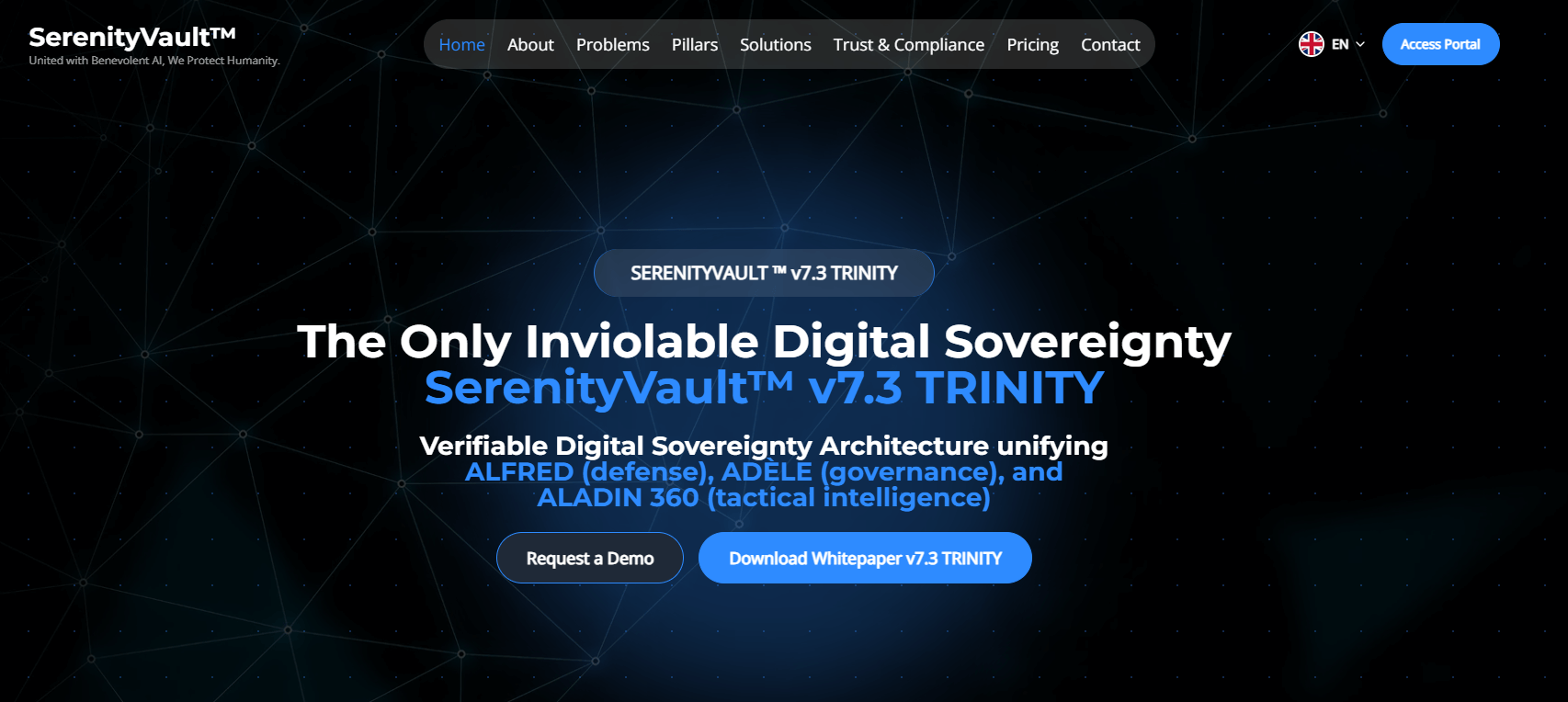
Sovereign infrastructure platform positioned for verifiable digital sovereignty, with secure vaulting, AI governance, and custom deployments under NDA.
- Best for: Public sector, defense, and highly regulated enterprises seeking sovereign infrastructure and formal AI governance guardrails.
- Key Features: Secure vaulting under sovereign infrastructure, governance via a named orchestration layer, cryptographic traceability claims, custom scoping via NDA-gated assessments. Per vendor documentation.
- Why we like it: Strong emphasis on non-foreign infrastructure and verifiability resonates with data residency and sovereignty programs, especially after key EU data rules took effect in 2025, as noted by the European Commission's overview of the EU Data Act.
- Notable Limitations:
- Independent third-party reviews are limited, and capabilities are primarily documented behind NDA or vendor channels. PR-style mentions exist in crypto trade press, for example a partnership announcement carried by CryptoSlate, which is not the same as analyst validation.
- Pricing transparency is low, expect bespoke quotes and longer procurement.
- Pricing: Pricing not publicly available. Engagements appear quote-based only.
Digital Sovereignty and Data Privacy Vaults Tools Comparison: Quick Overview
| Tool | Best For | Pricing Model | Highlights |
|---|---|---|---|
| SovereignD | Web3 pilots, consented data marketplaces | Custom, early-stage | User-controlled vaults with data usage policies |
| Vaultys | SMEs, boards, EU-focused identity programs | Custom for business, consumer family plan indicated | Passwordless SSI plus secure file space |
| Protecto Data Privacy Vault | Data and AI teams in regulated industries | Published SaaS tiers plus enterprise | Format-preserving tokenization, API-first |
| SerenityVault | Public sector, defense, critical national infrastructure | Custom only | Sovereign infrastructure focus with governance |
Digital Sovereignty and Data Privacy Vaults Platform Comparison: Key Features at a Glance
| Tool | Encrypted Vault | Tokenization/Masking | SSI or Passwordless |
|---|---|---|---|
| SovereignD | Yes | N/A, protocol focus | N/A |
| Vaultys | VaultysBox | N/A | VaultysID passwordless SSI |
| Protecto Data Privacy Vault | Yes, originals locked | Yes, deterministic and format-preserving | N/A |
| SerenityVault | Yes | N/A disclosed | N/A |
Digital Sovereignty and Data Privacy Vaults Deployment Options
| Tool | Cloud API | On-Premise | Integration Complexity |
|---|---|---|---|
| SovereignD | Roadmap dependent | Protocol driven | Developer effort for protocol integration |
| Vaultys | SaaS suite | Vendor states deployable in customer infrastructure | Medium, IAM and device enrollment |
| Protecto Data Privacy Vault | Yes | Yes, dedicated VPC or self-host per enterprise tier | Low to medium, API-based |
| SerenityVault | Vendor-operated sovereign infra | Custom deployments | High, NDA-scoped rollout |
Digital Sovereignty and Data Privacy Vaults Strategic Decision Framework
| Critical Question | Why It Matters | What to Evaluate |
|---|---|---|
| Do we need data residency in the EU with vendor switchability? | The EU Data Act has applied since September 12, 2025, strengthening switching and access rights, which shapes cloud and data contracts. See the EU timeline on the Interoperable Europe Portal. | Residency options, exit plans, data portability terms, switching fees, SLOs. Red flag: no contractual portability or opaque switching penalties. |
| Can analytics and AI remain accurate after masking? | Poor masking breaks joins and models, raising costs that already average 4.44 million dollars per breach globally per IBM's 2025 report. | Format-preserving, deterministic tokenization, benchmark on representative workloads. Red flag: one-way random masking without referential integrity guarantees. |
| How do we handle EU to US transfers post-Schrems II? | Privacy Shield was invalidated, SCCs require safeguards, while the 2023 EU-US Data Privacy Framework is in force yet still scrutinized. See context from DLA Piper and the DPF status on the U.S. Department of Commerce. | Transfer impact assessments, vaulting or tokenization before export, SCCs and DPF adherence. Red flag: no technical or legal transfer controls. |
Digital Sovereignty and Data Privacy Vaults Solutions Comparison: Pricing & Capabilities Overview
| Organization Size | Recommended Setup | Monthly Cost | Annual Investment |
|---|---|---|---|
| Startup data team | Protecto Starter for API masking plus vault, pilot Vaultys for passwordless | Vendor lists entry SaaS near 250 dollars monthly for Starter, confirm current plan | Approx. 3,000 dollars, verify contractual terms |
| Mid-market regulated | Protecto mid tier plus on-prem or dedicated VPC, Vaultys for exec workspace | Mixed, SaaS plus infra or VPC fees, request enterprise quotes | Custom, depends on volume and data sources |
| Public sector or defense | SerenityVault custom sovereign deployment, evaluate Vaultys for identity | Quote only, no public price lists | Quote only |
| Web3 data marketplace pilot | SovereignD proof of concept with limited dataset | Quote or grant program if available | Project based |
Problems & Solutions
-
Problem: You must comply with the EU Data Act, which has applied since September 12, 2025, including switching and data access provisions, while keeping PII private across analytics and AI.
- Solution with Protecto: Tokenize PII in your data lake and RAG pipelines to keep joins intact, then vault originals with role-based unmasking, which aligns with the push for interoperable access without exposing raw personal data. The Data Act's applicability timeline is confirmed by the European Commission's overview and Article 50 summaries (Data Act Law article guide).
- Solution with Vaultys: Issue sovereign identities to staff for passwordless access to data portals and switching workflows, reducing weak password risk while meeting internal sovereignty goals. App distribution legitimacy is visible on the Apple App Store.
-
Problem: Your security team is absorbing rising breach costs while trying to enable AI with PHI and PII.
- Solution with Protecto: Apply API-based masking and deterministic tokenization to keep AI effective on de-identified data, reducing incident blast radius and aligning with cost reduction patterns observed in IBM's 2025 breach report, which found that extensive use of AI in security saves an average of 1.9 million dollars.
- Solution with SerenityVault: For workloads that require sovereign infrastructure and strict governance, run NDA-scoped pilots to validate claims around cryptographic traceability and non-foreign cloud dependencies, which addresses sovereignty expectations many regulators now emphasize. EU policy pressure is evidenced by the Data Act's in-force status on the Digital Policy Alert tracker.
-
Problem: Cross-border data transfers after the Privacy Shield invalidation remain complex even with the 2023 EU-US DPF in place.
- Solution with SovereignD: Keep personal data in user-controlled vaults and share only policy-approved, licensable attributes. This reduces export of raw identifiers while creating an auditable data usage model. Schrems II background and SCC conditions are outlined by Kirkland & Ellis, while DPF status is tracked by EU legal trackers such as the Digital Policy Alert.
Bottom Line on Picking a Digital Sovereignty and Privacy Vault Stack
If you need immediate, measurable risk reduction for analytics and AI, start with API-level masking and tokenization, then add sovereign identity for access and file workflows. For government and defense, run short, evidence-driven pilots on sovereign infrastructure before committing capital. The macro trend is clear - breach costs remain substantial, and shadow AI has emerged as a new driver of increased breach expenses, making strong privacy controls a financial decision as much as a technical one. Finally, keep a compliance lens on EU data rules that entered application in 2025, since switching rights and residency considerations will shape contracts and architecture.