

Most teams discover access control gaps during their first security review, not from product demos. Working across different tech companies, we have watched pilots stall when chatbots need role scoped credentials, auditable tool calls, or scheduled automations across systems.
From our experience in the startup ecosystem, the fixes are technical and specific, for example SCIM based provisioning with least privilege, SIEM friendly audit trails of every tool call, and agent schedules that run in sandboxed contexts.
The shift to agents is not hype, it mirrors where budgets are moving, with worldwide AI spending forecast to hit $2.59 trillion in 2026, and service journeys shifting to conversational assistants by 2028, according to Gartner's AI spending outlook and Gartner's customer service predictions.
We filtered using third party mentions, marketplace or review evidence where available, and the presence of governance features. Below you will learn where each tool fits, what it does well, what to watch for, and the tradeoffs that save money in deployment and operations.
CoChat
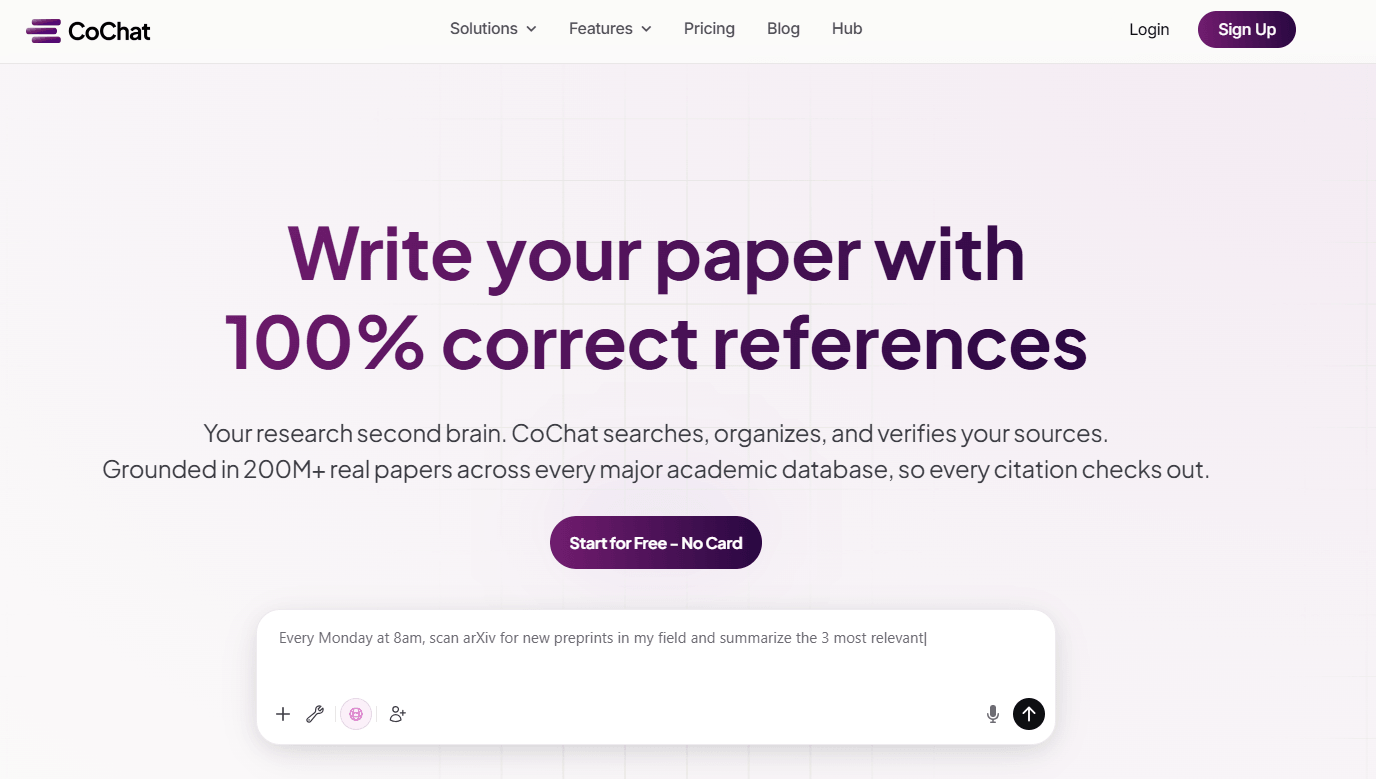
Collaborative AI workspace for teams, where human colleagues and AI agents share projects, memory, and scheduled responsibilities. Designed to run agents with personalities and task calendars in a secure, shared environment.
Best for: Cross functional teams that want one shared place for chat based work, agents with memory, and recurring automations.
Key Features:
- Shared agents with persistent memory and configurable personalities
- Scheduled tasks with cron or webhook triggers, plus real time collaboration
- Security boundaries that restrict tool use and limit memory leakage
- Audit activity feed recording each agent action
- Gateway model that connects OpenClaw and native assistants for coding and tool workflows
Why we like it: The combination of shared memory, scheduled tasks, and action level activity logs reduces handoffs and rework, especially for weekly reporting and monitoring.
Notable Limitations: Early stage product with limited independent reviews, change management is needed to adopt shared agent workflows, on prem or air gapped options are not publicly documented.
Pricing: Product launch materials describe a usage based model with free credits, no subscription, see the discussion on Product Hunt for details. Enterprise pricing not publicly available. Contact vendor for a custom quote.
Sentura
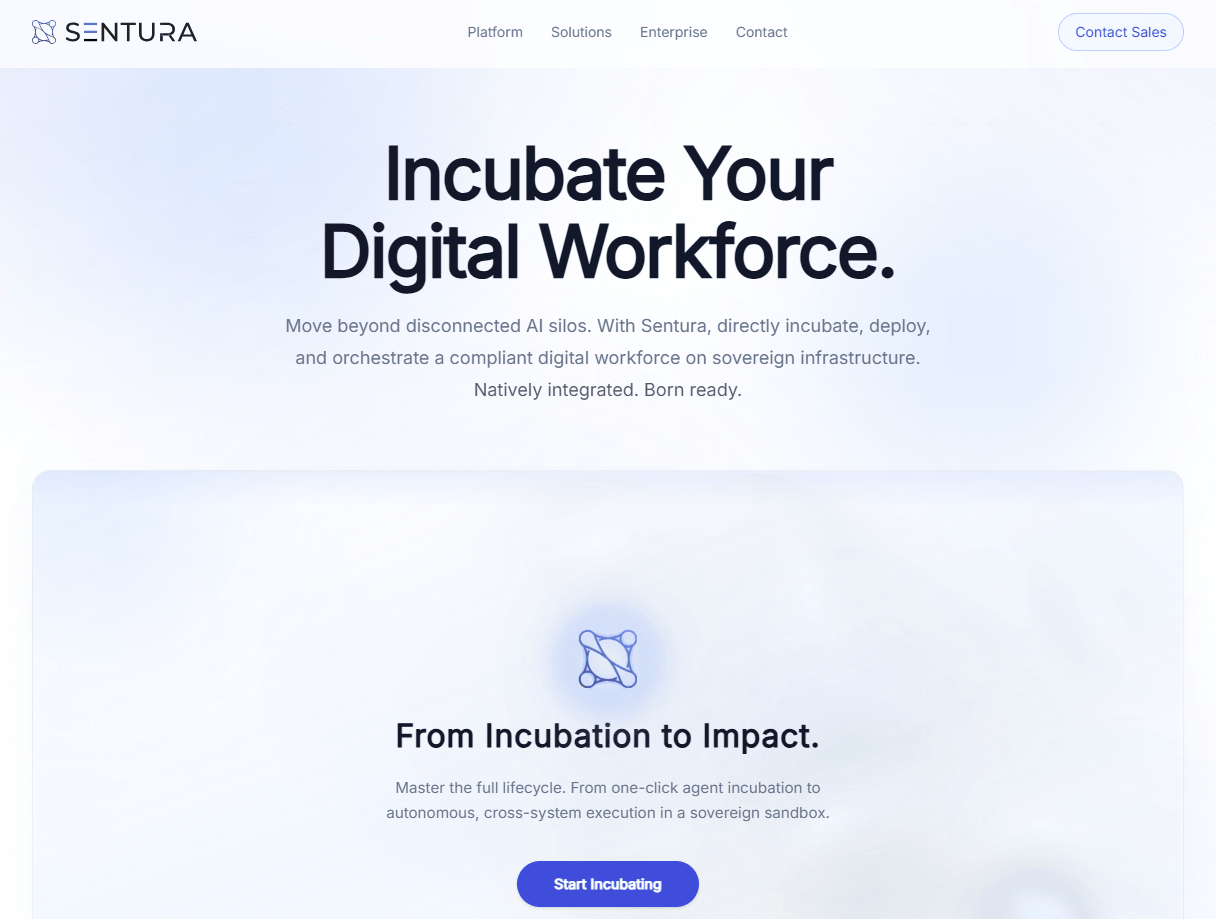
Platform focused on incubating and orchestrating autonomous AI employees inside private infrastructure. Emphasizes governance, compliance, and native access to enterprise systems.
Best for: Organizations with strict data residency or compliance requirements that prefer private, governed deployments over public SaaS.
Key Features:
- Zero code incubation of AI employees across functions
- Private, sovereign infrastructure and control plane focus
- Role scoped access to enterprise applications
- Orchestration of task lifecycles with reporting in natural language
Why we like it: The private infrastructure stance aligns with how security and risk teams evaluate agent deployment.
Notable Limitations: Very limited third party reviews, public documentation is sparse, and breadth of off the shelf connectors is unclear. Access is currently positioned for internal evaluation and proof of concept, so treat it as an early stage option.
Pricing: Pricing not publicly available. Contact vendor for a custom quote.
Quantilus
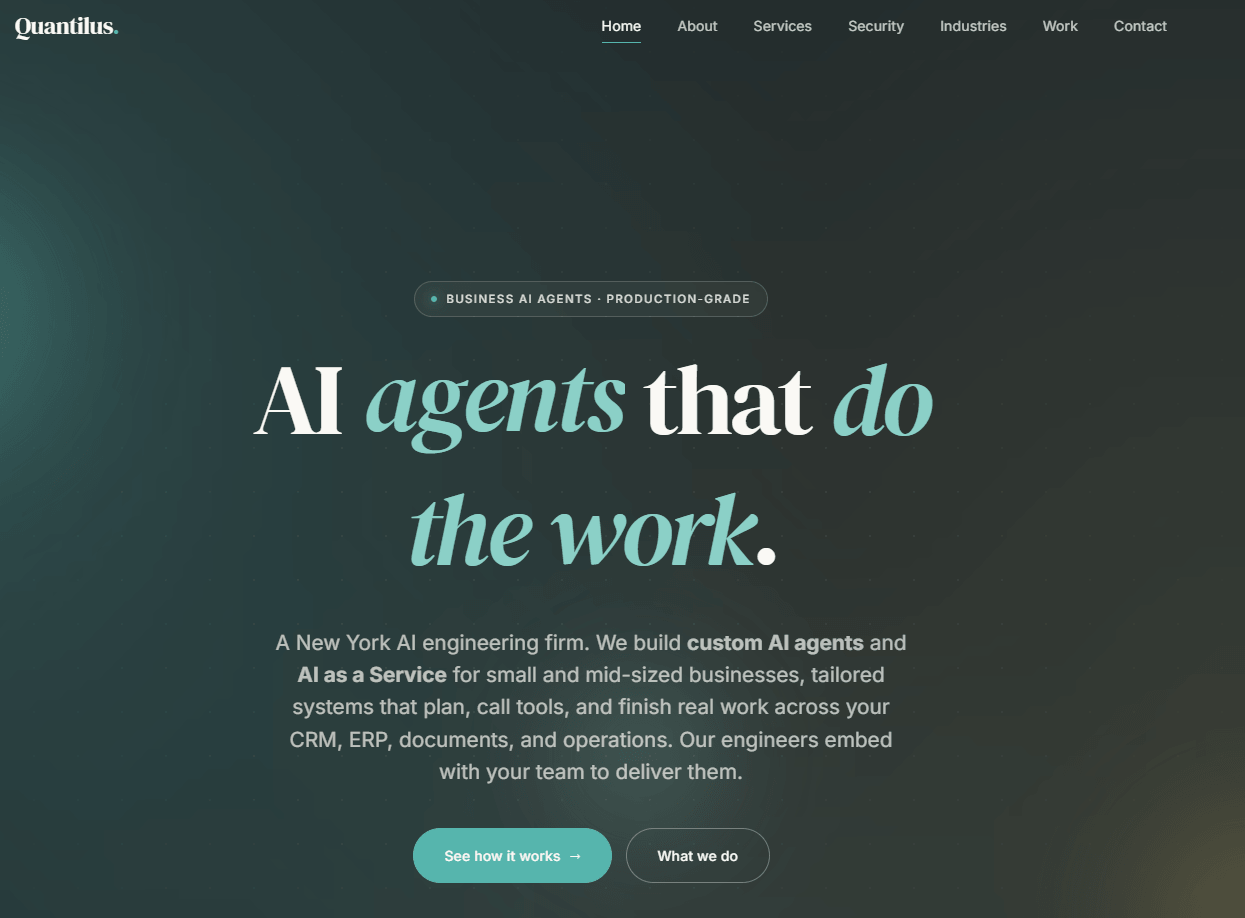
Services led provider delivering enterprise AI agents that plan, execute tool calls, reason in loops, and integrate with business systems. Offers multi model deployment and customer VPC options.
Best for: Enterprises that want custom agent solutions delivered into their own cloud or VPC with human in the loop controls.
Key Features:
- Tool execution across business apps with action logging
- Reasoning loops with escalation to human review for edge cases
- Multi model options including open weight models in customer VPC
- Integration with existing identity and security workflows
Why we like it: The focus on deployment in your VPC and model flexibility reduces lock in and eases security reviews.
Notable Limitations: Services projects require more time and stakeholder alignment than turnkey SaaS, limited third party review coverage, pricing varies by scope.
Pricing: Pricing not publicly available. Contact vendor for a custom quote.
Enterprise AI Chatbots Tools Comparison: Quick Overview
| Tool | Best For | Pricing Model | Highlights |
|---|---|---|---|
| CoChat | Shared agent workspace for teams | Usage based, enterprise custom | Shared memory, scheduled tasks, action feed |
| Sentura | Private, compliant deployments | Custom quote | Orchestrates AI employees inside private infrastructure |
| Quantilus | Custom builds in customer VPC | Custom services engagement | Multi model, human in the loop, VPC first |
Enterprise AI Chatbots Platform Comparison: Key Features at a Glance
| Tool | Feature 1 | Feature 2 | Feature 3 |
|---|---|---|---|
| CoChat | Shared agents with memory | Scheduled automations | Activity feed of actions |
| Sentura | Private infrastructure orchestration | Role scoped access | Multi agent workforce |
| Quantilus | Tool execution across systems | Human review for exceptions | Open weight in customer VPC |
Enterprise AI Chatbots Deployment Options
| Tool | Cloud API | On-Premise | Integration Complexity |
|---|---|---|---|
| CoChat | Yes | Not publicly stated | Medium, team workspace with many integrations |
| Sentura | Yes, private infra focus | Claimed | Medium to high, depends on system access |
| Quantilus | Yes | Yes, customer VPC | High, services led integration |
Enterprise AI Chatbots Strategic Decision Framework
| Critical Question | Why It Matters | What to Evaluate | Red Flags |
|---|---|---|---|
| Can the agent act with least privilege and leave an audit trail? | Security sign off depends on provable scope and accountability | Role scoped credentials, immutable logs, SIEM export paths | Broad tokens, no per action logs |
| How are loops, retries, and cost budgets controlled? | Runaway loops burn API spend and erode trust | Max tool calls per run, similarity checks on repeated actions, scheduled task sandboxes | Only prompt based guardrails, no hard budgets |
| What are the deployment boundaries? | Data residency and vendor lock in drive total cost | VPC or on prem options, model flexibility, exit paths | SaaS only, single model dependency |
| How do agents coordinate with humans? | Oversight and exception handling are required in production | Human in the loop checkpoints, approvals, replayability | Black box decisions, no pause or review |
| Is there evidence beyond demos? | Reduces risk of stalled pilots | Third party mentions, marketplace listings, real user discussions | No public signals, vague claims |
Enterprise AI Chatbots Solutions Comparison: Pricing & Capabilities Overview
| Organization Size | Recommended Setup | Monthly Cost | Annual Investment |
|---|---|---|---|
| Startup to SMB | CoChat for shared workflows, one or two scoped agents | Varies by usage, see CoChat launch details | Depends on usage, negotiate credits |
| Mid Market | CoChat for teams, Quantilus for targeted VPC builds | Not publicly available | Not publicly available |
| Regulated Enterprise | Sentura for private deployments, Quantilus for custom VPC builds | Not publicly available | Not publicly available |
Problems & Solutions
-
Problem: Security teams demand governed, auditable automation rather than chatbots with broad access.
Industry direction shows enterprise platforms highlighting audit trails and role scoped permissions when describing autonomous workforces, as seen in ServiceNow's Autonomous Workforce announcements.
How the tools help:- CoChat, per public launch discussions, records each agent action in an activity feed and scopes tool access for scheduled tasks, which makes audits easier.
- Sentura targets deployments inside private infrastructure, which aligns with security expectations for governed agent actions, as reflected in the industry push toward private, governed agent stacks like NVIDIA's on premises reference approaches reported by PR Newswire.
-
Problem: Agent loops can spin, driving up costs and interrupting operations.
Practitioners report looping between planner and executor agents that rack up API charges, with advice to use hard budgets and loop detection, as seen in multiple developer accounts on Reddit.
How the tools help:- CoChat users can schedule and review runs, then cap access to sensitive tools, per its public launch Q&A on Product Hunt.
- Quantilus engagements typically add human in the loop review for exceptions and action logging in customer VPCs, which is consistent with enterprise patterns highlighted in analyst and news coverage of agent programs like Anthropic's enterprise agents push.
-
Problem: Some buyers need sovereign or private, not public SaaS.
The concept of sovereign or infrastructurally anchored agents is gaining academic attention, with governance models proposed for agent systems operating with strong deployment controls, as discussed in work on sovereign agents and the charter governed operating models described in Sovereign OS.
How the tools help:- Sentura positions itself as private infrastructure first, incubating AI employees inside sovereign infrastructure, though access is currently focused on evaluation and proof of concept.
-
Problem: Fragmented adoption, where each team runs a different chatbot, kills shared context.
Public user discussions repeatedly describe the value of shared agent workspaces with scheduled tasks and memory for team adoption, as seen in the CoChat launch page on Product Hunt.
How the tools help:- CoChat centralizes chat, memory, and automations for multiple teams, reducing drift and duplicated prompts.
-
Problem: Leadership wants proof that agents are a mainstream direction, not a side project.
Market signals point to rapid spend and a clear shift to conversation led workflows, with AI spending projected at $2.59T in 2026 and journeys concentrating in conversational assistants by 2028, per Gartner's AI spending forecast and Gartner's customer service outlook.
How the tools help:- Quantilus delivers custom builds that fit current stacks and controls, which helps enterprises move from pilots to governed production.
The Bottom Line
You think you know chatbots until they must pass a security review, scale across teams, and justify cost against automation goals. The three tools above were selected after a broad field review of the category, and they map to common enterprise paths, shared workspaces with schedules and logs, private deployments with tight governance, and services led builds in your VPC.
The macro signal is clear, budgets are flowing to AI and service journeys are becoming conversational, as highlighted by Gartner's 2026 AI spending forecast and Gartner's channel predictions through 2028. Start with a small, governed scope, log everything, and pick the deployment model your security team already trusts.