Picture this. You are months into running a production application when a critical vulnerability surfaces in a transitive dependency no one remembers approving. Engineering is scrambling to identify where it is used, security cannot confirm exposure, and compliance wants proof of what is actually deployed. In 2026, this scenario is no longer rare. Modern applications routinely ship with hundreds of open source components, many pulled indirectly through build systems and containers, leaving teams with only partial visibility into what is running in production.
High profile supply chain incidents over the last few years made one reality unavoidable: you cannot secure software you cannot inventory. At the same time, regulatory pressure has increased. SBOMs are no longer optional artifacts created for audits. They are becoming a baseline requirement for secure development practices, procurement, and incident response. The challenge is that not all SBOM tools are built for the same job. Some focus on standards, others on developer workflows, compliance, or enterprise governance. Picking the wrong approach can leave you with reports that satisfy policy but fail you during a real incident.
This guide focuses on SBOM tools that organizations are actually using in production in 2026. The goal is not to check a box, but to help you understand which tools provide real visibility, how they fit into modern pipelines, and where their limits appear in practice.
Summary Comparison Table
| Tool | Primary Strength | Key Differentiator | Implementation Complexity |
|---|---|---|---|
| CycloneDX | SBOM Standard Flexibility | Full-stack BOM standard supporting SBOM, SaaSBOM, HBOM, VDR, and VEX | Low |
| Snyk | Developer Integration | Find vulnerable dependencies as you code in your IDE or CLI | Medium |
| FOSSA | License Compliance | Automated policy enforcement with legal risk assessment | Medium |
| Synopsys Black Duck | Enterprise Governance | Ability to detect virtually every open source component (and every associated license) in a massive codebase | High |
| OWASP Dependency-Track | Continuous Risk Monitoring | Real-time vulnerability intelligence and SBOM consumption | Medium |
CycloneDX — The Universal SBOM Standard
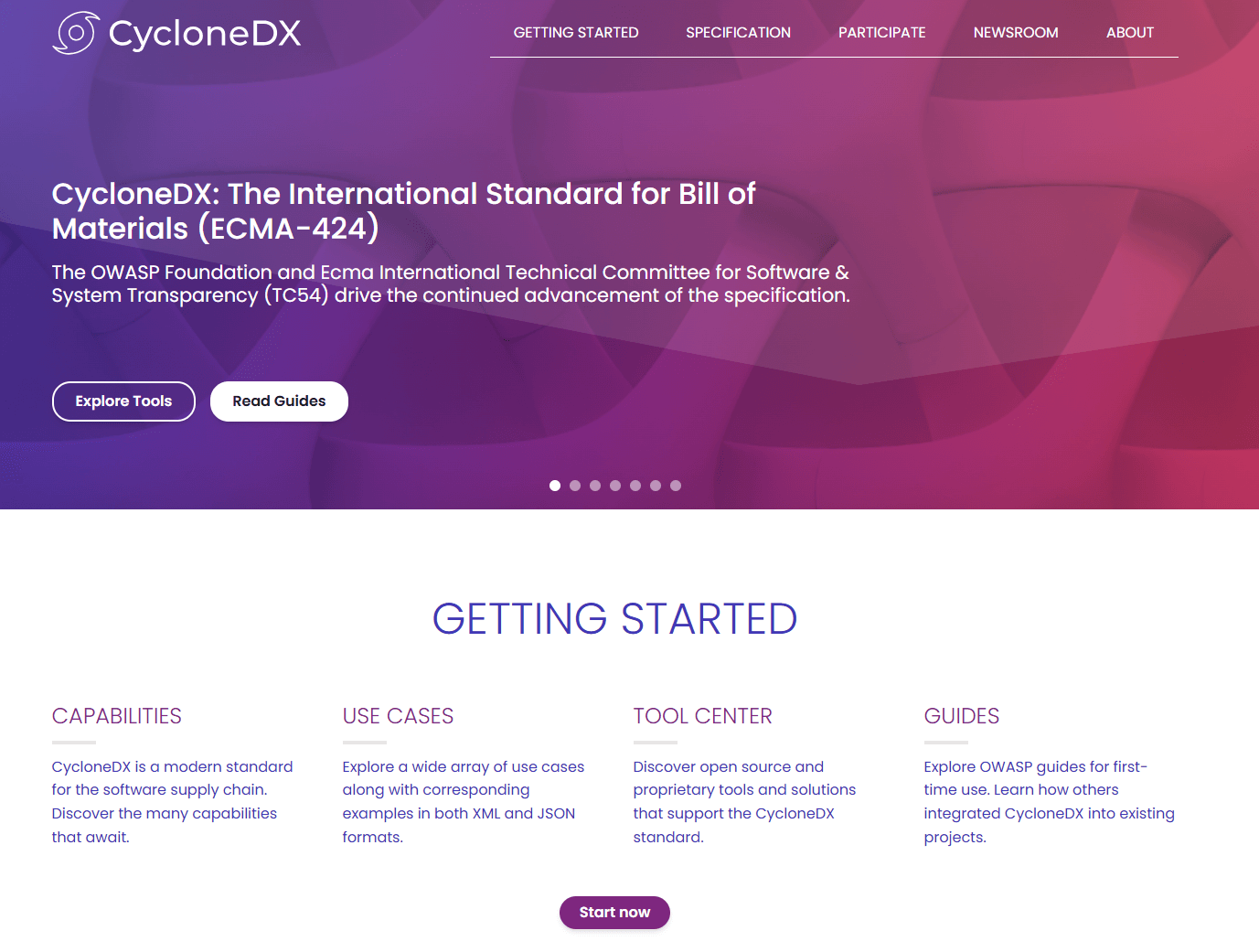
Best for: Organizations needing flexible, standard-compliant SBOM generation across multiple technologies.
CycloneDX is a full-stack Bill of Materials (BOM) standard that provides advanced supply chain capabilities for cyber risk reduction. Unlike proprietary formats, CycloneDX is an open standard that's one of the three SBOM specifications recommended by NTIA/CISA.
Key Capabilities:
- Multi-format BOM support (SBOM, SaaSBOM, Hardware BOM)
- VEX (Vulnerability Exploitability Exchange) integration
- Language-agnostic with tools for Java, .NET, Python, JavaScript, and more
- JSON and XML output formats
Deployment: Open source with community tools available. Professional tooling and support available through various vendors.
Limitations: CycloneDX is a standard, not a complete solution. You'll need additional tools for vulnerability scanning, policy enforcement, and continuous monitoring.
Real User Insight: "CycloneDX's format flexibility made it easy to integrate with our existing security stack, but we had to build custom automation around it."
Snyk — Developer-Centric Security Platform
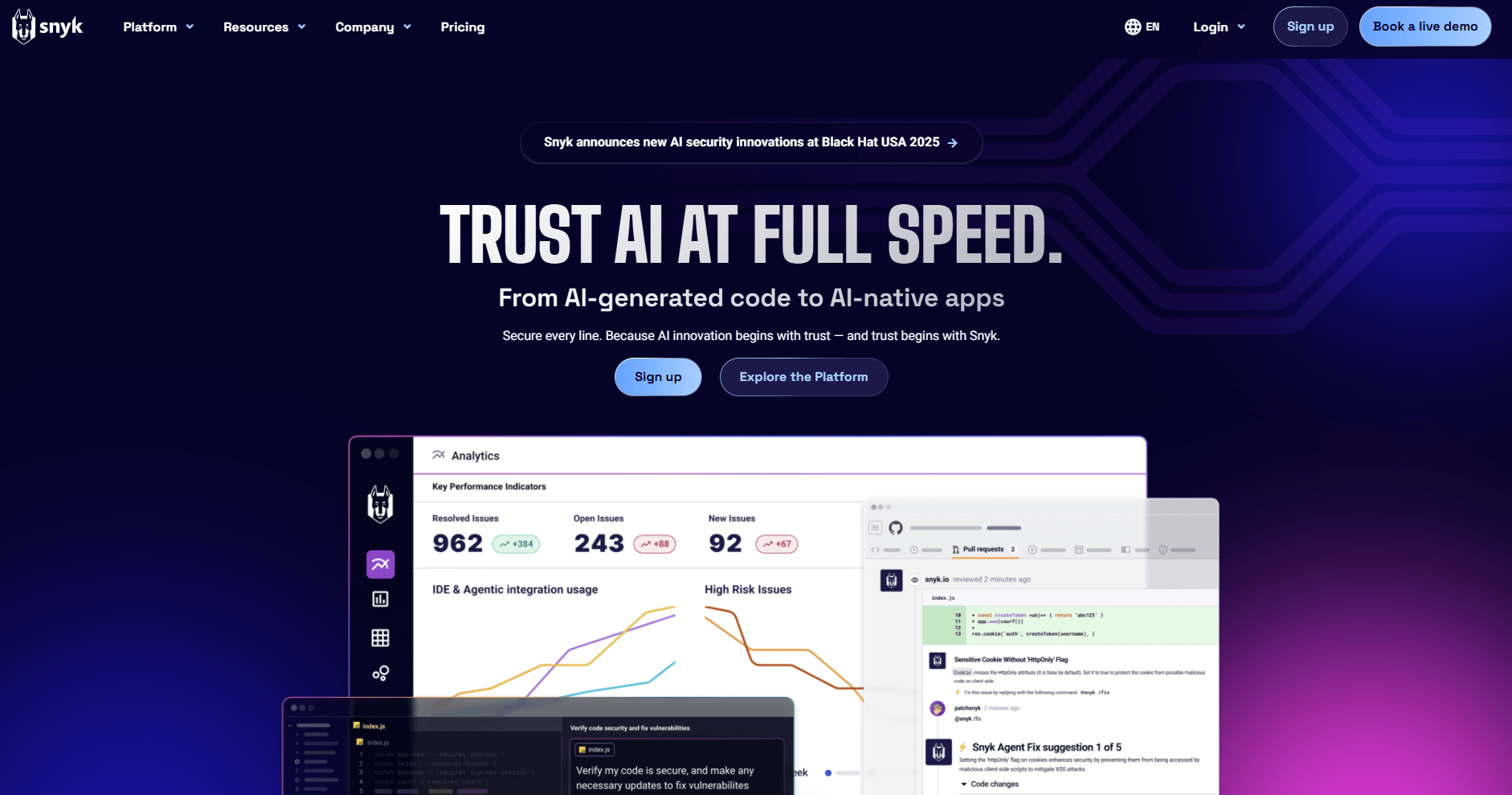
Best for: Development teams seeking integrated vulnerability management with minimal workflow disruption.
Snyk provides a developer-first SCA solution, helping developers find, prioritize, and fix security vulnerabilities and license issues in open source dependencies. The platform integrates directly into development workflows with IDE plugins, CLI tools, and CI/CD pipeline integration.
Key Capabilities:
- Real-time vulnerability scanning during development
- Automated pull request generation for fixes
- Container and infrastructure as code scanning
- Comprehensive license compliance reporting
Pricing: Starts at $25.0 per month with a Free Plan available. Enterprise pricing available for larger teams.
Deployment: SaaS-based with quick setup. Most teams are productive within 24-48 hours.
Limitations: While excellent for development teams, Snyk's SBOM generation capabilities are secondary to its vulnerability management focus. Enterprise governance features may require additional tools.
Real User Insight: "Snyk caught vulnerabilities we would have missed, but the SBOM export functionality felt like an afterthought compared to their vulnerability reporting."
FOSSA — Compliance-First Open Source Management
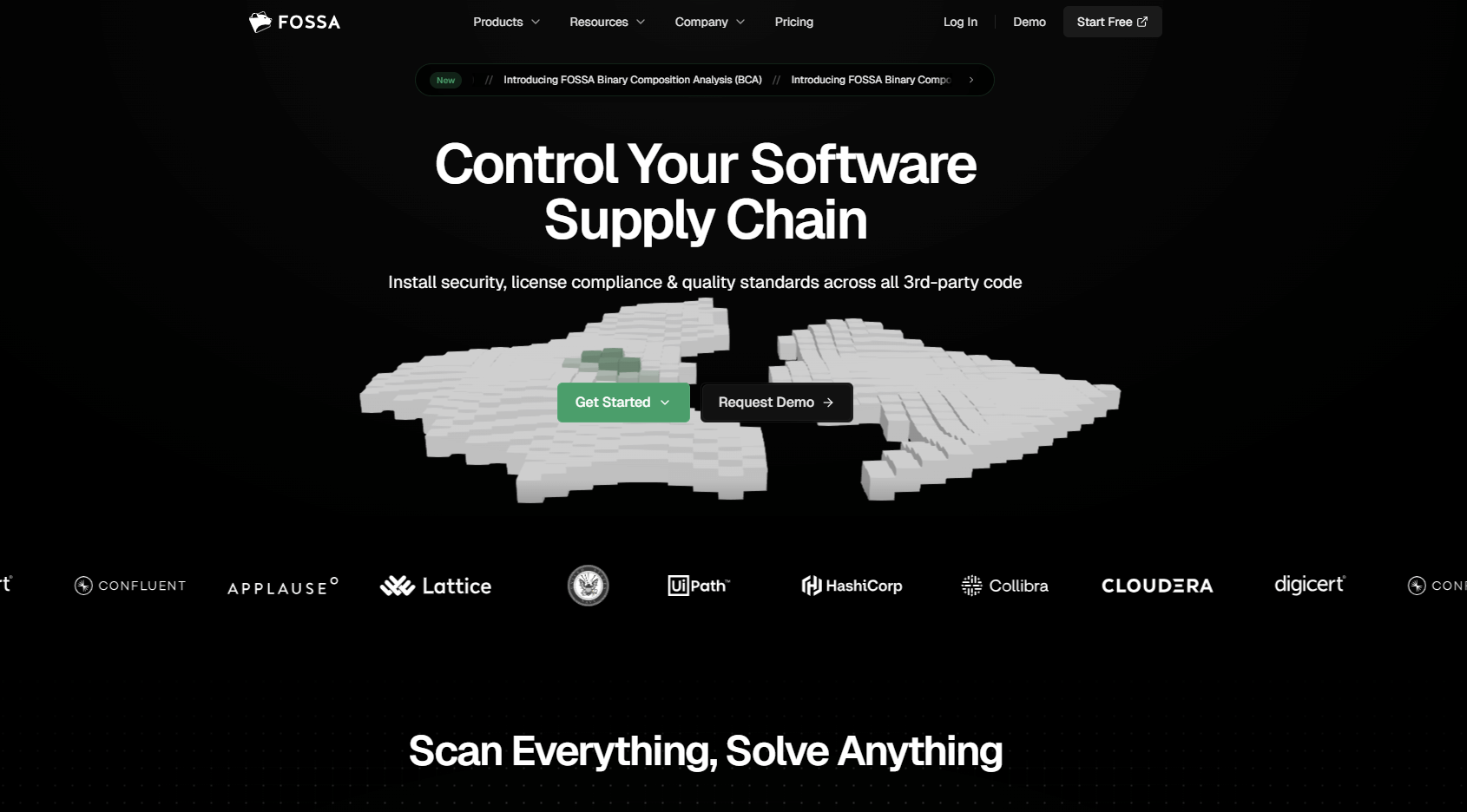
Best for: Organizations with strict license compliance requirements and legal risk management needs.
FOSSA specializes in automated license compliance and open source governance, making it particularly valuable for enterprises dealing with complex licensing requirements or M&A due diligence.
Key Capabilities:
- Automated license policy enforcement
- Legal risk assessment and reporting
- Custom policy creation and approval workflows
- Deep dependency analysis and license conflict detection
Deployment: SaaS platform with on-premises options available. Setup typically takes 1-2 weeks including policy configuration.
Limitations: Strong on compliance but less focused on real-time vulnerability management. Integration with security tools may require additional configuration.
Real User Insight: "FOSSA saved us during acquisition due diligence. The legal team finally had confidence in our open source compliance posture."
Synopsys Black Duck — Enterprise-Grade Governance
Best for: Large enterprises requiring comprehensive open source governance with extensive vulnerability management capabilities.
Black Duck is the heavyweight solution in the SBOM space, offering comprehensive capabilities for organizations that need deep visibility into their software supply chains. Its ability to detect virtually every open source component (and every associated license) in a massive codebase is unmatched.
Key Capabilities:
- Comprehensive component detection across 2,000+ programming languages
- Advanced policy management and approval workflows
- Integration with major development and security tools
- Detailed vulnerability and license risk reporting
Deployment: Complex enterprise installation typically requiring 4-8 weeks for full deployment and configuration.
Limitations: High cost and complexity can be overwhelming for smaller organizations. Requires dedicated resources for optimal configuration and maintenance.
Real User Insight: "Black Duck gives us unparalleled visibility, but it's definitely overkill for smaller projects. The setup process was intensive but worth it for our enterprise needs."
OWASP Dependency-Track — Continuous Risk Monitoring
Best for: Organizations seeking continuous monitoring of software supply chain risks with SBOM consumption capabilities.
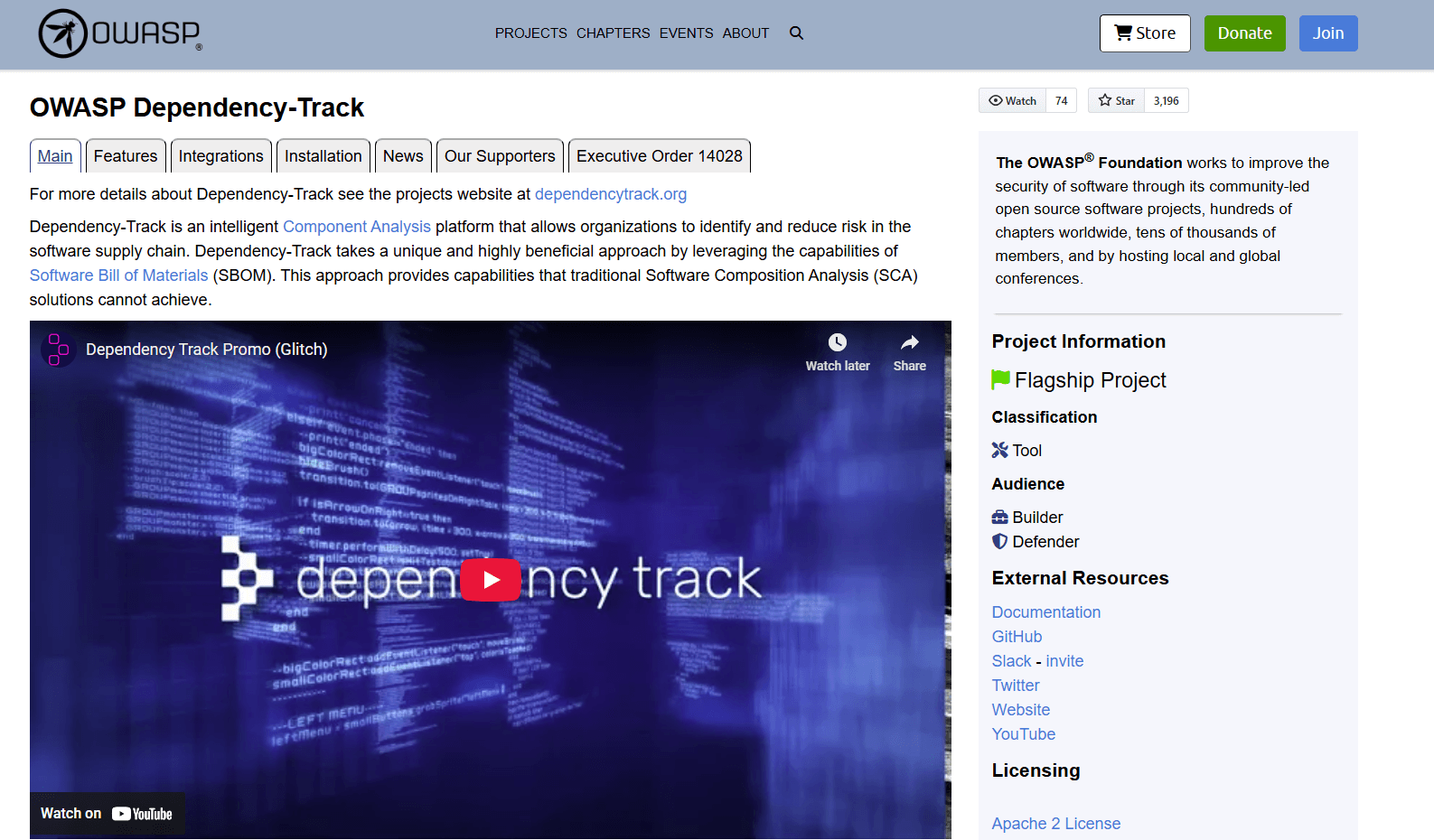
Dependency-Track is designed for continuous component analysis, consuming SBOMs from various sources and providing ongoing risk assessment as new vulnerabilities are discovered.
Key Capabilities:
- Multi-format SBOM consumption (CycloneDX, SPDX, SWID)
- Continuous vulnerability monitoring from multiple intelligence sources
- Risk-based metrics and reporting
- Policy violation alerting
Deployment: Open source with Docker-based deployment options. Can be operational within hours for basic setups.
Limitations: Requires SBOM generation from other tools. Limited native scanning capabilities compared to commercial alternatives.
Real User Insight: "Dependency-Track excels at ongoing monitoring once you have SBOMs flowing in, but you need other tools to generate comprehensive BOMs initially."
Practical Decision Framework
Choose CycloneDX if:
- You need standard-compliant SBOM generation
- You have existing security tools and need format flexibility
- You prefer open standards over proprietary formats
Choose Snyk if:
- Developer productivity is your primary concern
- You want integrated vulnerability management
- You need quick time-to-value with minimal setup
Choose FOSSA if:
- License compliance is business-critical
- You're dealing with M&A or audit requirements
- Legal risk management is a primary concern
Choose Synopsys Black Duck if:
- You're a large enterprise with complex requirements
- Comprehensive governance is essential
- Budget allows for enterprise-grade tooling
Choose OWASP Dependency-Track if:
- You need continuous risk monitoring
- You're already generating SBOMs elsewhere
- You prefer open source solutions with community support
Implementation Best Practices
Start Small, Scale Gradually: Begin with a pilot project to understand your organization's specific needs before enterprise-wide deployment.
Focus on Integration: Choose tools that integrate well with your existing development and security infrastructure rather than replacing everything.
Establish Policies Early: Define your vulnerability and license policies before tool deployment to avoid configuration delays.
Plan for Automation: Manual SBOM generation doesn't scale. Ensure your chosen solution supports automated integration with your CI/CD pipelines.
Final Thoughts
SBOMs are no longer about compliance theater. In 2026, they are foundational infrastructure for software supply chain security. The teams that get value from SBOMs treat them as living inputs to risk management, not static files generated once per release. Standards based formats create interoperability, but they do not solve vulnerability tracking or license risk on their own. Developer focused tools speed remediation, but may fall short on governance. Enterprise platforms deliver depth and control, but demand real investment to operate effectively.
For most organizations, the right answer is not a single product. It is a combination of an open, widely supported SBOM standard and tools that act on that data throughout the software lifecycle. Start with visibility. Automate generation in CI. Feed SBOMs into systems that track vulnerabilities, licenses, and exploitability over time. Measure success by how quickly you can answer one question during an incident: where is this component running and what is the risk right now.
Choosing an SBOM tool is less about features and more about fit. The best solution is the one your teams will actually integrate, maintain, and trust when it matters most.