
Most teams discover metric drift during monthly forecast reviews, not from a data governance checkpoint. Working across different tech companies, we have seen semantic layers fix costly blind spots fast by centralizing business logic across tools. Think row-level security tied to tags in your catalog, SQL pushdown across virtualized sources, and YAML-based metric specs that ground AI assistants, as described in Snowflake's Cortex Analyst semantic model documentation. After helping startups scale, we look for platforms that drive consistent metrics, enforce policy once, and make AI answers match finance's definitions rather than whatever a dashboard happened to calculate.
According to Gartner's 2026 market share analysis of Data Integration Software, this broader market grew to approximately $6.5 billion in 2025, which signals strong demand for governed data access that powers analytics and AI.
CData Semantic Layer
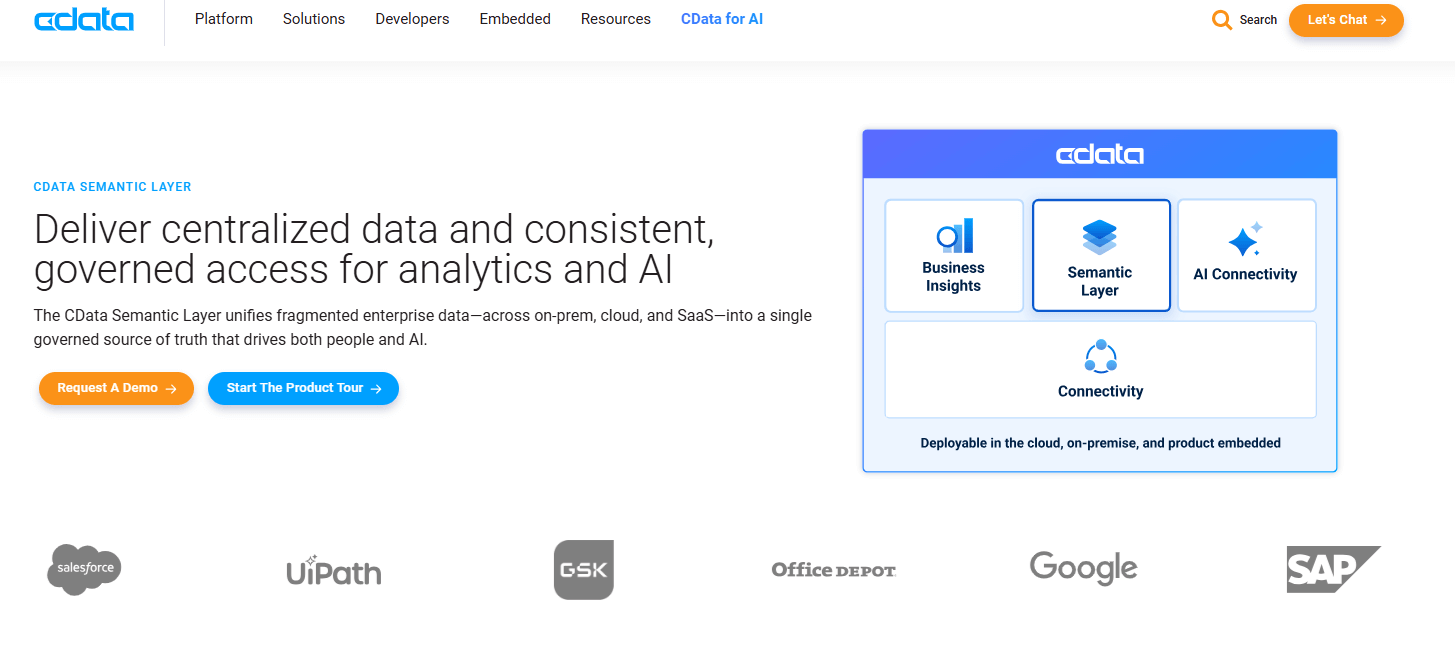
Unifies live and replicated data under one governed semantic layer with broad connector coverage. Backed by CData's acquisition of Data Virtuality, the platform combines virtualization and replication in one stack.
- Best for: Teams that need a unified semantic layer over many SaaS, databases, and files, plus optional replication, without rewriting BI models.
- Key Features:
- Data virtualization with query pushdown and caching, per vendor documentation.
- 300+ connectors across SaaS, databases, and files, per vendor documentation.
- Central governance and policy controls for consistent metrics across BI tools, per vendor documentation.
- Why we like it: Broad connectivity plus virtualization means faster wins when your estate is messy and you cannot centralize everything in a single warehouse right away.
- Notable Limitations:
- Reviews mention performance variance between connectors on large queries and occasional auth token hiccups, based on G2 feedback on CData Connectors and CData Connect Cloud.
- Limited third-party pricing transparency for the semantic layer itself, which complicates budgeting.
- Pricing: Pricing not publicly available. For context on the company's enterprise motion and recent scale, see Reuters' coverage of CData's $350M round and the Business Wire note on its Data Virtuality acquisition.
Coalesce Catalog Semantic Layer
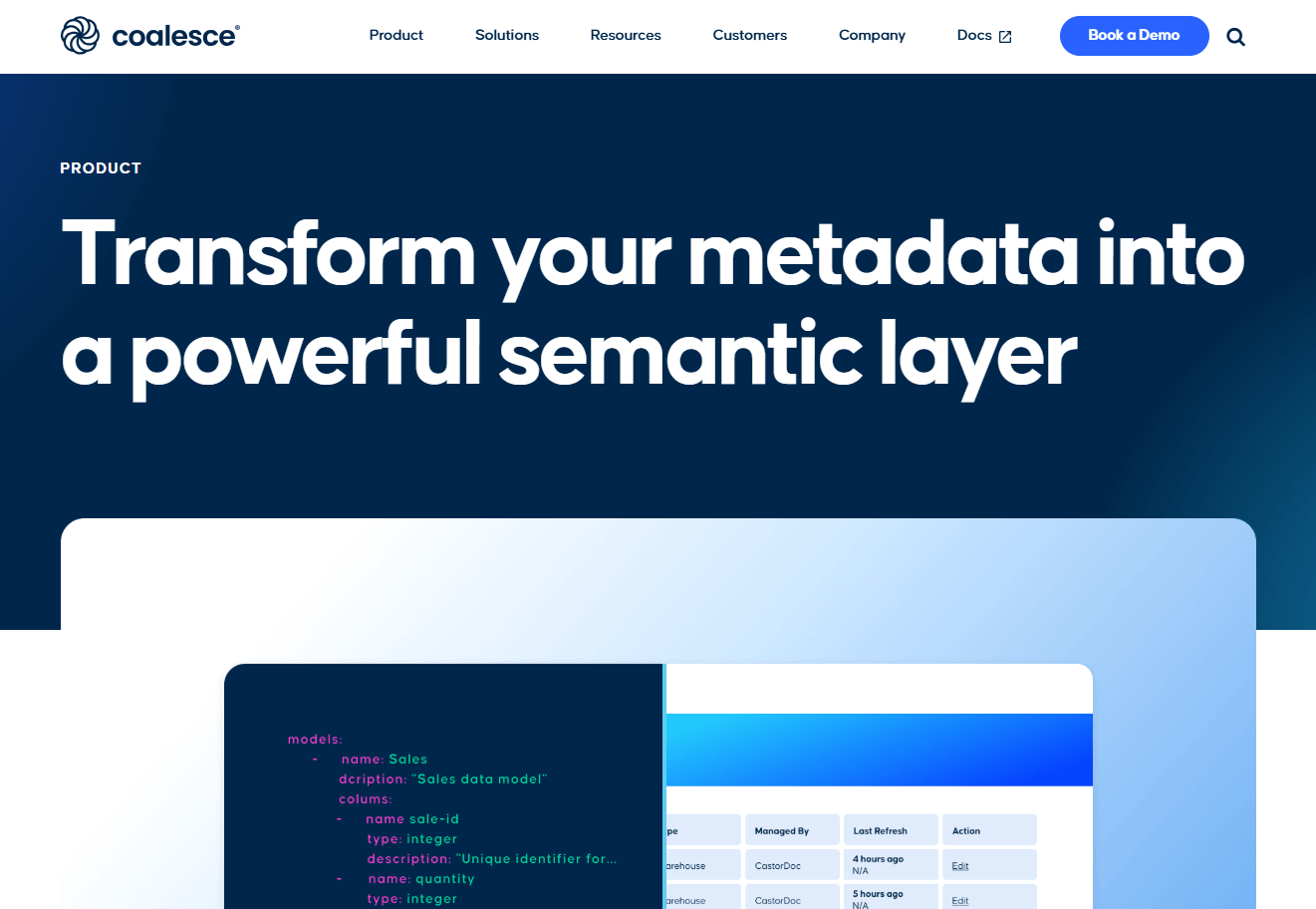
Automatically builds a governed semantic model from warehouse metadata and BI usage, then serves consistent metrics for AI and BI. Designed to align catalog, lineage, and semantics.
- Best for: Snowflake or lakehouse teams that want to auto-generate a standards-based semantic model and feed AI assistants with business context.
- Key Features:
- Auto-extracts technical metadata and BI usage to infer entities, relationships, and metrics, per vendor documentation.
- Git-native change control, versioning, and impact analysis across the semantic model, per vendor documentation.
- Semantic API to power AI assistants and downstream tools with consistent definitions, per vendor documentation.
- Why we like it: If you already model transformations in the warehouse, this meets you where you work, speeds up curation, and directly improves AI grounding with governed semantics.
- Notable Limitations:
- Users report slowdowns in very large projects and maturing documentation for some workflows, based on G2 reviews of Coalesce.
- Pricing details are often private, which makes TCO comparisons harder at the shortlist stage, per G2 pricing page for Coalesce.
- Pricing: An example public reference is the AWS Marketplace listing that shows $100,000 for a 12-month Coalesce platform contract. G2 notes "pricing not provided" on vendor profile pages, so contact Coalesce for a custom quote.
Denodo Universal Semantic Layer
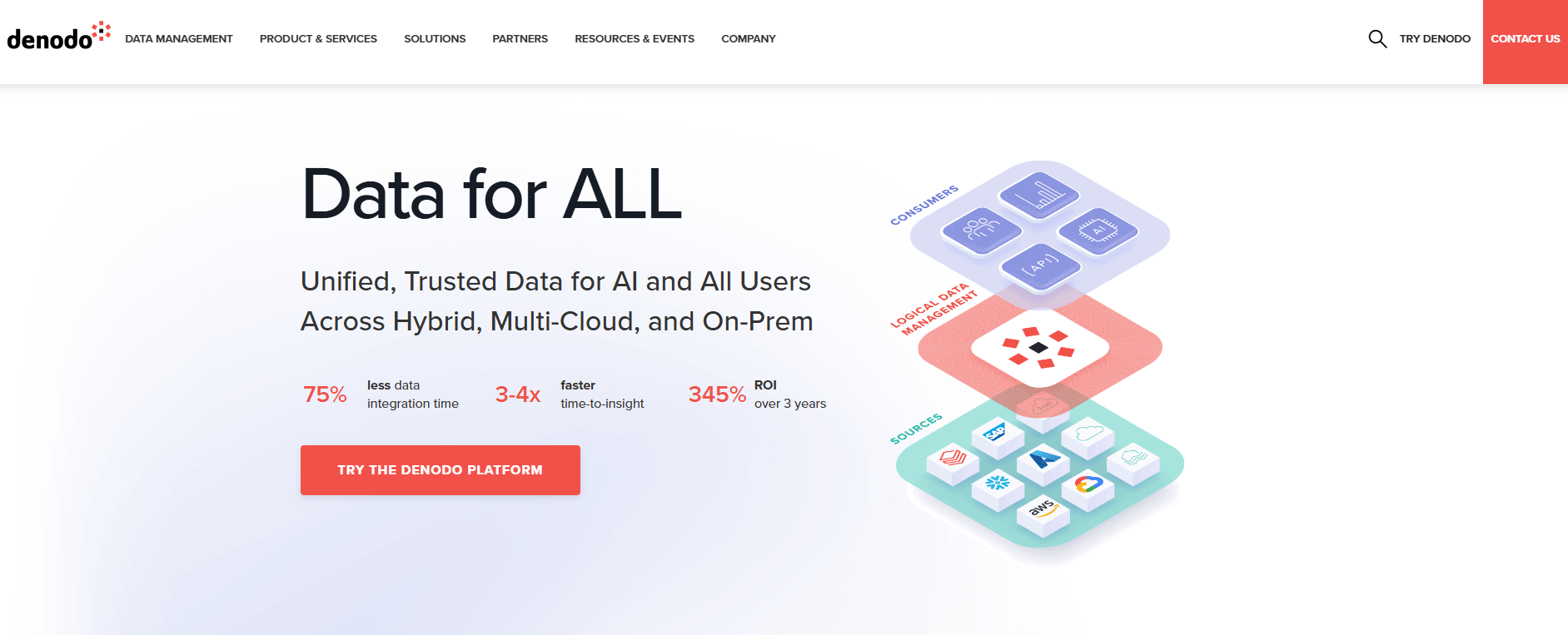
Logical data management and data virtualization that presents business-friendly views across distributed data. The semantic layer centralizes definitions and security while supporting hybrid deployments.
- Best for: Enterprises that need high-performance virtualization, centralized semantics, and policy once across many sources without moving data.
- Key Features:
- Universal semantic layer with business terms, centralized policies, and role-based controls, per vendor documentation.
- High-performance query optimization and caching for federated queries, per vendor documentation.
- Broad deployment flexibility, including managed cloud options and marketplace offers, per vendor documentation.
- Why we like it: Denodo is a mature choice when you need a governed business layer on top of complex, distributed estates and you cannot rely on a single warehouse.
- Notable Limitations:
- Reviewers cite a steep learning curve and enterprise-grade pricing, based on G2 feedback and PeerSpot summaries.
- Architecture and tuning can be complex for new teams, per aggregated reviewer notes.
- Pricing: Public references include AWS hourly pricing for Denodo Enterprise Plus and a private offer listing that shows annual per-core pricing. Denodo also offers managed SaaS and trials via marketplace, as reflected in Business Wire coverage.
Strategy One Semantic Layer
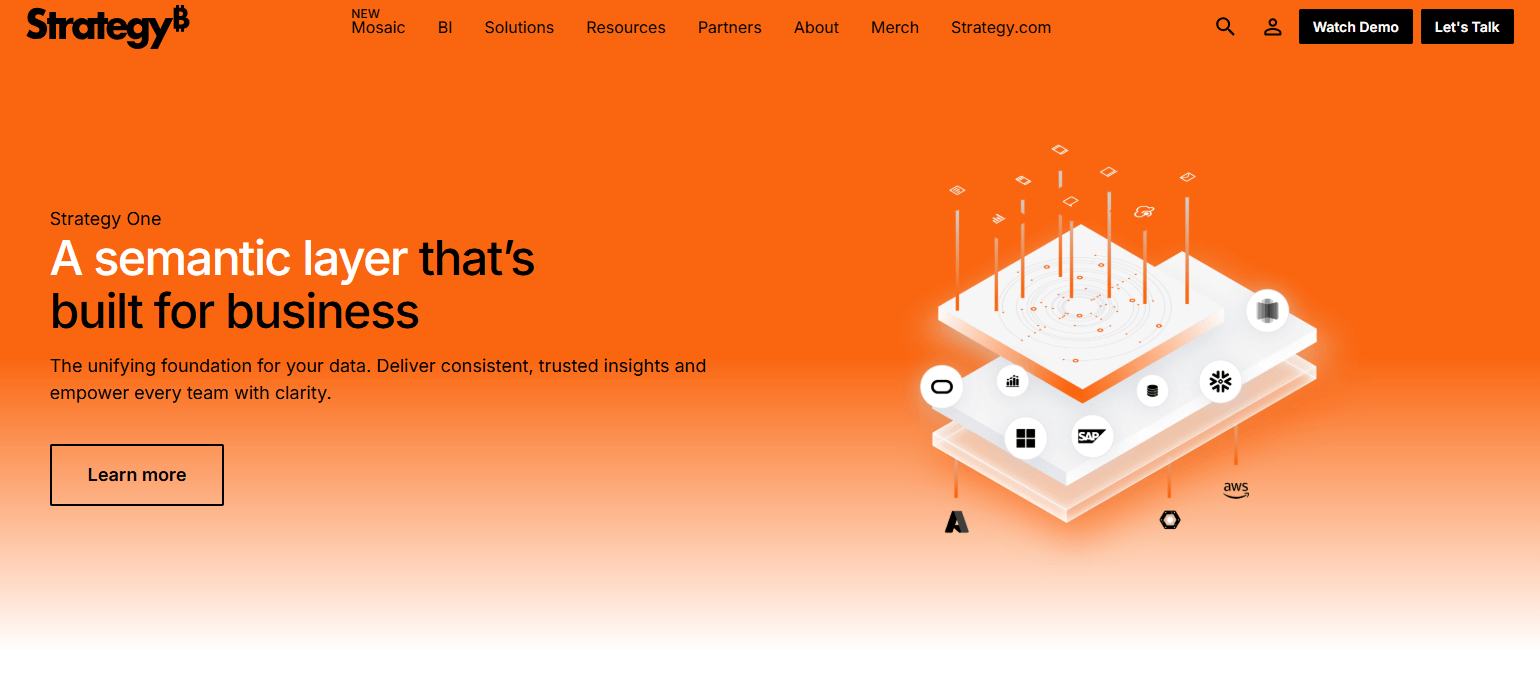
A cloud-native semantic layer embedded in Strategy One that enforces consistent business logic across analytics and augments BI with AI assistants. Built for large enterprise deployments.
- Best for: BI teams standardizing enterprise metrics and governance inside a full-stack analytics platform with AI-assisted authoring.
- Key Features:
- Central semantic graph and governed business terms inside the BI platform, per vendor documentation.
- AI chat for analysis and content generation, per vendor documentation.
- Embedded analytics and multi-cloud deployment patterns, per vendor documentation.
- Why we like it: If you want the semantic layer, BI, and AI copilots in one platform, Strategy One reduces integration work and keeps semantics close to consumption.
- Notable Limitations:
- Users frequently mention a steep learning curve and occasional performance or stability concerns with large datasets, based on G2 reviews.
- Some teams report slower support cycles and admin complexity compared to lighter BI tools, per aggregated comments.
- Pricing: Examples include a Strategy One managed cloud environment listed at $75,000 per year on AWS Marketplace and a G2 listing that shows "Standard" starting at $13 per user per month. Enterprise plans typically require a custom quote.
Semantic Layer Tools Comparison: Quick Overview
| Tool | Best For | Pricing Model | Highlights |
|---|---|---|---|
| CData Semantic Layer | Broad connector coverage, hybrid estates | Custom enterprise quotes | Virtualization plus replication in one stack, backed by acquisition of Data Virtuality |
| Coalesce Catalog Semantic Layer | Warehouse-first semantics for AI and BI | Contracts, example $100k/yr on AWS Marketplace | Auto-build models from metadata and BI usage, Git-native governance per vendor documentation |
| Denodo Universal Semantic Layer | Enterprise virtualization with central governance | Hourly or per-core contracts on marketplaces | Logical data management at scale, with public pricing examples on AWS Marketplace |
| Strategy One Semantic Layer | BI-anchored semantics with AI assistants | Managed environment examples on AWS, per-user options on G2 | Semantic graph inside BI with AI features |
Semantic Layer Platform Comparison: Key Features at a Glance
| Tool | Virtualization | Central Governance | AI Context Interfaces |
|---|---|---|---|
| CData Semantic Layer | Yes, per vendor documentation | Yes | Yes, feeds BI and AI with governed semantics, per vendor documentation |
| Coalesce Catalog Semantic Layer | Works over warehouse models | Yes, Git-native workflow | Yes, serves semantic API to AI assistants, per vendor documentation |
| Denodo Universal Semantic Layer | Yes, core capability | Yes | Yes, used to provide context to AI apps, per vendor documentation |
| Strategy One Semantic Layer | Inside BI layer | Yes | Yes, AI chat and assistants inside platform, per vendor documentation |
Semantic Layer Deployment Options
| Tool | Cloud Marketplace Listing | Self-Managed | Managed SaaS |
|---|---|---|---|
| CData Semantic Layer | Not specific to semantic layer, company lists other products on AWS | Yes | Yes |
| Coalesce Catalog Semantic Layer | Yes, see AWS Marketplace offer | Yes | Yes |
| Denodo Universal Semantic Layer | Yes, multiple AWS listings | Yes | Yes |
| Strategy One Semantic Layer | Yes, see AWS Marketplace listing | Yes | Yes |
Semantic Layer Strategic Decision Framework
| Critical Question | Why It Matters | What to Evaluate | Red Flags |
|---|---|---|---|
| Do we need virtualization or can we centralize in one warehouse? | Determines engine choice and cost | Ability to push down queries, caching, connector coverage | Vendor that requires data movement when policy forbids it |
| How will AI assistants consume semantics? | AI accuracy improves when grounded in a semantic model | YAML or API specs, verified queries, NL to SQL mappings | No clear spec for entities, metrics, relationships |
| Can we enforce policy once across tools? | Reduces drift and audit risk | Central RBAC, tags, lineage and impact analysis | Governance only in downstream BI models |
| What does pricing scale with? | Avoids surprise bills | Per core, per user, per contract, overage rules on marketplaces | Opaque pricing with no public references |
Semantic Layer Solutions Comparison: Pricing & Capabilities Overview
| Organization Size | Recommended Setup | Annual Investment | Notes |
|---|---|---|---|
| Mid-market team standardizing AI and BI | Coalesce Catalog contract for semantic model, warehouse-first | ~$100,000, contract dependent | Example from AWS Marketplace |
| Enterprise with distributed sources | Denodo with marketplace hourly or per-core private offer | $61,250 to $71,550 per core annually | Example private offers on AWS listing |
| BI-anchored enterprise standardizing metrics | Strategy One managed environment | $75,000 per year example | AWS managed env listing |
| Hybrid connectivity at scale | CData Semantic Layer with virtualization and replication | Custom | Contact vendor |
Problems & Solutions
-
Problem: "Revenue" means different things in different dashboards, so AI assistants and BI reports contradict each other.
Solution: A BI-anchored semantic layer pins definitions to a central model. Strategy One users call out the value of its semantic layer in reviews, while also noting a learning curve, which is typical for enterprise BI platforms. -
Problem: You need governed access to many operational systems without replicating sensitive data.
Solution: Denodo's logical data management and virtualization are designed for unified, governed views across distributed sources, which helps when centralization is not possible. Public listings and references highlight Denodo's marketplace presence and flexible pricing options. Reviewers acknowledge power and complexity. -
Problem: AI copilots hallucinate because they lack business context, so text-to-SQL misses your definitions.
Solution: A governed semantic spec improves accuracy by mapping business language to data structures. This pattern is documented for YAML-based models and semantic views in Snowflake's Cortex Analyst references and its guidance on verified queries to optimize results over time. Coalesce aligns with this, automatically extracting metadata and BI usage to generate a standards-based model, with users reporting productivity and some performance tradeoffs in large projects. -
Problem: You need one layer for both live queries and replicated data products without stitching multiple tools.
Solution: CData, strengthened by its Data Virtuality acquisition, combines virtualization and replication with a governed semantic layer, which is attractive in hybrid estates. Users like the breadth of connectors yet mention performance variance for some sources.
The Bottom Line
If you want the semantic layer to live closest to consumption, pick Strategy One to keep governance and AI in one BI platform. If your estate is distributed and policy requires minimal movement, Denodo's logical layer is a strong enterprise choice with transparent marketplace pricing signals. If you are warehouse-first and want automated semantics for AI and BI, Coalesce's catalog-driven approach is compelling, with a concrete public reference price on AWS Marketplace. For hybrid connectivity with massive connector coverage plus virtualization, CData is pragmatic, especially in light of its Data Virtuality acquisition. Whichever path you choose, anchor your rollout to a validated semantic spec, verified queries, and policy once, practices that are echoed in Snowflake's semantic model documentation.