Your company runs on apps you never approved. We built Reco for that.
Gal Nakash co-founded Reco after watching security teams lose track of their own environment. Here is how the platform works, and why he thinks "visibility" is the wrong word to lead with.

 Startup Stash Interviews
You can't secure an app you don't know exists. Most companies are full of them.Gal NakashCo-founder & CPO, Reco
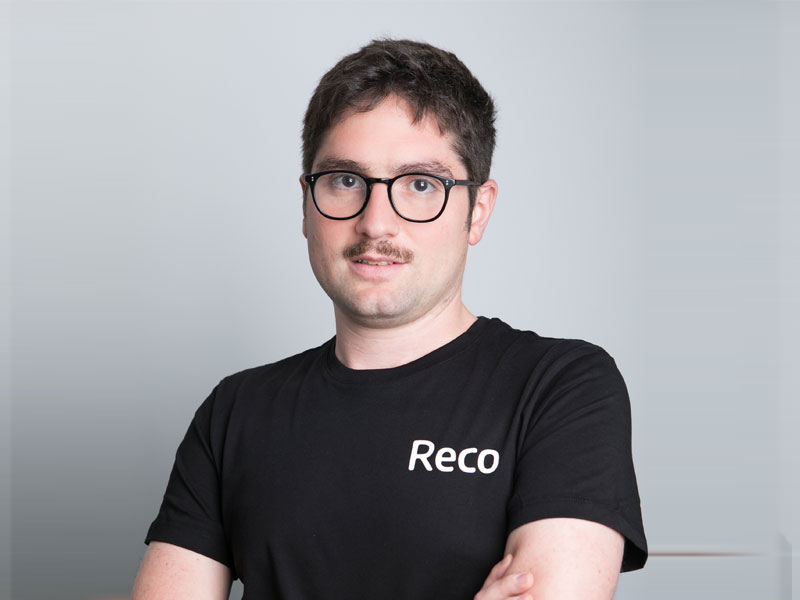
Reco's co-founder talks about the gap between what teams think they are protecting and what is actually running, how the platform maps an entire environment in days, and why he keeps a hand-drawn version of the product on a whiteboard.
In this interview
What is Reco, and what problem does it solve?
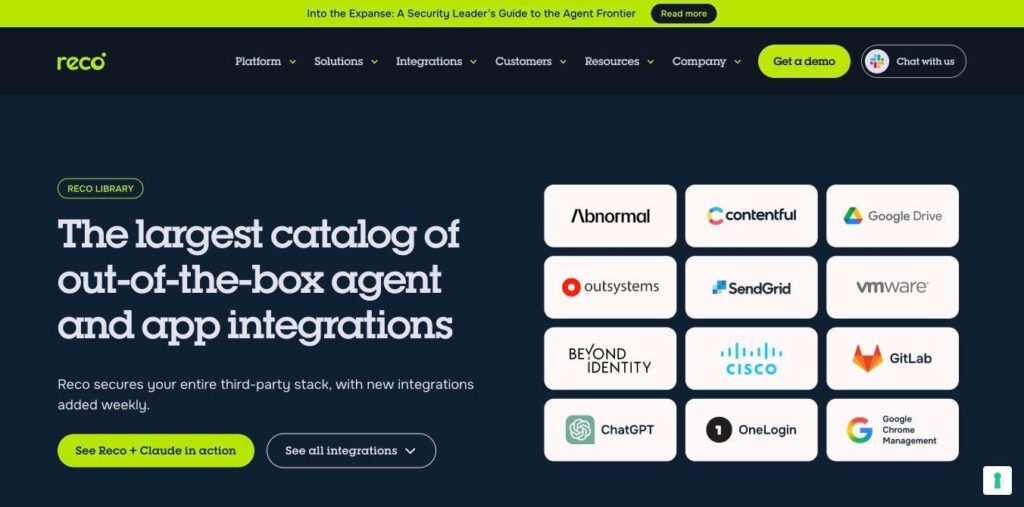
Reco is a security platform for everything your company connects to. That means your business applications, the identities inside them, the data moving between them, and the AI tools your teams have started wiring in. We connect to your environment, build a live map of it, and then tell you what is risky and what to fix first. We support more than 200 applications today, and when a customer needs one we do not cover yet, we add it in days, not quarters.
Why did you start Reco?
I started Reco because security teams had lost track of their own environment. They spent twenty years getting good at the network and the endpoint. Then the whole company moved into applications that nobody in IT ever provisioned. A marketing person signs up for a tool, connects it to Google Workspace, grants it broad permissions, and security never hears about it.
We kept meeting teams who could not answer basic questions. Which applications are connected to our core systems? Who has admin? Which accounts belong to people who already left? That gap is the entire reason Reco exists.
How does Reco work?
Four moves: connect, map, see, catch. I will draw it for you, because the whiteboard version is the one that makes it click.
How Reco works, on a napkin
connect · map · see · catch
→
→
→
Connect what you run, let Reco map it, see the whole picture, and catch the risk that matters first.
That is the loop. The integrations are the easy part. The thing that makes Reco useful is the map in the middle. Once every identity, application, permission, and data path lives in one graph, the questions answer themselves.
What makes Reco different from other security platforms?
What makes Reco different is the map in the middle. Most tools hand you visibility, and visibility without priority is just a longer list. If I give you ten thousand findings, I have not helped you, I have buried you.
Reco’s Knowledge Graph connects findings into a single story: this admin account, on this application, with no MFA, holding access to this sensitive data, owned by someone who left in March. That one sentence is worth more than ten dashboards.
We score every posture check by severity, from Critical down to Low, so the first thing you look at is the thing that can actually hurt you. That is the difference between a security platform and a search engine for problems.
Why a map beats a list
ten thousand findings, one that matters
A graph, not a spreadsheet: the highest-risk path stands out instead of getting lost in the pile.
How does Reco secure AI tools connected to company data?
Reco treats AI tools as part of the same map as everything else, not a bolt-on product. Teams connect them to their core applications and data exactly the way they connect anything else, usually faster and with less review.
Reco’s Connected AI Apps view shows which AI tools are connected, what they can reach, and runs posture checks against them. The point is not to have a separate “AI security” thing sitting in the corner. An AI tool with broad access to your data is just another high-risk identity, and it should show up in the same graph as everything else.
How does Reco find apps and accounts no one approved?
Reco runs discovery daily and surfaces every application connected to your core systems, including the ones it marks Unsanctioned because no one approved them. The same map shows the accounts behind them: admins, accounts with no MFA, and accounts that belong to people who already left.
You are not waiting for someone to file a ticket. If it connected, it shows up, and it shows up tomorrow too, because the scan runs again.
What does getting started with Reco look like?
Getting started is fast. You connect a few core systems, let the graph build, and almost everyone finds something in the first week: forgotten admin accounts, applications connected by people who are long gone, AI tools nobody flagged.
The mistake teams make beforehand is waiting for a clean inventory before they start. You never get one, because the environment changes every day. Reco re-discovers applications daily and re-scans posture daily, so the picture stays current without anyone babysitting a spreadsheet. It is not a six-month rollout before you get value. The value is the moment you can finally see the room.
Would you build Reco the same way again?
Yes, but I would draw the picture sooner. We spent our early months explaining the product in long decks, and people nodded politely and forgot it. The thing that actually made it land was a sketch on a whiteboard. Connect, map, see, catch. Four words and four doodles. So now we lead with the napkin, and we save the dashboards for later.
At a glance
About the company
Reco
reco.ai ↗Identity-first security platform that maps every SaaS app, AI tool, and agent in your environment.
- Category
- SaaS Security Posture Management (SSPM) and AI/agent security
- Built for
- Enterprise security teams and CISOs at Fortune 500 and high-growth companies
- App coverage
- 225+ apps supported
- new apps added in 3–5 days, not quarters
- Core tech
- Unified Discovery, App Factory, and a Knowledge Graph of identities, permissions, and data paths
- Capabilities
- Agent inventory, identity & access governance, data exposure management, threat detection & response
- Typical users
- CISOs at Fortune 500 and high-growth companies
- Enterprise security architects managing 200+ SaaS apps
- Compliance teams governing AI-agent and shadow-IT risk
About the founder
Co-founder and CPO of Reco, building security for the AI-agent era.
- Role
- Co-founder and Chief Product Officer at Reco
- Recognition
- Forbes 30 Under 30
- Background
- Former Israeli Prime Minister's Office
- advanced .NET performance and Windows internals
Featured in
- CIO
- Security Boulevard
- Business Insider
- Fast Company
Interview conducted and condensed by the Startup Stash editors.
For founders and startup teams
Want your story on Startup Stash?
An interview, edited by our team to Startup Stash standards.
More interviews