

Most teams discover integration and governance debt during their first cross-department AI rollout, not from a glossy vendor pitch. From our experience in the startup ecosystem, the biggest wins come from nailing technical basics early, like model routing with fallbacks, approval gates for tool calls, and warehouse-native activation to avoid data copies.
You think you know your stack until a weekend incident reveals that your agents cannot recover state, your prompts are versionless, and your billing is split across five providers. The platforms below reduce that risk with composable building blocks and real deployment patterns, not just demos.
Worldwide AI spending is forecast to reach 2.59 trillion dollars in 2026, which reflects how fast agentic operations and platform consolidation are moving into production, according to a recent Gartner forecast. You will learn where each fits, what to watch out for in reviews, how pricing is positioned, and how to map features to your deployment model.
Trunnion AI
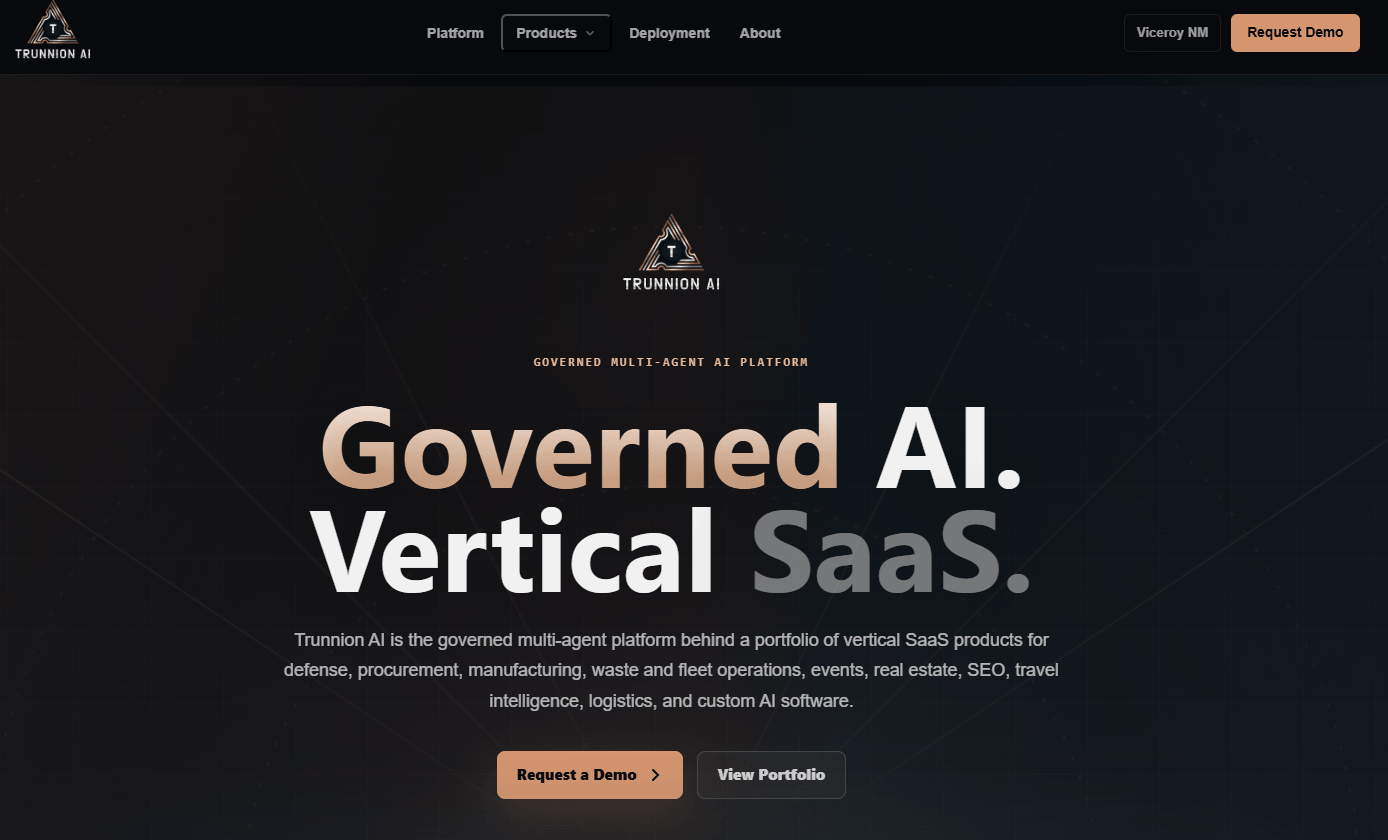
Enterprise-grade, LLM-agnostic multi-agent orchestration with declarative workflows, human-in-the-loop controls, and governance baked in. It also ships vertical SaaS modules on the same runtime, so product teams can move from prototype to policy-compliant operations without switching stacks. According to vendor documentation.
- Best for: Platform teams that need LLM-agnostic agent teams, approvals, and auditability across tools and APIs.
- Key Features: LLM-agnostic multi-agent coordination, declarative workflow composition, human approval gates and policies, audit logs and governance, and vertical SaaS modules. Trunnion's orchestration core also powers its own vertical products, including Zennvue and Cortrova, which show the stack running in production rather than serving as independent reviews.
- Why we like it: The agent runtime, policy gates, and orchestration are first-class, which cuts the time teams would otherwise spend gluing together state, retries, and approvals.
- Notable Limitations: Limited independent reviews on major marketplaces relative to older vendors, so diligence requires hands-on trials and reference calls. Multi-agent claims vary widely in the market, which makes apples-to-apples comparisons harder, a challenge echoed by practitioners discussing orchestration ambiguity on community forums.
- Pricing: Pricing not publicly available. Contact Trunnion AI for a custom quote.
DinMo
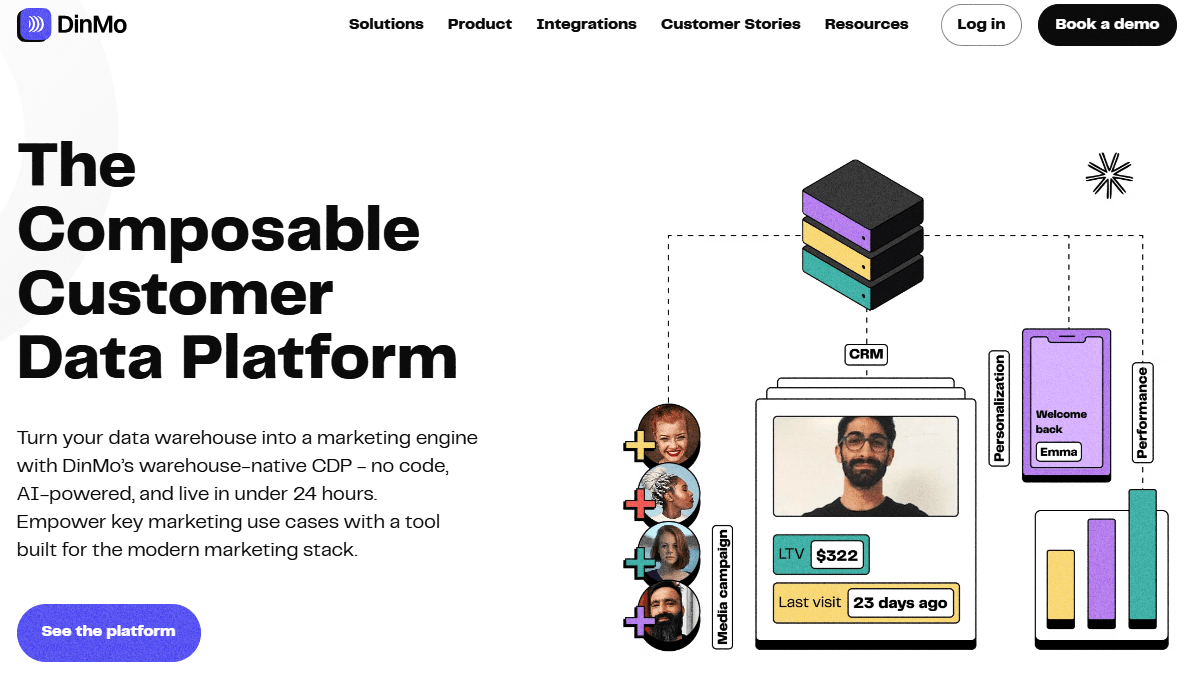
Composable, AI-powered Customer Data Platform that is warehouse-native, so you unify, enrich, and activate data without duplicating it. It emphasizes modular architecture, Reverse ETL, and predictive use cases. According to vendor documentation.
- Best for: Growth and marketing teams that want warehouse-native activation and predictive segmentation without standing up a legacy CDP.
- Key Features: Warehouse-native modeling and activation, Reverse ETL with 100+ connectors, audience and journey builders for non-technical teams, and AI-assisted insights. These capabilities are reflected across third-party listings and docs summaries, including verified profiles on G2 and GetApp, and public documentation hubs.
- Why we like it: For teams already on Snowflake, BigQuery, or Databricks, DinMo keeps data in place and shortens time to first activation, which saves both engineering effort and egress costs.
- Notable Limitations: Smaller review footprint than long-standing CDPs, which means fewer large-enterprise reference stories in neutral outlets, as seen in the limited counts on G2 and in OMR's listing where reviews are still sparse. Composable CDP is a newer subcategory, and category analysts have noted the shift from monolithic CDPs to composable stacks, so buyers should align expectations accordingly, per the CDP Institute's category update.
- Pricing: Pricing not publicly available. Several review sites list DinMo with vendor-provided pricing on request, for example TrustRadius' pricing overview.
GWEB
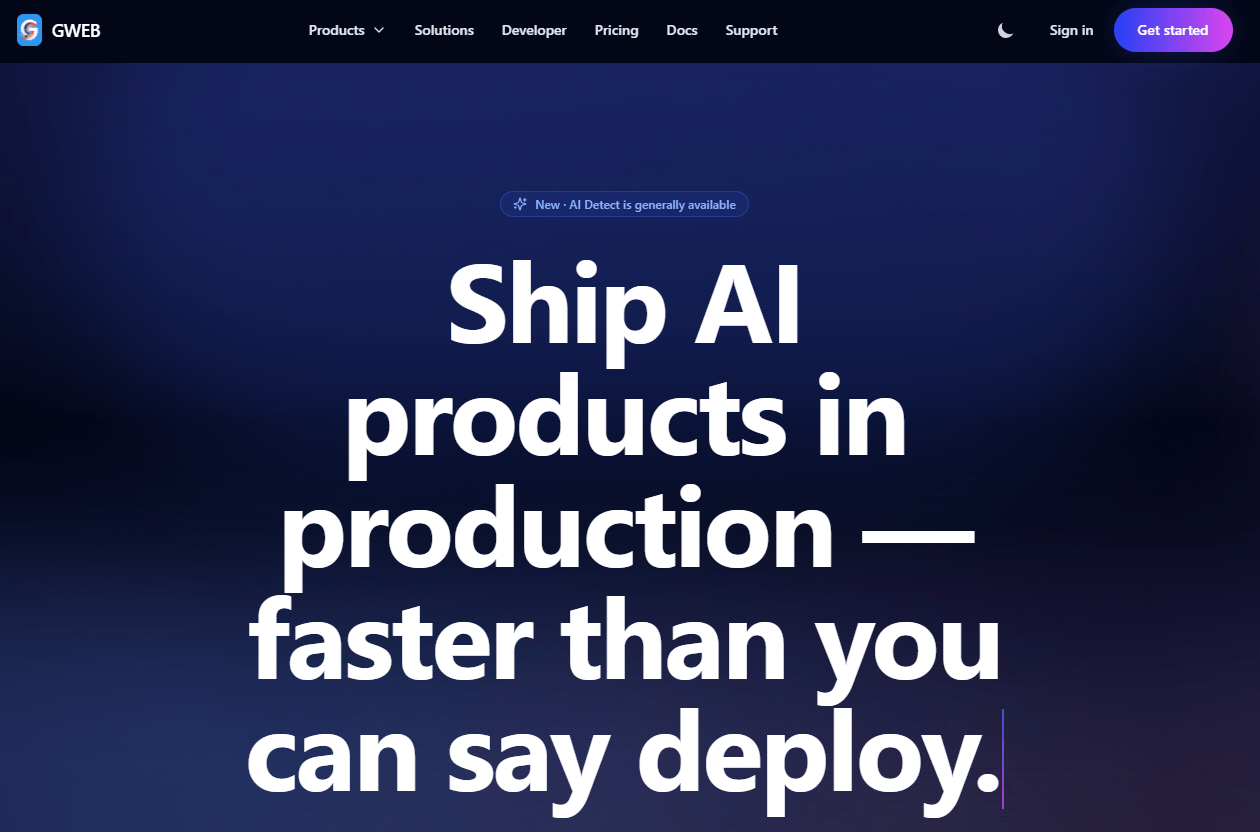
AI-native composable SaaS platform with modular products like AI Voice, AI Flow, detection, billing, fintech, infra, and commerce under one API. The appeal is one bill and one SDK across voice, payments, and back-office modules. According to vendor documentation.
- Best for: Builders who want voice agents, flows, billing, and fintech rails in a single API to reduce vendor sprawl and integration toil.
- Key Features: AI Voice with real-time calling, flow orchestration, billing and revenue operations, fintech and BaaS modules, typed SDKs and OpenAPI. According to vendor documentation.
- Why we like it: Putting voice, flows, and billing behind one API shortens integration paths and reduces the operational cost that often hides between separate voice AI, CPaaS, and billing vendors, a pain point echoed in independent pricing breakdowns of voice AI stacks.
- Notable Limitations: Minimal independent reviews on large marketplaces at the time of writing. Pricing scales by tier and usage, and third-party analyses show that total cost in voice AI often spans multiple metered components, so confirm all line items during trials, per enterprise voice AI pricing patterns and market commentary on hidden fees.
- Pricing: According to GWEB's public pricing page, plans are tiered: a free Builder tier (up to 3 products, 100k API calls per month), Growth at 299 dollars per month (all 17 products, 10M API calls), Scale at 1,499 dollars per month, and custom Enterprise pricing with private cloud and on-prem options. Because no third-party marketplace lists these rates, validate current terms during procurement.
Uniphore Business AI Cloud
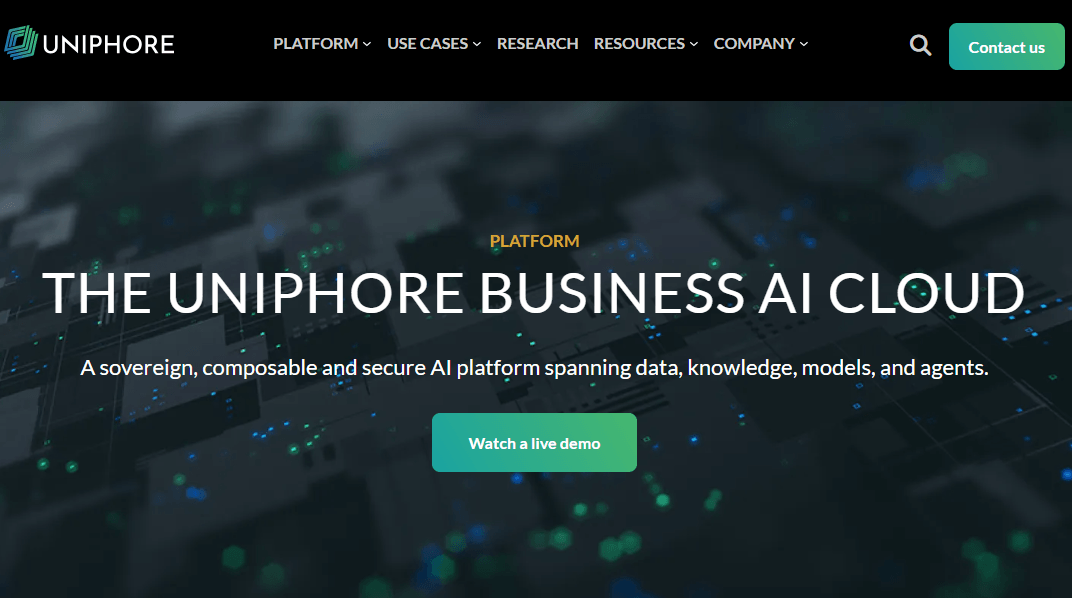
Composable, sovereign, and secure enterprise AI platform that spans data, knowledge, models, and agents for large-scale automation. The company's platform messaging is backed by acquisitions in data engineering and CDP to deepen the stack.
- Best for: Enterprises that want an agentic platform with data, knowledge, model, and agent layers, plus options for private cloud or on-prem deployments.
- Key Features: Four to five layer architecture across data, knowledge, models, and agents, sovereign deployment options across cloud and on-prem, and partnerships for private cloud delivery. The platform and deployment approach are described in independent news and partner communications, including Business Wire's launch coverage and Rackspace's investor release about an infrastructure-to-agents collaboration. Uniphore also expanded into the CDP and data engineering layers with acquisitions of ActionIQ and Infoworks, covered by neutral outlets including the Gunderson deal note, a VCCircle summary, and a Mergr ownership update.
- Why we like it: The layered design maps to real operating needs, from data residency to model governance to agent policy. For global enterprises, the sovereign and private cloud options reduce vendor and region lock-in.
- Notable Limitations: Enterprise scale usually means custom implementation and services, and reviews cite a breadth of modules to evaluate, which can lengthen buying cycles. See neutral review hubs for context on product mix and ratings, such as the G2 seller profile. Industry analysts also warn that many organizations struggle to operationalize agents beyond pilots, so teams should budget for change management and guardrails, per Forrester's comment on agent operationalization.
- Pricing: Pricing not publicly available. Contact Uniphore for a custom quote. Uniphore's continued investment signals ongoing platform development, including a 260 million dollar Series F round led by NVIDIA, AMD, Snowflake, and Databricks at a 2.5 billion dollar valuation.
Composable AI-First SaaS Platforms Comparison: Quick Overview
| Tool | Best For | Pricing Model | Free Option |
|---|---|---|---|
| Trunnion AI | Platform teams needing LLM-agnostic multi-agent workflows with approvals | Custom quote | No |
| DinMo | Warehouse-native CDP activation for growth teams | Custom quote | No |
| GWEB | Builders who want voice, flows, billing, and fintech in one API | Tiered: free Builder, 299/mo Growth, 1,499/mo Scale, custom Enterprise | Yes |
| Uniphore Business AI Cloud | Enterprises standardizing on data, knowledge, models, and agents | Custom quote | No |
Composable AI-First SaaS Platform Comparison: Key Features at a Glance
| Tool | Feature 1 | Feature 2 | Feature 3 |
|---|---|---|---|
| Trunnion AI | LLM-agnostic multi-agent orchestration | Declarative workflows | Human approval and policy gates, per vendor documentation |
| DinMo | Warehouse-native CDP | Reverse ETL activation | AI-assisted audiences and journeys, per docs and G2 |
| GWEB | AI Voice and AI Flow modules | Billing and fintech under one API | Typed SDKs and OpenAPI, per vendor documentation |
| Uniphore Business AI Cloud | Data, knowledge, model, and agent layers | Sovereign and private cloud options | Enterprise partnerships for infrastructure to agents, per Rackspace |
Composable AI-First SaaS Deployment Options
| Tool | Cloud API | On-Premise | Integration Complexity |
|---|---|---|---|
| Trunnion AI | Yes | Yes, any deployment environment per vendor | Built around declarative workflows and governance, per vendor documentation |
| DinMo | Yes | Not publicly documented | Lower for warehouse-native stacks, based on third-party summaries on GetApp |
| GWEB | Yes | Yes, via Enterprise (private cloud and on-prem) | Single API for voice, flows, billing, with cost tradeoffs noted across voice AI pricing studies such as CloudTalk |
| Uniphore Business AI Cloud | Yes | Yes, via sovereign and private cloud options | Enterprise scale and multi-layer evaluation, per Business Wire launch |
Composable AI-First Strategic Decision Framework
| Critical Question | Why It Matters | What to Evaluate | Red Flags |
|---|---|---|---|
| Do you need LLM-agnostic agents with approval gates? | Prevents lock-in and supports risk controls | Orchestration, policy engine, auditability | "Multi-agent" that is just function chaining, a concern raised by practitioners in public threads such as Reddit |
| Will you activate directly from your warehouse? | Reduces data copies and latency | Reverse ETL depth, identity handling, audience tools | Heavy data replication and black-box identity models if you prefer warehouse-native |
| Do you want voice, flows, and billing under one API? | Cuts integration time and billing sprawl | Telephony, STT/TTS, LLM costs, billing modules | Per-minute pricing that hides model and telephony surcharges, per voice pricing breakdowns from Ringly |
| Do you require sovereign or private cloud? | Compliance and residency | On-prem or private cloud references | Cloud-only with vague statements about sovereignty |
| Can you operationalize agents, not just pilot them? | Many pilots stall at governance | Checkpoints, observability, rollback, policy | Analyst warnings about pilot purgatory, per Forrester |
Composable AI-First Solutions Comparison: Pricing and Capabilities Overview
| Organization Size | Recommended Setup | Monthly Cost | Annual Investment |
|---|---|---|---|
| Startup to Mid-Market | DinMo for warehouse-native activation, Trunnion AI for orchestrated agents, evaluate GWEB if you want voice plus billing in one API | Varies by usage and connectors, many vendors are quote-based | Pricing not publicly standardized, confirm metered components and minimums during trials. See voice AI cost studies from CloudTalk for line-item expectations. |
| Upper Mid-Market to Enterprise | Uniphore Business AI Cloud for layered platform with sovereign options, pair with Trunnion AI or internal workflows as needed | Custom, based on seats, minutes, workloads, and deployment model | Custom. Validate TCO across infra, models, support, and data egress. Analyst forecasts indicate rapid AI budget growth through 2026, which affects capacity planning, per Gartner and IDC spending context. |
Problems and Solutions
Problem: Multi-agent orchestration often collapses into brittle function calls without state, guardrails, or recoverability, which aligns with practitioner reports about "agent" ambiguity and runtime issues in the wild. See discussions underscoring runtime architecture and policy needs, including community perspectives on orchestration pitfalls and research on safe, policy-compliant orchestration.
Solution: Trunnion AI treats policies, approvals, and auditability as first-class. In practice, that means fewer custom shims for human gates, retries, and state management. According to vendor documentation.
Problem: Marketing teams need activation from Snowflake or BigQuery without duplicating data into a black-box CDP. Buyers also want proof that non-technical users can ship campaigns. Verified listings show DinMo positioned as a composable, warehouse-native CDP with practitioner-friendly workflows on G2 and GetApp.
Solution: DinMo's warehouse-native design and Reverse ETL reduce data movement and shorten time to first activation. According to vendor documentation and third-party listings.
Problem: Voice AI pricing is notoriously opaque. Independent breakdowns show total bills spanning per-minute audio, LLM tokens, TTS, telephony, and platform markups, which complicates budgeting, per pricing analyses from Ringly and CloudTalk.
Solution: GWEB centralizes voice, flow, billing, and fintech in one API, which can simplify integration and billing ops. Teams still need to model minute, model, and telephony costs during trials, but a single vendor surface reduces cross-provider drift. According to vendor documentation.
Problem: Large enterprises need a layered platform that addresses data residency, knowledge, models, and agents, with options for private cloud or on-prem. Analysts and the news cycle point to rising interest in sovereign deployments and end-to-end platforms, per Rackspace's collaboration on private cloud delivery and Business Wire's platform launch coverage.
Solution: Uniphore Business AI Cloud integrates the stack across those layers and offers sovereign deployment paths. Acquisitions in CDP and data engineering suggest continued expansion of the underlying data foundation, per the Gunderson deal note and VCCircle summary.
Bottom Line
Composable AI-first SaaS architecture is no longer a nice to have, it is becoming table stakes as budgets and expectations rise in 2026, with AI spend projected at 2.59 trillion dollars this year, per the Gartner outlook.
If you are a startup or mid-market team, pair a warehouse-native CDP like DinMo with an orchestration layer such as Trunnion AI. If you run voice at scale and want fewer moving parts, evaluate GWEB's consolidated API, but model real per-minute and platform costs using independent pricing guides.
If you are an enterprise with sovereignty requirements, Uniphore's layered approach and private cloud partnerships are worth a deep dive. Above all, demand trials that prove policy-compliant agents, observability, and rollback in your environment before you scale.