Most teams discover that their "AI pilot" has ballooned into an ungoverned sprawl during quarterly cost reviews, not from the shiny kickoff deck. Working across different tech companies, we see the same traps, like missing model-routing policies, no JSON schema validation on outputs, and zero human-in-the-loop checkpoints. The stakes are rising fast, with the generative AI market projected to grow at a 40 percent CAGR from 2024 to 2029, hitting roughly 85 billion dollars by 2029, according to S&P Global Market Intelligence. That growth also brings waste, abandonment, and security risks if orchestration is weak.
The shortlist below balances no-code multimodal builders, prompt orchestration across many LLMs, one-click chained prompts, and enterprise document automation. You will learn when each platform wins, where it falls short, what pricing to expect, and how to align choices with FinOps, reliability, and compliance priorities. As a framing note, Gartner warned that at least 30 percent of generative AI projects would be abandoned by the end of proof of concept due to cost, control, and value gaps, which makes platform selection critical (Gartner).
Segmind (PixelFlow)
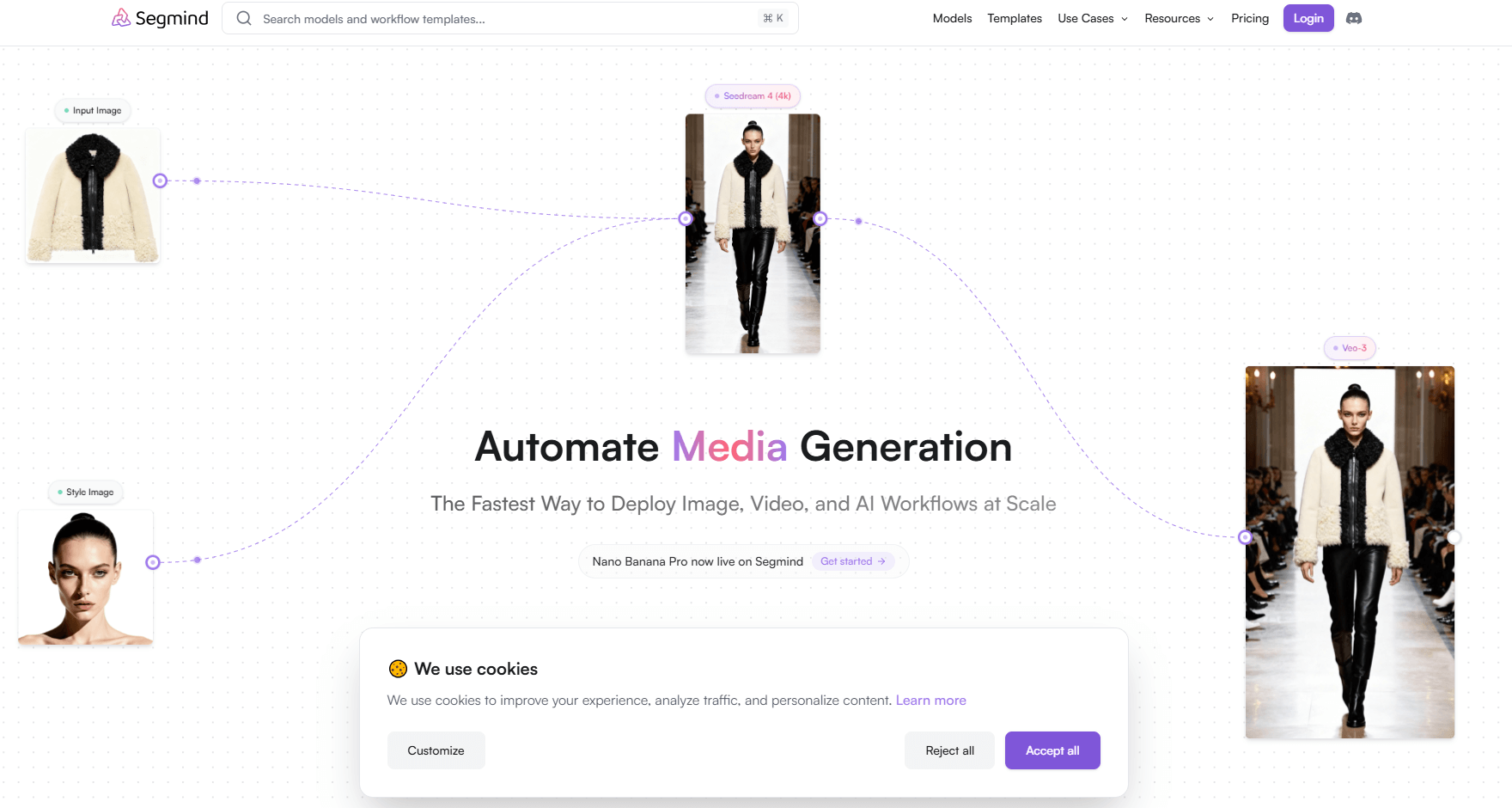
No-code, node-based builder for visual and multimodal AI workflows that you can convert into APIs. According to vendor documentation, supports chaining image, text, audio, and video steps, plus parallel branches.
Best for: Creative, growth, and product teams that need fast iteration on image and video pipelines with API handoff to engineering.
Key Features:
- Node-based workflow editor for multimodal AI, with parallel branching and conditional logic, per vendor documentation.
- Convert workflows into hosted APIs for integration, per vendor documentation.
- Access to multiple diffusion and image models with speed-optimized backends, per vendor documentation.
Why we like it: Practical for replacing ad-hoc prompt trials with repeatable pipelines. The API deployment keeps creative workflows close to production without heavy MLOps lift.
Notable Limitations:
- Community posts note occasional latency spikes during launch tests and mixed results for niche inpainting tasks such as signage text.
- Templates focus on creative tasks, so data-heavy governance or evaluation features may require external tooling.
- Team permissions and workflow versioning depth are lighter than enterprise AIOps suites.
Pricing: Per vendor pricing page accessed February 17, 2026: Free (Hobbyist); Personal 17 dollars per month; Pro 29 dollars per month; Business 399 dollars per month. Pricing subject to change. Contact Segmind for enterprise terms.
Prompts.ai
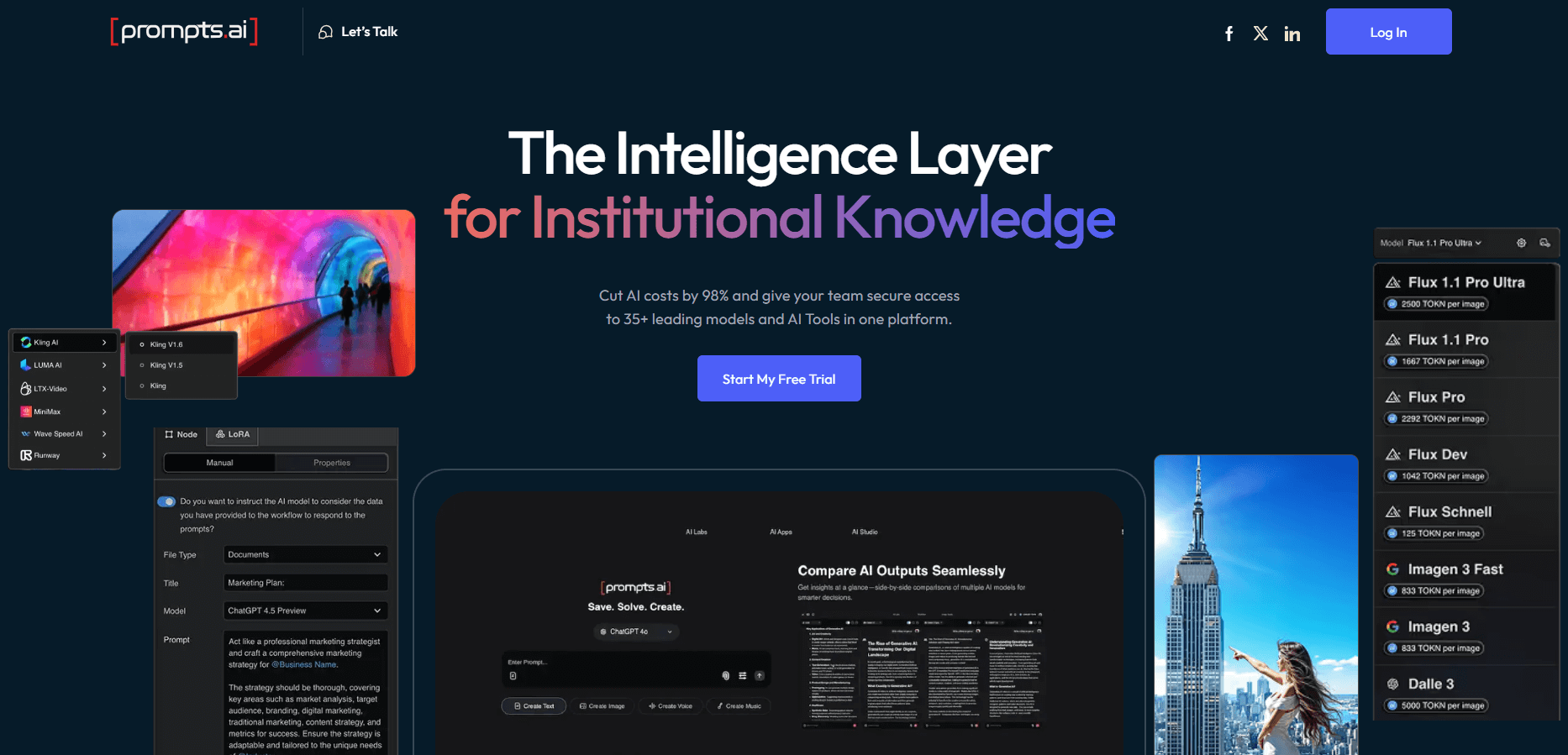
AI orchestration platform that centralizes prompt management and gives teams access to 35 plus LLMs in one interface, per vendor documentation. Includes cost tracking, side-by-side model comparison, and governance features.
Best for: Teams that want one place to compare models, standardize prompts, and add cost controls without stitching together several tools.
Key Features:
- Unified access to 35 plus LLMs with side-by-side comparisons, per vendor documentation.
- Governance features such as audit trails, roles, and spend visibility, per vendor documentation.
- Cost control with credits and routing policies to match workload to the right model, per vendor documentation.
Why we like it: Centralizes multi-model experimentation and production usage with a FinOps lens so you can stop paying for multiple overlapping subscriptions.
Notable Limitations:
- Independent third-party reviews are limited as of early 2026.
- Credits and routing concepts add a learning curve for non-technical teams.
- As with any aggregator, you still inherit upstream provider limits and policy shifts.
Pricing: Per vendor materials accessed February 17, 2026: free pay-as-you-go credits, with business plans that allocate monthly credits per member. Exact tiers may change. Contact Prompts.ai for current pricing.
Zunno
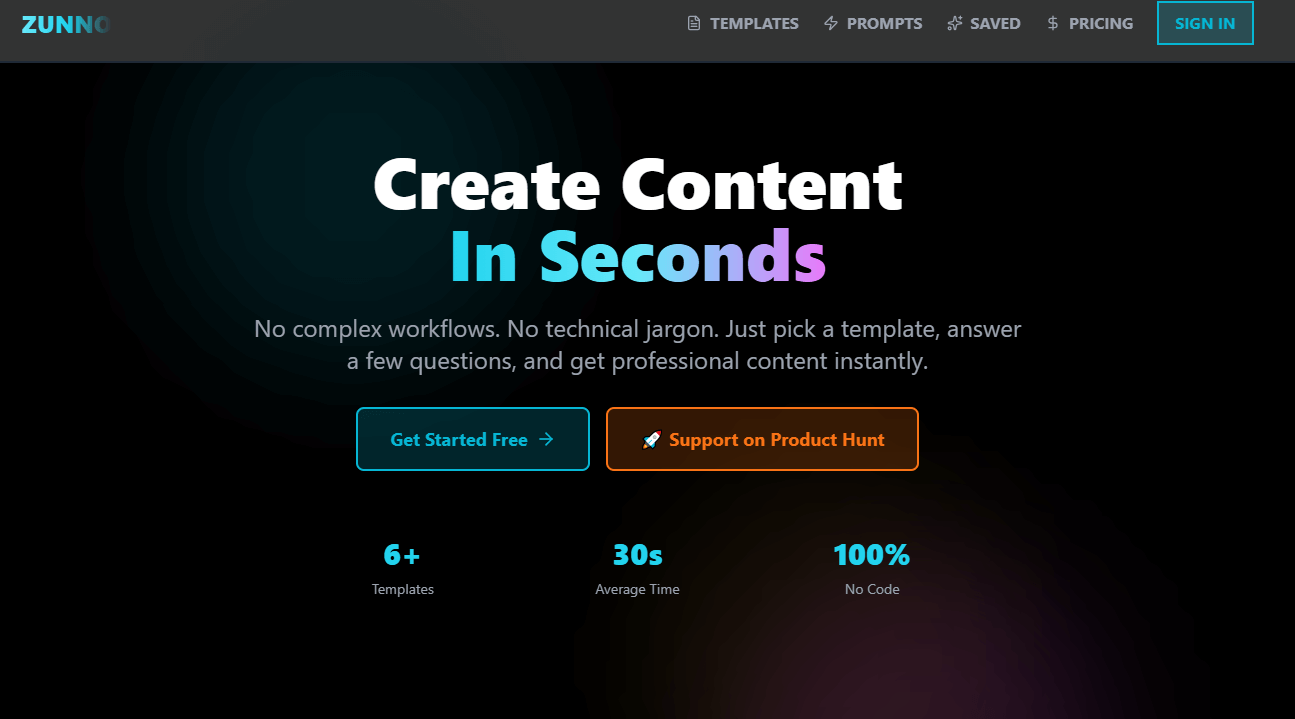
Web tool to chain multiple prompts into custom multi-step workflows and run them with one click. Geared toward content and marketing workflows.
Best for: Makers, creators, and small teams standardizing repeatable content tasks such as social posts, threads, and outlines.
Key Features:
- Multi-step prompt chaining with reusable templates, per vendor documentation.
- One-click end-to-end execution to avoid copy-paste between tools, per vendor documentation.
- Community templates that can be cloned and customized, per vendor documentation.
Why we like it: Fastest onramp if your pain is repetitive prompt work. Helps non-technical teams standardize outputs without new infrastructure.
Notable Limitations:
- Early-stage product, limited third-party reviews as of early 2026.
- Integrations and advanced branching logic are more limited than full workflow engines.
- Best for content, not complex back-office or compliance-driven processes.
Pricing: Per vendor site accessed February 17, 2026: free tier with a limited number of workflow runs per month. Paid tiers not publicly listed. Contact Zunno for details.
AI Hub Automate (Instabase)
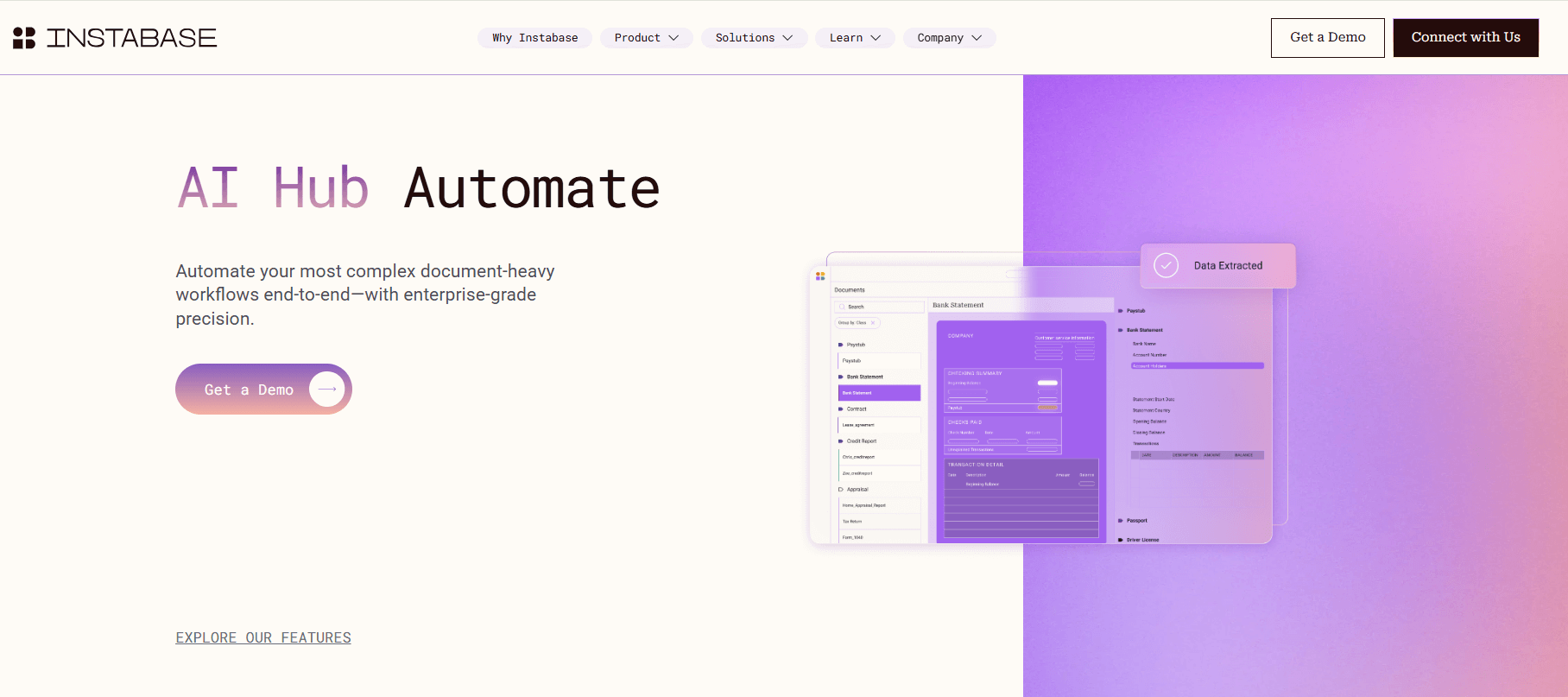
Enterprise platform for end-to-end document workflows with agentic logic, cross-document validation, human-in-the-loop, and full auditability, per vendor documentation. Deployment options include running in your own virtual private cloud.
Best for: Regulated industries and complex document packets, like mortgage files, claims, and trade finance, that need validation, traceability, and case management.
Key Features:
- Agentic automation that validates data across documents and applies business rules, per vendor documentation.
- Built-in human-in-the-loop case management with confidence thresholds, per vendor documentation.
- Auditability and enterprise controls including SSO, fine-grained permissions, and VPC deployment, per vendor documentation.
Why we like it: Purpose-built for multi-document decisions where accuracy, lineage, and compliance matter more than raw model novelty.
Notable Limitations:
- Enterprise deployment and change management can extend timelines.
- Proprietary platform means fewer low-level knobs than DIY stacks.
- Requires well-defined governance and process ownership to realize value.
Pricing: Pricing not publicly available. Contact Instabase for a custom quote.
Generative AI Workflow Tools Comparison: Quick Overview
| Tool | Best For | Pricing Model | Highlights |
|---|---|---|---|
| Segmind (PixelFlow) | Creative and product teams building multimodal assets and APIs | Freemium subscription (free tier available) | No-code builder, multimodal nodes, API deployment |
| Prompts.ai | Centralized multi-LLM orchestration, governance, and cost control | Credits and subscriptions (free tier available) | 35 plus LLMs in one place, cost tracking, model comparisons |
| Zunno | One-click content workflows for small teams | Freemium (free tier available) | Chain prompts into repeatable content pipelines |
| AI Hub Automate (Instabase) | Regulated, complex document workflows at scale | Enterprise custom (no free tier) | Agentic logic, validation, audit trails, human-in-the-loop |
Generative AI Workflow Platform Comparison: Key Features at a Glance
| Tool | Feature 1 | Feature 2 | Feature 3 |
|---|---|---|---|
| Segmind (PixelFlow) | Node-based editor | Multimodal steps | Convert to API |
| Prompts.ai | Multi-LLM hub | Side-by-side compare | Spend governance |
| Zunno | Multi-step chains | Templates library | One-click run |
| AI Hub Automate (Instabase) | Cross-doc validation | Case management | Full auditability |
Generative AI Workflow Deployment Options
| Tool | Cloud API | On-Premise / VPC | Integration Complexity |
|---|---|---|---|
| Segmind (PixelFlow) | Yes | Not publicly documented | Low for no-code, medium when productizing APIs |
| Prompts.ai | Yes | Not publicly documented | Medium due to credits and routing setup |
| Zunno | Yes | Not publicly documented | Low for content workflows |
| AI Hub Automate (Instabase) | Yes, including VPC | Enterprise options per vendor documentation | High, matches enterprise process rigor |
Generative AI Workflow Strategic Decision Framework
| Critical Question | Why It Matters | What to Evaluate | Red Flags |
|---|---|---|---|
| Do we need multimodal nodes or mostly text? | Narrows platform class | Image and video model support, latency, API export | Only text features when you need image or video |
| How will we control spend as usage scales? | AI FinOps is now table stakes | Model routing, per-prompt cost previews, budgets | No cost analytics or routing options |
| What validation is required before actions? | Reduces bad outputs and rework | JSON schema enforcement, regex guards, HITL queues | Free-form outputs with no structure |
| Do we need audit trails and approval workflows? | Needed for regulated teams | Versioning, lineage, approvals, case management | Missing traceability of prompts and changes |
| Where will it run? | Data governance and latency | Private VPC, region choice, APIs, SSO | Cloud-only with no enterprise controls |
Generative AI Workflow Solutions Comparison: Pricing & Capabilities Overview
| Organization Size | Recommended Setup | Monthly Cost | Annual Investment |
|---|---|---|---|
| Solo creator | Zunno free tier for content chains plus Segmind free for light assets | 0 to 20 dollars, depending on volume | 0 to 240 dollars |
| Startup team | Prompts.ai credits for multi-LLM experiments plus Segmind Pro for image/video APIs | 29 to 150 dollars per user equivalent, plus API usage | 348 to 1,800 dollars per user equivalent, plus usage |
| Mid-market | Prompts.ai business tier for governance, Segmind Business for throughput | Vendor quoted, based on seats and usage | Vendor quoted |
| Enterprise, regulated | AI Hub Automate in VPC with formal HITL and audit, optional Segmind APIs for creative | Custom quote | Custom quote |
Estimates reflect listed pricing accessed on February 17, 2026 where available; exact costs vary by usage, region, and contract terms.
Problems & Solutions
-
Problem: Multi-model experimentation balloons costs. CIO and CFO teams need FinOps guardrails as model routing becomes common.
Evidence and context: Gartner has spotlighted AI FinOps practices and the need to quantify cost, risk, and value in 2025 and beyond (Gartner webinar). The industry is adding native model routers for intelligent prompt routing, a trend captured by the FinOps Foundation's recap of Microsoft Ignite 2025 announcements (FinOps Foundation). Research also flags adversarial risks to routing systems that can escalate cost or degrade quality if not hardened (arXiv, RerouteGuard).
How a tool helps: Prompts.ai centralizes model access with cost analytics and routing policies, per vendor materials. That aligns with the FinOps push to pick cheaper models for simple prompts and reserve premium models for complex tasks, a point echoed in industry guidance on prompt routing tradeoffs (survey of routing strategies). -
Problem: Creative teams waste credits with trial-and-error image workflows.
Evidence and context: Practitioners frequently discuss credit burn and retry loops when prompts are not structured well (community discussion on saving credits). Users also report mixed results for specialized tasks like signage inpainting and occasionally observe latency variance during model launches, which impacts iteration speed (Reddit, Flux inpaint thread, Reddit, Flux Schnell speed thread).
How a tool helps: Segmind's PixelFlow replaces ad-hoc trials with node-based pipelines and parallel branches, then exposes a stable API for repeatable production use, per vendor documentation. -
Problem: Manual copy-paste between tools slows content workflows and introduces errors.
Evidence and context: Makers report building small tools explicitly to avoid copy-paste across AI steps when creating posts and threads (Reddit launch note from Zunno's creator).
How a tool helps: Zunno lets you chain prompts and execute pipelines in one click with shared templates, per vendor documentation. -
Problem: Regulated document workflows need validation, audit trails, and human review to go to production.
Evidence and context: Instabase continues to raise capital and win enterprise customers for automating unstructured document workflows, including claims of use by large banks, as covered in independent reporting (TechCrunch 2025 funding coverage, TechCrunch 2023 funding overview). Gartner also warned that many GenAI initiatives stall or are abandoned when costs rise and governance is weak, underscoring the need for platforms with validation and audit features.
How a tool helps: AI Hub Automate focuses on agentic validation, cross-document checks, HITL case management, and full auditability, per vendor documentation.
Conclusion: Choose Workflows That Match Your Operating Model
From our experience in the startup ecosystem, the winning platform is the one that matches your operating model, not the flashiest demo. If your bottleneck is creative iteration and handoff to engineering, a no-code multimodal builder with API export like Segmind can cut time to production. If you are wrestling with multi-model chaos, a governance-first orchestration layer like Prompts.ai helps standardize prompts, compare outputs, and control spend in line with the industry's push toward AI FinOps and intelligent routing. Content-centric teams can move fastest with Zunno's one-click chains, while regulated enterprises should prioritize Instabase's validation, auditability, and HITL. The market is expanding quickly, with S&P Global projecting a 40 percent CAGR through 2029, so anchor your choice to measurable outcomes, cost controls, and required assurances rather than model hype.