
Most teams discover their AI asset gaps during an audit or legal review, not from a quarterly roadmap. Working across different tech companies, we have seen the same three pitfalls repeat - from failing to maintain an AI bill of materials for LLM apps, to missing vector similarity search on image libraries, to weak SSO plus role mapping that leaks sensitive assets. You think you know where your content and AI components live until a regulator, a customer, or your own CISO asks for proof.
IDC expects global AI spending to reach $1.3 trillion by 2029, growing at a 31.9% compound annual growth rate, which is why platforms that inventory and govern owned AI assets have moved from "nice to have" to budget priority, per IDC's 2025 forecast update and press release. You will learn where each tool fits, what it actually does, verified limits, and how to avoid expensive false starts. (IDC AI spending forecast, Gartner's 2025 DAM overview.)
MediaValet
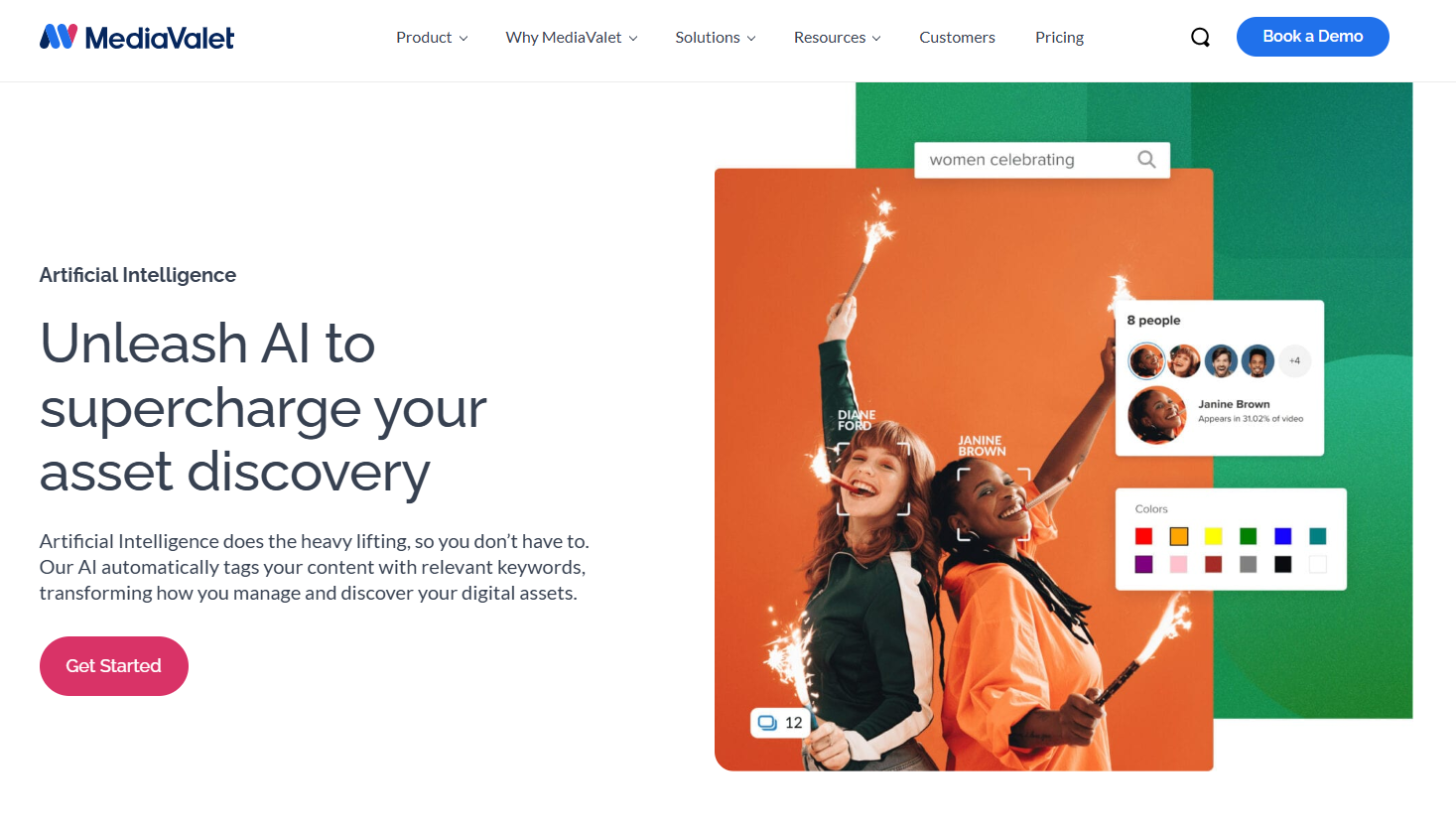
AI enhanced digital asset management that focuses on fast findability for images and video. Built on a cloud architecture with features that accelerate tagging, discovery, and distribution at enterprise scale.
Best for: Creative operations and brand teams that want automated tagging and face recognition in a DAM.
Key Features:
- Automatic object and keyword tagging, including landmark and celebrity recognition, plus color detection and video transcription, per vendor documentation.
- Face recognition that learns from labeled examples to tag people across the library, per vendor documentation.
- Brand portals, approvals, templating, analytics, SSO and access controls, per vendor documentation.
Why we like it: The AI tagging plus face recognition combo shortens search time on large photo archives, and the portals reduce one off file sharing.
Notable Limitations:
- Users report UI changes that made some tasks harder and a learning curve for search in the "new experience." (Capterra reviews.)
- Feedback about occasional lag on large files and upload or search quirks appears in community reviews. (G2 reviews summary.)
Pricing: Pricing not publicly available. Contact MediaValet for a custom quote. Third party review sites do not list official tiers. (G2 product page, SaaSworthy profile.)
Kontent.ai
A headless, AI accelerated content platform that adds image descriptions, natural language asset search, and governance to asset libraries inside the CMS. The focus is on structured content operations with AI assist.
Best for: Digital teams that want AI assisted content and asset governance inside a headless CMS.
Key Features:
- AI generated image descriptions to speed accessibility and multi language publishing, per vendor documentation.
- Natural language search across assets to cut down on filename hunting, per vendor documentation.
- Strong workflows, roles, and taxonomies for organizing assets and content at scale, per vendor documentation.
Why we like it: If your "assets" live inside content workflows, having AI descriptions and NL search next to modeling, localization, and governance keeps teams fast and compliant.
Notable Limitations:
- Reviews cite a learning curve for complex content models and requests for more out of the box tools compared with monolithic suites. (G2 reviews, Gartner Peer Insights.)
- Some buyers perceive premium pricing for enterprise features, based on user review commentary.
Pricing: Pricing not publicly available. Contact Kontent.ai for a custom quote. Funding history and product direction are covered in independent reporting. (BusinessWire funding news, Investing.com product launch.)
OpenAsset
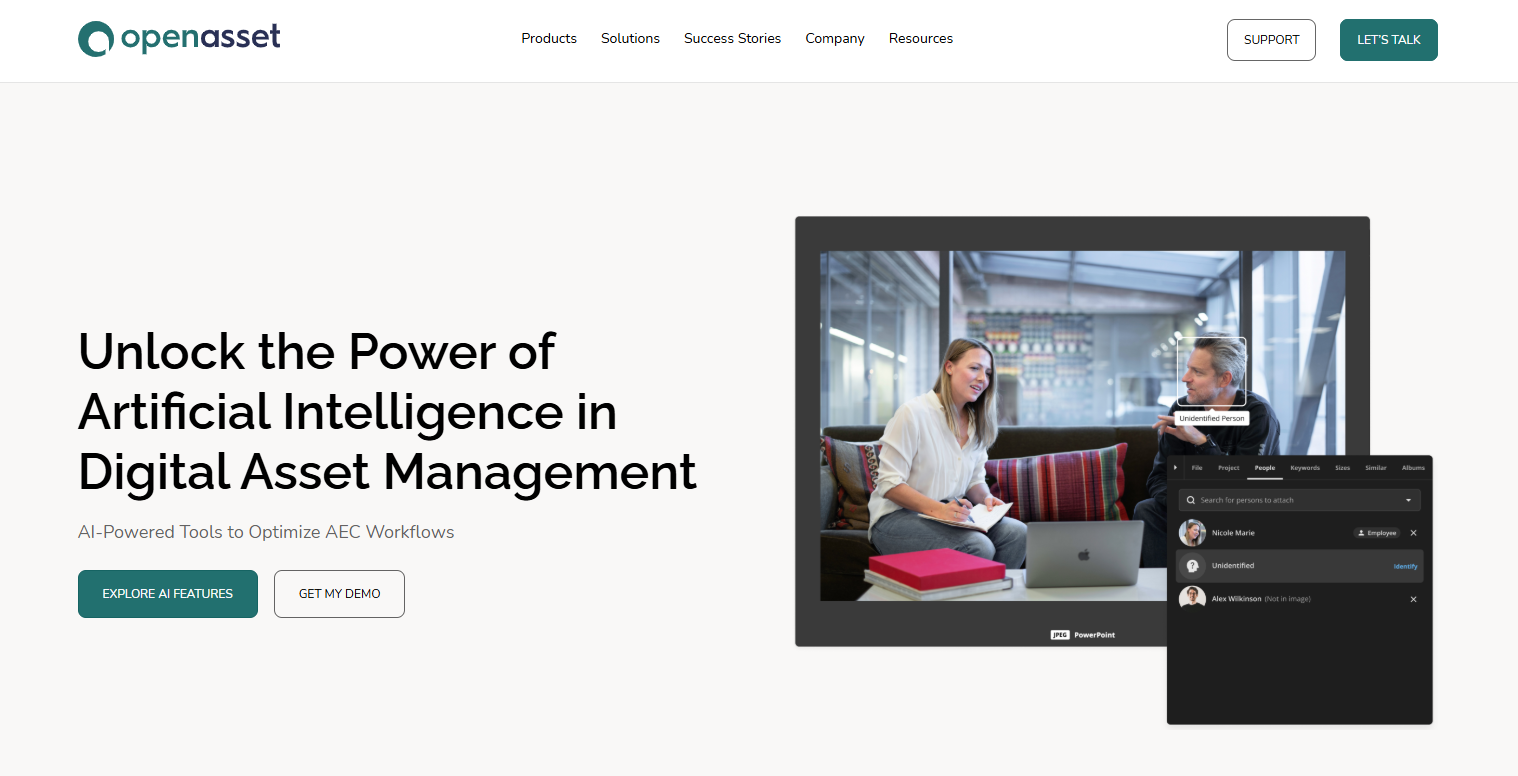
Project based DAM built for AEC teams, with AI visual similarity search and suggested keywords to find relevant images without heavy manual tagging. Emphasizes project metadata and proposal workflows.
Best for: Architecture, engineering, and construction firms that need project centric image discovery.
Key Features:
- AI visual similarity search to find related images even with sparse tags, per vendor documentation.
- AI suggested keyword tagging to accelerate cataloging, per vendor documentation.
- Deep project metadata, drag and drop into design tools, portals, and access controls, per vendor documentation.
Why we like it: The AEC focus plus AI visual search maps to how marketers and pursuit teams actually work on bids, which cuts hours off hunting for the right hero shot.
Notable Limitations:
- Reviews mention UI quirks, occasional performance hits, and that manual tagging can still take time. (Capterra reviews.)
- Some buyers say advanced workflow automation and heavy customization may require adjacent tools. (Research.com profile.)
Pricing: Pricing not publicly available. Several third party sources note that official price sheets are not posted publicly. (TrustRadius comparison shows no public pricing, Research.com notes lack of public pricing.)
SPLX AI Asset Management
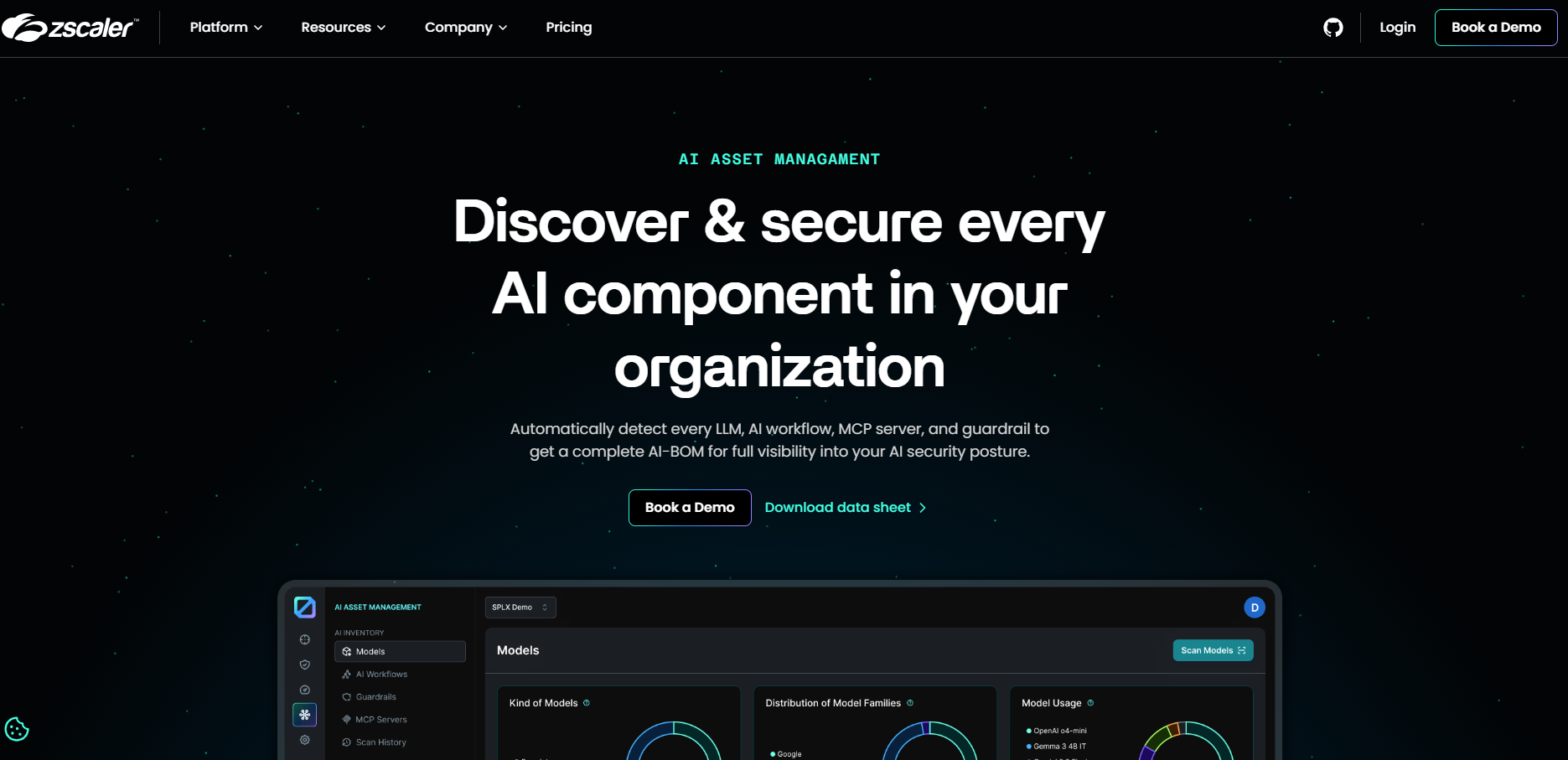
Enterprise AI asset discovery and security that generated an AI bill of materials, scanned models, workflows, and servers for risk, and mapped findings to governance. Note, SPLX was acquired by Zscaler on November 3, 2025, and its capabilities are being integrated into the Zscaler platform.
Best for: Security and risk teams that need an AI inventory for compliance and threat modeling across LLMs, agents, and workflows.
Key Features:
- Automatic AI asset discovery with an AI bill of materials, per vendor documentation.
- Workflow, model, and server scanning to surface risks across the stack, per vendor documentation.
- Mapping to security and compliance frameworks with governance reporting, per vendor documentation.
Why we like it: A live AI inventory plus risk mapping is the fastest route to get visibility before audits or red team exercises.
Notable Limitations:
- Acquisition means roadmap and packaging now flow through the Zscaler Zero Trust Exchange, which can change buying motion and integration patterns. (SecurityWeek coverage, CRN report.)
- Limited third party user reviews exist for the pre acquisition product, so buyers should pilot against specific controls and reporting needs. (Acquisition coverage above focuses on capabilities, not user ratings.)
Pricing: Pricing not publicly available. Post acquisition, evaluate as part of Zscaler's platform and request a custom quote.
Owned AI Assets Tools Comparison: Quick Overview
| Tool | Best For | Pricing Model | Highlights |
|---|---|---|---|
| MediaValet | Brand, creative, and marketing teams | Subscription, custom quote | AI tagging, face recognition, portals, enterprise support, cited in the 2025 Gartner DAM coverage. |
| Kontent.ai | Headless CMS teams needing AI assisted governance of content plus assets | Subscription, custom quote | AI image descriptions, NL asset search, strong workflows, active analyst coverage. (Forrester Wave blog) |
| OpenAsset | AEC, proposal and marketing teams | Subscription, custom quote | AI visual search and AEC centric metadata that reviewers call out in practice. |
| SPLX AI Asset Management | Security, risk, and compliance teams building an AI inventory | Now part of Zscaler, custom quote | AI asset discovery, AI BOM, governance, now integrated into Zscaler after the Nov 2025 acquisition. |
Owned AI Assets Platform Comparison: Key Features at a Glance
| Tool | Automated Tagging | Visual Similarity Search | Governance & Audit Reports |
|---|---|---|---|
| MediaValet | Yes | Private preview and roadmap noted publicly | Approval logs, SSO, audit trails reported by users |
| Kontent.ai | Yes, AI descriptions | Not primary | Strong workflows, roles, taxonomies |
| OpenAsset | Suggested keywords | Yes | Project centric metadata and permissions |
| SPLX AI Asset Management | N/A, focuses on AI components | N/A | AI BOM, compliance mapping, now via Zscaler |
Owned AI Assets Deployment Options
| Tool | Cloud API | On Premise | Integration Complexity |
|---|---|---|---|
| MediaValet | Yes | Not offered publicly | Moderate, typical DAM and SSO integrations, per user reviews |
| Kontent.ai | Yes | No | Moderate to high in composable stacks, per analyst context |
| OpenAsset | Yes | No | Moderate, focused on AEC workflows, per reviews |
| SPLX AI Asset Management | Yes, now via Zscaler | No public option | Enterprise security stack integration, per acquisition coverage |
Owned AI Assets Strategic Decision Framework
| Critical Question | Why It Matters | What to Evaluate | Red Flags |
|---|---|---|---|
| Do we need AI search on images or AI inventory of models, or both | Search centric DAM is different from AI security inventory | Depth of auto tagging, face match accuracy, or completeness of AI BOM and workflow discovery | Generic claims without precision on tagging accuracy or asset discovery scope |
| How will this tie into identity and approvals | Most incidents are permissions and process failures, not storage | SSO, SCIM, role granularity, approval logs, exportable audit trails | No SCIM, weak approval history, limited exportability |
| What is our regulatory and audit posture for AI | Audits require inventory and traceability | AI asset register, lineage, policy mapping, exportable reports | No AI BOM or compliance mappings |
| What is the cost driver for scale | Avoid surprises as libraries or AI apps grow | Pricing drivers such as users, storage, AI features, or scans | Opaque pricing, large uplift for basic controls |
| What is the vendor road map stability | Avoid churn mid rollout | Analyst mentions, funding or acquisition news | Recent acquisition that changes packaging or support terms |
Owned AI Assets Solutions Comparison: Pricing & Capabilities Overview
| Organization Size | Recommended Setup | Monthly Cost | Annual Investment |
|---|---|---|---|
| 1 to 50 employees, light media needs | Kontent.ai for content plus assets, or OpenAsset if AEC focused | Custom quote | Pricing not publicly available |
| 51 to 500 employees, rich media library | MediaValet for DAM, Kontent.ai for CMS workflows | Custom quote | Pricing not publicly available |
| 500+ with regulated AI workloads | MediaValet for brand assets, Kontent.ai for content, Zscaler with SPLX capabilities for AI inventory and governance | Custom quote | Pricing not publicly available |
Problems & Solutions
-
Problem: Creative teams spend far too much time searching, and the DAM market has been revitalized by generative AI to address findability.
Solution with MediaValet: Automated tagging plus face recognition shortens search and standardizes metadata at scale, a pattern aligned with analyst views of DAM at the center of the content supply chain. See Gartner's 2025 perspective on DAM and how gen AI has raised expectations for asset availability and reuse. (Gartner session abstract.) User feedback highlights both the gains and where search can still improve. -
Problem: Accessibility and brand compliance at scale require consistent image descriptions and governance inside authoring workflows.
Solution with Kontent.ai: AI generated image descriptions and NL search inside a headless CMS reduce manual work while keeping governance close to publishing, a trajectory reflected in recent product release coverage. Reviews note strong workflows with a learning curve on complex models, so plan onboarding accordingly. -
Problem: AEC teams need to find the right project visuals fast, often by concept rather than exact tags.
Solution with OpenAsset: AI visual similarity search and AEC centric metadata help proposal teams surface relevant imagery even when tags are incomplete. Reviewers call out time saved and note minor UI or search quirks to watch during rollout. -
Problem: Security leaders are being asked for a full inventory of AI models, agents, prompts, and guardrails before audits or red teams.
Solution with SPLX AI Asset Management, now in Zscaler: AI asset discovery and an AI bill of materials help establish a single system of record for AI components, mapped to governance and security controls. Buyers should evaluate today's packaging under Zscaler.
Bottom Line
The DAM market is mature and actively evolving, with analysts spotlighting how gen AI has raised the bar on asset availability, search, and governance. Use DAM when the primary challenge is media findability and brand control, and pair it with an AI inventory platform when regulators or your CISO want a living map of models and workflows. Start from your highest friction use case, pilot for measurable time saved in search or audit prep, and avoid recent acquisition churn by verifying current packaging. For market context and vendor field definition, see the latest analyst coverage on DAM and AI spending. (Forrester DAM Wave blog, IDC AI spending outlook.)