
Top Post-Quantum Cryptography Platforms
Most teams discover their cryptography sprawl during an outage or certificate expiry, not from a planned audit. Working across different tech companies, we have seen the same blind spots recur - like TLS 1.3 hybrid handshakes failing after ML-KEM updates, dormant RSA keys hiding in legacy APIs, and compliance teams struggling to build a real Cryptographic Bill of Materials. In August 2024, NIST finalized the first three PQC standards - ML-KEM, ML-DSA, and SLH-DSA - for immediate use, which turned roadmap debates into engineering work overnight (NIST announcement). Our analysis indicates that platforms combining discovery, policy, and change orchestration save the most time during migration.
The post-quantum cryptography market was approximately $2.17 billion in 2026 and is forecast to grow at 37.6 percent CAGR to reach $7.82 billion by 2030, according to Grand View Research.
QuProtect (QuSecure)
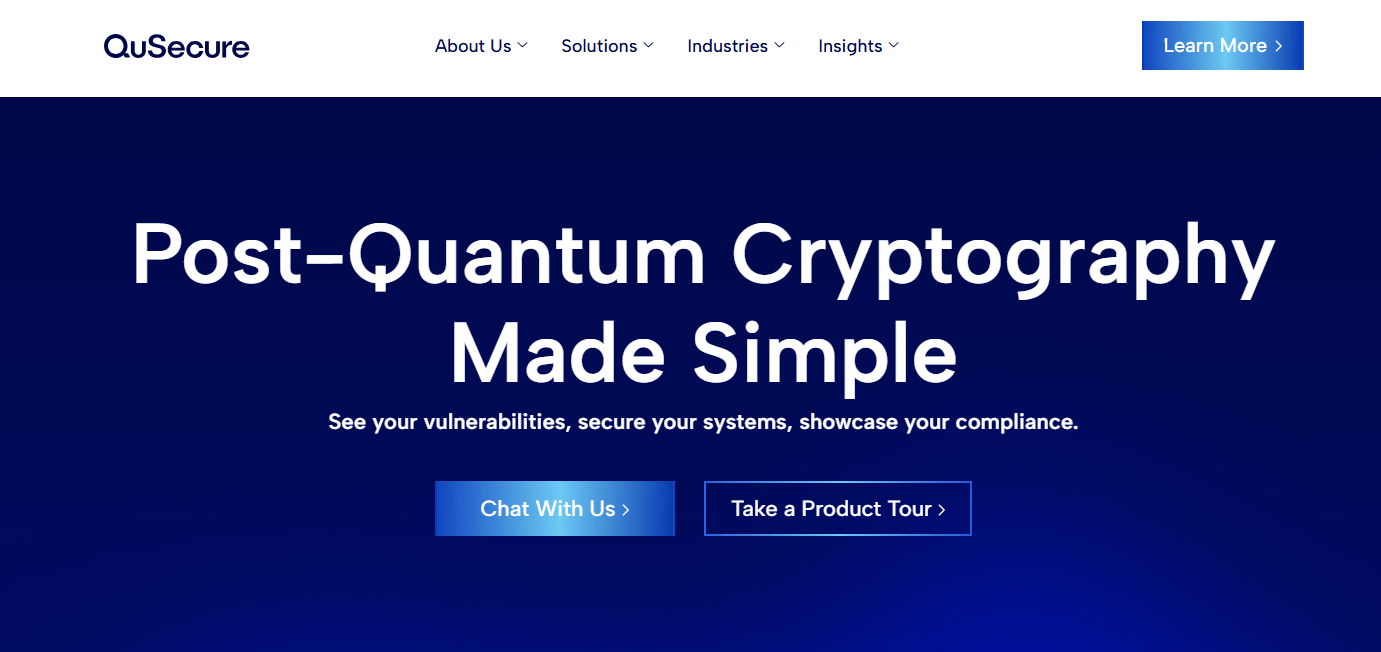
A crypto-agility platform that discovers your cryptography, enforces policies, and upgrades algorithms across networks without code changes, per vendor documentation. Recognized by third parties for product leadership and listed on AWS Marketplace.
- Best for: Enterprises and public sector teams that need crypto discovery, policy enforcement, and runtime remediation across heterogeneous networks.
- Key Features:
- Cryptographic discovery and CBOM style reporting, per vendor documentation.
- Runtime remediation and policy-based algorithm rotation without app redeploys, per vendor documentation.
- Compliance reporting mapped to CNSA 2.0 and NIST guidance, per vendor documentation.
- Why we like it: The network overlay model can reduce developer change risk when you must move to ML-KEM and ML-DSA before all apps are ready. It aligns with inventory and migration expectations in federal guidance like NSM-10 and OMB M-23-02.
- Notable Limitations:
- Limited public customer reviews at the time of writing, with only one visible review on G2's QuSecure profile.
- Enterprise pricing tier may be prohibitive for smaller teams.
- As with any in-line remediation, change control and integration testing are still required in regulated networks, a common PQC migration challenge highlighted by Cloudflare's PQC deployment notes.
- Pricing: Available via AWS Marketplace with flexible licensing options (AWS Marketplace). Government procurement routes are also publicly noted via GSA MAS availability in a Business Wire release. Contact vendor for current pricing.
PQC Now Ecosystem
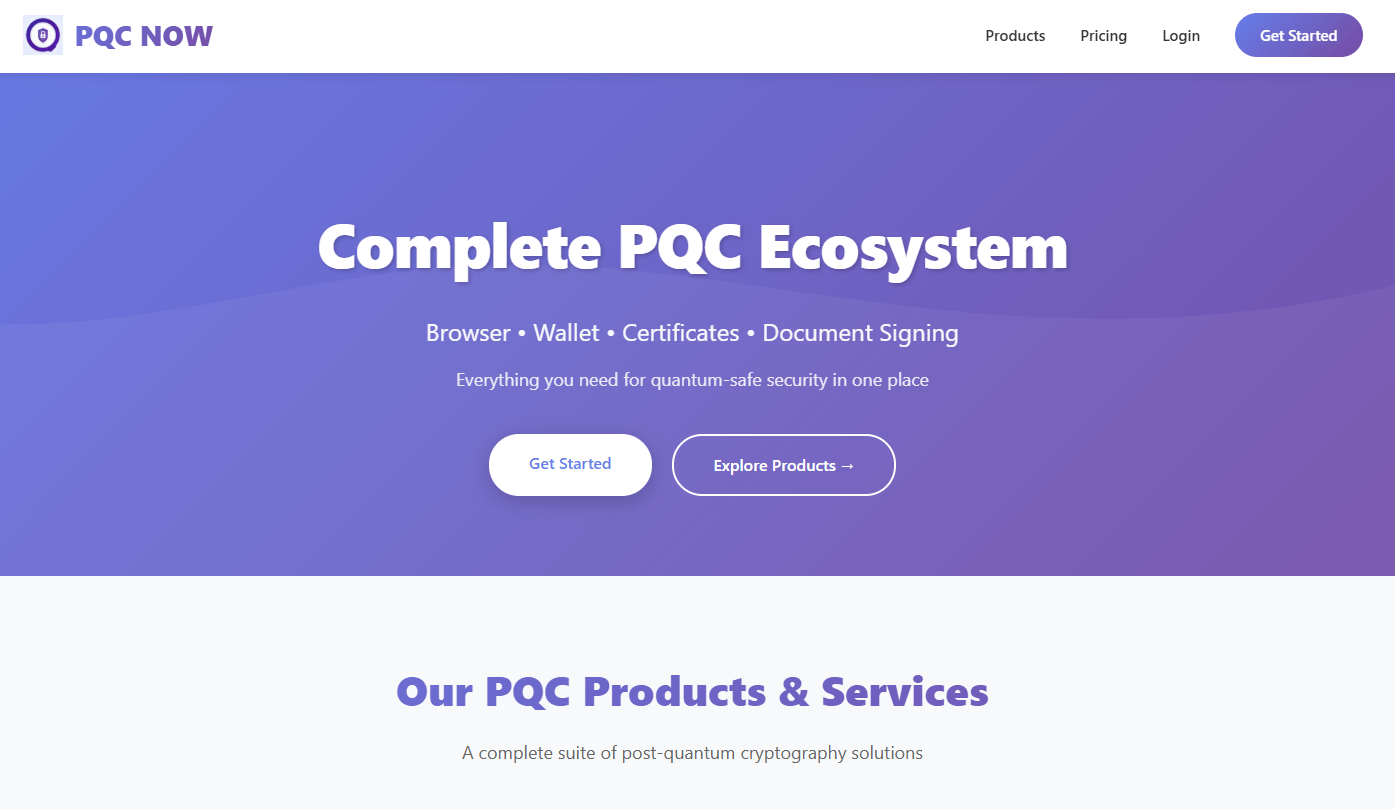
An ecosystem that includes a PQC-enabled browser, wallet, document signing, and PQC certificate issuance, per vendor documentation. Emphasizes ML-DSA certificates and signatures.
- Best for: Teams experimenting with PQC-only certificates and signatures in controlled environments, labs, and pilots.
- Key Features:
- Chromium-based PQC browser with ML-DSA validation, per vendor documentation.
- Document signing using ML-DSA and wallet integration, per vendor documentation.
- PQC certificate issuance with multiple security levels, per vendor documentation.
- Why we like it: Useful as a sandbox to test pure PQC certs and signature flows while mainstream browsers and CAs standardize hybrid approaches.
- Notable Limitations:
- Browser and WebPKI ecosystem support for pure PQC TLS remains limited, while mainstream browsers have moved to hybrid ML-KEM for key agreement (Google security blog, Chrome 131 ML-KEM; Cloudflare PQC support matrix).
- Very limited third-party adoption signals, for example a small install footprint on the PQC wallet Chrome extension listing at the time of writing (Chrome Web Store listing).
- Limited independent reviews or analyst coverage we could verify.
- Pricing: Pricing is publicly listed on the vendor site for PQC certificates, but not independently verified. Treat as indicative and confirm with sales.
PQCrypto
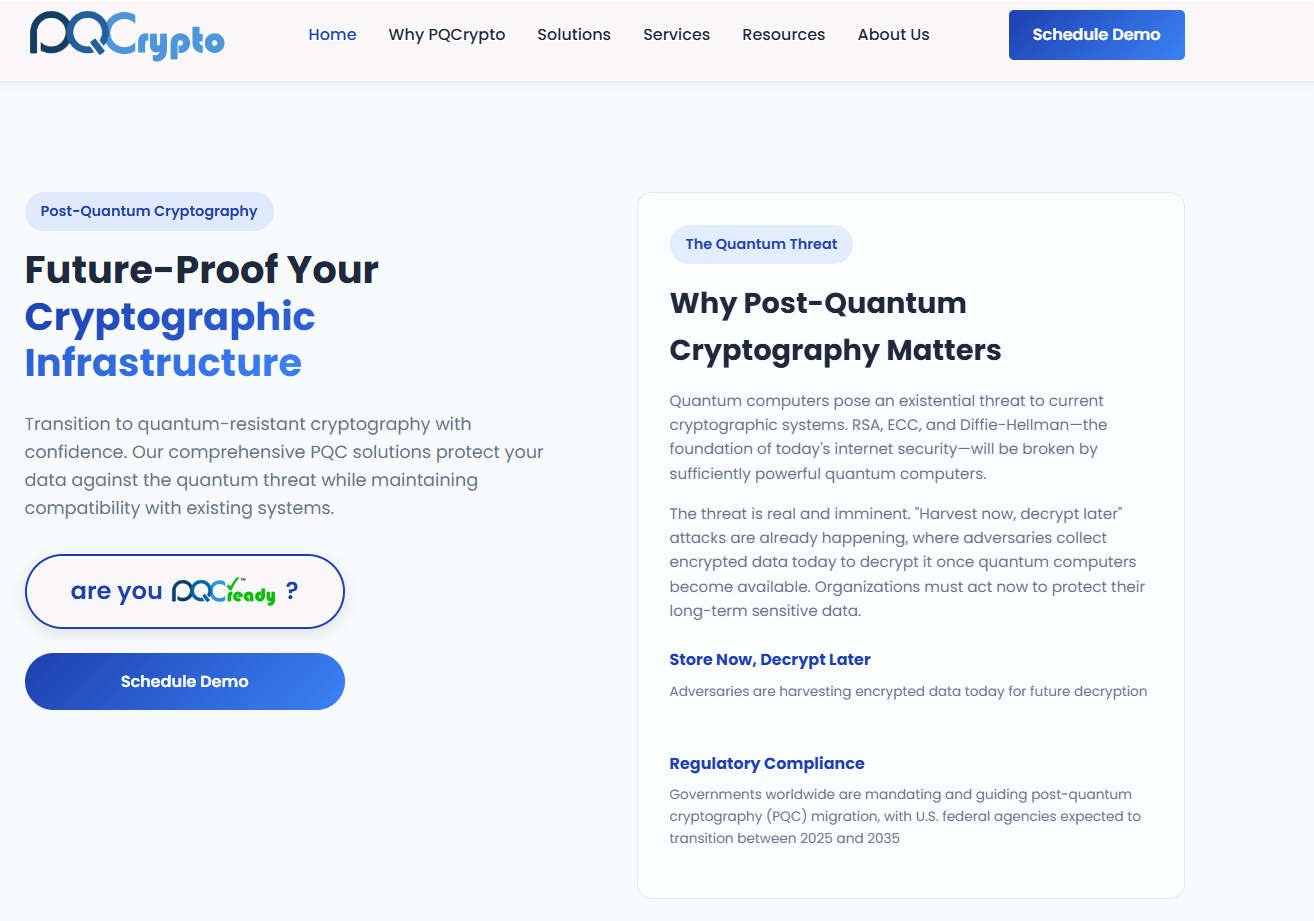
Enterprise-focused PQC implementations and migration orchestration using NIST-standard algorithms, per vendor documentation. Positions AI-assisted discovery and rollout planning.
- Best for: Security teams seeking drop-in PQC libraries, TLS 1.3 hybrid support, and services for migration planning.
- Key Features:
- Implementations aligned with FIPS 203, 204, 205 for ML-KEM, ML-DSA, and SLH-DSA, per vendor documentation.
- PQC-ready TLS and VPN components, per vendor documentation.
- Assessment and migration services including CBOM generation, per vendor documentation.
- Why we like it: The emphasis on drop-in libraries and orchestration fits staged rollouts where you must keep uptime while upgrading cryptography.
- Notable Limitations:
- Limited third-party reviews or marketplace presence we could verify, compared with larger players actively publishing PQC migration tooling, for example IBM's Quantum Safe Migration Orchestrator.
- No independently verified customer case studies at the time of writing.
- Pricing: Pricing not publicly available. Contact vendor for a custom quote.
Qinsight
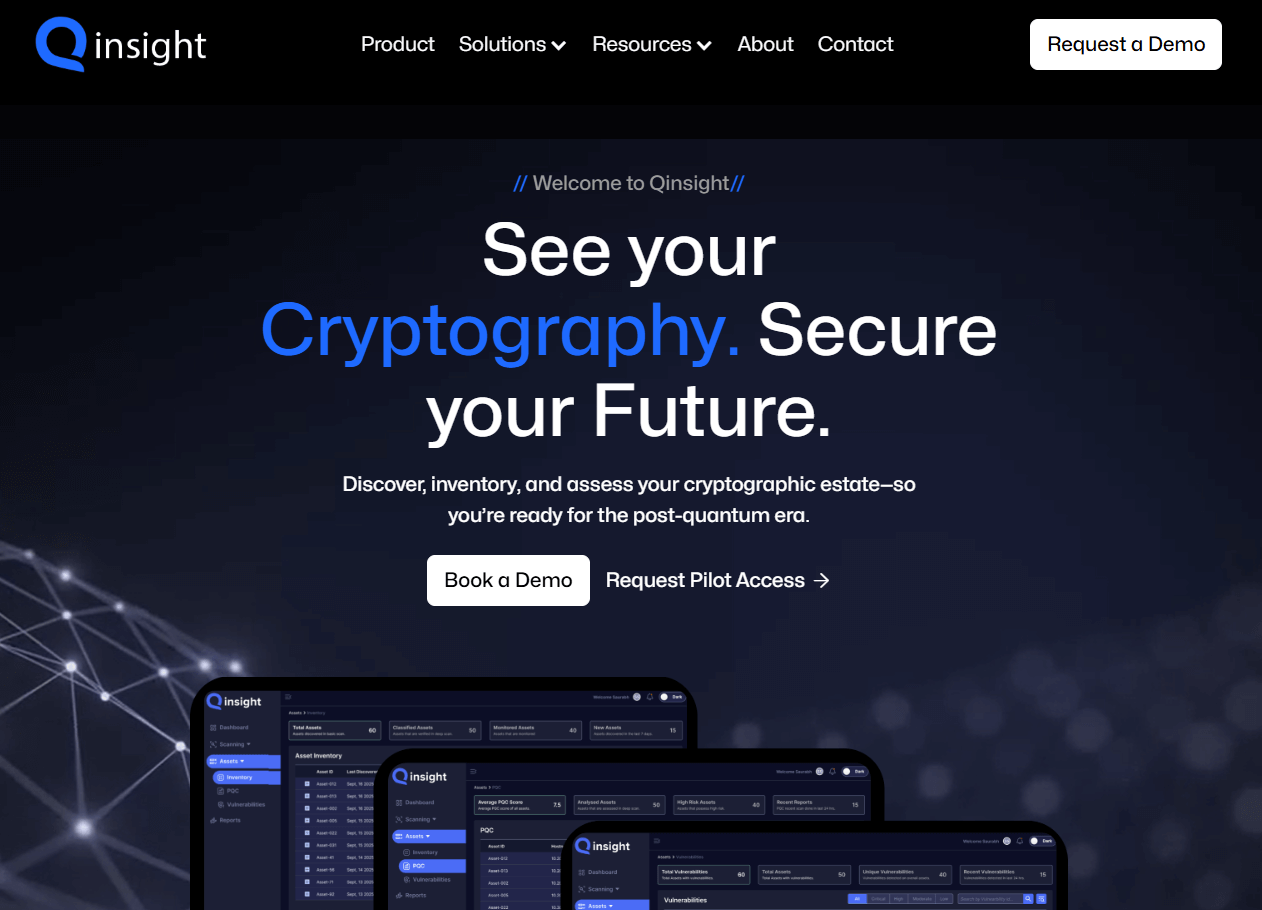
Cryptographic posture management, focused on discovering algorithms, keys, and certificates, then scoring PQC risk with compliance-ready reporting, per vendor documentation. SaaS with hybrid options.
- Best for: Organizations starting with cryptographic inventory, CBOM, and PQC exposure scoring to meet inventory mandates.
- Key Features:
- Crypto and certificate discovery with continuous scans, per vendor documentation.
- CBOM-style inventory and PQC readiness dashboards, per vendor documentation.
- API integrations with cloud key services and SIEMs, per vendor documentation.
- Why we like it: Directly addresses OMB M-23-02 style inventory and reporting, which is the first bottleneck for most teams, as summarized in ExecutiveGov's coverage of the OMB memo.
- Notable Limitations:
- Early-stage online footprint and limited third-party validation at the time of writing, see Crunchbase profile.
- Focus is primarily discovery and reporting today, with CLM automation and deeper remediation listed as roadmap items per vendor documentation.
- Pricing: Pricing not publicly available. Contact vendor for a custom quote.
Post-Quantum Cryptography Tools Comparison: Quick Overview
| Tool | Best For | Pricing Model | Highlights |
|---|---|---|---|
| QuProtect (QuSecure) | Enterprise crypto-agility and runtime remediation | Subscription, AWS Marketplace listing | Network-level remediation, CBOM reporting, compliance mapping |
| PQC Now Ecosystem | Lab pilots of pure PQC certs and signatures | Mixed, certificates publicly listed on vendor site | PQC browser, wallet, document signing - ecosystem approach with browser compatibility caveats |
| PQCrypto | Drop-in PQC and orchestration services | Quote-based | Libraries and services oriented to TLS, VPN, and data at rest migration |
| Qinsight | Crypto inventory and PQC risk dashboards | Quote-based SaaS | CBOM, continuous scanning, compliance-ready reports aligned to federal guidance |
Post-Quantum Cryptography Platform Comparison: Key Features at a Glance
| Tool | Feature 1 | Feature 2 | Feature 3 |
|---|---|---|---|
| QuProtect (QuSecure) | Runtime algorithm switching, per vendor docs | CBOM and compliance dashboards, per vendor docs | Policy-based remediation across networks, per vendor docs |
| PQC Now Ecosystem | PQC browser with ML-DSA validation, per vendor docs | PQC document signing, per vendor docs | PQC certificate issuance, per vendor docs |
| PQCrypto | FIPS-aligned PQC libraries, per vendor docs | PQC-ready TLS and VPN, per vendor docs | AI-assisted migration planning, per vendor docs |
| Qinsight | Crypto and certificate discovery, per vendor docs | PQC readiness scoring, per vendor docs | API integrations to SIEM and KMS, per vendor docs |
Post-Quantum Cryptography Deployment Options
| Tool | Cloud API | On-Premise | Integration Complexity |
|---|---|---|---|
| QuProtect (QuSecure) | Yes | Documented customer deployments in enterprise networks, per vendor docs | Medium - requires careful change control typical of in-line remediation |
| PQC Now Ecosystem | Cloud services plus desktop apps | Desktop apps available | Medium - due to non-standard browser and PKI testing patterns |
| PQCrypto | Yes | Services and libraries deployable in customer environments, per vendor docs | Medium - depends on code and protocol changes |
| Qinsight | SaaS with APIs | Hybrid options per vendor docs | Low to Medium - focused on discovery and reporting |
Post-Quantum Cryptography Strategic Decision Framework
| Critical Question | Why It Matters | What to Evaluate |
|---|---|---|
| Where are our quantum-vulnerable algorithms today | OMB M-23-02 and NSM-10 require inventories and migration plans | Breadth of discovery, CBOM export, mapping to NIST and CNSA 2.0 |
| How do we handle ML-KEM and ML-DSA changes across mixed stacks | Browsers and services are moving to ML-KEM hybrids, which can break assumptions | Hybrid TLS support, policy controls, test plans with Chrome 131+ changes |
| Can we sign code and documents with ML-DSA today | KMS and private CAs are adding ML-DSA | Support for ML-DSA in KMS, Private CA, and document flows |
| What will this cost if we delay | Breach costs continue to rise, and HNDL risk accumulates | Time to inventory, migration labor, breach cost trends |
Post-Quantum Cryptography Solutions Comparison: Pricing and Capabilities Overview
| Organization Size | Recommended Setup | Annual Investment |
|---|---|---|
| Mid-market | Qinsight for inventory and CBOM, plus a pilot of QuProtect or PQCrypto in one critical path | Varies by scope |
| Large enterprise | QuProtect for remediation and policy, Qinsight for continuous posture, PQCrypto libraries for app teams | Contact vendors for quotes |
| Public sector pilot | Qinsight for inventory against OMB M-23-02, limited QuProtect pilot, evaluate ML-DSA via AWS KMS | Varies by scope |
Problems & Solutions
-
Problem: Browser and server friction during PQC rollout. Chrome 131 moved to ML-KEM hybrids, deprecating Kyber hybrids, which can cause handshake mismatches until servers update.
- How tools help: QuProtect's policy-based remediation can standardize cipher negotiation at the network edge, reducing app changes, while PQCrypto's TLS 1.3 libraries help app teams test ML-KEM safely, per vendor documentation. Plan tests against up-to-date client matrices and provider notes like Google's Chrome ML-KEM update.
-
Problem: Agencies must inventory cryptographic systems and plan PQC migration per NSM-10 and OMB M-23-02. The first deadline required inventories by May 4, 2023, then annually through 2035.
- How tools help: Qinsight builds a CBOM and PQC exposure score suitable for audit evidence, then QuProtect or PQCrypto can drive remediation and staged upgrades. See ExecutiveGov's summary of OMB's memo.
-
Problem: PQC for signatures, code, and certificates is arriving in cloud KMS and private CA stacks, but ecosystem compatibility is uneven.
- How tools help: PQC Now's document signing and PQC certificates are useful for controlled pilots. In production PKI, test ML-DSA in your existing KMS flows with AWS KMS ML-DSA support and AWS Private CA PQC certificates, then phase rollout to public endpoints as CA/B Forum guidance evolves (Chrome Root Program update).
-
Problem: Waiting increases risk and cost. Average breach costs hit $4.44 million in 2025 (down from $4.88 million in 2024), and HNDL means long-lived data is at risk today.
- How tools help: Start with discovery and CBOM, then protect high-value data paths with hybrid ML-KEM and ML-DSA signers. See IBM's 2025 Cost of a Data Breach report.
The Bottom Line on Quantum-Safe Platforms
Organizations think they know their cryptography until a real inventory shows how much RSA and ECC still guard critical traffic. Standards are here, with ML-KEM, ML-DSA, and SLH-DSA finalized for use, browser stacks are shifting to hybrid ML-KEM, and cloud KMS and private CAs now offer quantum-safe signatures. From our experience in the startup ecosystem, the fastest wins come from pairing a posture platform for CBOM and reporting with a remediation layer that can enforce ML-KEM and rotate signatures without destabilizing apps. Start there, pilot fast, and expand with clear policy and change control.