
You think you know how fast stablecoins can save on cross-border payments until finance asks for production-grade controls tomorrow morning and legal wants regulator-ready logs by noon. From our experience in the startup ecosystem, the teams that ship on time already plan for programmable mint and burn with role-based controls, MPC or HSM-backed key management, and automated travel-rule data exchange. Momentum is real, with the market now exceeding $300B, per CoinDesk Data's analysis, and banks announcing stablecoin programs that push this from pilot to production, as covered by Barron's Visa stablecoin note.
The stablecoin market cap reached approximately $306B by late 2025, according to DeFi Llama, after the U.S. passed the GENIUS Act in mid 2025, reported by Reuters.
Bastion
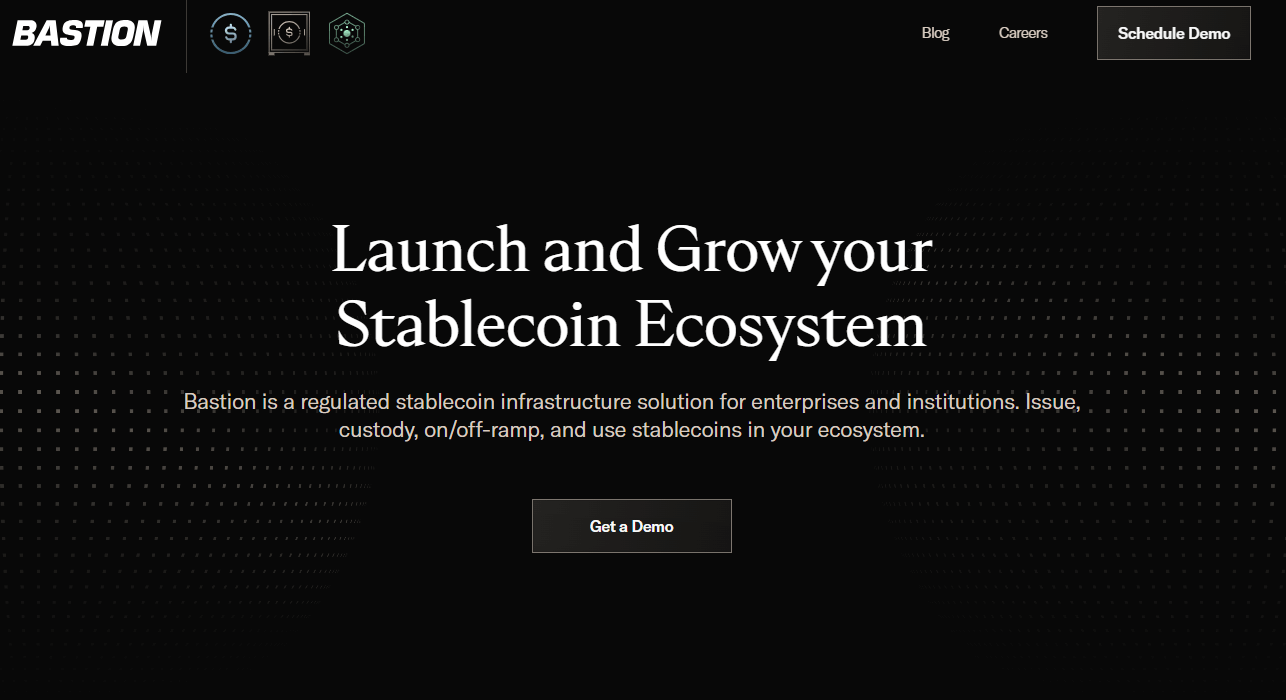
Regulated stablecoin-as-a-service focused on issuance, custody, and fiat on or off-ramps with compliance built in. Backed by notable investors and selected by a major bank for a U.S. stablecoin initiative.
According to vendor documentation.
Best for: Banks and large enterprises that need a regulated partner for white-label USD stablecoins and custody.
Key Features:
- Stablecoin issuance with reserve and liquidity management, plus mint, burn, and smart contract controls, per vendor documentation.
- Custodial wallets with policy controls and compliance workflows, per vendor documentation.
- Fiat on or off-ramps integrated into the platform, per vendor documentation.
- Operates via a NYDFS trust chartered subsidiary for virtual currency business, as noted by Sony Bank's announcement.
Why we like it: Clear focus on regulated issuance and a marquee signal, with Sony Bank publicly naming Bastion as infrastructure partner, which shortens vendor risk review for banks.
Notable Limitations:
- Young platform with limited third-party reviews in public marketplaces.
- Some capabilities depend on ongoing regulatory processes, per company disclosures referenced in coverage by CoinDesk.
- Documentation depth and SDK maturity may lag incumbents, based on the relative lack of independent developer feedback online.
Pricing: Pricing not publicly available. Contact Bastion for a custom quote. Bastion's funding and go-to-market were covered by GlobeNewswire.
Estable.io
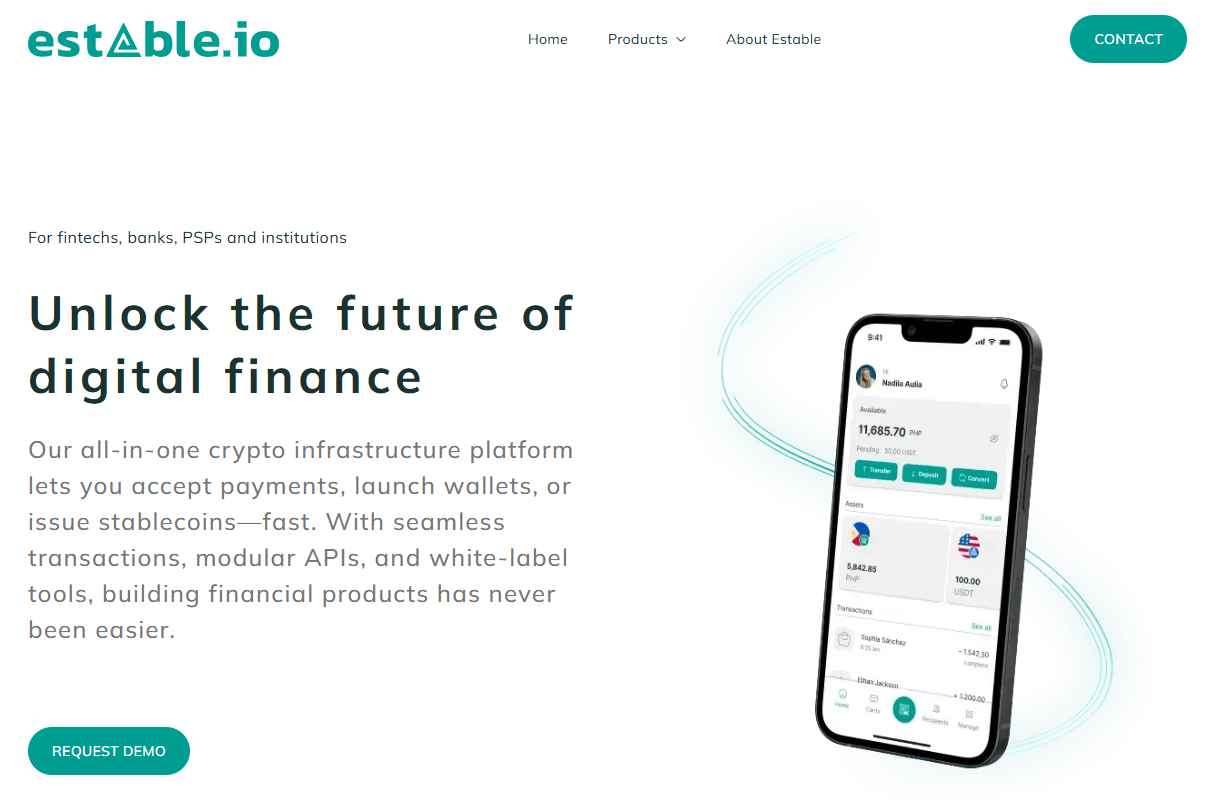
All-in-one crypto infrastructure to issue stablecoins, launch white-label wallets, and accept crypto payments with modular APIs. Operates with a focus on emerging markets.
According to vendor documentation.
Best for: Early-stage fintechs and regional PSPs that want a single vendor to pilot wallets, payments, and local stablecoin issuance.
Key Features:
- Modular APIs for wallets, payments, and issuance with KYC or AML workflow support, per vendor documentation.
- Real-time settlement across on-chain and Lightning rails, per vendor documentation.
- Multichain deployment for local stablecoins and merchant acceptance, per vendor documentation.
Why we like it: Rapid pilot potential for non U.S. markets and a recent collaboration that targets day-to-day stablecoin payments, as highlighted in a release carried by FinancialContent's Markets desk.
Notable Limitations:
- Sparse independent reviews and third-party benchmarks as of January 2026.
- Limited publicly verifiable security attestations compared to larger vendors.
- Enterprise references outside press wires are still thin.
Pricing: Pricing not publicly available. Contact Estable.io for a custom quote.
MoonPay

Enterprise stablecoin infrastructure layered on a global payments network, with issuance, payments, on or off-ramps, and swaps across products.
According to vendor documentation and independent news.
Best for: Enterprises that want stablecoin issuance plus wide distribution through existing buy, sell, swap, and checkout products.
Key Features:
- Enterprise stablecoin business launched in November 2025, including integration with M0 for issuing and managing fully reserved digital dollars, per press coverage.
- Acquired Iron, an API-first stablecoin infrastructure startup, strengthening enterprise capabilities, per CNBC.
- Global licensing footprint and payments distribution referenced in enterprise launch materials, per M^0 newsroom.
Why we like it: Distribution matters. MoonPay can issue and immediately route to multiple rails, which compresses time to real users, as noted in its enterprise launch news and acquisitions.
Notable Limitations:
- Mixed consumer-facing feedback about fees, KYC delays, and support responsiveness on Trustpilot and in BBB complaints.
- Developer threads cite friction around account state and selling flow UX, see examples on Reddit.
Pricing: Pricing not publicly available for enterprise stablecoin services. Contact MoonPay for a custom quote.
Crossmint
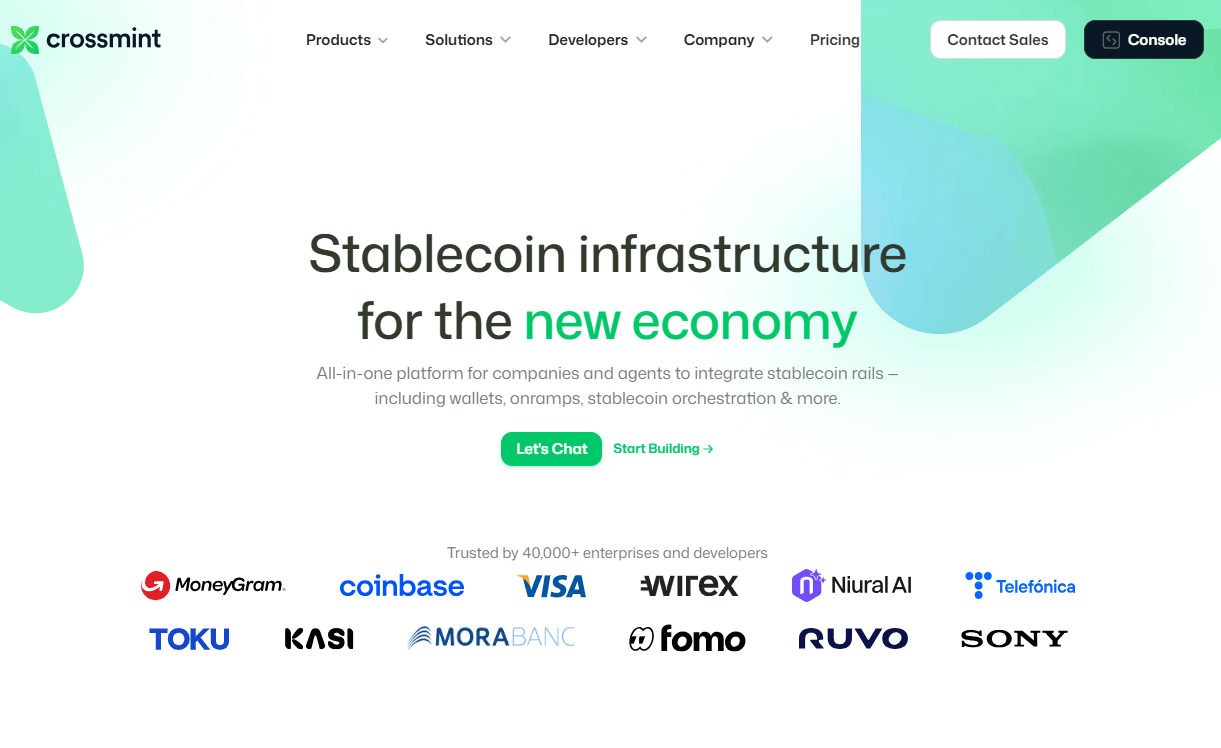
Wallet and stablecoin platform with developer-friendly APIs for wallets, payments, and compliance. Powers large consumer payment and remittance experiences.
According to vendor documentation and independent news.
Best for: Fintechs and marketplaces that need programmable wallets, card acceptance, and cross-border stablecoin flows without hiring blockchain specialists.
Key Features:
- Programmable wallet stack used in production by major fintech brands, per PR coverage of MoneyGram's new app.
- Unified smart account infrastructure that helps partners expand to non EVM chains, per Wirex partnership news.
- Built in compliance with automated KYC or KYB, AML screening, and travel-rule integrations described in technical docs, referenced by Crossmint docs overview.
Why we like it: Clear pattern of powering end-customer experiences at scale, from remittances to card-linked flows, with multiple enterprise references in newswire coverage.
Notable Limitations:
- Some developers report approval and risk-review friction or requests for smoother integration paths on Trustpilot.
- Depth of public SLAs and pricing for large-scale enterprise deployments often requires sales engagement.
Pricing: Developer pricing is advertised as a mix of free tiers and usage-based fees per vendor materials, but enterprise terms are custom.
Chainstack
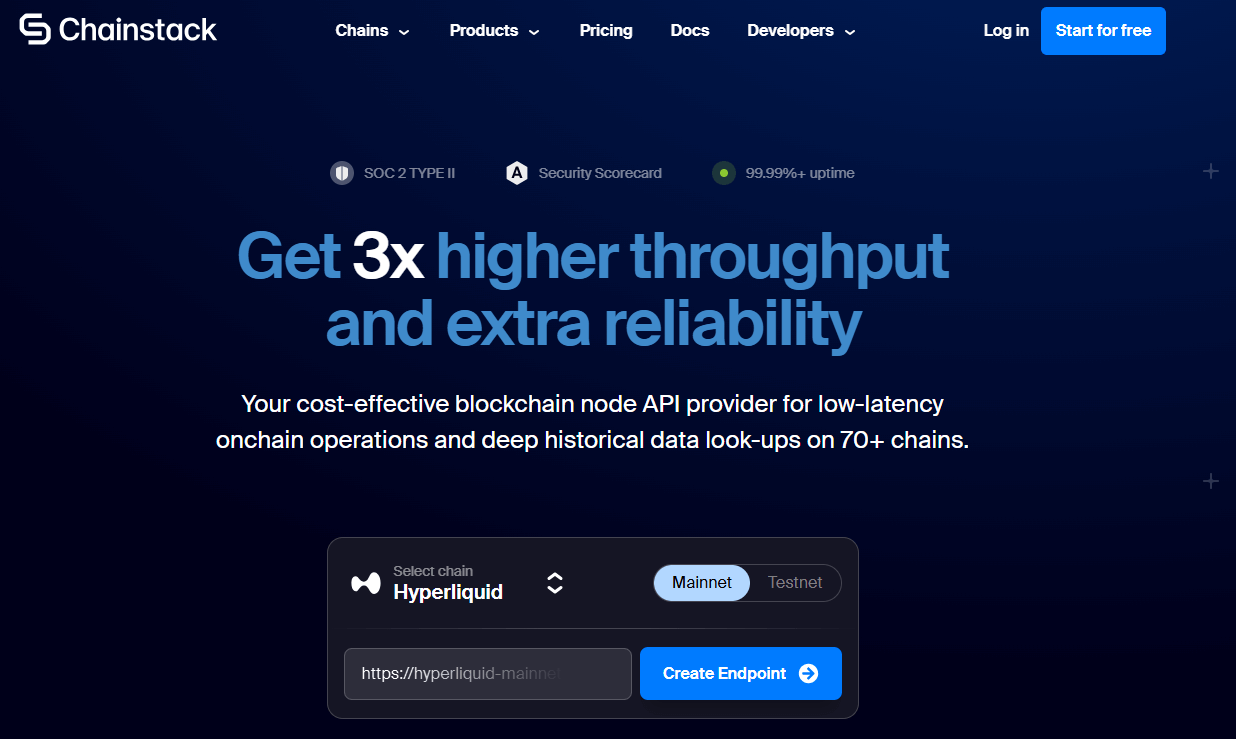
SOC 2-aligned blockchain infrastructure across 70 plus networks used to build and scale stablecoin services. Offers node, data, and archive access with predictable pricing.
According to vendor documentation and third-party listings.
Best for: Teams that need multichain RPC, archive data, and subgraphs to support stablecoin issuance, payments, and analytics at scale.
Key Features:
- 70 plus protocol coverage and high-throughput archive access, per third-party listings on G2.
- SOC 2 Type II attestation announced December 2025, per company announcement.
- Tiered plans for developers through enterprise with global support and 99.99 percent uptime claims.
Why we like it: Stablecoin programs break without reliable nodes and historical data. Chainstack's breadth and predictable pricing help teams avoid surprise overages, reflected in the detail on G2 pricing.
Notable Limitations:
- Reviewers request more built-in RPC error alerting and broader language support in the console, per user feedback on G2.
- On-prem or air-gapped options are not clearly documented in third-party sources.
Pricing: Public tiers listed on G2 include Growth at $49 per month and Pro at $199 per month, with enterprise custom plans.
Stablecoin Infrastructure Tools Comparison: Quick Overview
| Tool | Best For | Pricing Model | Highlights |
|---|---|---|---|
| Bastion | Regulated bank or enterprise issuance | Custom quote | Named by Sony Bank as infrastructure partner for USD stablecoin work |
| Estable.io | Early-stage fintechs or PSPs in emerging markets | Custom quote | Collaboration focused on everyday stablecoin payments |
| MoonPay | Enterprises needing issuance plus distribution | Custom quote | Enterprise stablecoin launch and M0 integration |
| Crossmint | Fintech payments, remittances, programmable wallets | Usage based, enterprise custom | Powers MoneyGram cross border app and Wirex multichain rollout |
| Chainstack | Multichain nodes, archive data, subgraphs | Tiered subscription, enterprise | Public pricing and reviews on G2 |
Stablecoin Infrastructure Platform Comparison: Key Features at a Glance
| Tool | Issuance | Wallets | Compliance Stack |
|---|---|---|---|
| Bastion | Yes, regulated issuance per Sony Bank disclosure | Yes | KYC, AML, licensing, per vendor documentation |
| Estable.io | Yes | Yes | KYC or AML and regulatory-aligned issuance, per vendor materials |
| MoonPay | Yes, enterprise launch with M0 | Yes | Global licensing footprint |
| Crossmint | Orchestration and payments | Yes, programmable | Built-in KYC, AML, travel-rule integrations |
| Chainstack | N/A, infra layer | N/A | SOC 2 posture per company announcement |
Stablecoin Infrastructure Deployment Options
| Tool | Cloud API | On-Premise | Integration Complexity |
|---|---|---|---|
| Bastion | Yes | Not disclosed | Low to Medium for API-first issuance, per public materials |
| Estable.io | Yes | Not disclosed | Low for pilots, Medium for full stack |
| MoonPay | Yes | Not disclosed | Medium, enterprise engagement required |
| Crossmint | Yes | Not disclosed | Low for wallets and checkout, Medium for orchestration |
| Chainstack | Yes | Not disclosed | Low for nodes, Medium for enterprise networking |
Stablecoin Infrastructure Strategic Decision Framework
| Critical Question | Why It Matters | What to Evaluate | Red Flags |
|---|---|---|---|
| What regulatory cover will you rely on, and where | Cross-border issuance needs auditable controls | Trust charter or licensing footprint, reserve attestations, audit cadence | No public licensing posture or reliance on unregulated issuers |
| How will you handle compliance at scale | KYC or AML and travel-rule automation reduce manual ops | Built-in KYC or KYB, sanctions screening, case management | Vendor requires you to bolt on multiple third parties |
| Which networks and payment rails matter | Distribution beats features when you want adoption | Supported chains, card networks, remittance corridors | Single chain support or no card or bank connectivity |
| What is your RTO or RPO for outages | Treasury and payouts cannot stall | SLAs, failover, observability, on call model | No SLA or unclear incident playbooks |
Stablecoin Infrastructure Solutions Comparison: Pricing & Capabilities Overview
| Organization Size | Recommended Setup | Monthly Cost | Annual Investment |
|---|---|---|---|
| Startup or pilot | Crossmint developer tier for wallets or checkout plus Chainstack Growth for multichain RPC | Crossmint developer free per vendor materials, Chainstack Growth $49 | Approx $588 for Chainstack, other costs vary |
| Mid-market fintech | Bastion or MoonPay for issuance or orchestration, Crossmint for checkout, Chainstack Pro for data | Custom quote for Bastion or MoonPay, Crossmint enterprise custom, Chainstack Pro $199 | Custom for platform vendors, $2,388 for Chainstack Pro |
| Bank or large enterprise | Bastion for regulated issuance or MoonPay enterprise distribution, Chainstack enterprise | Custom quotes | Custom quotes |
Problems & Solutions
-
Problem: A bank wants to pilot a USD stablecoin in the U.S. without building its own regulated stack.
Solution: Bastion was publicly named by Sony Bank as its infrastructure partner for U.S. stablecoin development, which indicates a path to issuance, reserve management, and custody under a regulated model. This reduces the bank's licensing workload and speeds time to pilot. -
Problem: An enterprise needs to issue a branded digital dollar and route it across existing buy, sell, swap, and checkout channels.
Solution: MoonPay launched an enterprise stablecoin business and integrated with M0 to issue and manage fully reserved digital dollars, and it bought Iron to deepen enterprise APIs. This pairs issuance with immediate distribution to users. -
Problem: A remittance provider wants a consumer app with stablecoin rails and compliance without hiring blockchain engineers.
Solution: Crossmint powers MoneyGram's new stablecoin cross-border experience and supports partners like Wirex expanding to non EVM networks. Their APIs abstract the blockchain and handle KYC, AML, and travel-rule workflows. -
Problem: Engineering is blocked by unreliable nodes and missing historical data across multiple chains.
Solution: Chainstack provides multichain RPC and instant archive access with public pricing and verified user feedback on G2. This lowers risk of outages that stall treasury operations or compliance reporting. -
Problem: A regional PSP wants to launch wallets, accept crypto, and explore a local stablecoin with fast time to market.
Solution: Estable.io positions an all-in-one stack and recently announced a collaboration aimed at everyday stablecoin payments. This can be a practical path for early pilots in emerging markets.
The Bottom Line on Picking a Stablecoin Stack
If you are a bank or a large enterprise, prioritize vendors with public regulatory signals and named financial institution partnerships. Bastion's selection by Sony Bank is a strong reference. If distribution and speed to users are crucial, MoonPay's enterprise launch and M0 integration plus the Iron acquisition suggest an end-to-end path from issuance to checkout. For developer velocity and wallet or payment UX, Crossmint's role behind consumer apps is notable. Finally, do not overlook the boring parts. Multichain node reliability and archives from Chainstack, validated by public listings and reviews on G2, are what keep finance reconciliations and audits on schedule as this market, now exceeding $300B, keeps evolving.