


Crypto lending is two products sold under one search term. One is a self-custody protocol: you connect a wallet, supply into a money market or a curated vault, and borrow against collateral that stays in the smart contract. The other is a custodial desk: you open an account, send Bitcoin or a basket of coins, and a company credits a loan. Mixing those doors is how people lose the plot. Keys versus a terms-of-service account is the first filter, not a feature comparison.
The pool is large enough that the mix-up keeps happening. DefiLlama lists about $50.5 billion in total value locked in its Lending category. Galaxy Research found that in Q2 2026, CeFi venues overtook DeFi apps in outstanding crypto-collateralized loans for the first time since Q3 2023. That is not a ranking. It is two books sitting next to each other. If you keep the keys, the wallet that signs those transactions is a separate buy: safest cryptocurrency wallet software.
If you want on-chain rates and you will run a wallet, the DeFi door is the one that fits. If you want dollars or a credit line without operating a protocol position, the CeFi door is the one that fits. Liquidation still exists on both sides. The difference is who holds the collateral while the loan is open.
How we evaluated crypto lending platforms
We used four first-party checks: who holds the keys (a wallet-connected protocol versus a company account), what you post as collateral versus what you take out, whether any starting APR or fee is printed on the product page or only a live rate in the app, and what that page says about liquidation, LTV, and isolation. Category marketing labels did not move a ranking. The method is on How we review tools.
TL;DR: The Five Compared
| Platform | Best for | Pricing signal | Watch-out |
|---|---|---|---|
| Aave | Deepest pooled DeFi money market when you will run a wallet | Live protocol rate. No seat | Shared-pool risk. Liquidation is on-chain |
| Morpho | Isolated markets and curated vaults instead of one giant pool | Live vault or market rate. No seat | Curator and isolation parameters are the product |
| Compound | A simpler single-base-asset Comet market | Live protocol rate. No seat | One base asset per market |
| Ledn | Bitcoin-backed loans from a custodial desk | Published starting APR | You send BTC to a company. Eligibility is jurisdictional |
| Nexo | Multi-asset custodial earn plus a Credit Line | Published starting APR | Custodial. Loyalty and country change the terms |
The platforms below stood out for the door they actually open: a wallet-connected pooled market, a curated isolated market, a simpler single-base-asset market, a Bitcoin-backed desk loan, or a multi-asset credit line. Match that door to whether you will hold the keys.
Aave
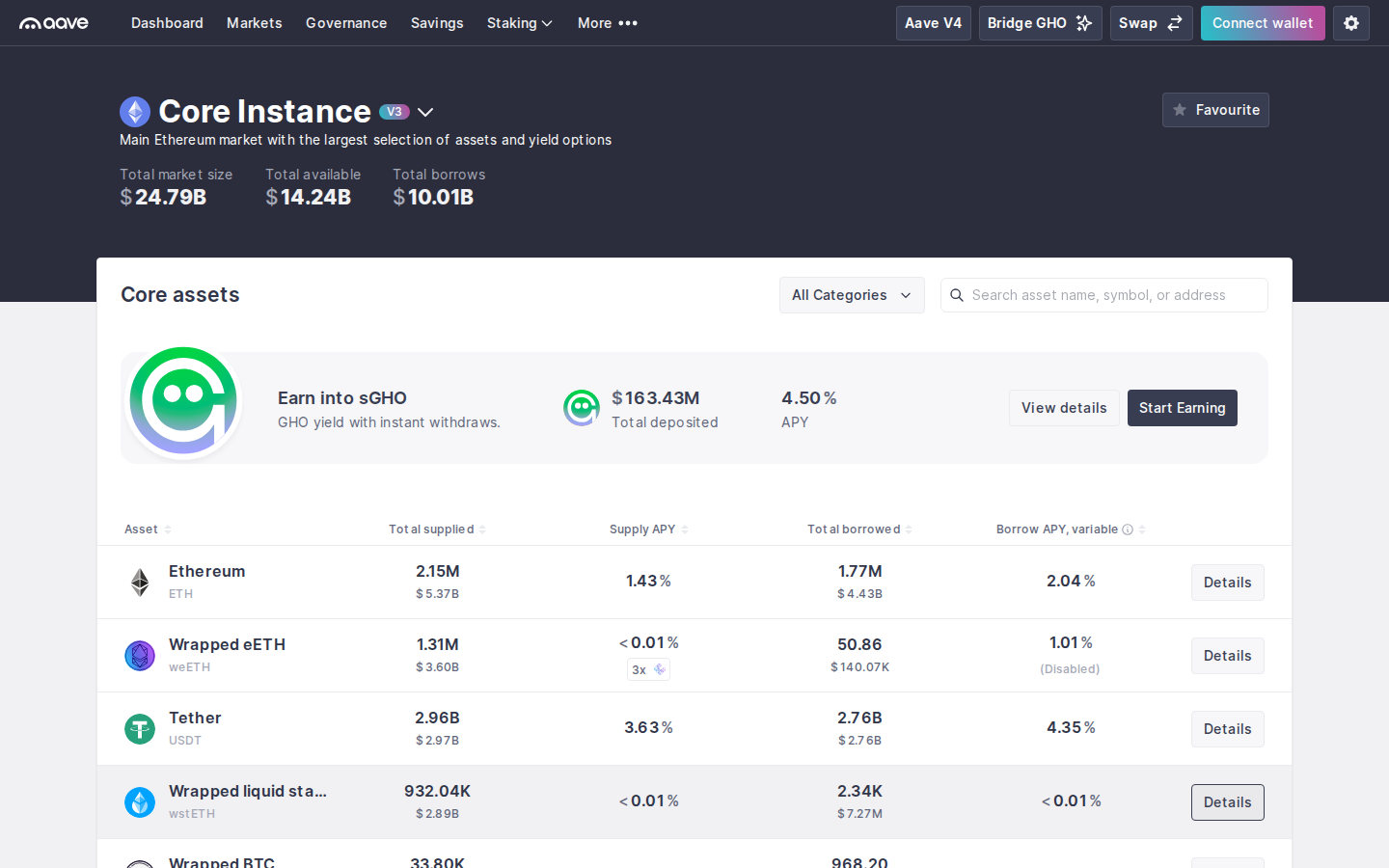
Aave is a decentralized, non-custodial liquidity protocol. You connect a self-custodial wallet, supply assets into pooled markets, and borrow against that collateral. The app is the live money market. Ethereum Core Instance V3 is the deep book, with other networks beside it. Suppliers receive aTokens that accrue as utilisation changes. GHO is the protocol's native stablecoin. Umbrella is the staking backstop. Governance sits with AAVE holders.
You are buying a shared pool, not a loan officer. Rates move with utilisation. If the position falls through the collateral threshold, liquidation is on-chain. There is no subscription. If you will not run a wallet, this door is the wrong one.
Best for: People who want the deepest pooled DeFi money market and will keep the keys.
Key features:
- Non-custodial supply and overcollateralised borrow across multiple networks
- Pooled markets with live utilisation-based rates in the app
- GHO stablecoin, Umbrella staking, and on-chain governance
Why we like it: The product page and the app agree on the job: a wallet-connected money market with a deep Ethereum book, not a custodial credit line.
Notable limitations:
- You hold the keys and the liquidation risk. There is no desk to call
- Risk is shared inside each pooled market, not isolated per pair
- Rates are not a printed APR card. They move with utilisation
Pricing: No subscription. Supply and borrow rates are live per market. Verify in the Aave app. Rates move.
Morpho
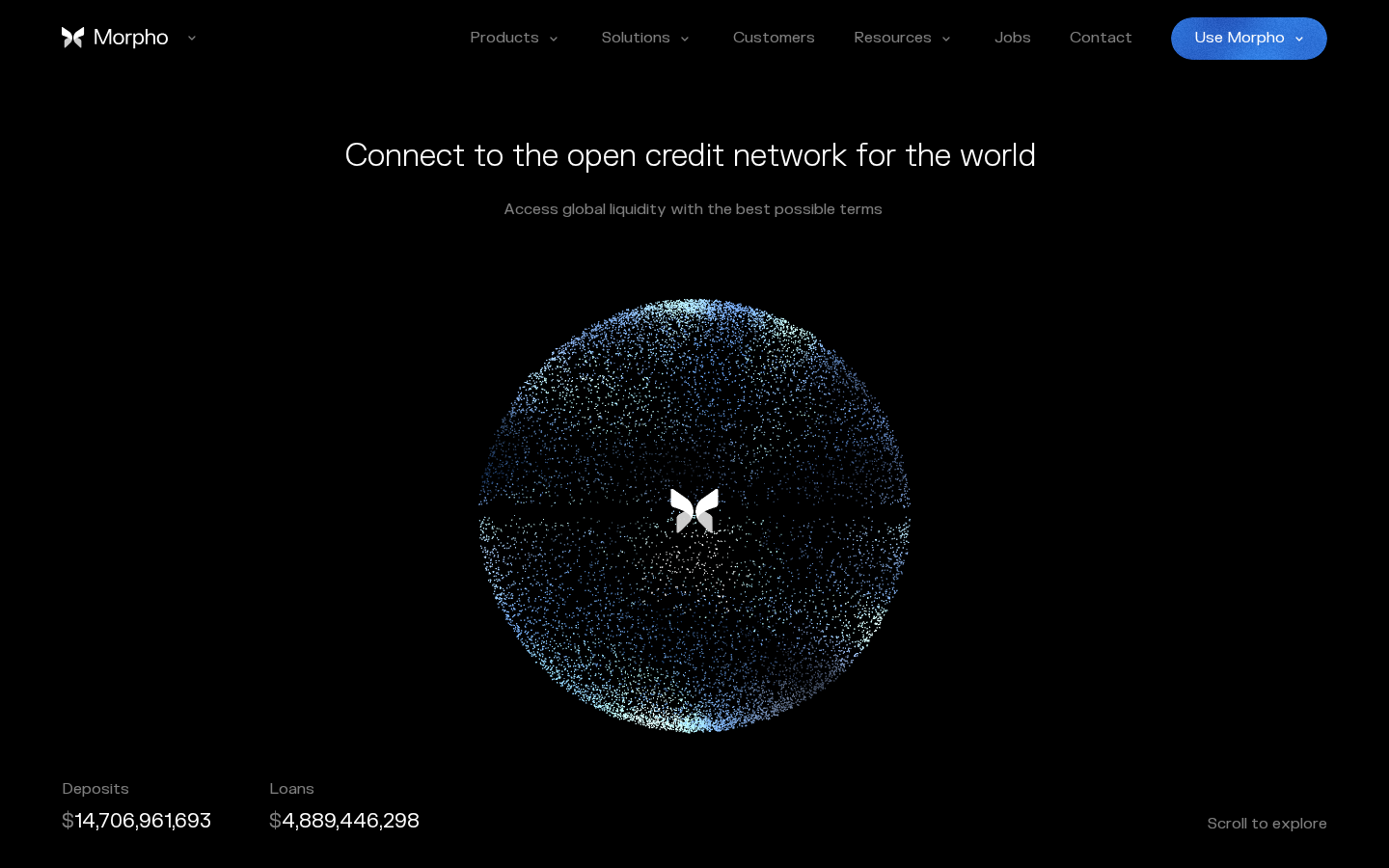
Morpho is an open credit network built around isolated markets and curated vaults. A Morpho market pairs one collateral asset with one loan asset. Parameters (including LLTV, oracle, and rate model) are set at creation and stay put. Vaults let a curator allocate deposits across those markets instead of asking you to pick every pair by hand. The borrow product page names Coinbase, Ledger, and Crypto.com as integrators.
You are buying isolation and curation, not one shared Aave-style pool. That is the point. A bad market does not automatically infect the next one. The catch is that you still have to trust the market parameters or the vault curator. Rates are live. There is no seat fee.
Best for: People who want DeFi rates with isolated markets or a curated vault instead of one giant pool.
Key features:
- Isolated one-collateral, one-loan markets with immutable parameters
- Curated vaults that allocate into those markets
- Earn and borrow surfaces, including infrastructure used by named wallet and exchange partners
Why we like it: The protocol is honest about the fork from pooled money markets. Isolation is the design, not a footnote.
Notable limitations:
- You still pick a market or a curator. Isolation is not the same as no risk
- Vault terms and LLTV live on the market, not on a sales PDF
- Rates are live in the app. There is no printed APR card
Pricing: No subscription. Vault and market rates are live on-chain. Verify in the Morpho app. Rates move.
Compound
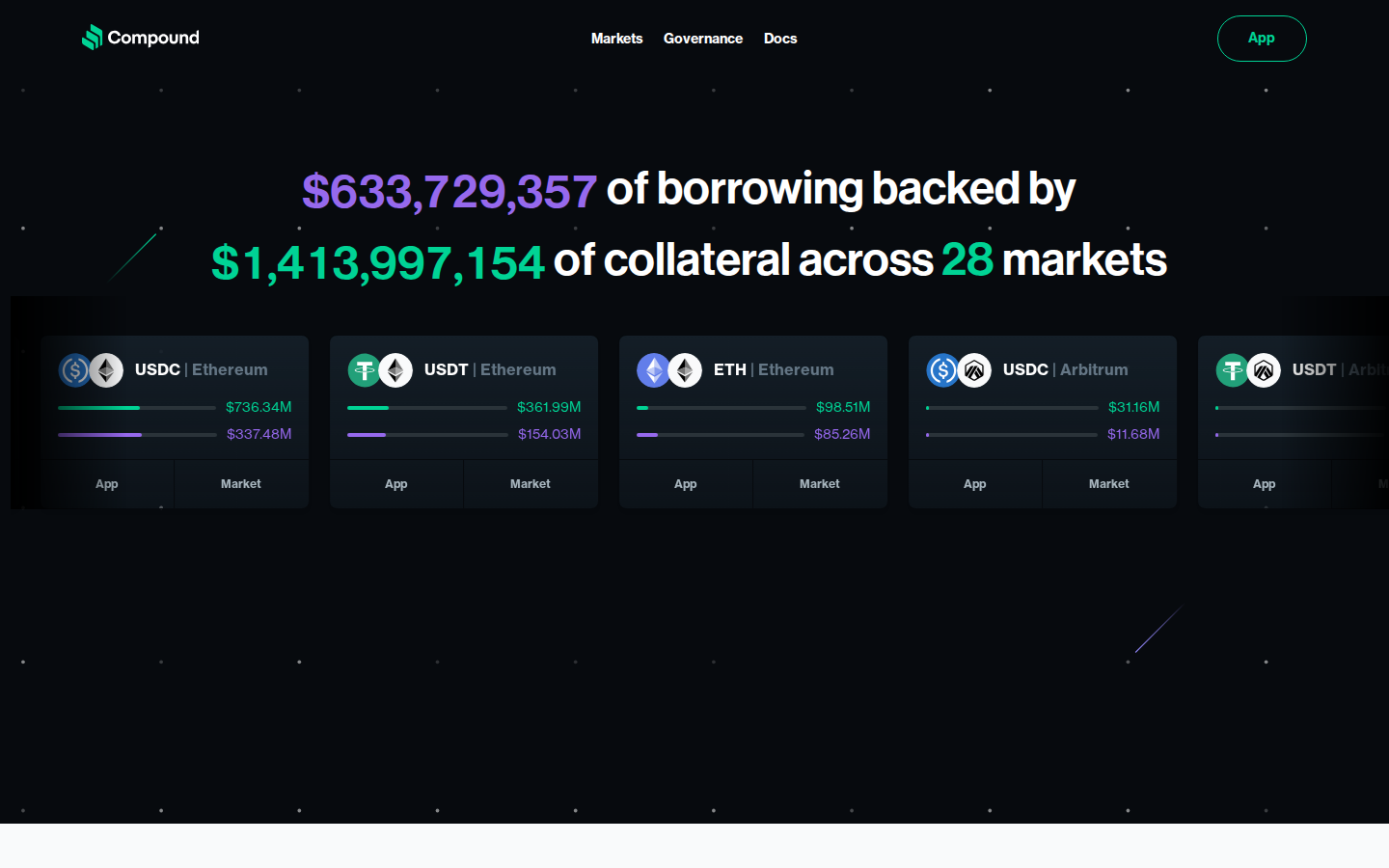
Compound is the simpler original DeFi money market still in production as Compound III (Comet). You supply collateral and borrow one base asset per market. The first Ethereum market used USDC as that base asset. That is narrower than a multi-asset pool where many borrowed coins share the same book. Docs list OpenZeppelin and ChainSecurity audits, plus a COMP rewards contract.
You are buying a smaller surface: one base asset, collateral in, borrow out. If you want every asset borrowable from one pool, this is not that product. If you want a wallet-connected market without a curator layer, it is the remaining DeFi door on this list.
Best for: People who want a simpler wallet-connected money market with one base asset per Comet market.
Key features:
- Compound III markets: collateral in, one base asset out
- Community interfaces and an App entry on the product homepage
- Public audit history (OpenZeppelin, ChainSecurity) and COMP rewards
Why we like it: The Comet design is easier to explain than a multi-asset pool, and the homepage still shows live supply and borrow across named markets.
Notable limitations:
- One base asset per market. That is the design, not a missing toggle
- You still run a wallet and take on-chain liquidation
- Rates are live. There is no subscription card
Pricing: No subscription. Market rates are live in the app. Verify on Compound. Rates move.
Ledn
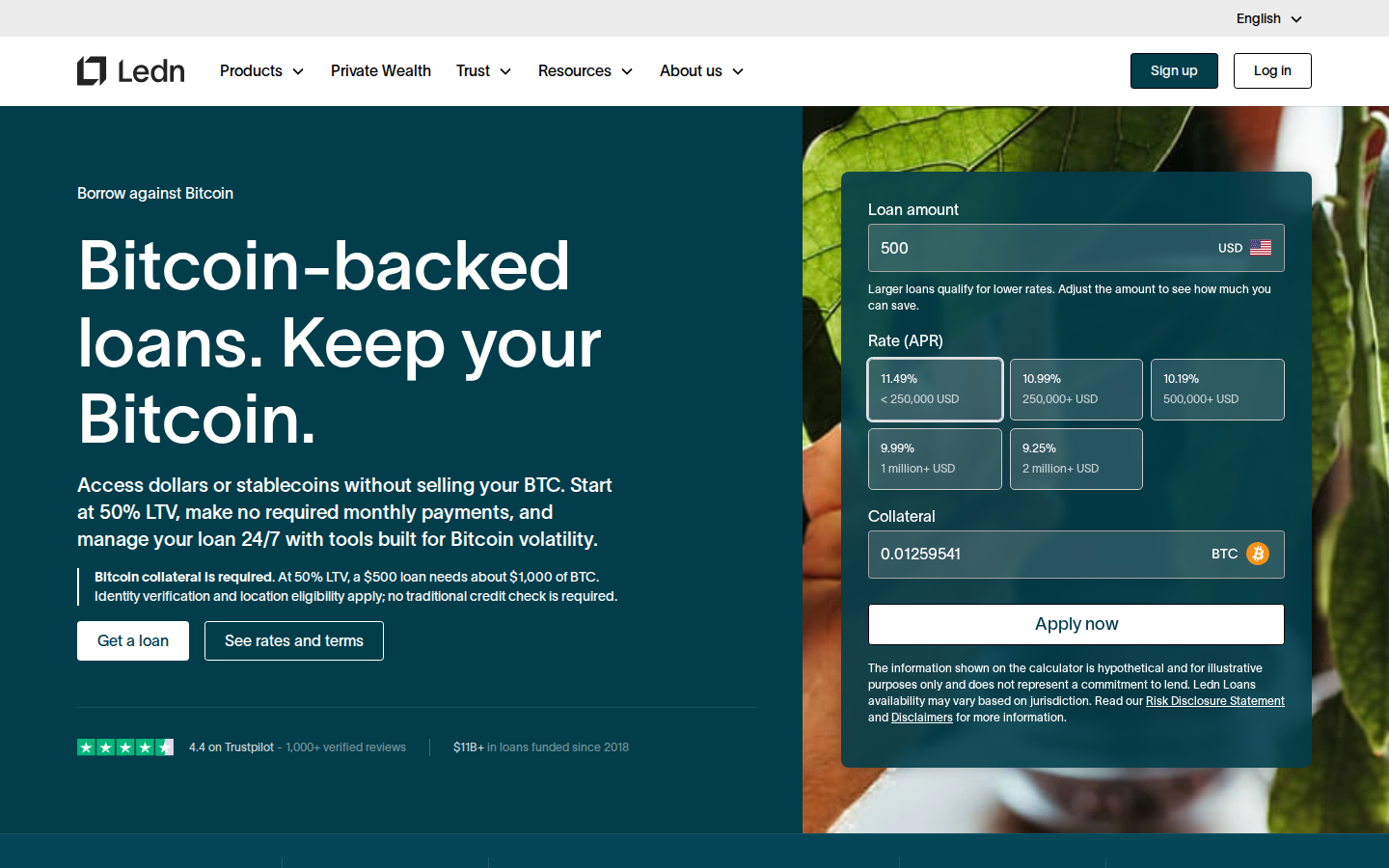
Ledn is a custodial Bitcoin-backed loan. You send BTC, and the company credits USD or stablecoins. The product page prints a typical 50% LTV, a 12-month term, no required monthly payments, and no early-repayment penalty. Identity verification applies. A traditional credit check does not. Availability depends on country, state, or province.
You are buying a desk, not a protocol. Collateral sits in Ledn's custody model, which the page describes as verifiable custody that is not lent out for yield. If Bitcoin falls far enough, the page describes notices and then automatic liquidation. Proof of reserves and an Open Book report are the first-party receipts. If you will not send BTC to a company, this door is the wrong one.
Best for: Bitcoin holders who want a custodial USD or stablecoin loan without selling the coins.
Key features:
- BTC-backed loans with a published LTV, term, and repayment rules
- No required monthly payments and no early-repayment penalty on the product page
- Open Book reporting and proof of reserves
Why we like it: The loan page prints the mechanical terms a Bitcoin borrower actually needs (LTV, term, liquidation path) instead of hiding them behind a demo form.
Notable limitations:
- Custodial. You send Bitcoin to Ledn
- Eligibility and funding routes vary by jurisdiction
- Collateral can be sold if LTV climbs through the published liquidation threshold
Pricing: The loan page publishes APR from 9.25% to 11.49% by loan size, with a $500 minimum. A 2% administration fee applies at origination except where Ledn says it is waived for Canada and the United States. Rates move. Verify in the Ledn app.
Nexo
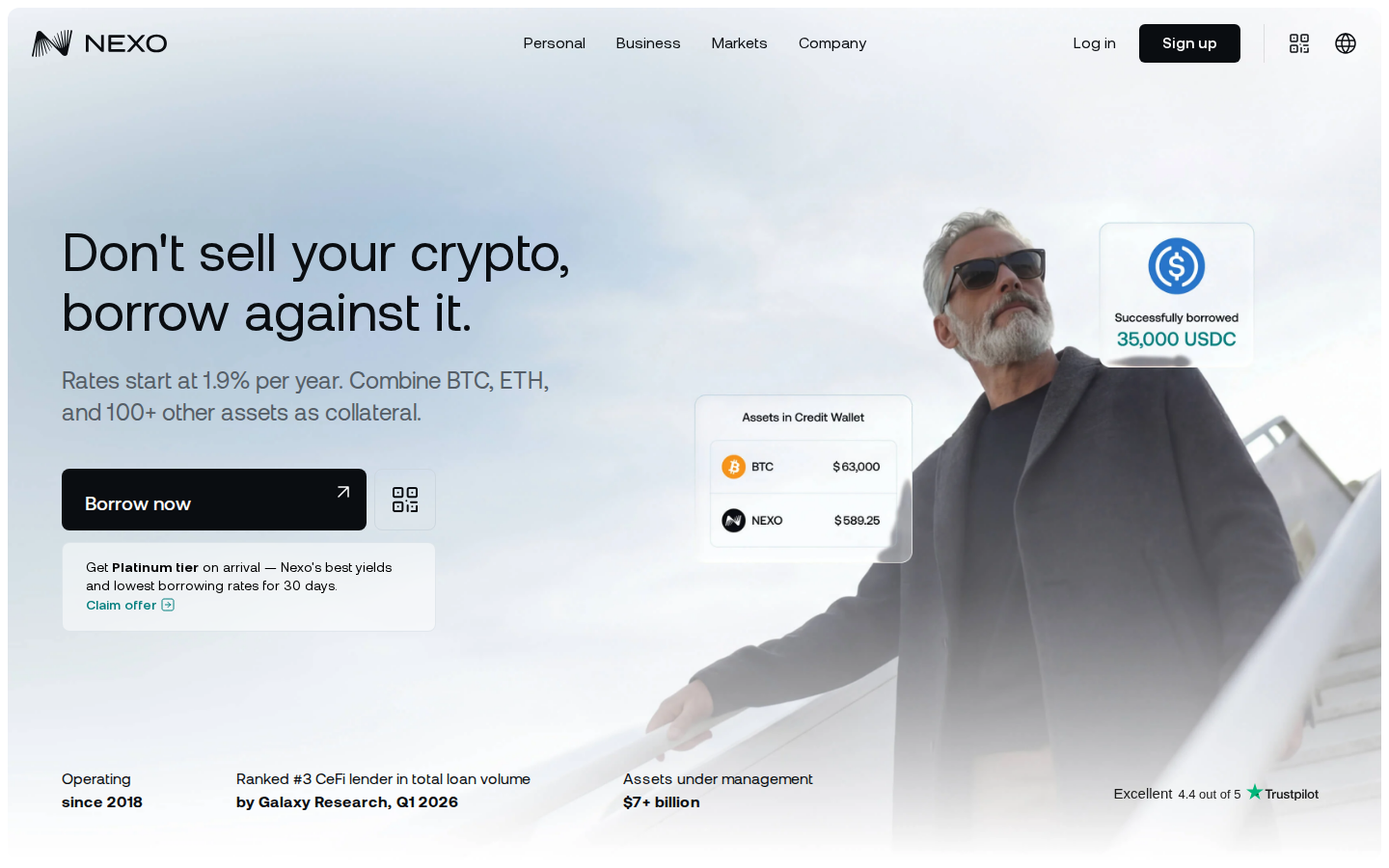
Nexo is a custodial wealth app with earn and a crypto-backed Credit Line. The borrow page says you can combine BTC, ETH, and 100+ other assets as collateral, draw funds, and repay on your own schedule with no fixed dates. You open an account, complete identity checks, and deposit to Nexo. That is a company balance, not a wallet-connected market.
You are buying a multi-asset desk: earn, borrow, and spend in one login. Loyalty changes the terms. Features vary by jurisdiction. If the collateral falls, the help pages describe automatic repayment from collateral. If you want isolation and keys, this door is the wrong one.
Best for: People who want a custodial earn-and-borrow app across many assets, not a Bitcoin-only loan desk.
Key features:
- Crypto-backed Credit Line using 100+ supported assets
- Flexible repayment, with crypto or stablecoins, and no fixed installment calendar on the borrow page
- Loyalty program tied to account balance, plus earn inside the same app
Why we like it: The borrow page is explicit that this is a Credit Line against a basket, not a single-asset Bitcoin loan and not a self-custody market.
Notable limitations:
- Custodial. Assets sit with Nexo
- Loyalty tier and country change what you can earn and what you pay to borrow
- Automatic repayment can sell collateral if LTV climbs
Pricing: No seat fee. The borrow page prints Credit Line rates from 1.9% per year. The homepage prints earn up to 15% annually. Loyalty starts above a $5,000 account balance. Rates move with loyalty and LTV. Verify in the Nexo app. Features vary by jurisdiction.
What usually goes wrong when buying crypto lending
Most mismatches happen because a protocol demo and a custodial loan form get treated as the same product.
| Problem | Solution |
|---|---|
| You mix a wallet-connected protocol with a company that holds the coins | Pick the door first: keys in a protocol, or a custodial desk. Do not rank them as clones |
| Collateral and the loan asset do not match the job | Say what you will post and what you need back: a pooled asset, an isolated pair, Bitcoin-only USD, or a multi-asset line |
| Finance cannot tell a live protocol rate from a printed starting APR | Check whether any rate or fee is public on the product page, then verify in the app the same day |
| Nobody reads the liquidation path until the collateral falls | Ask what the page says about LTV, isolation, notices, and automatic sale before you deposit |
Who holds the keys, and how broad the loan book is
This grid plots two questions. Across is whether you keep the keys in a protocol or send assets to a custodial lender. Up is whether the book is a broad money market or a narrower loan product.

 Pooled / Comet markets
 Earn plus Credit Line
 Isolated / curated
 Bitcoin-backed loan
Placement follows first-party product language: a non-custodial protocol versus a custodial loan desk, and a broad money market versus a narrower loan product. This is a map of the products, not a ranking.
Pricing Comparison Table (Last update: September 6, 2026)
| Platform | How pricing works | What to confirm before buying |
|---|---|---|
| Aave | No seat. Live supply and borrow rates per market | Utilisation and liquidation parameters in the app |
| Morpho | No seat. Live vault or isolated-market rates | Which market or curator, and the LLTV on that market |
| Compound | No seat. Live Comet market rates | Which base asset the market actually borrows |
| Ledn | Published APR 9.25% to 11.49% by loan size. $500 minimum. 2% origination fee, waived for Canada and the United States per Ledn | Eligibility in your jurisdiction. Whether the origination fee applies to you |
| Nexo | Credit Line from 1.9% per year on the borrow page. Earn up to 15% on the homepage. Loyalty above $5,000 | Loyalty tier, LTV, and which products your country allows |
Rates move. Verify the figure on the protocol or the lender app before you borrow. A screenshot on this page is not a quote.
Other crypto lending platforms worth considering
- Spark
- Maple Finance
- Fluid
How do you choose the right crypto lending platform
If a product page cannot answer these three, you are still buying the wrong door.
- Will you connect a wallet, or send assets to a company account?
- What collateral will you post, and what do you need back: a pooled asset, an isolated pair, Bitcoin-only USD, or a multi-asset credit line?
- What does the first-party page say happens when collateral falls, and is any rate public or only live in the app?
Which crypto lending platform should you pick
If you want the deepest pooled DeFi book and you will run a wallet, start with Aave. If you want isolated markets or a curated vault, Morpho is the fork. If you want a simpler Comet market with one base asset, Compound is the remaining DeFi door. If you want a Bitcoin-backed loan from a desk, Ledn. If you want earn plus a multi-asset Credit Line in one custodial app, Nexo. Do not flatten those into one ranked stack. A wider on-chain toolkit sits on DeFi tools.
Frequently asked questions
What is the difference between DeFi and CeFi crypto lending?
DeFi lending is a protocol you reach with a self-custodial wallet. Collateral sits in a smart contract. CeFi lending is a company account. You send assets to the lender and take their credit line or BTC-backed loan. The search term is shared. The custody is not.
Can the protocol or the lender sell my collateral?
Yes, if the position crosses the liquidation or repayment threshold on that product. On a protocol, liquidation is on-chain. On a custodial desk, the lender's page describes notices and automatic sale or repayment. Read that path before you deposit.
Why don't DeFi protocols publish a single APR?
Protocol rates are per market and move with utilisation. A printed starting APR is more common on custodial loan pages, and even those move. Verify in the app the day you borrow.