
Most teams discover runaway cloud cost per customer during a board or budget review, not from their dashboards. From our experience in the startup ecosystem, the biggest spikes hide in engineering realities like Kubernetes cross-namespace egress, untagged shared services, and Savings Plans coverage drifting after a high-traffic launch. You think you know your COGS until a data pipeline scales at 2 a.m., then cost per event doubles and no one owns the anomaly. FinOps platforms that connect cost to unit metrics and day-to-day engineering workflows prevent these moments with real-time visibility, automated commitment planning, and scoped guardrails.
Worldwide public cloud end-user spending reached $723.4B in 2025, up from $595.7B in 2024, and is projected to grow 21.3% in 2026 to approximately $877B, keeping cost governance and unit economics squarely in focus, according to Gartner's cloud spending outlook and the Gartner 3Q25 public cloud services forecast update. In minutes, you will learn where each tool fits, what it really does well, what may slow you down, and how to match a platform to your unit economics goals.
CloudZero
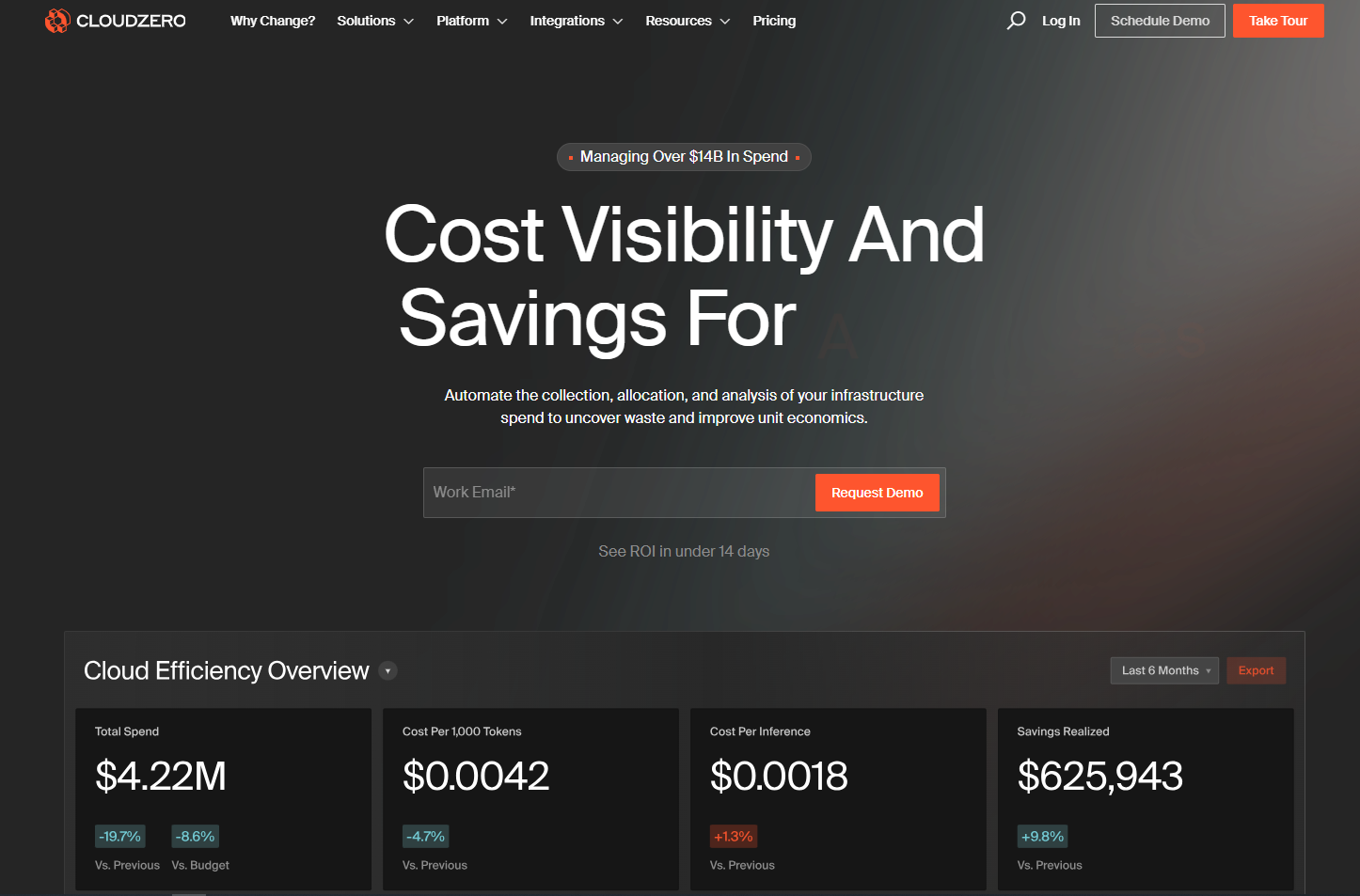
Cloud cost intelligence focused on unit economics and engineering ownership. Translates raw billing into metrics like cost per customer, product, or transaction with real-time anomaly surfacing.
Best for: Product and platform teams that need granular unit cost metrics and engineering-first allocation without perfect tagging.
Key Features:
- Unit economics, including cost per tenant or feature, and allocation for shared resources and Kubernetes, corroborated by the AWS Marketplace listing.
- Anomaly detection and trend alerts that surface spend changes quickly.
- Multi-source cost ingestion across cloud, PaaS, and SaaS, with engineering dashboards.
Why we like it: After helping startups scale, we have seen CloudZero shorten the path from "who spent this" to "this PR increased cost per request by X cents." That context speeds action and keeps margin work inside normal engineering rituals.
Notable Limitations:
- Users mention a non-trivial setup and learning curve for advanced views, plus desire for richer proactive alerting, based on G2 reviews.
- Pricing can feel premium for smaller teams according to sentiment on G2.
Pricing: Contract and usage based. Public pricing is available via the AWS Marketplace listing. For direct enterprise plans, contact the vendor. CloudZero's platform has been recognized by the FinOps Foundation, with certification coverage reported on PR Newswire.
OpsNow FinOps Plus
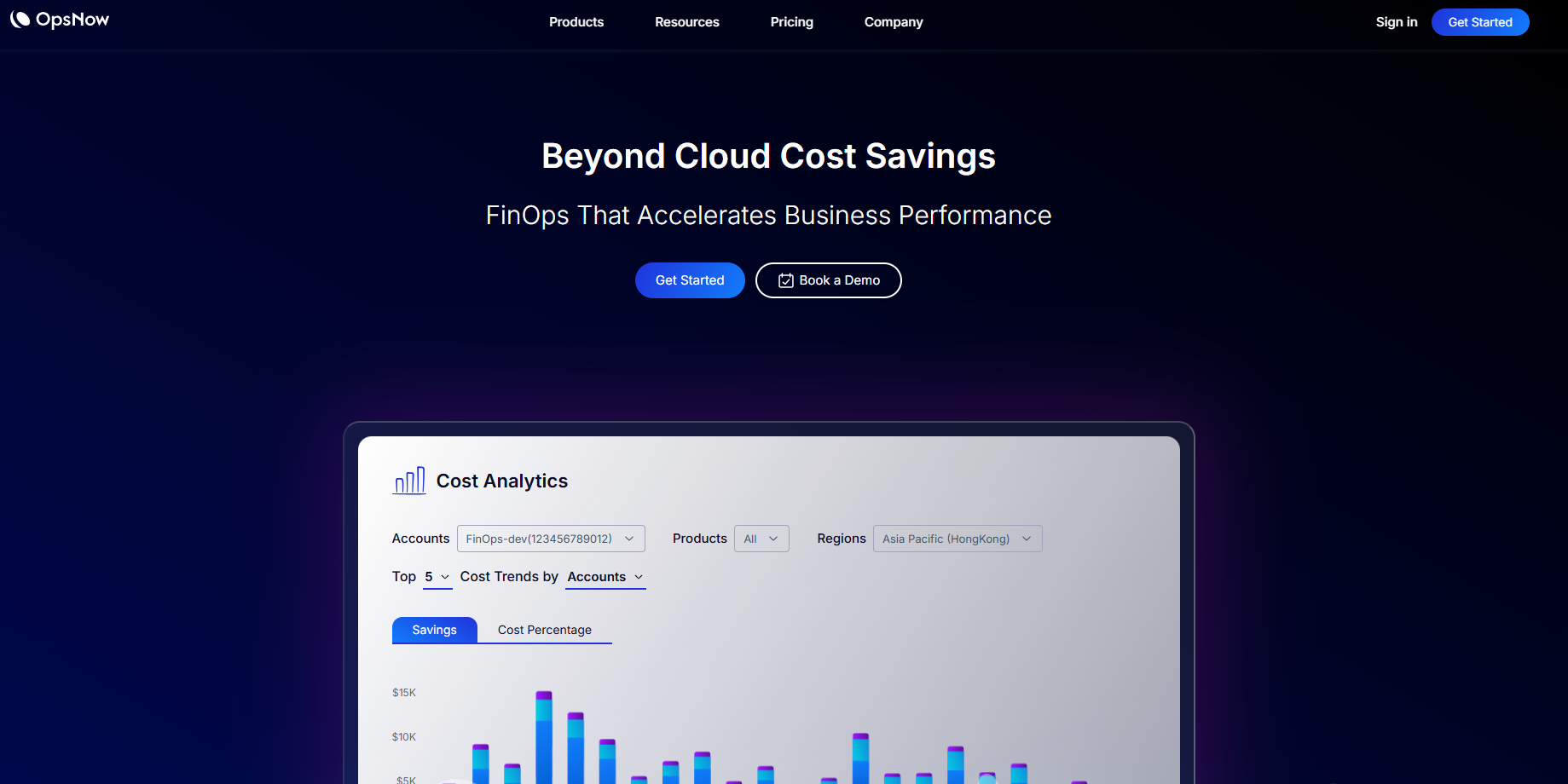
Multi-cloud FinOps platform with AI-assisted cost analysis, budgeting, and automated commitment optimization, designed for finance and engineering collaboration.
Best for: Teams running across AWS, Azure, and GCP that want anomaly detection, budgets, and automated Savings Plan or RI actions in one place.
Key Features:
- Cost visibility, analytics, and automated reporting mentioned by users on G2.
- Budgeting and forecasting for finance and engineering, consistent with user-reported workflows on G2.
- AI-driven anomaly detection and optimization recommendations, with solution positioning validated by OpsNow's membership page on the FinOps Foundation.
Why we like it: Working across different tech companies, we have seen budget reviews turn adversarial. OpsNow's emphasis on budgets plus engineering-readable insights helps shift teams toward shared KPIs, not spreadsheets.
Notable Limitations:
- Several reviewers note setup complexity and the need for guidance during onboarding, per G2 feedback.
- Limited third-party pricing transparency for FinOps Plus specifically, which complicates quick vendor comparisons, as indicated by G2's "pricing not available" banner.
Pricing: Pricing not publicly available. G2 lists no published rates for the OpsNow platform. Contact OpsNow for a custom quote.
FinOpTrix
Consulting-led cloud cost auditing and optimization focused on visibility, rightsizing, commitment strategy, and dashboards for ongoing control.
Best for: Organizations that want hands-on help to stand up FinOps basics quickly, then hand off to internal teams.
Key Features:
- Cost auditing, rightsizing, and reserved instance or Savings Plan strategy, per vendor documentation.
- Benchmarks and dashboards to track cost by service, team, or project, per vendor documentation.
- Budget creation and alerting to establish ongoing guardrails, per vendor documentation.
Why we like it: After helping startups scale, we have found the first 60 days of FinOps can be more about muscle memory than software. A focused audit and commitment plan can unlock 15 to 30 percent without tooling churn.
Notable Limitations:
- Limited independent reviews or analyst coverage, so buyers should apply extra diligence on references and deliverables.
- No verified marketplace listing or public pricing, which makes apples-to-apples comparison harder.
Pricing: Pricing not publicly available. Request a proposal and verify scope and savings accountability with references.
Flexera One FinOps
Unified FinOps with cloud cost optimization integrated with ITAM and SaaS management, designed for hybrid estates and policy automation.
Best for: Enterprises that need FinOps plus software licensing, on-prem visibility, and policy control in one platform.
Key Features:
- Cross-cloud visibility and policy-based optimization with deep ITAM integration, reflected in third-party analyses like Forrester's 2024 CCMO Wave coverage.
- FinOps KPIs module for commitment coverage and savings tracking, documented in Flexera's help center (Flexera docs summary page).
- Recognized FinOps practice depth, including more than 400 certified staff members, as reported by GlobeNewswire.
Why we like it: For hybrid environments with complex licensing, Flexera's single view of cloud, SaaS, and on-prem saves time stitching datasets, and its policy engine helps drive repeatable optimization at scale.
Notable Limitations:
- Reviewers mention a steep learning curve and heavier onboarding for multi-system integrations, plus cost considerations for smaller orgs, based on G2 reviews.
- Some users cite slower performance with very large datasets and a UI that can feel dense, also noted on G2.
Pricing: Pricing varies by module and contract. Flexera One components are sold via marketplaces, for example, IT Visibility is listed at $200,000 for 36 months on the AWS Marketplace. Contact Flexera for a custom quote for FinOps modules.
FinOps & Cloud Unit Economics Tools Comparison: Quick Overview
| Tool | Best For | Pricing Model | Highlights |
|---|---|---|---|
| CloudZero | Engineering teams driving unit economics | Contract and usage based via marketplace | Unit metrics and anomaly detection aligned to engineering |
| OpsNow FinOps Plus | Multi-cloud FinOps with budgets and AI insights | Custom quote | Cost analytics, budgets, AI anomaly detection |
| FinOpTrix | Services-first FinOps acceleration | Services engagement | Hands-on audit, rightsizing, commitment planning |
| Flexera One FinOps | Enterprise FinOps plus ITAM and SaaS | Enterprise contracts, marketplace modules | Policy automation, hybrid visibility, and KPIs |
FinOps & Cloud Unit Economics Platform Comparison: Key Features at a Glance
| Tool | Unit Cost Metrics | Anomaly Detection | Commitment Optimization |
|---|---|---|---|
| CloudZero | Yes, cost per customer or feature | Yes | Guidance present via recommendations |
| OpsNow FinOps Plus | Cost analytics and tag-based allocation | Yes, AI-assisted | Automated actions are core positioning, validate during evaluation |
| FinOpTrix | Reported in audit deliverables, per vendor documentation | Included in services scope, per vendor documentation | Reserved Instances and Savings Plans strategy, per vendor documentation |
| Flexera One FinOps | KPIs and allocation across hybrid estate | Yes, with policy automation | Commitment planning and policy automation documented across analyses |
FinOps & Cloud Unit Economics Deployment Options
| Tool | Cloud API | On-Premise / Air-Gapped | Integration Complexity |
|---|---|---|---|
| CloudZero | Yes | No public on-prem; not advertised for air-gapped | Requires initial mapping and data model setup |
| OpsNow FinOps Plus | Yes | Not advertised | Reviewers note setup guidance is helpful |
| FinOpTrix | Services based, tool agnostic | Possible through consulting or audits | Depends on target stack and scope |
| Flexera One FinOps | Yes, enterprise integrations | Limited public detail for full on-prem FinOps; not advertised for air-gapped | Heavier onboarding for complex estates |
FinOps & Cloud Unit Economics Strategic Decision Framework
| Critical Question | Why It Matters | What to Evaluate | Red Flags |
|---|---|---|---|
| Can we measure cost per customer, feature, and event today? | Unit metrics tie spend to value and drive roadmap decisions | Native unit economics, Kubernetes and shared-resource allocation, FOCUS alignment | Tool requires perfect tagging before value appears |
| How will budgets and forecasts guide engineering without friction? | Budgets should enable, not police, developer work | Roles, alerts in Slack or Teams, and drill-downs that match services and PRs | Monthly PDF handoffs with no team ownership |
| What is our commitment strategy across AWS, Azure, and GCP? | Savings Plans, RIs, and CUDs drive rate reduction | Coverage, utilization KPIs, and automation options | Manual spreadsheets for commitment planning |
| Where will anomalies show and who fixes them? | Speed to detect and resolve limits waste | Real-time anomaly detection and assignment to owners | Alerts without routing or context to take action |
FinOps & Cloud Unit Economics Solutions Comparison: Pricing & Capabilities Overview
| Organization Size | Recommended Setup | Monthly Cost | Annual Investment |
|---|---|---|---|
| <$1M annual cloud | Services-first audit with FinOpTrix, then lightweight product | Varies by services scope | Pricing not publicly available, validate outcomes |
| $1M-$10M annual cloud | CloudZero or OpsNow FinOps Plus pilot, add services for commitment strategy | Contract based, verify via marketplace or quote | Depends on usage and modules, confirm with vendors |
| >$10M annual cloud, hybrid estate | Flexera One FinOps with ITAM and SaaS, plus engineering dashboards | Enterprise contracts | Marketplace modules provide directional benchmarks, for example Flexera IT Visibility at $200,000 for 36 months on AWS Marketplace |
Problems & Solutions
-
Problem: "We cannot explain a sudden 18 percent month-over-month spike, and engineers do not see it until finance asks."
- CloudZero: Real-time anomalies and engineering-first allocation shorten time to root cause, with users emphasizing visibility on G2 and capability detail on the AWS Marketplace listing.
- OpsNow FinOps Plus: AI-assisted anomaly detection and automated reports, with reviewers citing useful cost dashboards on G2.
- Flexera One FinOps: Policy-driven alerts and KPIs to track savings and coverage, as reflected in Forrester's CCMO Wave coverage.
- FinOpTrix: A focused audit creates a prioritized playbook, with rightsizing and commitment quick wins, per vendor documentation.
-
Problem: "Budgets trigger finger-pointing, not action."
- OpsNow FinOps Plus: Budgeting and tag-based analytics make finance goals visible to engineering, supported by user commentary on G2.
- CloudZero: Unit metrics like cost per feature connect budgets to shipped work and PRs, which reviewers say improves accountability on G2.
- Flexera One FinOps: Budget and policy automation cut manual governance in hybrid estates, noted in third-party analyses like GlobeNewswire's Forrester coverage.
- FinOpTrix: Coaching and dashboards align budget owners and service owners with achievable monthly targets.
-
Problem: "We are missing out on commitment discounts and overpaying for predictable workloads."
- CloudZero: Visibility into coverage and unit economics to inform savings choices.
- OpsNow FinOps Plus: Automated commitment recommendations and actions are a core value prop to validate in demos, aligned with OpsNow's FinOps posture on the FinOps Foundation member page.
- Flexera One FinOps: Commitment KPIs and policies to raise utilization and coverage, reflected in capability pages such as the KPIs feature overview.
- FinOpTrix: Reserved Instance or Savings Plan strategy, plus buy and rebalance guidance, per vendor documentation.
-
Problem: "Tools are dashboards that do not drive action."
Practitioner feedback across the FinOps community often highlights the need for actionable, engineer-friendly insights, as seen in community discussions on r/FinOps.- Pick platforms that embed alerts into team workflows, tie costs to services, and show the delta after deployments. CloudZero, OpsNow, and Flexera all claim to support this pattern through different lenses, which users and third-party coverage echo across G2 and analyst write-ups like Forrester's CCMO Wave coverage.
Bottom Line: Picking a FinOps & Unit Economics Platform That Engineers Will Actually Use
Cloud spend is accelerating alongside AI and platform growth, with public cloud services projected to grow 21.3% in 2026 to approximately $877B, on track to reach $1.48T by 2029, which raises the bar for real-time visibility and actionability (Gartner 3Q25 public cloud services forecast update). If your north star is unit cost and developer adoption, CloudZero stands out. If you need multi-cloud budgets and AI-assisted anomaly workflows, OpsNow FinOps Plus is worth a close look. For hybrid estates that span SaaS and software licensing, Flexera One FinOps brings policy scale and ITAM depth. If you are early and under-resourced, a short, outcomes-tied engagement with FinOpTrix can unlock savings fast while you build internal discipline. Validate each choice with live data, confirmed KPIs, and a clear plan for ownership within engineering and finance.