Startup Stash is one of the world's largest online directory of tools and resources for startups
Looking for professional billing and invoicing software for your online business? We’re sure you’ll be able to find the right billing and invoicing software tool for your needs on this page. Learn what is Billing and Invoicing Software and more in our FAQ section. Check out our categories section for new interesting tools


Search for tags















Billing and invoicing software is a group of software programs that help companies to bring in money, Of course, this is what all businesses aim for, so it’s not a stretch to quickly understand the importance of such software. Despite the fact that many platforms will have their differences, they all generally automate the processes and workflows of sending invoices and getting them paid. It can be really hard to get paid by your customers 60% of businesses have stated that they have been paid late in the past. This is another reason why billing and invoicing software is critical to businesses.
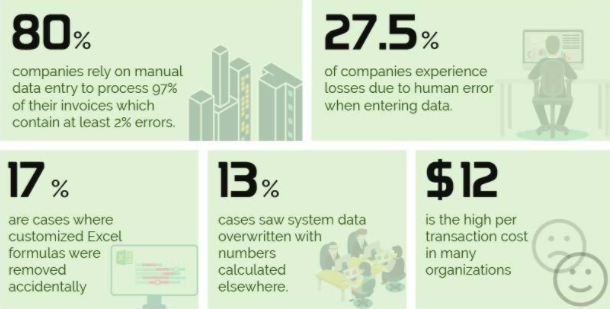
(Datafloq)
These types of systems make it so that the user can generate invoices to be sent out to customers. A lot of these will have an array of pre-created templates to choose from for your invoices, which can help to save time. Many will also allow you to create your own invoices, so if you don’t want to stick with the templates. You don’t have to. You can also choose to print and save the invoices for your own filing purposes, although physically storing invoices is not common business practice in the modern day.
If users are worried about a customer’s memory, they can set reminders to their invoice that will notify the customer that payment is required. These requests can take customers through to the appropriate payment method instantly, to ensure ease-of-payment which in turn increases the speed at which the user will get paid. Invoices can be set to be paid every month, like with subscriptions and a range of different payment methods can be used by the customers.
Certain types of companies will also benefit from the capability to use timing software so that they can bill work to customers by the hour and have these calculations fed into invoices. Various expenses and other costs of sale can also be automatically included in valuations to ensure easy billing. These types of software are also incredibly versatile, with integration options being available across a number of different platforms.
There are a number of different reasons why a company may use billing and invoicing software. It may all seem obvious at first, but some of the benefits are more obscure. These benefits are not just felt by the finance departments of businesses, but the whole organization as a whole. This can be down to the most basic features, all the way up to the most complex things to do with finance. Some of these reasons can be seen down below.
As a business grows, keeping track of customers, invoices and orders can get more difficult. This is where the benefits of billing and invoicing software can be felt. These systems make it so that invoices can be found in the same place, which prevents people from hurrying around trying to find an errant invoice. Having this software allows businesses to also have a clear picture of which customers owe them money and which ones are due to pay in the near future. Customer relationships are also less likely to grow sour due to chasing payments when these systems are used effectively.
If a business didn’t have automated invoicing, they would have to manually send invoices out to every customer. This would be almost impossible for some businesses and incredibly expensive in terms of man-hours for the ones who could do it. Furthermore, rather than having to do everything by check, these systems ensure that invoices can be rapidly paid through digital means, which improves the cash flow prospects of the business itself. This will ultimately save the business time and money on chasing customers for payments and waiting for the various red tape to clear with regards to the payments.
If you integrate your accounting software with your invoicing and billing software, then you’re going to be able to keep a more accurate picture of your account records for your business. The software will allow businesses to reflect payments for expenses and payments from customers in the process of generating sales. Having this information recorded in this way makes accounting practices more transparent and also helps businesses to remain compliant with the law by using best practices.
You may think that sending out links to pay and reminders is annoying, but I would tell you that the opposite is true. It can be annoying to dig through your emails so that you can pay an invoice. This is why sending out payment reminders with a payment link can be a great way to improve customer experience in the billing process. You’re also making sure that you get paid on time, which is the whole point of trying to manage your cash flow. If you have a powerful tool that can help you to get paid on time, then why wouldn’t you.
There are a number of different businesses and employees within those businesses that would make use of billing and invoicing software. The primary people that use these systems are accountants, which shouldn’t really surprise you at all. Many accountants work inside companies, running their finance teams and as a result, they will generally be responsible for taking payments from customers. This is why they would use this software so that they can streamline their processes.
Another commercial example of billing and invoicing software can be found on the project level. For instance, a project manager may be required to send invoices to customers. There are a number of details that would decide pricing on a project, such as materials used, man-hours committed, services rendered, and many more. Billing and invoicing systems help to make the process of getting paid for a project much easier. This is achieved through automation and other features that can be accessed.
Another example of specific billing can be found in the world of healthcare. Medical bills are a reality of life in many countries and these complex equations have to be calculated somehow. This is where billing and invoicing software comes in. This requires specialist systems as the legal standards for billing are much higher due to the sensitive nature of the sector. This is also due to the presence of insurance companies and other entities.
Small-business owners are also massively popular users of billing and accounting software. The main reason for this shouldn’t be too surprising and that’s the fact that small businesses generally don’t hire their own accounts team. The alternative is to use a simple, yet powerful accounting and invoicing tool to ensure that payments are made on time. These types of systems are generally built specifically for those who don’t have experience in finance.
There are many different types of enterprise sectors out there in the business world, so it shouldn’t be a surprise that there are a lot of different types of billing and invoicing software out there too. We’re going to go over some of the different billing and invoicing systems that you would be most likely to see in your business.
This is a question that I get asked a lot and nobody ever likes the answer that I give them. The answer is that it completely depends on what you’re looking for. There are many different kinds of billing and invoicing software on the market for a variety of different industry sectors and business sizes. You also have to take into account how much you have in your budget to spend on this software. This is why it’s incredibly important to make sure that you do the research on various platforms, so you know whether you’re getting the right platform for you.
For instance, if you’re a small business then you’re going to need to be aware of the price that you’re going to be paying. You’re also probably not going to have a dedicated finance team, so it’s going to need to be easy and simple to use. Alternatively, if you’re working in a large business, then you’re going to need to make sure that you get a powerful solution. This is where you may need to make use of advanced features and you may also have to pay a lot more to get access to these types of features.
A lot of different billing software is different, although the general idea of what they do is likely to stay the same. You will have an account with the software provider of your choice. With the software, you will be able to save new customers for your business, the various products that you sell and their prices along with the tax considerations for your locality. This allows the user to either easily send invoices manually, or in the case of more advanced software, even automatically send invoices out to customers once an order has been made. This makes it easy on your end.
Billing software also helps to make things easier on the customer side. When the customer receives their bill, they normally get an email with a payment link and a copy of the invoice for review. The customer is able to quickly and easily pay the invoice online, which ensures that the money rapidly goes to the seller’s account. Reminders also make sure that these customers don’t lose track of what they have to pay. The improved efficiency and features of billing and invoicing software allow companies to optimize their billing processes so that they can get paid the right amount, on time.
As has been previously stated, there are a lot of different software programs out there and they will all have their own unique toolbox of features. Despite this, there are some common features that have proven critical for users. When you’re looking at getting invoicing and billing software, you should consider finding one that has the below features as a minimum. This will ensure that you can increasingly scale your payments and use the same software for a considerable amount of time.
This is another question where the answer is completely dependent on the type of software that you’re looking to get. What you will generally find is that the more advanced features you have, the more you’re going to pay and if you’re on a plan with a higher number of users, you will also likely pay more than others. Software for self-employed individuals and small businesses is also likely to cost a lot less than more commercial-heavy packages. If you look around, you will also be able to find some software packages for free, although these will have very limited functionalities compared to other packages.
Due to the sheer volume of software packages out there, to get a true fix on the cost for you, you should have a look around the market. There are numerous comparison articles and review sites that can help you to get a good idea of whether a tool is worth it. Just be sure to check out all of your options before you commit to a decision, you don’t want to have to change the software that you’re using once you’ve already got all of your information moved over.
The answer to this question is a resounding yes and it’s actually one of the things that makes billing and invoicing software so powerful for businesses. For instance, it is very common to have your invoicing software linked to your accounting software so that all transactions can be logged away for filing purposes. In addition to this, CRMs can also be integrated so that users can see a customer’s billing history and new orders can be easily logged without having to do it manually. These integrations make billing and invoicing software a critical requirement for your business.
Other billing systems can also be integrated with time-tracking applications, which are commonly used in fields that bill at an hourly rate. You most commonly find this associated with the legal sector and a number of different digital fields. This helps to ensure that customers are getting billed for an accurate reflection of the time spent on a task. This also improves trust between your business and your customers, as they should be able to access these time-tracking reports if desired.
Yes, of course, there can. Similarly, with any other form of technology and software, there can also be problems with billing and invoicing software. Due to the critical nature of billing and invoicing to the survival of a business, you need to make sure that you’re using a reliable provider. Failure to do so could mean that you’re not able to take payments from your customers, which could force them to use your competitors. Other problems can also cause material harm to the business, so just make sure your software is good before getting it.
Of course, I’m not a psychic, so I can’t exactly tell you what the future is going to hold. Despite this, I can give you a very educated guess based on the state of the industry at the moment. Traditionally speaking, billing and invoicing have developed at a slow pace and apart from the rapid drive to digital payments, there hasn’t been any significant change. The main recent changes have been the shift to mobile payments, the use of cloud technology, and integrations with other systems.
It is very likely that blockchain technology will have a role in the billing and invoicing options for the future. B2B transactions can have their speed rapidly increased through the use of a payment blockchain and this is already a massive potential draw on its own. These distributed ledgers also make it less likely for information to be accessed illegally. It would also make doctoring the information close to impossible as blockchains can rarely be changed retroactively.

Most France lists mix two companies that only share a postcode. One is a product a French buyer can actually run, with a headquarters you...

The United Kingdom remains Europe's largest startup economy and the natural first stop for founders building on the continent. It ranks second globally in StartupBlink's...

Singapore has turned a city-state of under six million people into one of the most concentrated technology hubs anywhere, with the whole country effectively operating...
India is now the world's third-largest startup ecosystem, home to more than 130 unicorns and close to 700,000 registered companies. Bengaluru remains the country's primary...
Malaysia has matured into one of Southeast Asia's most watched startup bases, with Kuala Lumpur entering the top 20 of Startup Genome's emerging ecosystem ranking....
The United Arab Emirates is the Middle East's most active startup hub, with tens of thousands of companies clustered in Dubai and Abu Dhabi. In...
Australia has matured into one of the Asia Pacific region's most active startup hubs, home to thousands of venture-backed companies and ranked around 9th globally...
Kenya has emerged as a prominent startup hub, driven by a thriving entrepreneurial ecosystem and supportive government policies. The country boasts over 300 active startups,...
With its diverse landscapes and multicultural heritage, Canada is quickly becoming a key player in the global startup ecosystem. Major cities like Toronto, Vancouver, and...
Estonia has quickly emerged as a hotspot for startups, earning global recognition for its dynamic and innovative ecosystem. Estonia's startup scene has flourished, with over...
 Startup Stash
The biggest online directory of tools and resources for startups
Hello@startupstash.com Get listedKeep up with our weekly STASH!
The best tools, resources, and discounts, in one short note.


 Verified